Chichibu Night Festival
秩父夜祭The Chichibu Night Festival is one of Japan's three great float festivals and arguably the most visually dramatic, a December spectacle in which massive, elaborately decorated yatai floats weighing up to twenty tons are hauled through the streets of this mountain-encircled city and up a steep hill to the accompaniment of taiko drums, festival chants, and some of the most spectacular fireworks displays in the Japanese festival calendar. The festival's timing in early winter, when the air is cold and clear and the early darkness provides a velvet backdrop for the illuminated floats and pyrotechnics, creates conditions of visual intensity that summer festivals, however grand, cannot match.
The six floats that form the procession's core are masterworks of Edo-period decorative art, their surfaces covered in intricate carvings of dragons, phoenixes, and legendary figures gilded with gold leaf and painted in colors that glow with extraordinary richness under the lantern light. Each float belongs to a specific town neighborhood and represents generations of community investment and craftsmanship, the maintenance and occasional reconstruction of these enormous vehicles constituting a continuous tradition of artistic production that connects contemporary Chichibu to its Edo-era origins.
The climactic moment occurs on the evening of December 3, when the floats are pulled up the steep Dangozaka slope to the grounds before Chichibu Shrine. The physical effort required to haul these multi-ton structures uphill, the teams of hundreds straining against ropes while the crowd roars encouragement and fireworks burst overhead, produces a spectacle of raw communal energy that transcends aesthetic appreciation and enters the realm of the visceral. The night sky fills simultaneously with pyrotechnic color and the breath of thousands of spectators and participants, the cold air making visible the collective exhalation of a city united in the effort and excitement of its greatest annual tradition.
History & Significance
The Chichibu Night Festival traces its origins to the Edo period, with historical records confirming the festival's existence by the early eighteenth century, though local tradition places its origins considerably earlier. The festival is associated with Chichibu Shrine, whose December festival coincided with the historically important Chichibu silk market, creating a convergence of commerce and ceremony that drew visitors from across the region. The festival's December timing, unusual among Japan's major float festivals, reflects this connection to the silk trade's seasonal calendar rather than the agricultural rhythms that govern most Japanese festivals.
The festival was designated a UNESCO Intangible Cultural Heritage in 2016, recognition that acknowledged both its artistic and social significance. The float construction and maintenance tradition, requiring skills in woodcarving, gilding, lacquerwork, textile production, and structural engineering, sustains a network of traditional craftspeople whose expertise might otherwise lack sufficient demand to survive. The festival's role as a vehicle for transmitting these skills across generations, each float requiring periodic restoration that provides training opportunities for younger artisans, makes it a living institution of cultural preservation rather than merely an annual spectacle.
What to Expect
The afternoon of December 2 introduces the floats in daylight, when their carved and gilded surfaces can be examined in detail. The craftsmanship rewards close inspection: the dragons writhe with muscular energy, their scales individually carved; the phoenixes spread wings of hammered gold; the human figures enact mythological scenes with expressions of startling individuality. The floats' upper levels feature stages on which children and musicians perform, their small figures perched above the carved splendor like inhabitants of a miniature world.
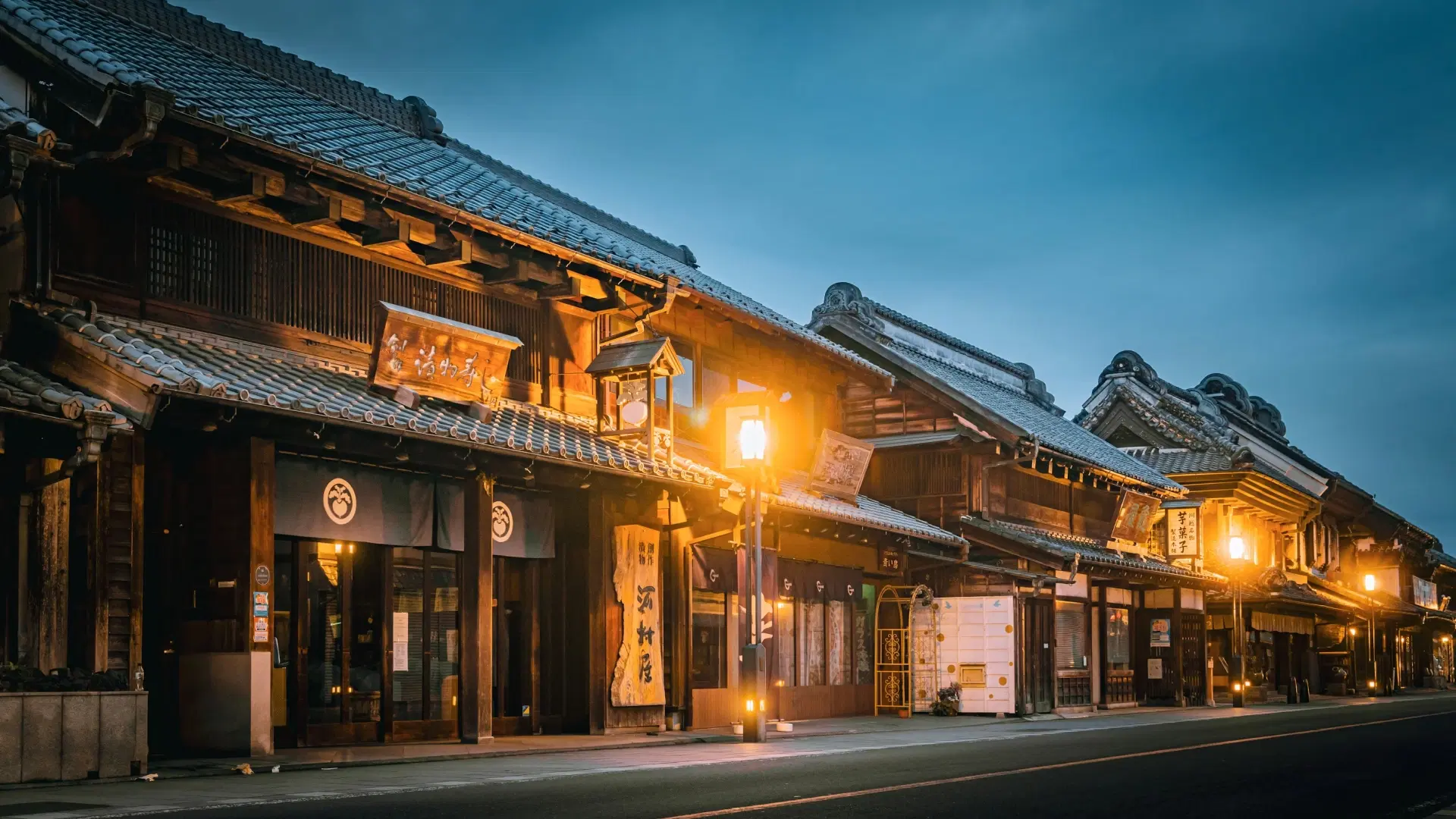
The transformation at nightfall is absolute. Lanterns mounted along the floats' structures are lit, and the carved surfaces that appeared rich but static in daylight become alive with flickering shadows and warm light that finds the gold leaf and makes it burn. The floats move through the streets accompanied by groups of musicians playing traditional instruments, the rhythmic chanting of the hauling teams, and the thunder of taiko drums that reverberates off the surrounding mountain walls. The procession's route through Chichibu's commercial district creates moments of dramatic scale contrast, the enormous floats filling narrow streets to their edges, their upper structures rising above the rooflines of the shops below.
The December 3 evening climax at Dangozaka is the festival's most intense experience. The slope is steep enough that the floats must be hauled by teams of several hundred people pulling on thick ropes, the effort visible in the straining bodies and audible in the rhythmic shouts that coordinate the pulls. Fireworks launch throughout the ascent, their explosions providing both illumination and sonic accompaniment to the struggle below. The moment when each float crests the hill and reaches the festival grounds draws eruptions of cheering that express not merely aesthetic pleasure but profound communal satisfaction in a difficult task accomplished together.