Saga International Balloon Fiesta
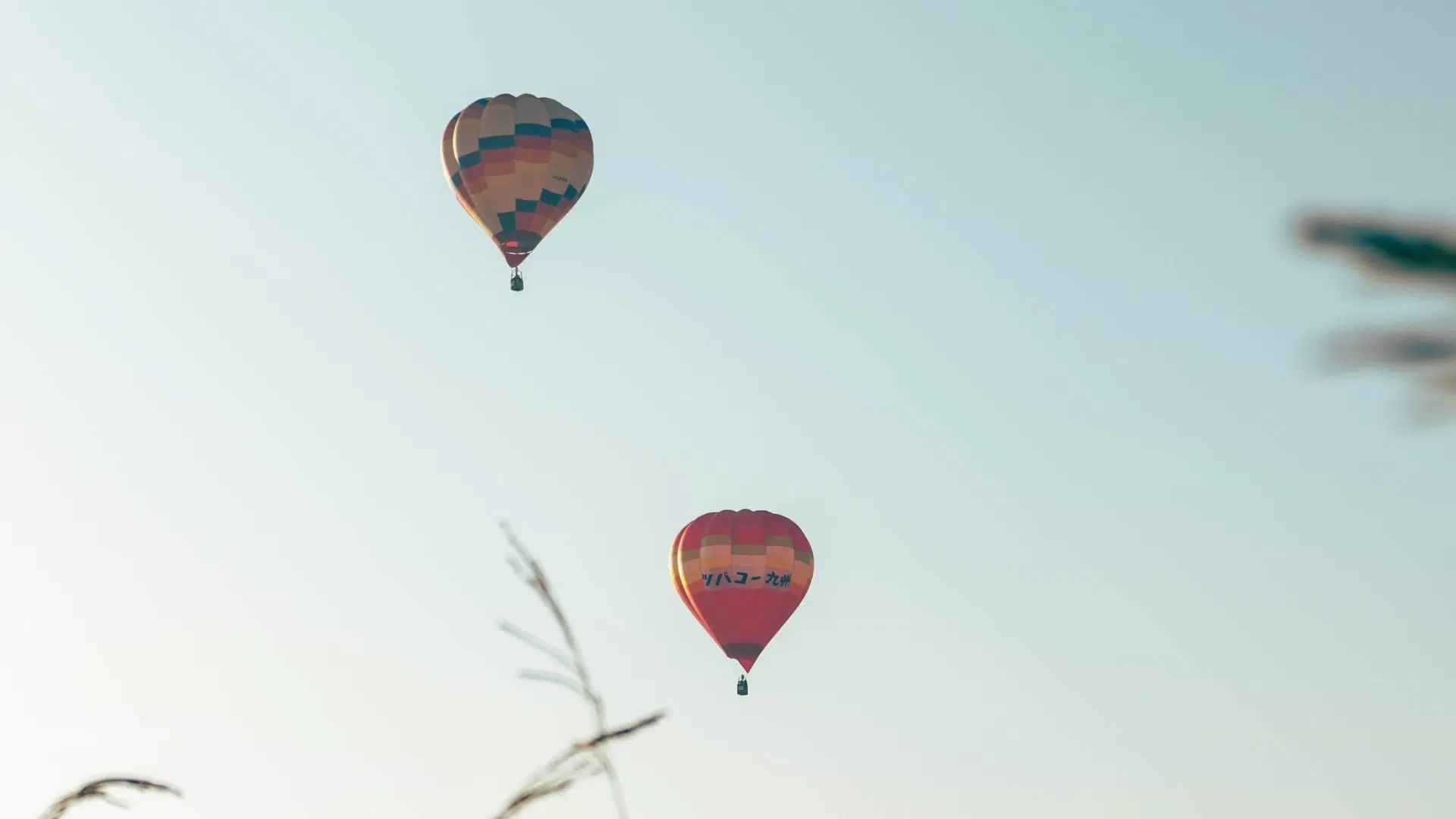
佐賀インターナショナルバルーンフェスタThe Saga International Balloon Fiesta fills the autumn sky above the Chikugo River plain with more than a hundred hot air balloons, their bright canopies rising into the cold morning air like a flock of improbable birds migrating upward. This is Asia's largest hot air balloon event and one of the most visually spectacular gatherings in the Japanese calendar, a five-day festival that transforms the flat agricultural landscape of southern Saga into an open-air gallery of color, form, and the particular beauty of objects that seem to defy gravity.
The event draws competitors and spectators from around the world. Over one hundred balloons from twenty or more countries participate in competitive flights that test the pilots' ability to navigate the unpredictable currents of the autumn atmosphere, while shaped balloons in the forms of animals, cartoon characters, and fantastical objects provide visual entertainment for the vast crowds that line the banks of the Chikugo River. The combination of serious competition and popular spectacle gives the Fiesta a dual character that sustains engagement across its full duration, the drama of the races complemented by the sheer joy of watching an enormous inflatable cow float serenely above a rice field.
The landscape of the Saga Plain contributes to the event's visual impact. The flat terrain, uninterrupted by significant elevation changes, provides sightlines that extend to the horizon, and the autumn sky, typically clear and high in late October, creates a backdrop of unlimited blue against which the balloons' colors register with maximum intensity. The Chikugo River, winding across the plain, reflects the balloons from below, doubling the display in its calm morning surface. The combination of flatness, light, and the vertical drama of the ascending balloons produces compositions of almost abstract beauty.
The Saga International Balloon Fiesta fills the autumn sky above the Chikugo River plain with more than a hundred hot air balloons, their bright canopies rising into the cold morning air like a flock of improbable birds migrating upward.
History & Significance
The first Saga Balloon Fiesta was held in 1978, when a small group of balloon enthusiasts organized a gathering on the Chikugo River floodplain. The event's founders recognized that the Saga Plain's flat topography, stable autumn weather patterns, and proximity to the thermal inversions that provide the calm air conditions ideal for ballooning made the site exceptionally suited to the sport. The early events were modest, attracting a handful of domestic balloonists, but the quality of the flying conditions and the enthusiastic support of the local community attracted increasing international participation.
The transformation from a hobbyists' gathering to an international competitive event occurred during the 1980s, when the Fiesta was designated as a round of the Hot Air Balloon World Championship series. This competitive dimension attracted the world's elite pilots, whose presence raised the event's profile and demonstrated the exceptional quality of the Saga flying conditions to the global ballooning community. The event's continued status as a championship venue reflects the ongoing recognition of the site's advantages.
The growth of the spectator audience from thousands to nearly a million over the event's five days has transformed the Fiesta into one of Saga Prefecture's most important economic and cultural events. The local government and community have invested in infrastructure, including a temporary station on the JR Nagasaki Main Line that operates only during the Fiesta, to accommodate the crowds. This investment reflects the event's significance not merely as a sporting competition but as an assertion of regional identity, a demonstration that a quiet agricultural prefecture can stage an event of genuine international caliber.
What to Expect
The competitive flights take place in the early morning, typically launching between 7 and 8 AM, when the air is calmest and the thermal conditions most predictable. The mass ascension of over a hundred balloons, inflating and rising in sequence across the launch field, is the event's most photogenic moment, the progression from the horizontal chaos of the inflation process to the vertical order of the ascending fleet creating a time-lapse narrative of transformation that never loses its capacity to astonish. The competitive tasks, which require pilots to navigate to designated targets and drop markers with precision, demonstrate the subtle art of balloon navigation, in which the pilot's only tools are the ability to change altitude and the knowledge of how wind patterns vary at different heights.
The shaped balloon display, typically held in the afternoon or at designated times, provides the event's most whimsical pleasures. These special-shape balloons, designed and built by teams from around the world, take the form of animals, buildings, cartoon characters, and objects of pure imagination, and their inflation and brief flights produce scenes of surreal comedy that delight children and adults in equal measure. The sight of an enormous bee floating above a field of harvested rice, or a forty-foot-tall samurai helmet rising into the autumn sky, belongs to the particular category of spectacle that is too absurd to be anything but wonderful.
The evening balloon glow, or "La Montgolfiade," is the Fiesta's most atmospheric event. After dark, a line of tethered balloons is inflated and illuminated by their burners in synchronized sequence, the canvas canopies glowing from within like enormous lanterns. Music accompanies the display, and the rhythm of the burner blasts, timed to the soundtrack, produces a performance that is part concert, part light show, and part communal gathering around a source of warmth and wonder.