Takeo
武雄Takeo Onsen announces itself with an architectural gesture of uncommon beauty. The Romon Gate, a two-story vermilion tower designed by Tatsuno Kingo, the architect of Tokyo Station, stands at the entrance to the public bathhouse like a declaration that the act of bathing here is worthy of a grand portal. Built in 1915 and now designated an Important Cultural Property, the gate bridges the aesthetic traditions of Shinto shrine architecture and early modern design with a confidence that speaks to the ambitions of the Meiji era and the deep antiquity of the hot spring it introduces. The springs behind the gate have been in continuous use for over 1,300 years, and the roster of historical figures who bathed here, from the legendary Empress Jingu to the feudal lord Toyotomi Hideyoshi to the Meiji-era philosopher and writer Miyamoto Musashi, gives the waters a narrative depth that few onsen in Japan can match.
The town extends from the bathhouse along a gentle valley, its streets lined with the ryokans, shops, and residences that constitute the domestic landscape of a Japanese onsen community. The atmosphere is quieter and less touristic than larger spa towns, the pace slower, the engagement between visitors and residents more natural. This intimacy is Takeo's particular appeal: the sense of entering a community that has organized its life around the hospitality of its waters rather than around the entertainment of its visitors.
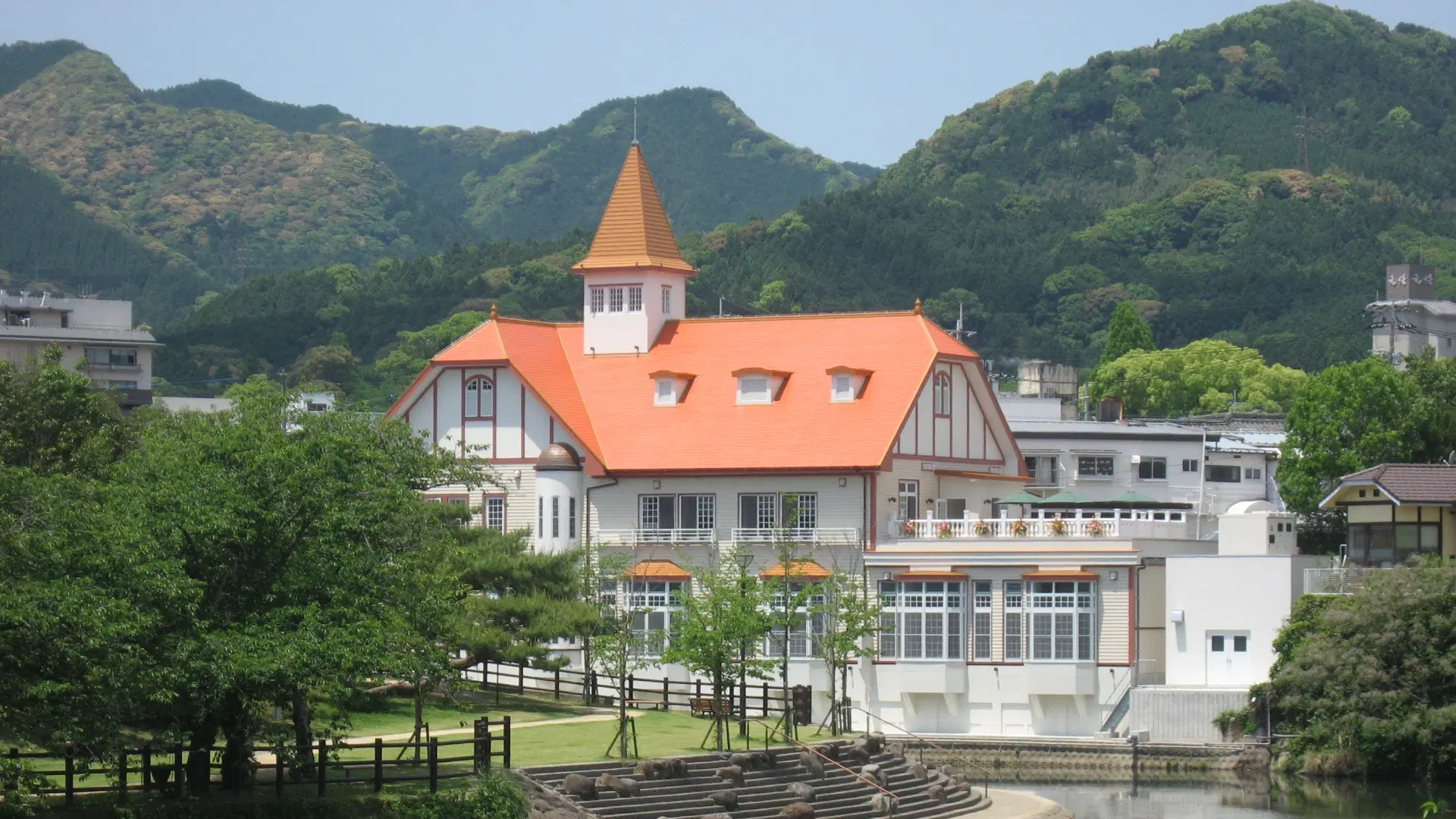
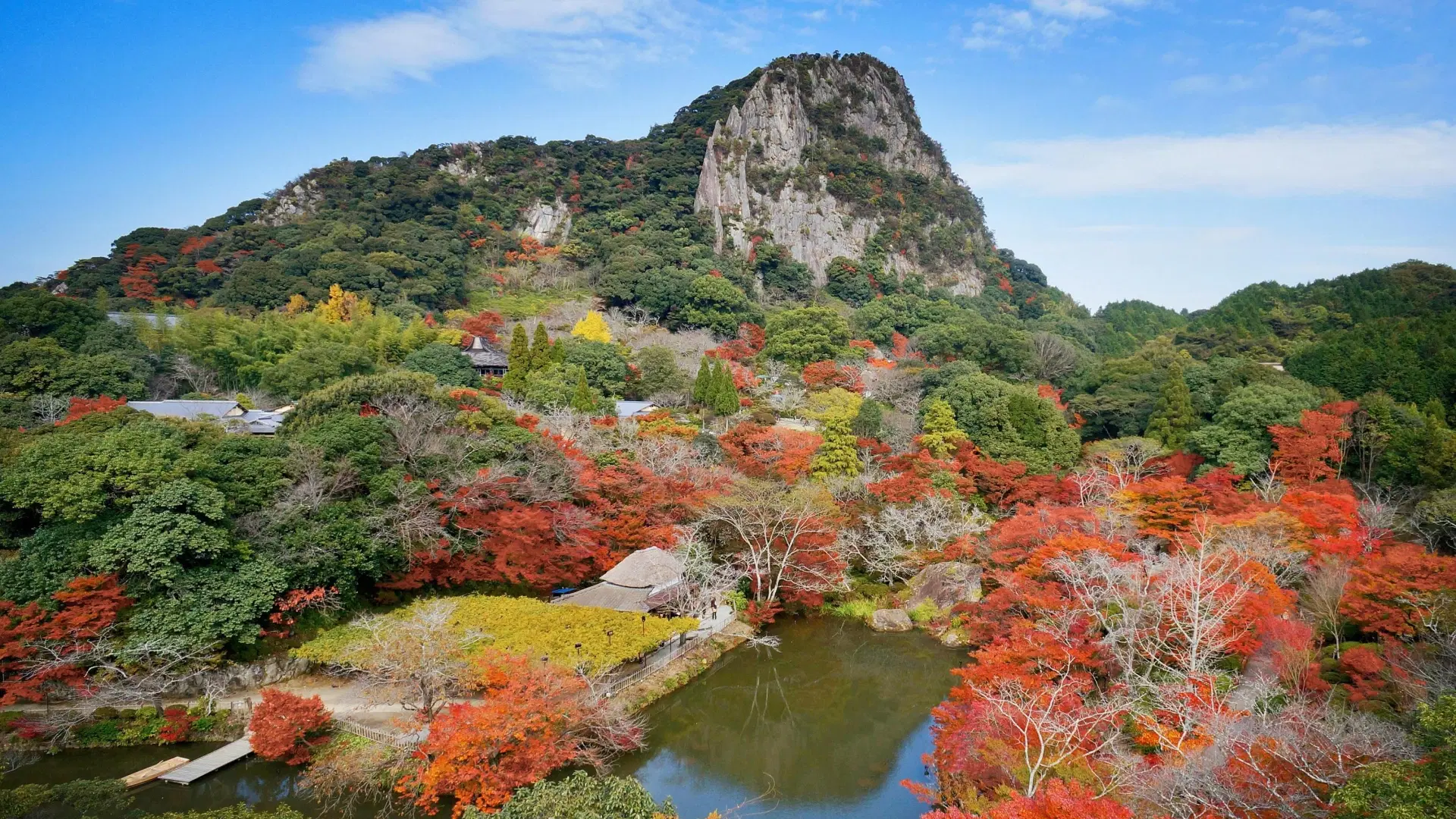
The surrounding landscape adds depth to the bathing experience. The Mifuneyama Rakuen garden, a vast landscape park created by the local lord in 1845, occupies the slopes of a cliff-faced mountain that rises dramatically behind the town. The Takeo Shrine, with its three-thousand-year-old camphor tree whose enormous trunk has been designated a Natural Monument, anchors the town's spiritual life to the deep time of the natural world. And the recently renovated Takeo City Library, designed by the architect behind the Tsutaya bookstore chain and cited as one of the most beautiful public libraries in the world, has added a contemporary cultural dimension that attracts visitors whose interests extend beyond the bath.
Takeo Onsen announces itself with an architectural gesture of uncommon beauty.
Highlights
The Romon Gate and the historic public bathhouses behind it provide the essential Takeo experience. The Motoyu bathhouse, the oldest of the public facilities, retains a character of austere simplicity that connects the contemporary bather to the centuries of visitors who preceded them. The Tonoshama-yu, originally reserved for the feudal lords, features a marble-lined bath of unusual refinement whose proportions and materials communicate the status that bathing held in the aristocratic imagination. The more recently constructed Haikarayo offers a modern bathing facility with outdoor baths, saunas, and the amenities that contemporary visitors expect, without sacrificing the quality of the water that is the town's irreducible asset.
Mifuneyama Rakuen is a garden of exceptional scale and drama. The park occupies approximately fifty hectares at the base of a cliff whose vertical rock face rises above the treetops like a natural cathedral wall. The garden's azalea and wisteria collections produce seasonal displays of extraordinary intensity, the mass plantings covering entire hillsides in single colors that shift through the spectrum as different varieties reach their peak. The teamLab installation, a digital art exhibition housed within the garden's caves and forest spaces, has attracted international attention for its immersive light and projection works that transform the natural landscape into a canvas for contemporary art. The interplay between the historic garden, the geological drama of the cliff, and the digital interventions creates an experience that is unlike anything else in Japan.
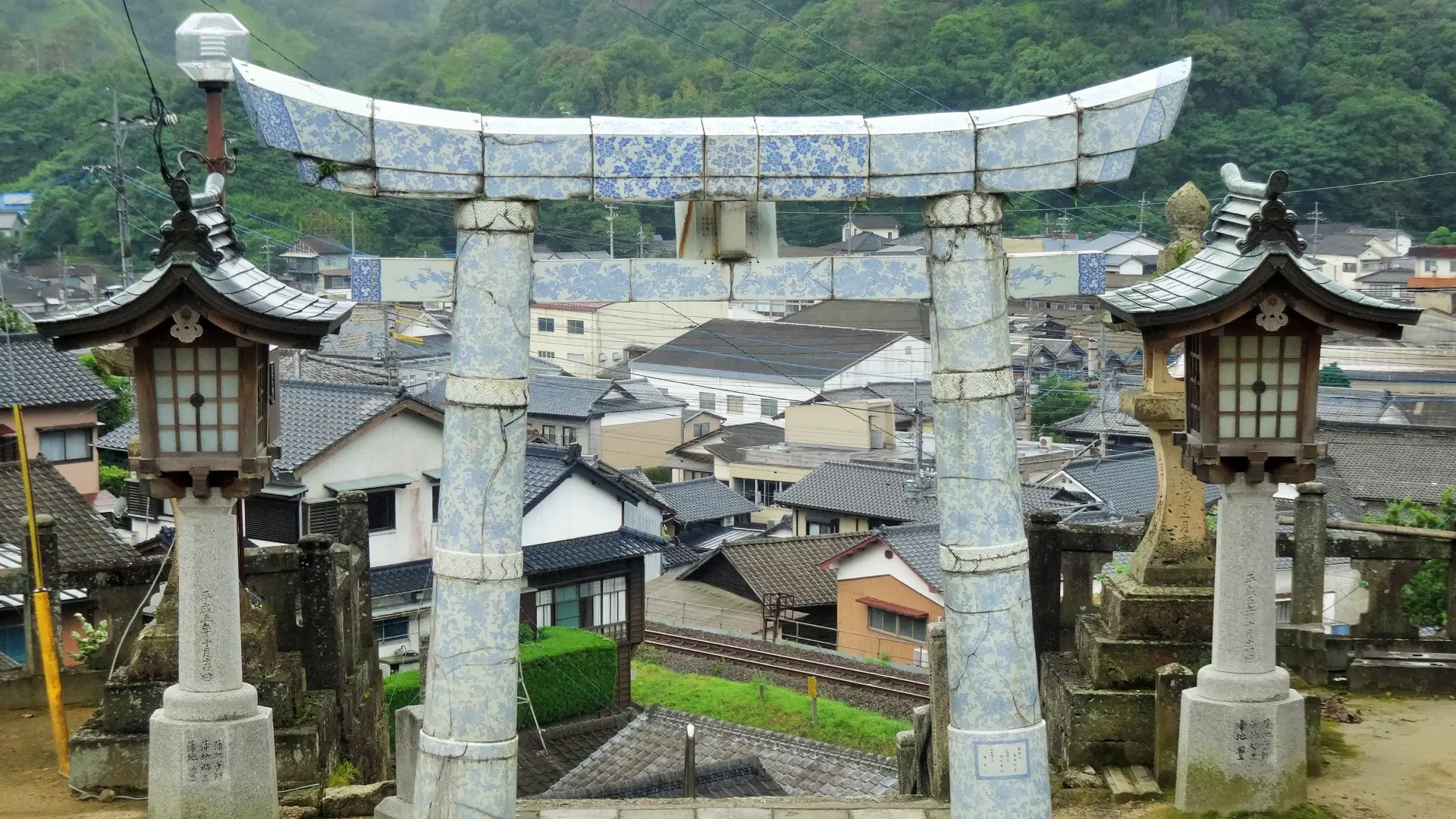
The great camphor tree at Takeo Shrine is a natural monument whose age and scale inspire a reverence that borders on the religious. The tree's trunk, measuring over twenty meters in circumference, has been hollowed by time into a cathedral-like interior, and the wooden platform built within the hollow allows visitors to stand inside the living tree and contemplate the three millennia of growth that produced the space. The experience is primal and moving, a reminder of the timescales that dwarf human concerns.
Culinary Scene
Takeo's culinary traditions reflect the agricultural abundance of the Saga Plain and the creative energy of a town that has welcomed travelers for over a millennium. The local ramen, served in a rich pork bone broth particular to the area, has developed a following that extends beyond the town's borders, its balance of richness and clarity distinguishing it from the heavier tonkotsu styles of neighboring Fukuoka. The ramen shops near the station and bathhouse serve bowls whose preparation reflects decades of refinement, the broth recipes passed between generations with the seriousness of family heirlooms.
Saga beef, the prefecture's premier wagyu, appears at Takeo's ryokan tables in preparations that showcase the meat's extraordinary marbling and delicate flavor. The onsen tamago, eggs slow-cooked in the hot spring water until the white achieves a silky, custard-like consistency while the yolk remains warm and liquid, is a simple pleasure that connects the culinary and the thermal dimensions of the town's identity.
The morning market, held periodically near the shrine, offers seasonal produce from the surrounding farms alongside handmade confections and local specialties. Takeo's proximity to the Arita and Imari ceramic-producing regions means that meals are often served on locally made pottery, adding an artistic dimension to the dining experience that reflects the broader cultural richness of the region.