Arita
有田Arita is the birthplace of Japanese porcelain, and this distinction is not merely historical but living. In 1616, the Korean potter Ri Sampei discovered deposits of porcelain stone in the hills surrounding this small town in western Saga Prefecture, and the kilns that he and subsequent generations established here produced the first true porcelain made in Japan. From this single point of origin, an industry expanded that would transform Japanese decorative arts, reshape European aesthetics through the export trade via the Dutch East India Company, and establish a tradition of ceramic excellence that continues in the workshops and studios of Arita today, four centuries after the first firing.
The town itself is shaped by its vocation. The main street, Uchiyama, runs through a narrow valley between forested hills whose slopes conceal the ruins of early kilns and the clay deposits from which they drew their raw material. The buildings along this street, many of them ceramics shops and workshops, present facades of traditional design that open onto showrooms where the full spectrum of Arita porcelain, from museum-quality pieces by designated Living National Treasures to everyday tableware of quiet excellence, is displayed with a seriousness that communicates the depth of the town's investment in its craft. Brick chimneys punctuate the roofline, remnants of the wood-fired kilns that preceded the modern gas and electric facilities, and their presence gives the streetscape its distinctive silhouette.
The porcelain tradition in Arita encompasses two major styles. Arita-yaki, characterized by delicate blue-and-white decoration painted under the glaze, represents the tradition's foundational aesthetic, its designs drawing on Chinese models while developing a distinctively Japanese refinement. Ko-Imari, the richly decorated overglaze enamel ware that captivated European courts in the seventeenth and eighteenth centuries, adds red, gold, and green to the palette, creating pieces of opulent beauty that bridged the aesthetic traditions of East and West. Both traditions continue to be produced in Arita, alongside contemporary interpretations that extend the vocabulary of porcelain into forms and functions unimagined by the founding potters.
Arita is the birthplace of Japanese porcelain, and this distinction is not merely historical but living.
Highlights
The Kyushu Ceramic Museum, located at the entrance to the town, provides the essential context for understanding Arita's place in the history of Japanese and world ceramics. The museum's collection spans the entire four-century arc of Arita porcelain production, from the rough, experimental pieces of the earliest kilns to the refined masterworks of the eighteenth-century golden age and the contemporary innovations that are extending the tradition into the present. The displays of Ko-Imari export ware, alongside examples of the European porcelain it inspired at Meissen, Sevres, and Delft, demonstrate with startling clarity the global influence of this small town's production.
The Uchiyama historic district, a preserved section of the main street that retains its Edo-period character, offers the most concentrated engagement with the living tradition. The workshops here, many operated by families whose involvement in porcelain spans multiple generations, welcome visitors to observe the processes of shaping, painting, and glazing that transform raw clay into finished ware. The precision of the painters, applying cobalt designs with brushes whose tips narrow to a single hair's width, is mesmerizing, and the opportunity to watch this level of skill deployed in real time provides an understanding of the craft that no museum display can replicate.
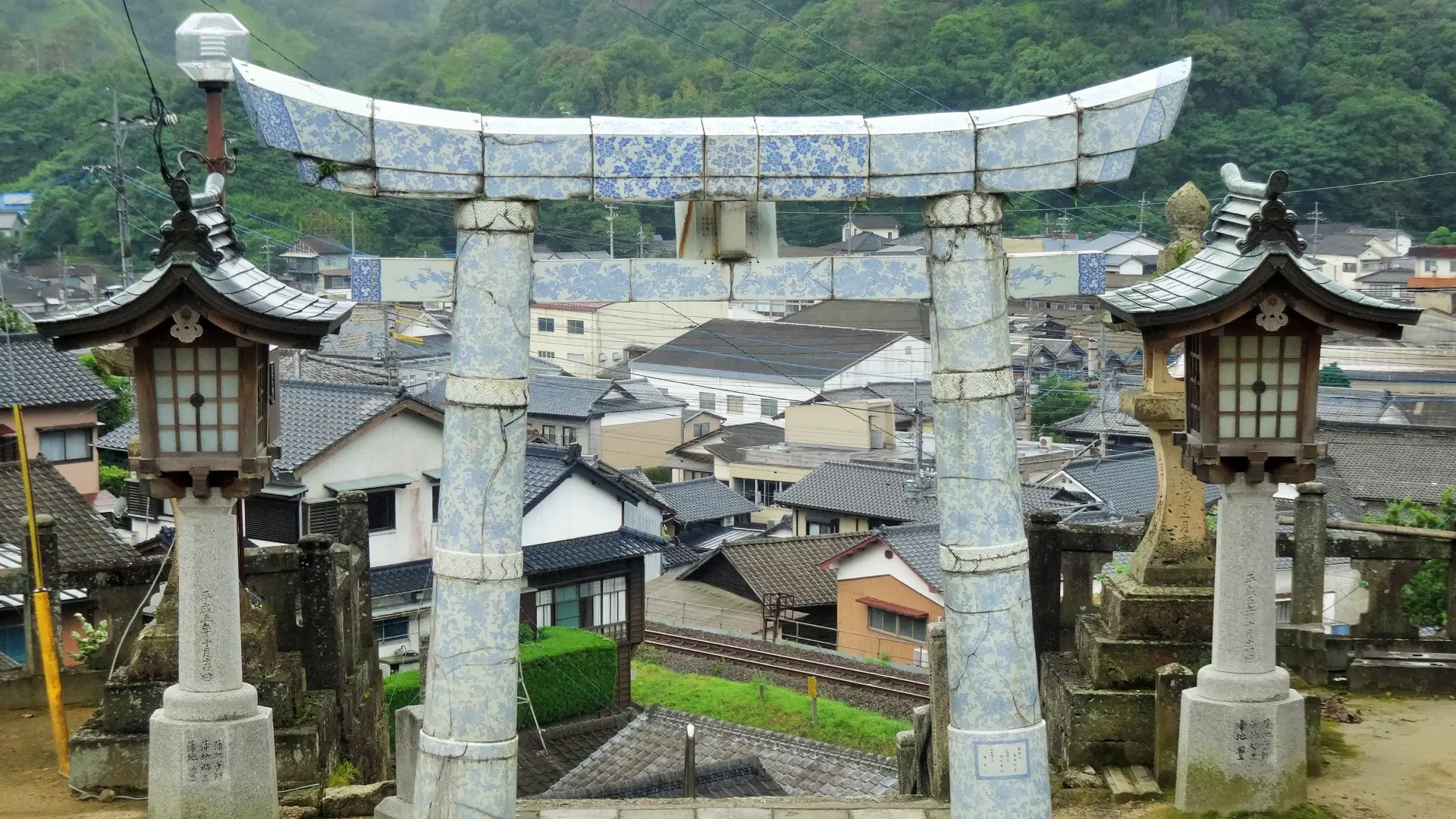
The Tozan Shrine, built from porcelain components including its torii gate and guardian lion-dogs, is a monument unique in Japan and perhaps the world. The porcelain torii, constructed in 1888 and now designated a Registered Tangible Cultural Property, demonstrates the material's versatility and durability while serving as a declaration of civic identity: in Arita, even the sacred architecture is made from the substance that defines the town.
The hillside sites of the earliest kilns, accessible by walking trails from the main street, offer the opportunity to stand at the locations where Japanese porcelain was born. Shards of early production still emerge from the earth at these sites, and the experience of holding a fragment of four-hundred-year-old porcelain, its blue decoration still vivid against the white body, connects the visitor to the moment of origin with a directness that no reconstruction can achieve.
Culinary Scene
Arita's culinary culture is inseparable from its ceramic tradition. The ryokans and restaurants of the town serve their cuisine on Arita porcelain, and the experience of eating from vessels that represent four centuries of accumulated artistry transforms the meal from sustenance into ceremony. The kaiseki served at the finest establishments arrives on a succession of plates, bowls, and dishes that constitute a curated exhibition of the town's production, each piece selected to complement the food it holds in color, form, and seasonal reference.
Saga beef, raised in the prefecture's pastureland and regarded as one of the finest wagyu varieties in Japan, appears at Arita's tables with a frequency that reflects both regional pride and genuine quality. The marbling of Saga beef is intense and evenly distributed, producing a richness that melts across the palate with almost disconcerting ease. Served as shabu-shabu, sukiyaki, or grilled over charcoal in thick cuts that allow the fat to render slowly, the beef demonstrates the same commitment to excellence that characterizes the town's ceramic production.
The local gozen, a set meal served on a collection of Arita porcelain dishes, offers a more accessible encounter with the town's dual traditions of food and craft. These meals, available at restaurants along the main street, typically include seasonal preparations of local vegetables, fish from the nearby Genkai and Ariake seas, and rice from the Saga Plain, presented on ceramics that range from contemporary designs to reproductions of historic patterns.