Ureshino
嬉野Ureshino is an onsen town whose waters possess a quality so distinctive that it has earned a name: bihada no yu, the hot spring of beautiful skin. The sodium bicarbonate and sodium chloride waters that rise from the volcanic geology beneath this quiet Saga valley produce a sensation upon immersion that is unmistakable. The water feels silky, almost oily, coating the skin in a film of dissolved minerals that leaves it noticeably softer and smoother after bathing. This cosmetic effect, documented since at least the Edo period and celebrated in the literature of Japanese onsen culture, has given Ureshino a reputation among bath connoisseurs that exceeds the town's modest size and remote location.
The town occupies a gentle valley along the Ureshino River, its ryokans and bathhouses arranged along the riverbanks and the slopes above in a composition that has evolved organically over centuries of hospitality. The scale is intimate, the atmosphere unhurried, and the surrounding landscape of tea plantations, rice paddies, and forested hills provides the visual tranquility that the bathing experience demands. Ureshino tea, cultivated on the hillsides above the town, is one of Japan's most respected green tea varieties, and the combination of fine water and fine tea gives the town a dual claim to sensory refinement that few onsen settlements can match.
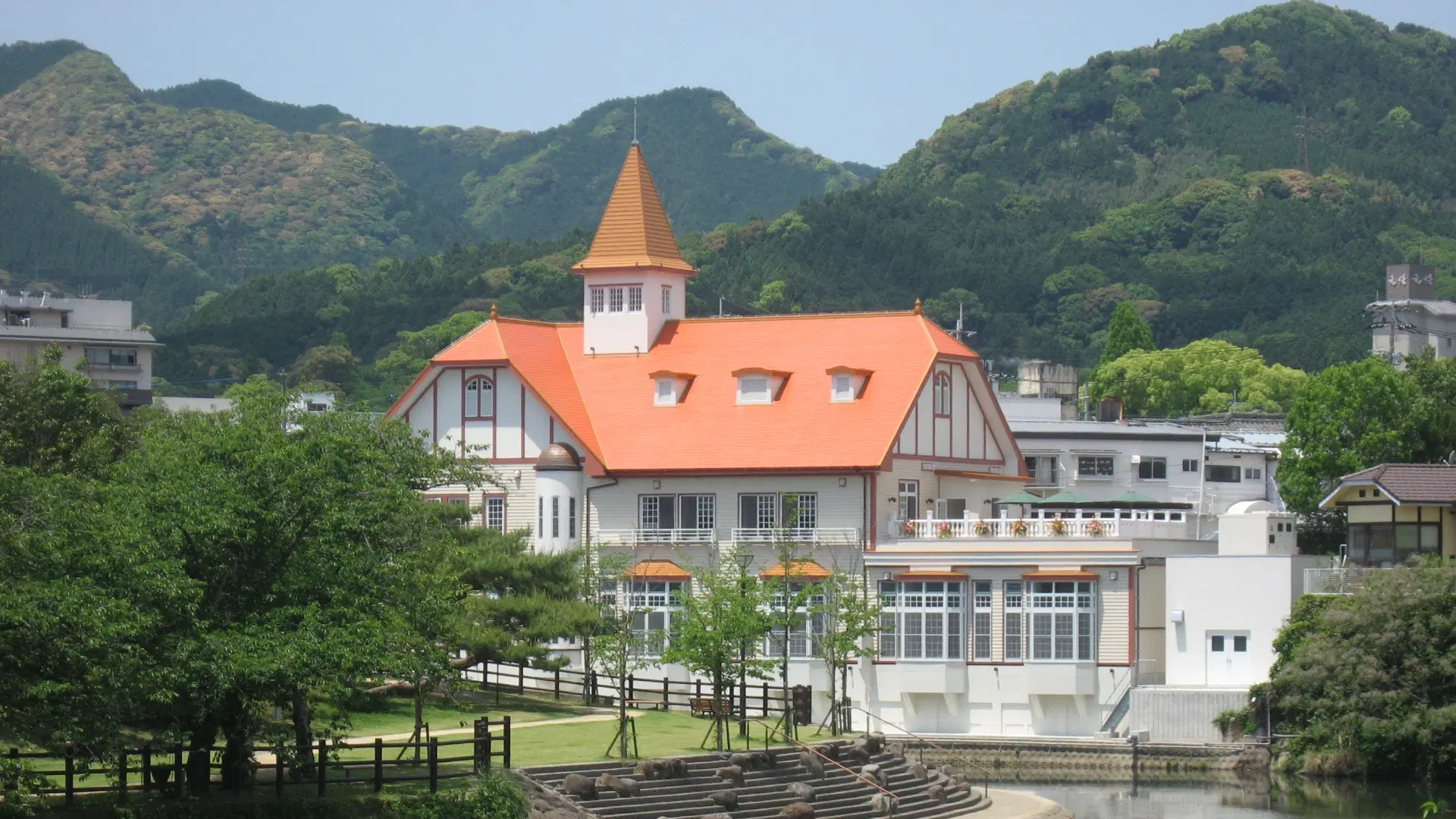
The history of bathing at Ureshino extends back over thirteen hundred years. The eighth-century chronicle Hizen no Kuni Fudoki records the existence of hot springs in the area, and the continuous use of the waters across the intervening centuries has produced a culture of bathing that is as deeply embedded in the community's identity as any temple or shrine. The public bathhouse at the town's center, Siebold no Yu, named for the German physician who visited and documented the springs in the early nineteenth century, provides the most democratic access to the waters, its communal baths offering the essential Ureshino experience to visitors who may not be staying at one of the town's ryokans.
Ureshino is an onsen town whose waters possess a quality so distinctive that it has earned a name: bihada no yu, the hot spring of beautiful skin.
Highlights
The onsen experience itself is Ureshino's primary attraction, and the variety of bathing options ensures that every visitor can find their preferred mode of immersion. The ryokans along the river offer private and communal baths that range from intimate stone tubs shaded by garden trees to expansive rotenburo that face the forested hillsides, and the quality of the water is consistent across all establishments, the same silky, skin-softening character emerging from every tap and spring. The public bathhouse provides a no-frills alternative whose affordability and communal atmosphere offer their own pleasures.
The Todoroki Falls, a short walk from the town center, provide a natural spectacle that complements the cultivated beauty of the onsen gardens. The falls cascade over a rocky face into a pool surrounded by forest, and the walk to reach them, along a path that follows the river through increasingly dense vegetation, creates a transition from the domesticated landscape of the town to the wild landscape of the valley. The sound of the water, building from a distant murmur to a thunderous presence as the falls come into view, provides a counterpoint to the silence of the baths.
The tea plantations that surround Ureshino on three sides offer both visual beauty and the opportunity to engage with one of Japan's important tea-producing regions. Ureshino tea, known for its round, bold flavor and its characteristic production method that involves pan-roasting the leaves rather than steaming them in the style common elsewhere in Japan, is a distinctive product whose taste carries the mineral character of the volcanic soil from which it grows. Tea shops in the town offer tastings that reveal the range of the local production, from delicate new-season sencha to robust roasted varieties.
The Toyotama Shrine, a small Shinto institution near the town center, is notable for its catfish motif, unusual in Japanese shrine architecture. The shrine's association with Toyotama-hime, the sea goddess of Japanese mythology, and the local legend connecting the hot springs to the catfish that inhabited the primordial waters of the valley, gives the shrine a mythological dimension that enriches the bathing tradition with narrative depth.
Culinary Scene
Ureshino onsen yudofu, tofu simmered in the town's mineral-rich hot spring water, is the defining dish of the local cuisine. The alkaline water reacts with the proteins in the tofu, softening its texture until it achieves an almost custard-like consistency that dissolves on the tongue with a richness that belies the simplicity of its ingredients. Served in a clay pot at the table, with a dipping sauce of ponzu and condiments of grated ginger and green onion, the yudofu demonstrates the principle that the finest cuisine need not be complex, only that its ingredients must be excellent and its preparation must be sympathetic to their nature.
Ureshino tea, served at every meal and available at shops throughout the town, provides the beverage that completes the spa experience. The pan-roasted production method gives Ureshino tea a toasted, rounded character that distinguishes it from the vegetal brightness of steamed teas, and this warmth of flavor pairs naturally with the rich, soft textures of the local cuisine. The tea-infused sweets produced by local confectioners, including matcha-flavored manju and sencha-dusted mochi, extend the tea tradition into the realm of the sweet with an inventiveness that respects the ingredient.
Saga beef appears at the finest ryokan tables, its marbled richness providing the counterpoint to the tofu's delicacy. The combination of yudofu, Saga beef, seasonal vegetables from the surrounding farms, and the hot spring water that is used in the preparation of several dishes creates a cuisine that is rooted in the specific geology and agriculture of the valley, a true expression of terroir achieved through the simplest of means.