Karatsu
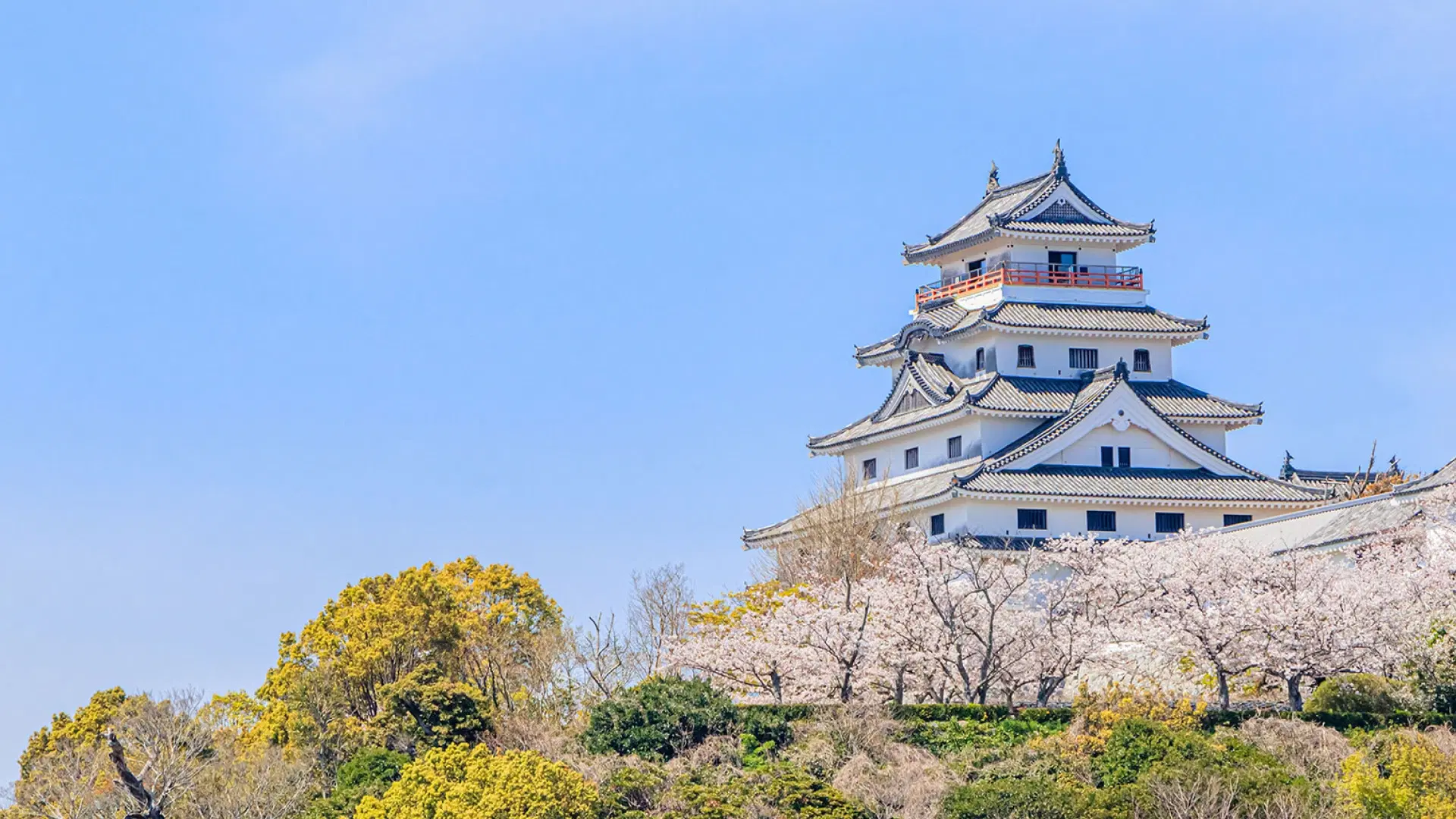
唐津Karatsu faces the sea with the confidence of a town that has been looking outward for millennia. Its name, written with characters meaning "China port," declares its historical orientation toward the Asian continent, and the trade routes that connected this northern Saga coast to Korea, China, and beyond gave Karatsu a cosmopolitan depth unusual in a Japanese town of its size. The castle that rises above the harbor, its white walls reflected in the waters of Karatsu Bay, was built in the early seventeenth century by the Terasawa lords, and its commanding position at the tip of a peninsula communicates the strategic importance of this coastline as both a gateway and a rampart.
Karatsu's ceramic tradition rivals Arita's in age and exceeds it, many would argue, in aesthetic power. Karatsu-yaki, the stoneware tradition that flourished here from the late sixteenth century, produces vessels of rough, earthy beauty that embody the wabi-sabi aesthetic central to the Japanese tea ceremony. Where Arita porcelain aspires to perfection of surface and precision of decoration, Karatsu ware embraces the irregularity, the accidental, the trace of the maker's hand and the kiln's fire. Tea masters of the Momoyama period, including Sen no Rikyu and his circle, elevated Karatsu ware to the highest status in the hierarchy of tea utensils, and the phrase "first Ido, second Raku, third Karatsu" encapsulates the reverence in which these rough, unassuming vessels have been held for four centuries.
The landscape surrounding Karatsu contributes to its allure. The Niji-no-Matsubara, a pine grove that stretches for nearly five kilometers along the shore of Karatsu Bay, is one of Japan's three great pine groves, its estimated one million black pines creating a forest that filters the sea light into a green luminosity of extraordinary beauty. The coastline to the north and west, punctuated by fishing villages, sea caves, and the dramatic cliffs of the Genkai Quasi-National Park, provides some of the most striking coastal scenery in western Japan.
Karatsu faces the sea with the confidence of a town that has been looking outward for millennia.
Highlights
Karatsu Castle, perched on a hilltop at the western end of the bay, offers panoramic views that sweep from the pine grove along the beach to the islands scattered across the Genkai Sea. The castle, originally built between 1602 and 1608 and reconstructed in its current concrete form in 1966, houses a museum of local history and art, including examples of Karatsu-yaki and artifacts from the town's centuries of maritime trade. The approach through the castle grounds, lined with cherry trees that bloom spectacularly in early April, provides one of Saga Prefecture's finest hanami experiences.
The Niji-no-Matsubara pine grove is best experienced on foot or by bicycle, its sandy paths winding through a forest that creates the impression of walking through a landscape painting. The grove, planted in the early seventeenth century by the same Terasawa lords who built the castle, was intended to protect the town from wind and waves, but its beauty has long transcended its functional purpose. The light that filters through the pine canopy shifts in quality and intensity throughout the day, and the sound of wind through the needles creates a natural music that is simultaneously soothing and invigorating.
The Karatsu-yaki studios and galleries scattered through the town and surrounding countryside offer encounters with a ceramic tradition that values the handmade, the imperfect, and the individual above all else. The major studios welcome visitors to observe the processes of shaping, decorating, and firing that produce the characteristic Karatsu aesthetic, and several offer hands-on workshops where participants can experience the resistance of the clay and the challenge of imposing form upon it. The Nakazato Tarouemon kiln, operated by a family whose involvement in Karatsu ceramics spans fourteen generations, is among the most historically significant, and the showroom displays pieces that embody the full range of the tradition's expressive possibilities.
The Hikiyama Exhibition Hall houses the fourteen elaborately decorated floats used in the Karatsu Kunchi festival each November. These floats, built in the form of samurai helmets, sea bream, dragons, and other figures, are constructed from lacquered paper over wooden frames and represent some of the finest examples of festival craft in Japan. Seeing them at rest, in the quiet of the exhibition hall, allows appreciation of their artistry that the kinetic chaos of the festival itself sometimes obscures.
Culinary Scene
Karatsu's position on the Genkai Sea gives it access to some of the finest seafood in Kyushu. The squid of the Genkai, caught by the light-fishing boats whose illumination dots the nighttime sea like a floating constellation, is prized throughout Japan for its sweetness and translucent beauty when served as sashimi. The experience of eating ika no ikizukuri, squid served so fresh that its flesh still pulses with residual nerve activity, is Karatsu's most dramatic culinary encounter, the transparency of the fresh flesh gradually clouding as it meets the air, each slice a study in the boundary between the living and the consumed.
The morning market at Karatsu harbor, operating daily near the waterfront, offers the catch of the day in all its variety: seasonal fish, shellfish, sea urchin, and the small coastal species that never reach the markets of larger cities. The market's sushi restaurants serve preparations of extraordinary freshness at prices that reflect the absence of intermediaries between the boat and the counter.
Karatsu's food culture extends beyond the marine. The ceramics tradition influences the presentation of every meal, and eating from genuine Karatsu-yaki vessels, their rough textures and earthy glazes forming a deliberate contrast with the delicacy of the food they hold, provides a tactile dimension to the dining experience that smoother tableware cannot achieve. Saga beef and the agricultural products of the surrounding plain round out a culinary repertoire that balances sea and land with the same ease that the town balances tradition and openness.