Tenjin Matsuri
天神祭The Tenjin Matsuri is one of Japan's three great festivals and the event that most fully expresses Osaka's identity as a city born from water, commerce, and the conviction that celebration is not a luxury but a civic necessity. Held annually on July 24th and 25th in honor of Sugawara no Michizane, the deified scholar-statesman enshrined at Osaka Tenmangu Shrine, the festival transforms the Okawa River and the streets of the Tenmanbashi district into a spectacle of fire, water, music, and human energy that has been rehearsed and refined for over a thousand years. On the climactic evening of the 25th, a flotilla of more than a hundred boats fills the river, their lanterns and torches reflected in the dark water as fireworks burst overhead, and the combined effect of light, sound, and the collective exhilaration of a million spectators lining the riverbanks produces a sensory experience that transcends the category of festival and approaches the condition of communal ecstasy.
The festival's origins date to 951 AD, when a hoko spear was carried from Osaka Tenmangu to the confluence of the Dojima and Okawa rivers and offered to the waters in a ritual of purification and prayer. That initial gesture of devotion evolved, over the following centuries, into a celebration whose scale and complexity reflect Osaka's growth from a provincial shrine town into the commercial capital of feudal Japan. The merchants who made the city wealthy adopted the Tenjin Matsuri as their own, pouring resources into its rituals, its processions, and its river pageantry with the competitive generosity that characterized Osaka's commercial culture, each neighborhood and trade guild striving to outdo its rivals in the splendor of its contribution.
For the contemporary visitor, the Tenjin Matsuri offers something that sanitized, tourist-oriented festivals cannot: the experience of a city celebrating itself with an intensity and sincerity that erases the boundary between performer and audience. The festival is not staged for visitors but sustained by residents, the mikoshi bearers and boat crews drawn from neighborhood associations whose participation is a matter of identity and honor. The heat of late July, the crush of the crowds, and the physical demands of the two-day program are not obstacles to enjoyment but essential elements of an experience whose power lies precisely in its excess.
The Tenjin Matsuri is one of Japan's three great festivals and the event that most fully expresses Osaka's identity as a city born from water, commerce, and the conviction that celebration is not a luxury but a civic necessity.
History & Significance
Sugawara no Michizane, the ninth-century scholar and statesman whose spirit the festival honors, was one of the most brilliant and most tragically treated figures in Japanese history. A poet, calligrapher, and political advisor who rose to the rank of Minister of the Right, Michizane was exiled to Dazaifu in Kyushu through the machinations of the rival Fujiwara clan and died in disgrace in 903 AD. The natural disasters and political calamities that followed his death were attributed to his vengeful spirit, and the imperial court, seeking to appease him, elevated Michizane to the status of a deity: Tenjin, the god of learning and scholarship. Shrines were erected throughout Japan, and Osaka Tenmangu, founded in 949 AD, became one of the principal sites of his worship.
The river procession, or funatogyo, that defines the festival's climax was established in 951 when the shrine's priests carried the hoko spear to the river as a purification ritual. The custom grew as Osaka's merchant class adopted the festival, the river becoming a stage for displays of wealth and devotion that reflected the city's commercial character. By the Edo period, the procession involved hundreds of boats, elaborate costumes, and fireworks of increasing sophistication, and the festival had become one of the three great matsuri of Japan, alongside Kyoto's Gion Matsuri and Tokyo's Kanda Matsuri. The Meiji period brought temporary restrictions, and the wartime and postwar years saw interruptions, but the festival was fully revived in the 1950s and has been celebrated without interruption since, its traditions maintained by neighborhood associations and shrine organizations that regard the festival's continuity as a sacred obligation.
What to Expect
The festival unfolds over two days. The first day, July 24th, is devoted to the yoimiya, a series of rituals at Osaka Tenmangu Shrine that include traditional drumming, lion dancing, and the purification ceremonies that prepare the ground for the following day's procession. The shrine precincts and surrounding streets fill with yatai food stalls whose offerings represent the full spectrum of Japanese festival cuisine, from yakisoba and okonomiyaki to kakigori shaved ice and chocolate bananas, the air thick with the smoke of grilling meat and the mingled scents of sweet and savory that define the olfactory landscape of a Japanese summer festival.
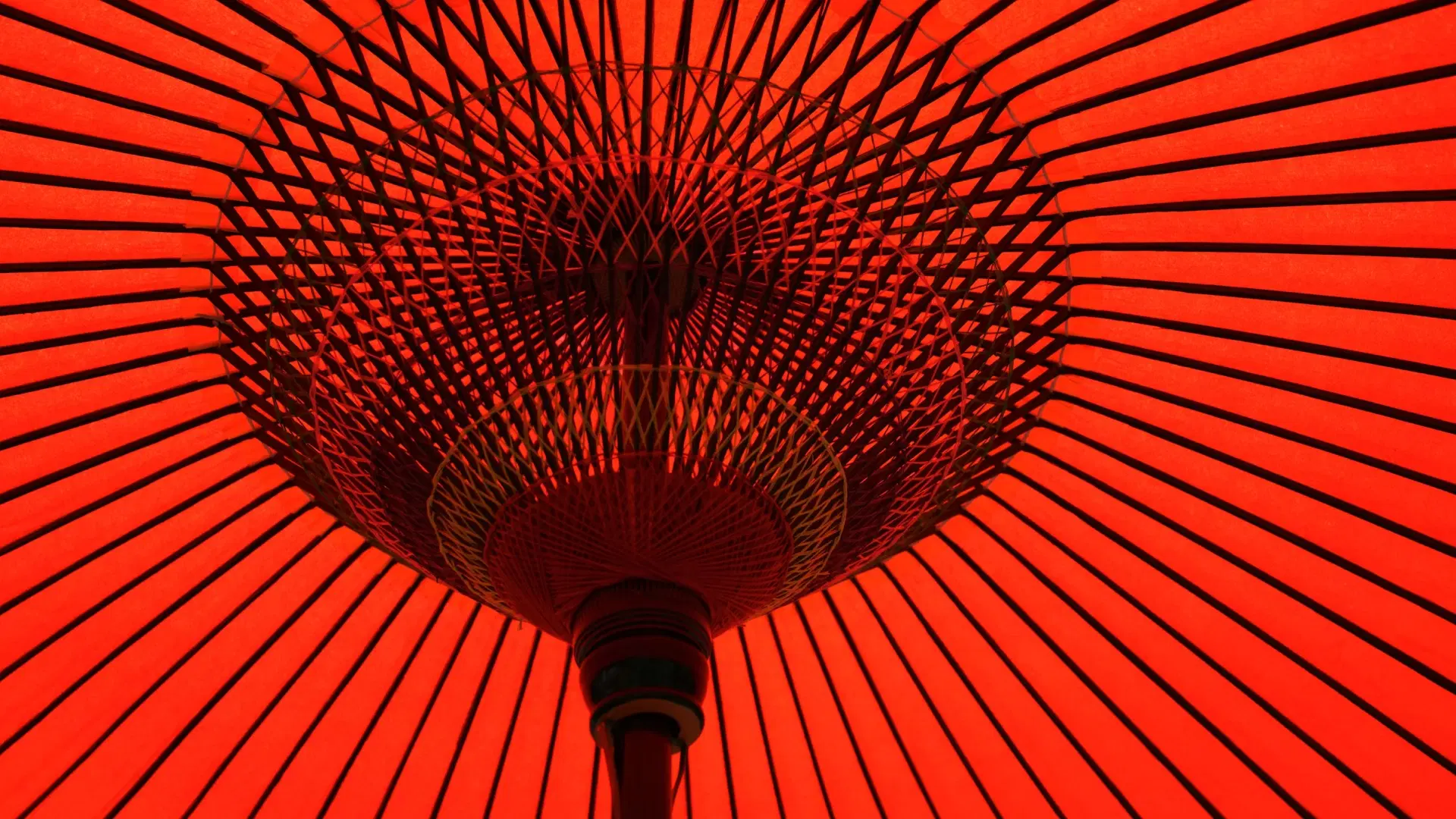
The second day, July 25th, begins with the rikutogyo, a land procession of more than 3,000 participants in period costume who carry mikoshi portable shrines and perform traditional music and dance through the streets from Osaka Tenmangu to the riverbank. The procession includes catalysts of particular spectacle: the moyoshi daiko drummers who ride a float while pounding massive drums in rhythms that can be felt as vibration in the chest, and the umbrella-bearing dancers whose choreography dates to the medieval period. The land procession reaches the river in the late afternoon, and the transition to the funatogyo, the river procession, marks the festival's emotional crescendo.
The funatogyo fills the Okawa River with illuminated boats carrying musicians, shrine officials, and community groups, their lanterns creating a floating constellation that moves with the current while fireworks explode above. The spectacle reaches its peak between 7 and 9 PM, when the density of boats, the volume of the fireworks, and the energy of the crowd along the riverbanks converge in a sustained assault on the senses that leaves no room for detachment. The boats carry taiko drummers, kagura performers, and groups singing traditional songs whose melodies are audible in fragments between the percussion of the fireworks, the combined sound rising and falling in waves that mirror the movement of the water itself.