Osaka Cherry Blossom Season
大阪桜シーズンOsaka's cherry blossom season arrives each spring as a transformation so total that it seems to alter not merely the appearance but the temperament of the city. The blossoms soften everything: the concrete riverbanks that line the city's canals and rivers, the stone walls of Osaka Castle that have witnessed four centuries of human ambition and catastrophe, the park lawns where office workers and families spread their blue tarps for hanami parties whose conviviality ranges from genteel picnics to full-throated celebrations fueled by beer and shochu. Osaka approaches cherry blossom viewing the way it approaches everything: with appetite, volume, and a democratic openness that makes the experience as much about human fellowship as botanical beauty.
The city's cherry blossom landscape is shaped by its waterways. Osaka was once called the "city of eight hundred bridges," and though modernization has reduced the number, the network of rivers and canals that thread through the urban fabric provides linear corridors of blossom that can be experienced by boat, on foot, or from the elevated walkways and bridge decks that offer aerial perspectives on the pink canopy. The Okawa River, flowing past the Mint Bureau whose famous late-blooming varieties extend the season beyond the typical window, is the city's premier blossom venue, its banks lined with Somei Yoshino trees whose pale pink flowers, reflected in the slow-moving water, create a doubled landscape of almost hallucinatory beauty.
The Osaka hanami tradition is distinguished from its Tokyo and Kyoto counterparts by its informality and its integration with the city's eating culture. Where Tokyo's hanami tends toward the corporate and the carefully organized, and Kyoto's toward the aesthetic and the contemplative, Osaka's hanami is a celebration of abundance: the food is plentiful, the drink flows freely, the laughter carries across the parks and riverbanks, and the blossoms themselves, while genuinely admired, serve as much as pretext as inspiration. This is not to diminish the beauty but to contextualize it within a city whose deepest conviction is that pleasure shared is pleasure multiplied.
Osaka's cherry blossom season arrives each spring as a transformation so total that it seems to alter not merely the appearance but the temperament of the city.
History & Significance
The practice of hanami in Osaka traces its lineage to the Heian period, when aristocratic flower-viewing parties combined poetry composition with the contemplation of blossoms that served as metaphors for the transience of beauty and the brevity of life. As Osaka developed into a commercial center during the Muromachi and Edo periods, the practice democratized, the merchant class adapting the aristocratic tradition to their own more gregarious sensibility. The planting of cherry trees along the city's waterways and in its public spaces was accelerated during the Meiji period, when the modernizing government promoted hanami as a form of civic recreation, and again in the postwar period, when the trees planted along the rebuilt riverbanks symbolized renewal and the return of beauty to a city scarred by firebombing.
The Osaka Mint Bureau's cherry blossom viewing, established in 1883 when the director of the Mint opened its grounds to the public for one week each spring, occupies a special place in the city's blossom calendar. The Bureau's collection of approximately 350 trees representing over 130 varieties, many of them rare cultivars not found in public parks, extends the season well beyond the typical Somei Yoshino peak, with some varieties not reaching full bloom until late April. The week-long opening, called sakura no tsurinuke ("passage through the cherry blossoms"), draws enormous crowds to a 560-meter path through the grounds, the experience intensified by the rarity of access and the variety of blossoms on display.
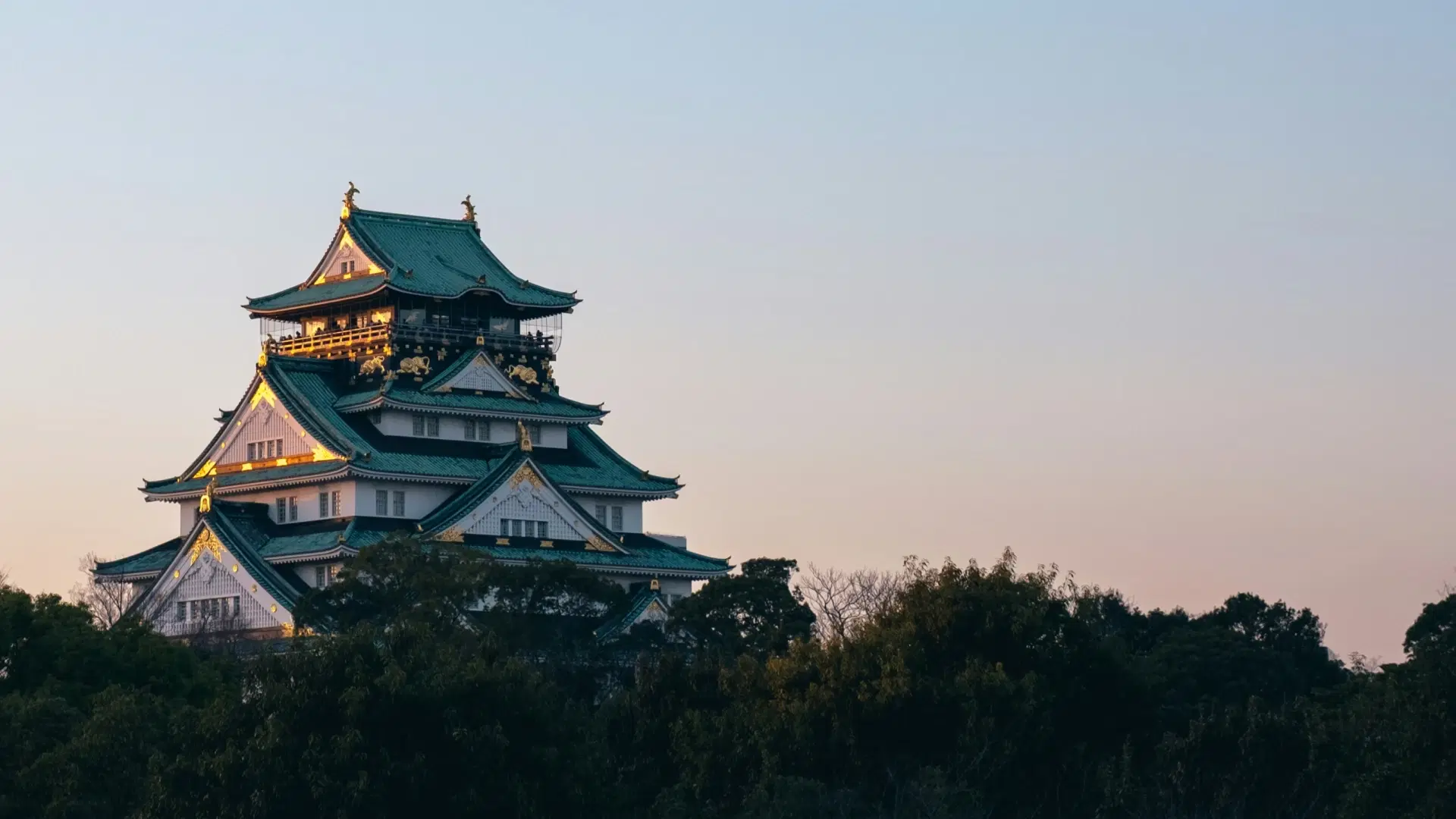
Osaka Castle's cherry blossom landscape was shaped by Toyotomi Hideyoshi's original vision for the castle grounds and subsequently by the successive restorations and replantings that have maintained the park as one of the city's principal public spaces. The approximately 3,000 trees in the castle park, predominantly Somei Yoshino with significant plantings of early-blooming kanzakura and late-blooming yaezakura, create a season within a season, the different varieties ensuring that some portion of the park is in bloom from mid-March through late April.
What to Expect
The peak of the Somei Yoshino bloom, typically occurring in the first week of April but varying by year, transforms the city's major blossom venues into landscapes of overwhelming beauty and considerable human density. Osaka Castle Park, the city's largest and most popular hanami site, fills with groups of every size and description, their tarps arranged on the lawns of the Nishinomaru Garden and along the moat-side paths where the blossoms frame views of the castle tower. The Nishinomaru Garden, which charges a modest entrance fee that reduces crowd density without eliminating atmosphere, offers the most beautiful views, the blossoms arching over the lawn with the castle keep rising behind them in a composition that has been replicated in millions of photographs without ever being exhausted.
The Okawa River, from Tenmabashi north to Kema, offers a linear hanami experience that can be enjoyed on foot along the paved riverbank paths or by boat during the blossom season cruises that operate between several riverside docks. The evening illumination of the trees along the Okawa, their blossoms lit from below by spotlights that turn the canopy into a ceiling of glowing pink, creates a yozakura (nighttime blossom viewing) experience whose beauty is enhanced by the reflections on the water and the silhouettes of the bridges that cross the river at intervals.
The Osaka Mint Bureau opening, typically scheduled for one week in mid to late April after the Somei Yoshino peak has passed, provides a different order of blossom experience. The passage through the grounds presents varieties whose forms and colors range from the deep pink of kanzan to the pale green of gyoiko to the pendulous cascades of weeping varieties, each tree labeled with its cultivar name, creating an experience that is botanical garden and blossom festival in equal measure. The crowds during the Mint opening are substantial, and the one-directional flow of visitors along the designated path requires patience, but the rarity of the varieties and the beauty of the setting reward the effort.