Osaka Kita / Umeda
大阪キタ/梅田Osaka Kita is the city's northern gravitational center, a landscape of elevated walkways, underground rivers of commuters, and towers whose glass surfaces reflect a skyline that remakes itself with each passing decade. Umeda Station, the nerve center of this district, processes more than two million passengers daily, a human current that flows between JR, Hankyu, and Hanshin lines with the practiced efficiency of a city that has been moving people and goods for four centuries. Yet beneath the infrastructure of velocity, Kita preserves pockets of older Osaka: the narrow alleys of Ohatsu Tenjin Dori, where tiny bars and yakitori stalls recall the postwar drinking culture that gave the city its reputation for convivial excess, and the grounds of Ohatsu Tenjin Shrine, where the love suicide that inspired Chikamatsu Monzaemon's most famous play occurred in 1703, a reminder that Osaka's emotional life has always been as intense as its commercial one.
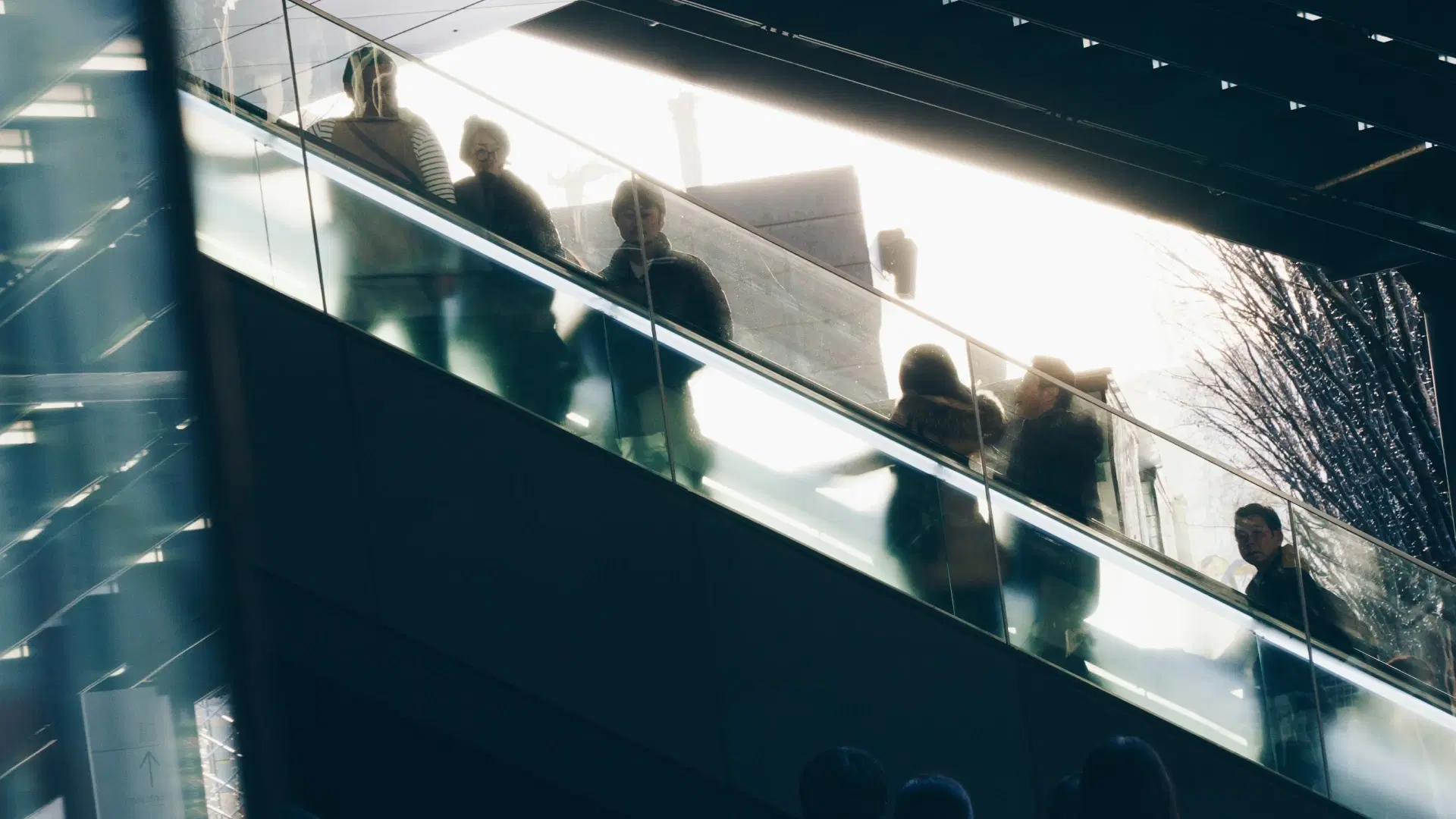
The district's transformation accelerated with the completion of the Umeda Sky Building in 1993, Hiroshi Hara's twin-tower structure connected at its summit by a Floating Garden Observatory whose circular open-air platform offers a panorama that stretches from the mountains of Ikoma to the cranes of Osaka Bay. The building remains one of the most audacious works of late-twentieth-century architecture in Japan, its cross-tower escalators ascending through open air in a gesture of structural bravado that still startles first-time visitors. More recently, the Grand Front Osaka complex has extended the district northward into former rail yards, its mix of retail, dining, research facilities, and public spaces creating a new urban quarter where the boundary between commerce and culture is deliberately blurred.
For travelers accustomed to thinking of Osaka as Tokyo's rougher, funnier counterpart, Kita offers a corrective. The district's department stores, particularly Hankyu and Hanshin, maintain food halls of extraordinary quality, their basement floors curating the best of Kansai's confectionery, bento, and prepared food traditions with a merchandising sophistication that rivals anything in Ginza. The dining above ground ranges from Michelin-starred kappo hidden in office buildings to the ramen alleys where workers queue at lunch with the patient discipline of people who understand that the best bowl is worth the wait.
Osaka Kita is the city's northern gravitational center, a landscape of elevated walkways, underground rivers of commuters, and towers whose glass surfaces reflect a skyline that remakes itself with each passing decade.
Highlights
The Umeda Sky Building remains Kita's most distinctive architectural statement, its Floating Garden Observatory providing not merely views but a spatial experience that few buildings in the world can match. The ascent begins in enclosed elevators, transitions to glass-enclosed escalators that cross between the two towers 150 meters above the ground, and concludes on the open-air rooftop where wind and sky and the 360-degree cityscape merge into a single sensory environment. At dusk, when the lights of Osaka begin to define the grid below and the western horizon holds the last color of the setting sun, the observatory achieves a romanticism that the building's brutalist geometry would seem to preclude. The basement-level recreation of a 1920s Osaka streetscape, complete with period shopfronts and atmospheric lighting, provides an unexpected counterpoint, a journey downward through time that mirrors the upward journey through space.
Nakanoshima, the narrow island in the Dojima River that has served as Osaka's civic and cultural spine since the Edo period, anchors Kita's southern edge with institutions of substance. The Nakanoshima Museum of Art, opened in 2022 in a striking black box designed by Endo Shuhei, houses a collection of modern and contemporary art that traces the intersection of Western and Japanese aesthetic traditions. The nearby Central Public Hall, a 1918 Neo-Renaissance structure built with funds donated by a stock exchange magnate, survives as one of the finest examples of Taisho-era public architecture in Japan, its red brick and copper dome asserting the civic ambitions of an era when Osaka rivaled Tokyo in wealth and cultural aspiration.
Tenjinbashisuji, stretching 2.6 kilometers from the southern tip of Tenjinbashi to the precincts of Osaka Tenmangu Shrine, claims the title of Japan's longest shopping street. The arcade's appeal lies not in luxury brands but in the accumulated character of hundreds of small shops, their owners' personalities expressed in hand-lettered signs, idiosyncratic displays, and the running commentary that Osaka shopkeepers direct at passersby with a theatrical warmth unknown in the quieter retail cultures of Tokyo and Kyoto.
Culinary Scene
Kita's culinary landscape stratifies vertically: the basement food halls of the great department stores on the lower levels, the casual dining of the underground shopping arcades at street level, and the serious restaurants hidden on the upper floors of office towers and in the quieter streets behind the main thoroughfares. The Hankyu department store's food hall is a pilgrimage site for anyone interested in the craft of Japanese confectionery and prepared food, its vendors representing the finest producers of wagashi, tsukemono pickles, and seasonal bento from across the Kansai region. The displays change with the calendar, the spring strawberry season giving way to summer peach and autumn chestnut in a commercial expression of shun, the Japanese principle that eating should follow the rhythm of the natural world.
The kappo tradition, Osaka's distinctive contribution to fine dining, finds some of its most accomplished practitioners in Kita's quieter blocks. Unlike the formal kaiseki of Kyoto, where presentation follows codified aesthetic principles and the diner is a passive recipient of the chef's vision, Osaka kappo positions the guest at a counter facing the chef, the interaction between cook and customer shaping the meal in real time. The chef responds to the diner's preferences, the market's offerings that morning, and the creative impulses of the moment, producing a meal that is unrepeatable by design. The best kappo in Kita operate with only a handful of seats, their reservations managed through introduction or persistence, their menus unwritten and their prices communicated through the discreet language of seasonal market value.
The district also harbors some of Osaka's finest sushi, the proximity to the former Osaka Central Wholesale Market and the continuing flow of product from the Kansai region's fishing ports ensuring that the neta on offer reflects both the Japan Sea's bounty and the Inland Sea's more delicate harvest. The Osaka sushi tradition favors a slightly warmer, more vinegar-forward rice than the Tokyo style, and the pressure-formed battera sushi of mackerel and konbu remains a regional specialty whose layered flavors reward attention.
Ryokans in Osaka
There are no ryokans in our guide listed in Osaka Kita / Umeda. See our selection across Osaka.
View ryokans in Osaka