Minoo
箕面Minoo exists at the threshold between metropolis and wilderness, a town at the northern edge of Osaka prefecture where the suburban grid dissolves into forested mountains with a suddenness that feels almost theatrical. The transition from the Hankyu train station, with its convenience stores and residential streets, to the wooded gorge of the Minoo River takes less than fifteen minutes on foot, and this proximity between urban convenience and natural beauty has made Minoo a place of retreat for Osaka's residents since the Nara period, when the monk Ryoko founded Ryuanji Temple beside the waterfall that remains the gorge's climax.
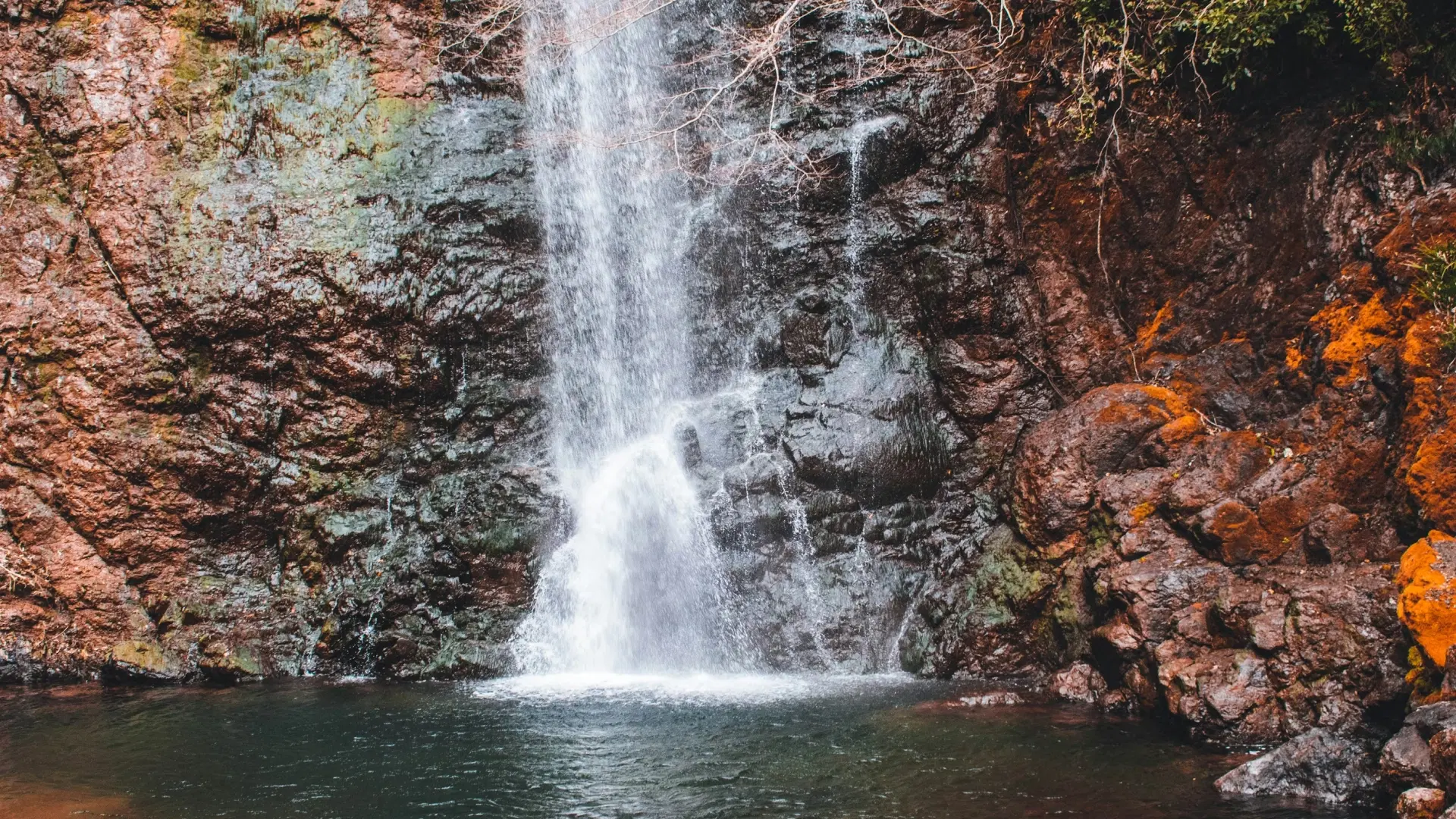
The Minoo Waterfall, dropping 33 meters over a ledge of red sandstone into a pool surrounded by maple and cedar, is one of the most celebrated cascades in the Kansai region, its fame owing not to scale but to setting. The walk to the falls follows the river through a forested gorge that, in autumn, becomes one of the great foliage spectacles of western Japan, the maples lining both banks transforming into a corridor of crimson, orange, and gold whose intensity is amplified by the dark trunks of the cedars and the clear water of the stream below. The path is gentle enough for any walker, paved and gradually ascending, and the experience of leaving the city behind with each step, the urban sounds fading as birdsong and the sound of water take their place, produces a sense of cleansing that is the essence of Minoo's appeal.
The mountains above the gorge form part of the Meiji no Mori Minoo Quasi-National Park, a protected landscape that shelters a biodiversity remarkable for its proximity to a city of nearly nine million. Japanese macaques inhabit the forests, their troops occasionally descending to the gorge trail where they regard hikers with the studied indifference of creatures who have been coexisting with human visitors for longer than the city below has existed. The forests themselves are a mosaic of broadleaf and coniferous species whose canopy structures and understory flora change with altitude, the lower slopes favoring maple and oak while the ridgelines support stands of Japanese cypress and pine.
Minoo exists at the threshold between metropolis and wilderness, a town at the northern edge of Osaka prefecture where the suburban grid dissolves into forested mountains with a suddenness that feels almost theatrical.
Highlights
The walk to Minoo Falls is the essential experience, a 2.7-kilometer path that follows the Minoo River from the base of the gorge to the waterfall through a landscape that seems designed by a master gardener rather than shaped by geology alone. The path passes Ryuanji Temple, whose vermilion structures appear through the trees with a pictorial perfection that has inspired painters and photographers for centuries, and several smaller shrines and rest points where the gorge opens to reveal views of the forested slopes above. The falls themselves, when they come into view around the final bend, reward the walk with a visual composition whose elements of rock, water, and foliage achieve a balance that feels both natural and arranged, the water striking the pool with enough force to generate a fine mist that catches sunlight and, on fortunate days, produces rainbows.
The Minoo Park Insectarium, located along the gorge trail, houses one of Japan's most respected collections of butterflies and other insects, its displays combining scientific rigor with aesthetic presentation in a way that reflects the Japanese tradition of finding beauty in natural specimens. The surrounding forest itself serves as a living extension of the museum's collection, the trails above the gorge offering encounters with wildlife that include deer, wild boar, and the Japanese giant salamander in the cleaner stretches of the river.
For those willing to extend the walk beyond the falls, trails ascend into the quasi-national park toward the summit of Mount Minoo, where views across the Osaka plain to the distant shimmer of Osaka Bay reward the climb. The ridgeline trails connect to a network of hiking paths that extend throughout the northern Osaka mountains, offering full-day walking options that feel impossibly remote from the city visible far below.
Culinary Scene
Minoo's signature food is momiji tempura, maple leaves that are harvested in autumn, preserved in salt for a year, and then deep-fried in a light batter seasoned with sesame seeds. The result is a confection that hovers between sweet and savory, the crisp batter shattering to reveal the tender leaf within, its flavor a gentle echo of the autumn landscape from which it was gathered. Vendors along the gorge trail sell momiji tempura from stalls whose presence has been continuous for over a thousand years, the recipe passed through generations of families who consider the preparation not merely a business but a cultural responsibility.
The town's proximity to Osaka's culinary infrastructure means that serious dining is never far away, but Minoo's own restaurants tend toward the contemplative rather than the theatrical, their menus emphasizing the mountain vegetables, river fish, and seasonal preparations that connect the table to the landscape visible through the window. Soba noodles made from buckwheat grown in the surrounding highlands appear at several restaurants near the gorge entrance, their clean, nutty flavor complementing the forest atmosphere. The tea houses positioned along the trail serve matcha and seasonal wagashi whose flavors shift with the calendar, the autumn chestnut and sweet potato confections giving way to winter citrus and spring cherry blossom.

Ryokans in Osaka
There are no ryokans in our guide listed in Minoo. See our selection across Osaka.
View ryokans in Osaka