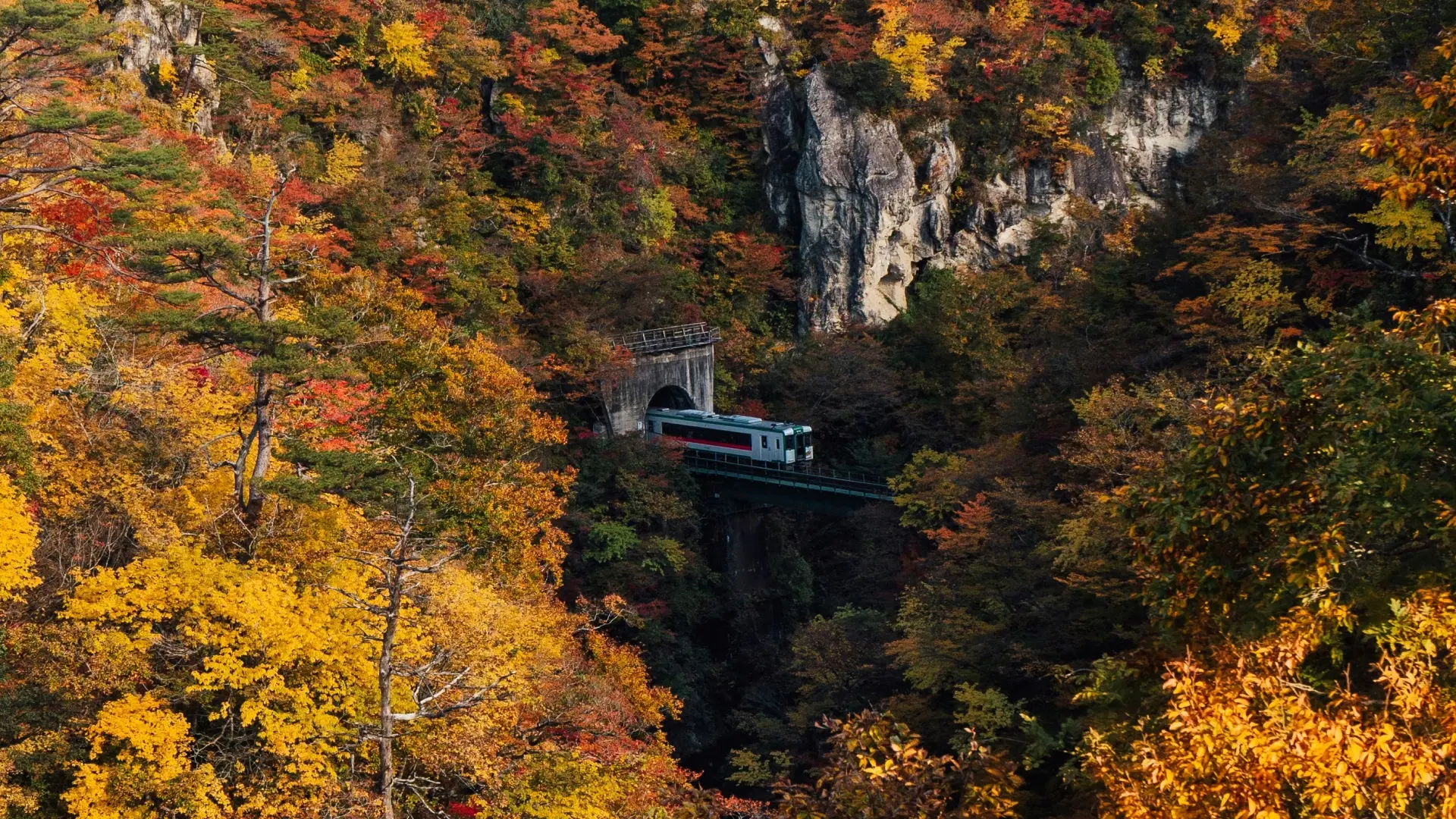
Naruko Gorge Autumn Foliage
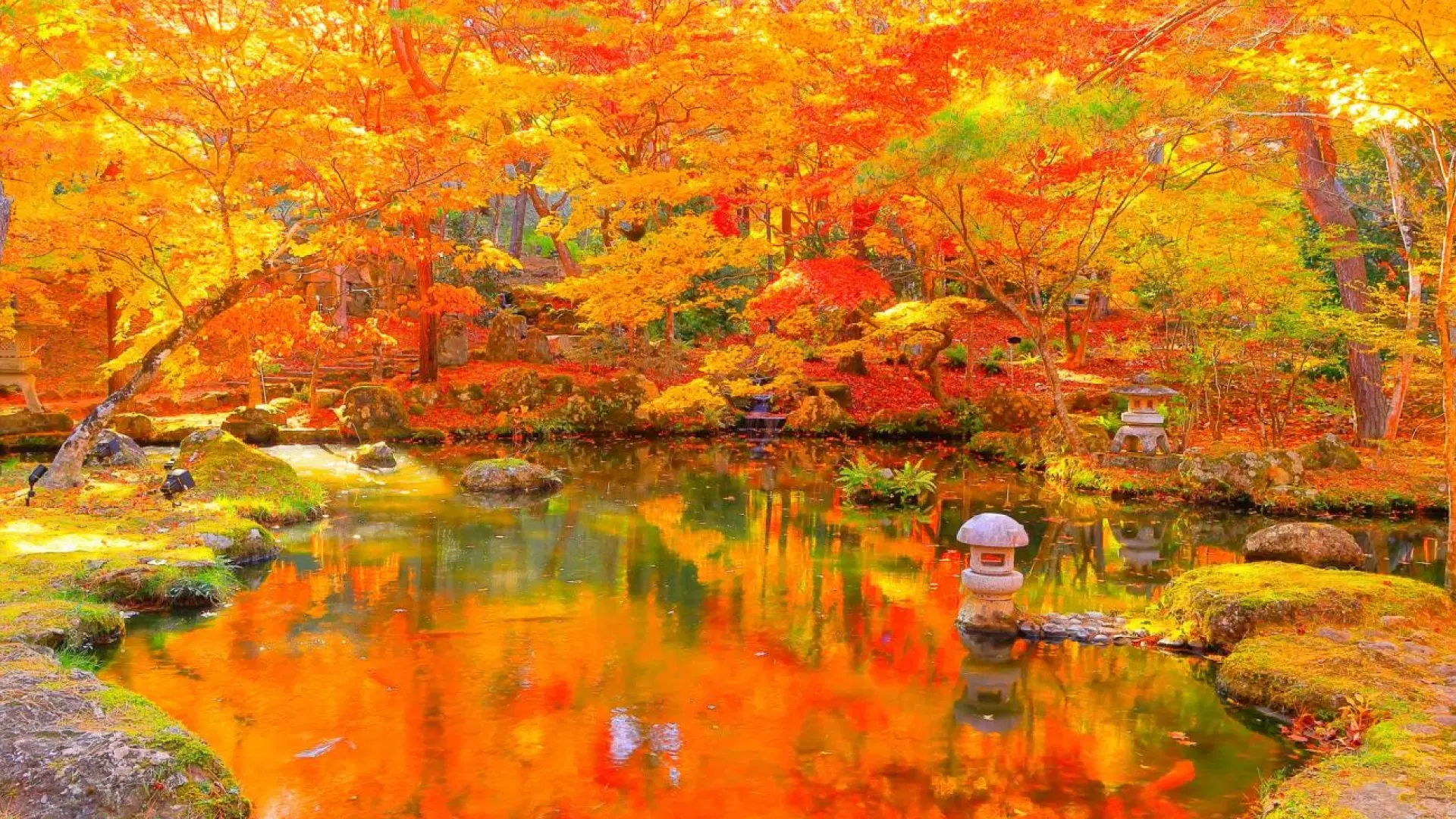
鳴子峡の紅葉Naruko Gorge in autumn is one of the great natural performances of the Japanese year. The ravine, carved one hundred meters deep through volcanic tuff by the Otani River in northwestern Miyagi, spends most of the year in relative obscurity, a dramatic but undervisited landscape of grey-green cliff faces and coniferous forest. Then, for approximately two weeks in late October and early November, the deciduous trees that cling to the gorge walls ignite in a progression of color so intense and so compressed that the effect is less scenic beauty than sensory overwhelm. Vermillion Japanese maple, golden beech, amber oak, and the persistent dark green of pine layer together across the vertical rock faces, producing a chromatic density that no photograph fully captures.
The gorge's orientation and depth create conditions that amplify the display. The steep walls trap light in the morning and afternoon, casting portions of the foliage into shadow while illuminating others, so that the scene shifts continuously through the day. The volcanic soil, rich in minerals, nourishes the trees to a vigor that intensifies their autumn pigmentation. And the elevation, approximately 300 meters above sea level, places Naruko at the precise point in the Tohoku autumn gradient where the color reaches its peak just as the weather produces the clear, cold days that make the viewing most dramatic.
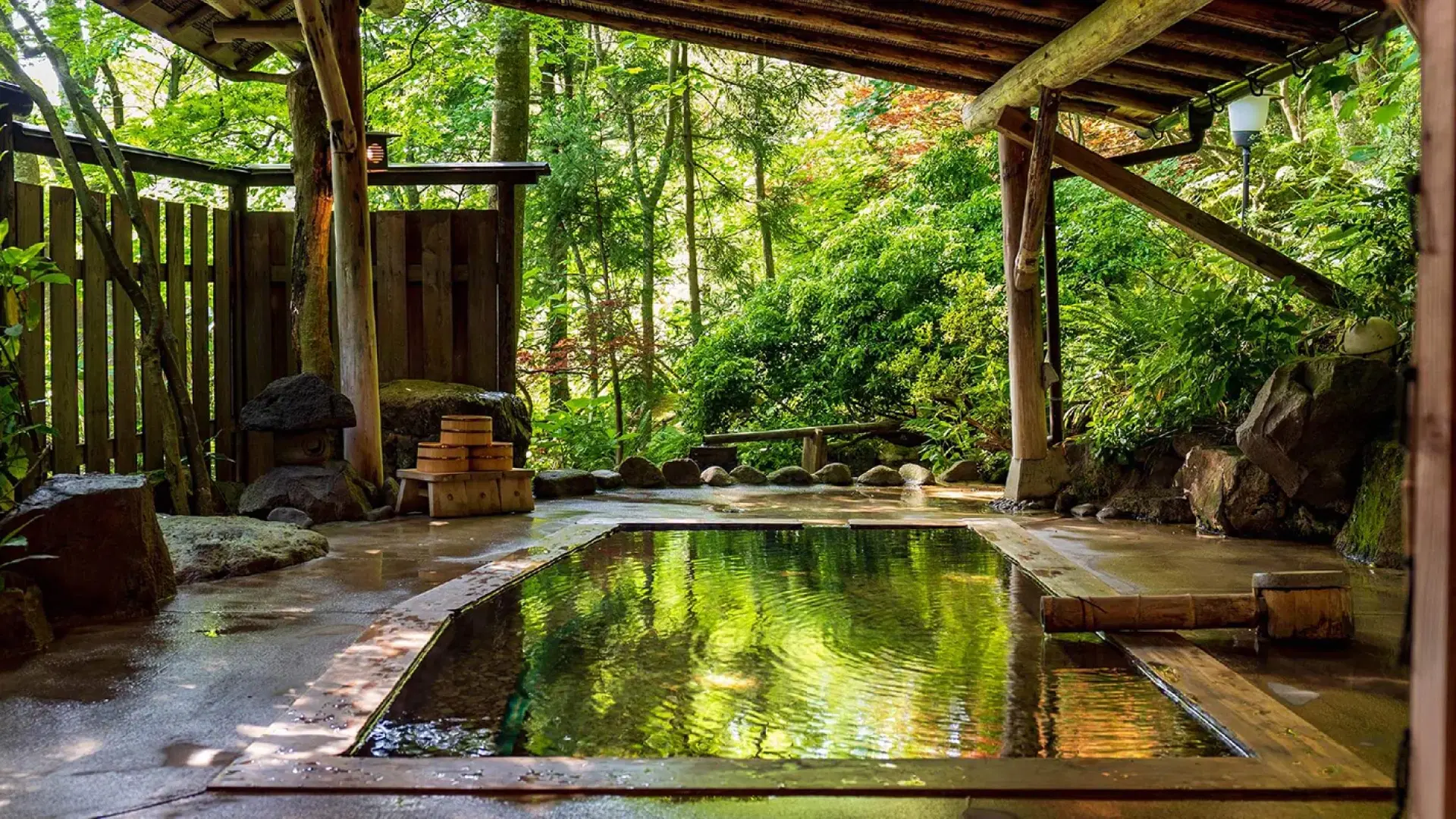
For visitors from the Kanto region and beyond, Naruko Gorge represents a Tohoku autumn of a quality and accessibility that has made it one of the most sought-after koyo destinations in northern Honshu. The combination of hot spring bathing and autumn spectacle, soaking in sulfur-scented waters while the mountainsides blaze with color, is a pairing that feels almost too perfectly composed to be accidental.
Naruko Gorge in autumn is one of the great natural performances of the Japanese year.
History & Significance
The gorge has been a recognized scenic landmark since the Edo period, when travelers on the Ushu Kaido road, the mountain highway connecting the Sendai domain to the interior provinces, would pause at the ravine to marvel at the geological drama of the landscape. The construction of the JR Rikuu East Line through the gorge in 1917 opened the scenery to rail passengers and established the views from the train windows and bridges as among the most spectacular on any Japanese railway line. The sight of a small train crossing the Ofukazawa Bridge against the backdrop of the flaming gorge has become one of the iconic images of Tohoku autumn.
The formal development of viewing infrastructure came gradually through the twentieth century. The Ofukazawa Bridge viewpoint, the Naruko Gorge Rest House, and the walking trails that now provide access to the gorge rim were constructed to accommodate the growing number of visitors drawn by improved rail and road connections. The gorge's designation as part of Kurikoma Quasi-National Park afforded it environmental protections that have preserved the forest cover and water quality. Today, the autumn foliage at Naruko Gorge is monitored and reported daily by the Miyagi tourism authority, and peak color predictions are followed with the same intensity that cherry blossom forecasts receive in spring.
What to Expect
The primary viewing experience centers on the Ofukazawa Bridge and the adjacent rest house at the gorge's western end. From the bridge, visitors look down into the full depth of the ravine, where the Otani River runs as a thin silver thread at the bottom of walls draped in autumn color. The scale is vertiginous: the gorge drops away sharply, and the trees on the opposite wall are close enough to distinguish individual species yet far enough to merge into a continuous tapestry. In peak season, the view from this single point is worth the journey from Tokyo.
A walking trail of approximately 2.2 kilometers follows the gorge rim from the rest house to the Naruko Onsen town side, passing through forest and offering multiple viewpoints that reveal different sections of the ravine. The trail is well maintained but includes some uneven terrain and stairways; comfortable walking shoes are essential. Along the route, several vantage points provide views of the JR railway bridges that span the gorge, and timing a visit to coincide with a passing train adds a compositional element that photographers prize.
The connection to Naruko Onsen town, a short drive or bus ride from the gorge, makes a combined visit natural and rewarding. After the visual intensity of the gorge, descending into the sulfurous warmth of a public bathhouse provides a physical counterpoint that feels earned. Several ryokan in town offer day-use bathing, and the public baths are open to all visitors.