Matsushima
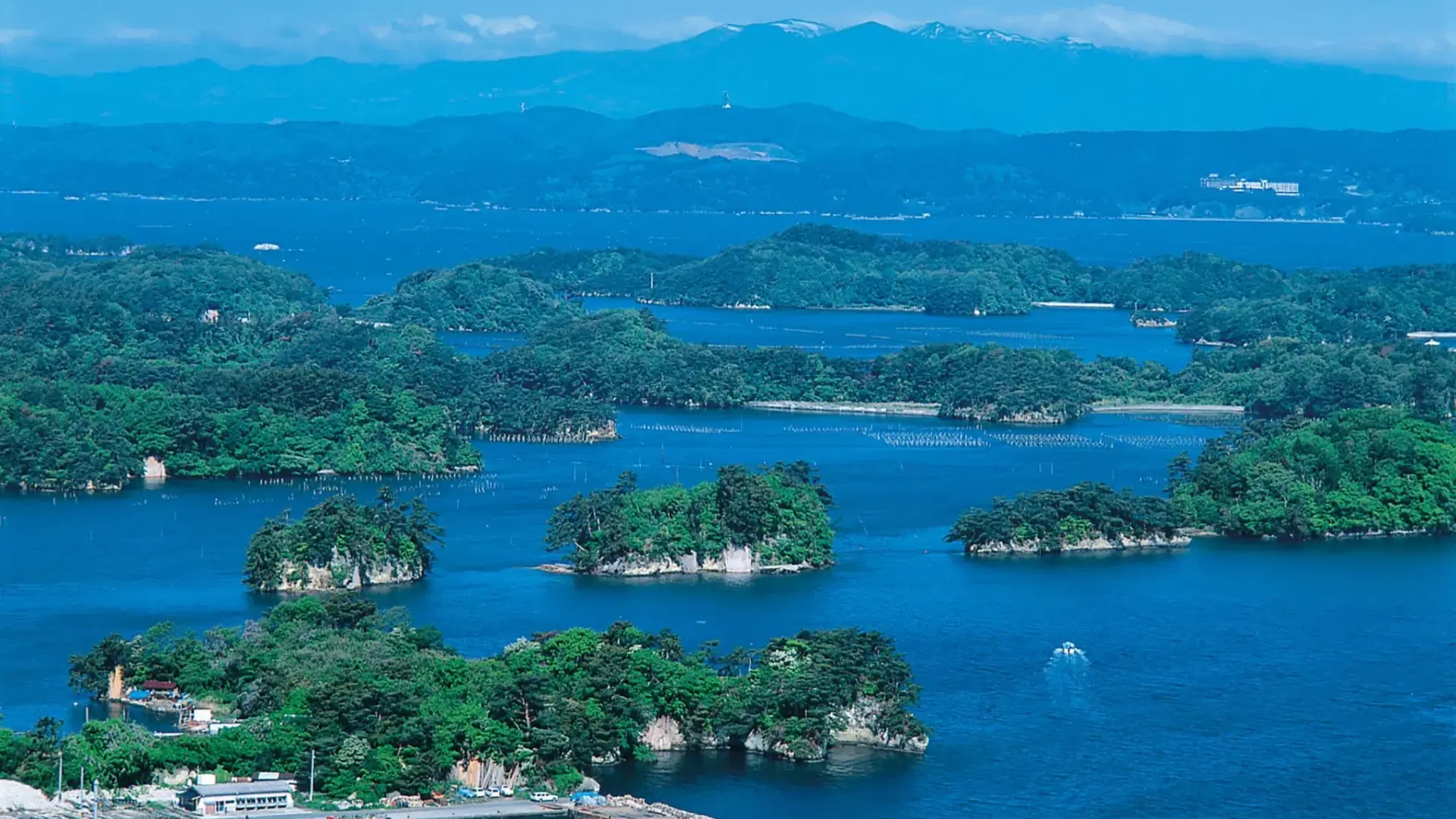
松島Matsushima is the landscape that silenced Basho. The great haiku master, who traveled the length of northern Honshu composing Oku no Hosomichi, reportedly stood before this bay of pine-clad islands and found himself unable to compose a verse adequate to what he saw. "Matsushima, ah, Matsushima, Matsushima," he is said to have murmured, the repetition itself a poem of surrender. Whether or not this attribution is apocryphal, it captures something true: Matsushima Bay, scattered with some 260 small islands weathered into fantastical shapes and crowned with twisted Japanese black pines, possesses a beauty that has challenged description for centuries.
The bay is one of Japan's Nihon Sankei, the Three Great Views, a designation that dates to the scholar Hayashi Gaho's 1643 treatise and that has drawn visitors to this coastline ever since. What distinguishes Matsushima from the other two, Miyajima and Amanohashidate, is the sheer multiplicity of the scene. The islands number in the hundreds, ranging from substantial landmasses supporting shrines and walking paths to solitary rocks bearing a single pine tree bent by wind into a gesture of defiance. At dawn and dusk, when the light slants across the water and the islands layer into silhouettes of diminishing intensity, the effect is less landscape than ink painting come to life.
The 2011 tsunami, which devastated much of the Miyagi coastline, spared Matsushima significant damage. The islands themselves served as natural breakwaters, absorbing and dissipating the wave energy before it could reach the shore with full force. This geological accident, the very beauty of the bay acting as its protector, added a dimension of gratitude to an appreciation that was already profound.
Matsushima is the landscape that silenced Basho.
Highlights
The bay is best understood from four traditional viewpoints, known as the Shitaikan, each offering a distinct character. Otakamori, to the southeast, provides the broadest panorama and is considered the most spectacular; Tomiyama, to the southwest, emphasizes the layered depth of the island formations; Tamonzan and Ogidani complete the quartet with views that foreground different arrangements of water, pine, and sky. Visiting all four requires a half-day circuit by car, but even a single vantage point establishes why the bay has captivated Japanese aesthetics for four hundred years.
The cruise boats that traverse the bay offer intimate encounters with the islands' sculptural forms. Eroded by centuries of wave action, the soft tuff rock has been carved into arches, tunnels, and overhangs that support improbable clusters of pine trees. The commentaries identify islands by their fanciful names, shapes likened to turtles, bells, or reclining Buddhas, but the pleasure is more immediate than any narrative: it is the endless variation of form, the way no two islands repeat their geometry.
Zuiganji, the Zen temple that anchors the town, is Matsushima's cultural complement to its natural spectacle. Founded in 828 and rebuilt by Date Masamune in 1609 as the Date clan's family temple, Zuiganji's main hall is designated a National Treasure. The Momoyama-period paintings on the sliding doors, attributed to the Kano school, depict peacocks, pines, and Chinese landscapes in gold and polychrome that glow in the dim interior light. The adjacent cave grottoes, carved into the hillside as meditation chambers, hold stone Buddhist figures worn smooth by time and devotion.
Culinary Scene
Matsushima's cuisine is defined by its oysters. The bay's calm, nutrient-rich waters produce kaki of exceptional plumpness and minerality, harvested from October through March and served in every conceivable preparation. Grilled over charcoal at the waterfront stalls, the shells open to reveal oysters that are creamy, briny, and faintly sweet. Kaki-don, oyster rice bowls, and kaki nabe, oyster hot pots, appear on every restaurant menu during the season. The Matsushima Oyster Festival, held in February, offers all-you-can-eat grilled oysters at prices that astonish visitors accustomed to metropolitan markups.
Beyond oysters, the bay yields excellent anago, the conger eel that is grilled, simmered, or served over rice in preparations that rival those of the Seto Inland Sea. The local fish cake, sasakama, reflects Sendai's broader kamaboko tradition but benefits from the freshness of fish landed at Shiogama port, a few kilometers to the south. Tea houses near Zuiganji serve matcha with seasonal wagashi that often incorporate local flavors: zunda, red bean, and chestnut in autumn.