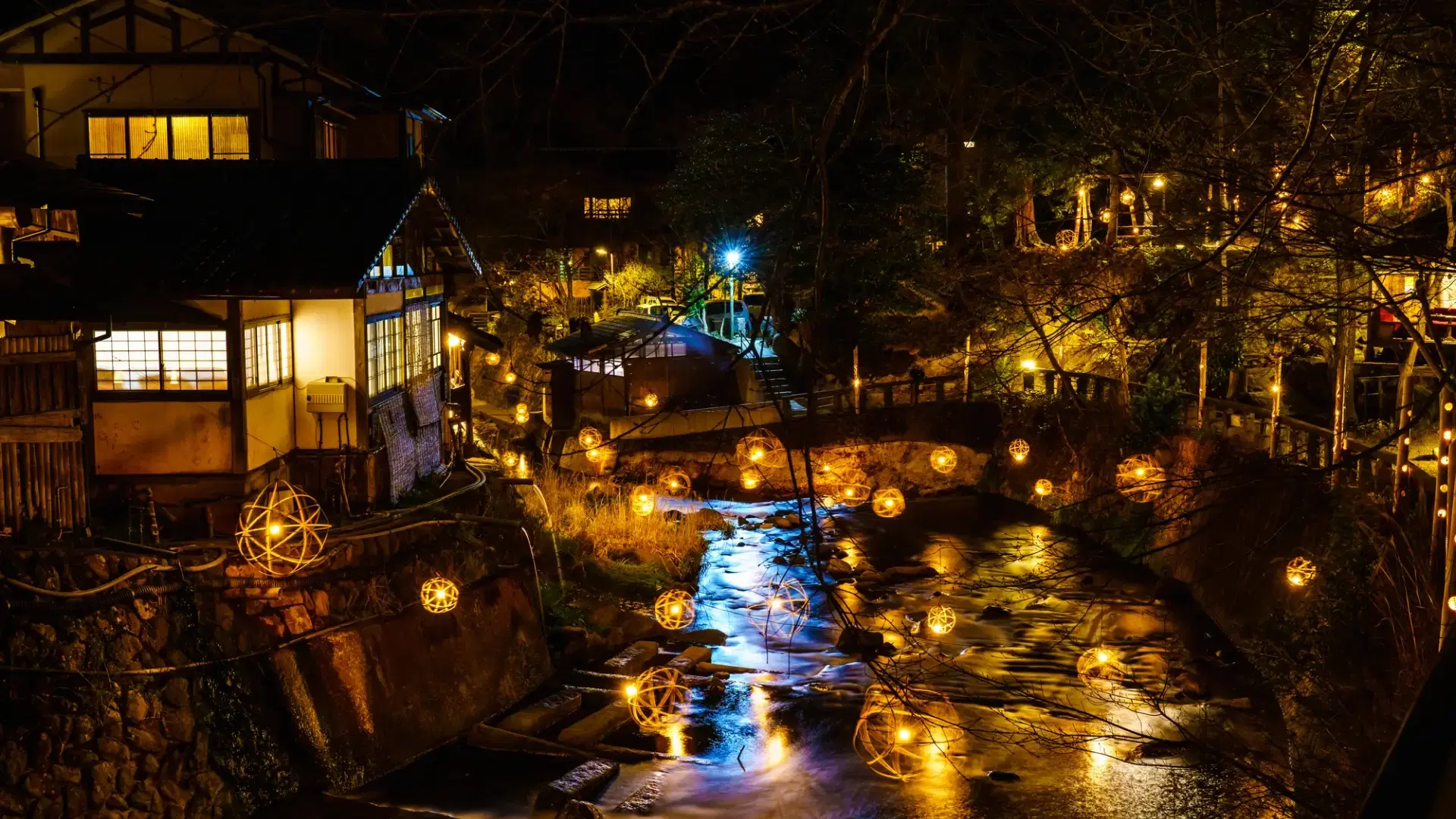
Yamaga Lantern Festival
山鹿灯籠まつりThe Yamaga Lantern Festival is one of the most beautiful and haunting spectacles in Japan, a midsummer celebration in which a thousand women dance through the streets of this small Kumamoto city wearing lanterns of pure paper on their heads, their movements tracing patterns of light against the summer darkness. The lanterns, constructed entirely from washi paper and paste without the use of a single piece of wood, wire, or metal, represent one of the most refined expressions of Japanese paper craft, and the sight of them swaying in unison atop the dancers' heads, each lantern glowing from the candle within, achieves a beauty that transcends the festival format and enters the realm of living art.
The Yamaga Toro, the paper lanterns that give the festival its name and character, are objects of astonishing delicacy and precision. Master craftsmen construct each lantern from multiple layers of handmade washi, folded, cut, and assembled into miniature architectural forms that replicate the structures of shrines, palaces, and castle towers with a fidelity that seems impossible in a medium so fragile. The craft has been designated a National Traditional Craft, and the skills required to produce a single lantern represent years of apprenticeship in techniques that have been transmitted within the Yamaga community for over six hundred years.
The festival's emotional center is the Senninodori, the "thousand-person dance," performed on the evening of August 16. A thousand women in yukata, each wearing a golden paper lantern, dance in concentric circles in the grounds of the Yamaga Elementary School, their synchronized movements and the collective glow of their lanterns creating a spectacle of mesmerizing, almost hypnotic beauty. The elegiac quality of the dance, performed during the Obon season when the spirits of the dead are believed to return to the world of the living, gives the spectacle a spiritual dimension that elevates it beyond entertainment into a communion between the visible and invisible worlds.
History & Significance
The origin of the Yamaga lantern tradition is traced to a legend in which the emperor Keiko, traveling through the region in ancient times, became lost in a thick fog that descended upon the Kikuchi River. The people of Yamaga lit torches to guide his passage, and the festival commemorates this act of luminous hospitality. The historical basis of the legend is uncertain, but its narrative function is clear: it establishes the lantern as a symbol of guidance, welcome, and the community's dedication to those who pass through its territory.
The evolution from torches to the elaborate paper lanterns that define the contemporary festival occurred during the Muromachi period, when advances in washi production and the refinement of paper-folding techniques allowed craftsmen to create increasingly complex architectural models from paper alone. The prohibition on using any material other than paper and paste, which defines the Yamaga lantern tradition, was formalized during this period and has been maintained without exception through the present day. This constraint, far from limiting the craft, has driven its development into realms of precision and ingenuity that looser rules would not have demanded.
The Senninodori, the thousand-person dance, was introduced in 1956 as a revival of older bon dance traditions, and its immediate success in establishing a visual identity for the festival ensured its continuation. The dance has since become one of the most recognized festival images in Japan, its combination of grace, light, and collective movement reproduced in photographs and broadcasts that have made Yamaga a destination of national cultural significance.
What to Expect
The festival's two days offer contrasting but complementary experiences. August 15 features the Hanabi Taikai, a fireworks display over the Kikuchi River that illuminates the town and its surrounding hills with a pyrotechnic overture to the following evening's dance. The riverside stalls, the yukata-clad crowds, and the warmth of the summer evening create the convivial atmosphere that prepares the community for the more solemn beauty of the main event.
The Senninodori on August 16 is the festival's defining moment. As darkness falls, the dancers assemble in the grounds of the school, each wearing the traditional yukata and the golden paper lantern on her head. The lanterns are lit, and the dance begins, the women moving in slow, graceful patterns choreographed to the melancholy melody of the Yamaga Yoheho folk song. The sight of a thousand moving lights, each framed by the dancer's face and the folds of her yukata, produces an emotional response that is difficult to articulate and impossible to forget. The dance continues for several hours, and the sustained beauty of the spectacle, which does not build to a climax but maintains its intensity through repetition and variation, creates a meditative state in the observer that mirrors the dancer's own concentration.
The Yamaga Lantern Museum, open year-round, displays examples of the paper lantern craft at its most elaborate, including full-scale replicas of famous buildings constructed entirely from washi. The museum provides the context that deepens appreciation of the festival, demonstrating the technical mastery behind objects whose apparent fragility belies the sophistication of their construction. The opportunity to observe craftsmen at work, folding and assembling the components of a lantern with the focused attention of a surgeon, reveals the human discipline that sustains the tradition.