Aso
阿蘇Aso is a landscape that operates on a scale that the human mind struggles to comprehend. The Aso caldera, formed by a series of colossal eruptions approximately 90,000 years ago, is one of the largest volcanic calderas in the world, its outer rim encompassing an area of roughly 350 square kilometers in which entire towns, rice paddies, forests, and a population of approximately 50,000 people exist within the bowl of what was once a volcano of almost unimaginable size. At the caldera's center, the five peaks of the Aso volcanic group rise from the flat floor like mountains growing from a plain, and the highest and most active of these, Nakadake, continues to emit the sulfurous plumes that remind observers that the geological forces responsible for this landscape are not historical artifacts but present realities.
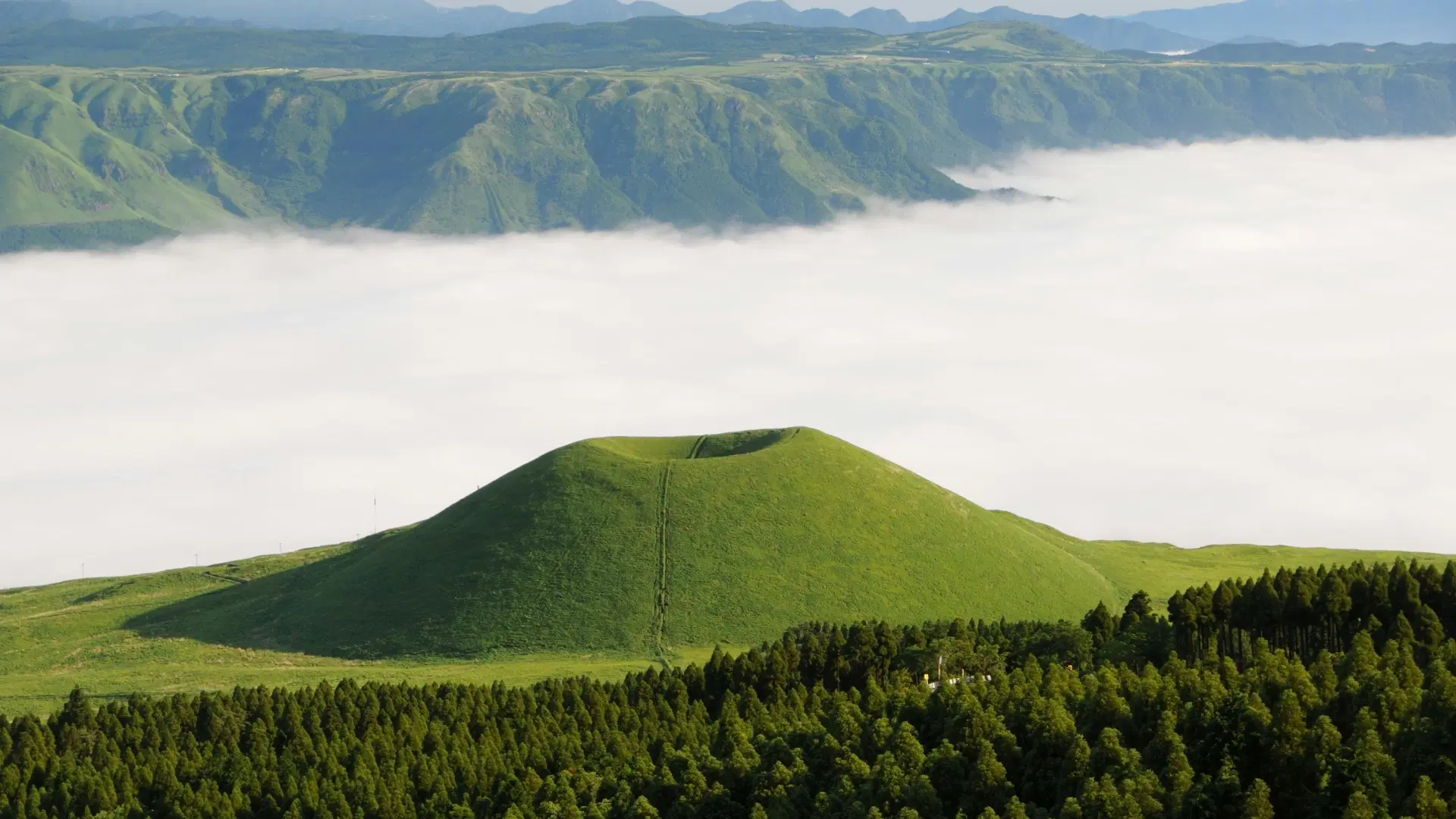
The grasslands that cover the caldera's outer slopes are Aso's most distinctive and beloved landscape. These vast, rolling prairies of susuki grass and wildflowers, maintained for centuries by the controlled burning that local communities conduct each March, create a panorama that is unique in Japan, more reminiscent of the highlands of East Africa or the steppes of Central Asia than of the island nation's typically forested mountain terrain. The effect, particularly in autumn when the susuki catches the low sun and transforms the hillsides into seas of silver, is of a beauty so expansive and so unlike the intimate aesthetics that usually characterize Japanese landscape that it leaves visitors momentarily disoriented, as though they had stepped through a doorway into a different country.
The human communities within the caldera have adapted to their extraordinary setting with a pragmatism that coexists comfortably with wonder. The farms that cultivate the rich volcanic soil produce rice, vegetables, and the beef cattle whose Akaushi breed, raised on Aso's grasslands, has become one of Japan's most sought-after meats. The onsen that emerge from the volcanic geology provide bathing opportunities throughout the region. And the spiritual traditions that have developed around the volcano, from the shrine at the summit to the agricultural rituals that mark the seasons on the caldera floor, reflect a relationship with the natural world that is simultaneously reverent and matter-of-fact.
Aso is a landscape that operates on a scale that the human mind struggles to comprehend.
Highlights
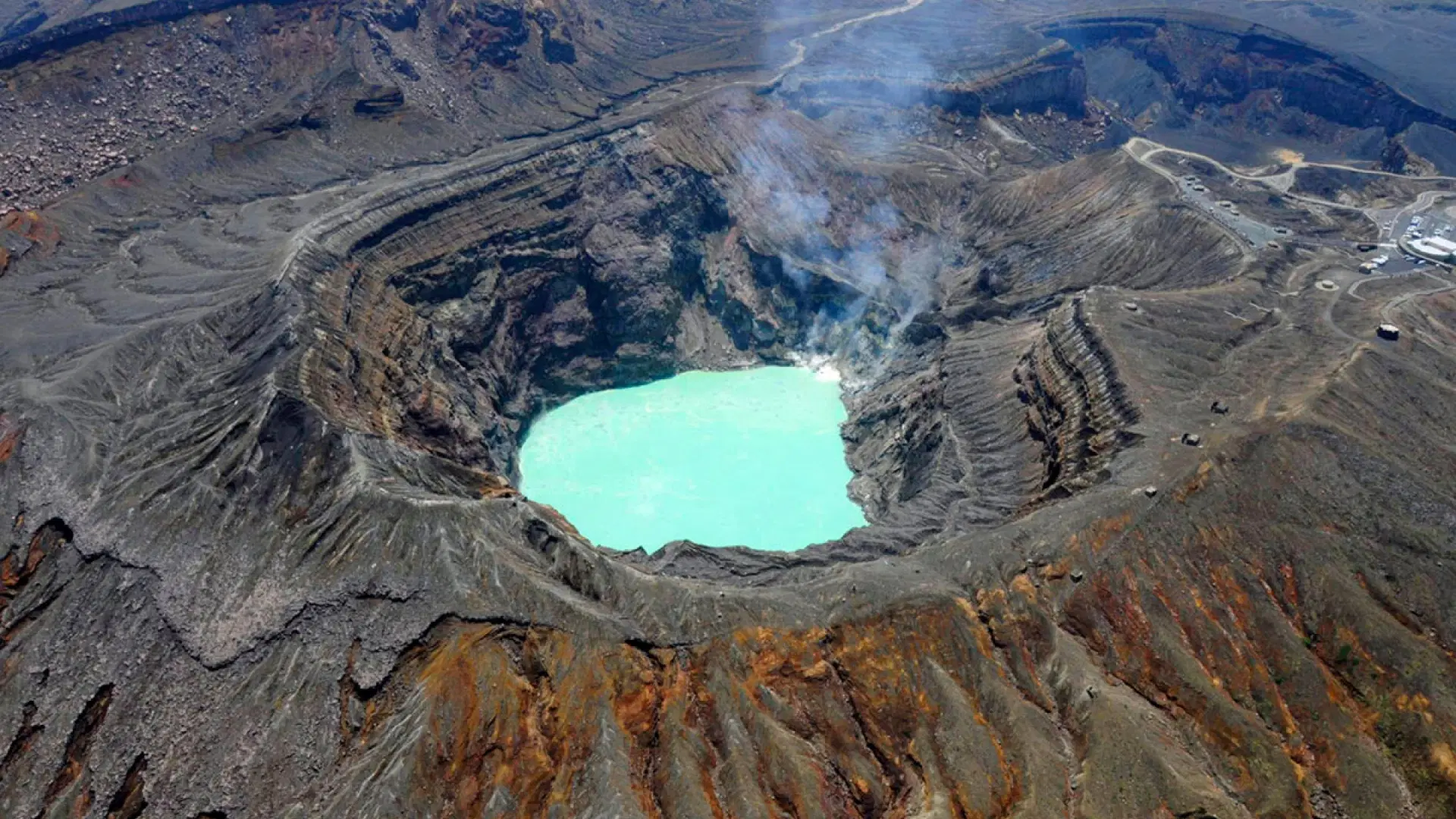
The Nakadake crater, when volcanic conditions permit access, provides the most direct encounter with the geological forces that created the Aso landscape. The crater's turquoise lake, whose color shifts with the chemical composition of the volcanic gases rising through it, occupies the active vent of a volcano whose eruptions have shaped the region's geography for millennia. The ropeway and walking trail to the crater rim place the visitor at the edge of one of the most active volcanic features in Japan, and the experience of looking into the steaming depths, the sulfurous gases stinging the nostrils and the heat palpable on the face, is one of the most visceral encounters with the planet's interior available to the non-geologist. Access is restricted during periods of elevated volcanic activity, and checking conditions before visiting is essential.
The Kusasenri grassland, a broad plateau on the caldera's western rim, provides the most accessible experience of Aso's distinctive prairie landscape. The expanse of grass, dotted with grazing horses and bisected by walking trails, extends to the horizon in every direction, and the absence of trees, buildings, or any vertical interruption creates a feeling of exposure and freedom that is rare in the densely forested Japanese archipelago. The light on the grassland changes constantly, the clouds casting moving shadows across the terrain in patterns that give the landscape a cinematic quality.
The Daikanbo viewpoint, perched on the caldera's northern rim, offers the panoramic perspective from which the full scale of the Aso caldera can be appreciated. The view encompasses the five central peaks, the flat caldera floor with its patchwork of rice paddies and settlements, and the encircling rim stretching to the horizon, and the effect is of looking into a world contained within a world, a landscape that is simultaneously vast and enclosed. On clear mornings, the sea of clouds that sometimes fills the caldera below the viewpoint creates a scene of such ethereal beauty that it has become one of the most sought-after photographic subjects in Kyushu.
The Aso Shrine, one of the oldest Shinto institutions in Kyushu, stands at the foot of the volcanic peaks and has served as the spiritual center of the caldera community for over two thousand years. The shrine, severely damaged in the 2016 earthquakes and currently undergoing reconstruction, embodies the resilience of a community that has lived with volcanic risk for millennia and whose relationship with the mountain is one of reverence rather than fear.
Culinary Scene
Aso's culinary culture is shaped by the volcanic landscape and the pastoral traditions of the caldera. Akaushi, the brown-haired Japanese cattle breed raised on Aso's grasslands, produces beef of a character quite different from the heavily marbled wagyu varieties of other regions. Leaner, with a deeper, more concentrated beef flavor and a firmer texture that rewards both grilling and slow cooking, Akaushi reflects the active, grass-fed life of cattle raised on open pasture rather than in the confined stalls that produce the marbling prized elsewhere. The taste is more assertive, more distinctly bovine, and many who experience it come to prefer its honest richness to the buttery dissolution of more expensive varieties.
The dairy products of the Aso region, produced by farms that benefit from the rich volcanic pasturage and the pure mountain water, include milk, cheese, and yogurt of remarkable quality. The Aso milk, sold at roadside stands and farm shops throughout the caldera, has a richness and freshness that city-dwellers rarely encounter, and the soft cheeses produced by the region's growing community of artisan cheesemakers reflect a European-influenced craft tradition that has found an ideal terroir in the volcanic highlands.
Takana-meshi, rice mixed with pickled mustard greens, is Aso's most characteristic everyday preparation, the sharp, vegetal flavor of the takana cutting through the richness of the region's meat and dairy dishes with a cleansing acidity. The sweet corn grown in the volcanic soil of the caldera floor, available at roadside stands during the summer harvest, achieves a sweetness and tenderness that reflect the mineral richness of the earth, and eating an ear of corn while looking out over the landscape that produced it provides the most direct connection between place and plate that the region offers.