Yakushima
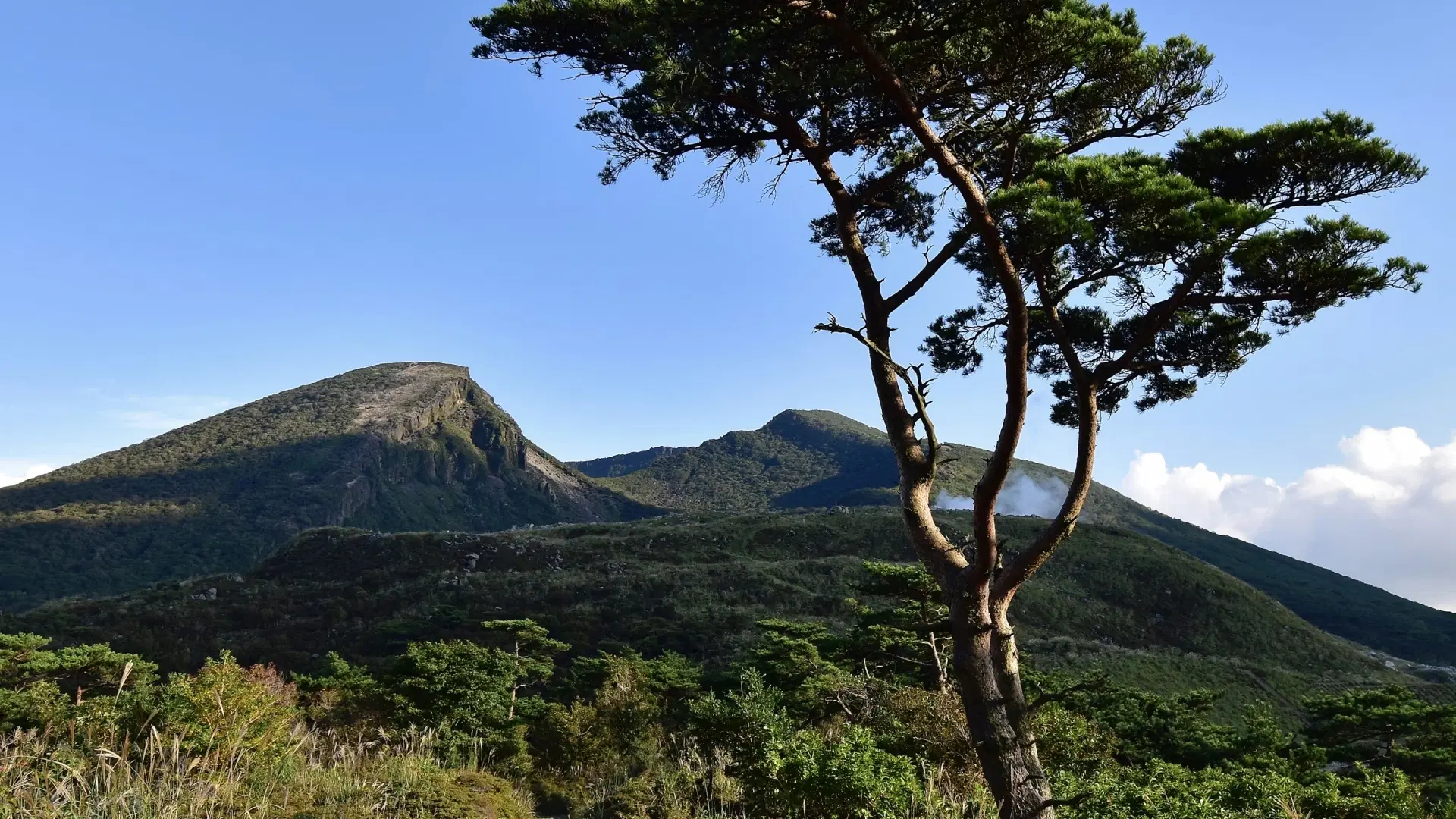
屋久島Yakushima is an island that exists in vertical. Rising from the subtropical waters of the East China Sea to the alpine summit of Miyanoura-dake at 1,936 meters, the highest peak in Kyushu, its climate zones are stacked one above another in a compression that places coral reefs and snow-capped peaks within thirty kilometers of each other. The island receives prodigious rainfall, the mountain interior catching moisture from the warm Kuroshio Current in quantities that have inspired the local saying: "It rains thirty-five days a month." This rain, far from being a mere meteorological fact, is the medium through which Yakushima's landscape achieves its defining character. The water cascades down granite slopes, feeds rivers of crystalline clarity, and sustains a forest of such density, antiquity, and atmospheric intensity that it became the inspiration for Hayao Miyazaki's animated masterpiece, Princess Mononoke.
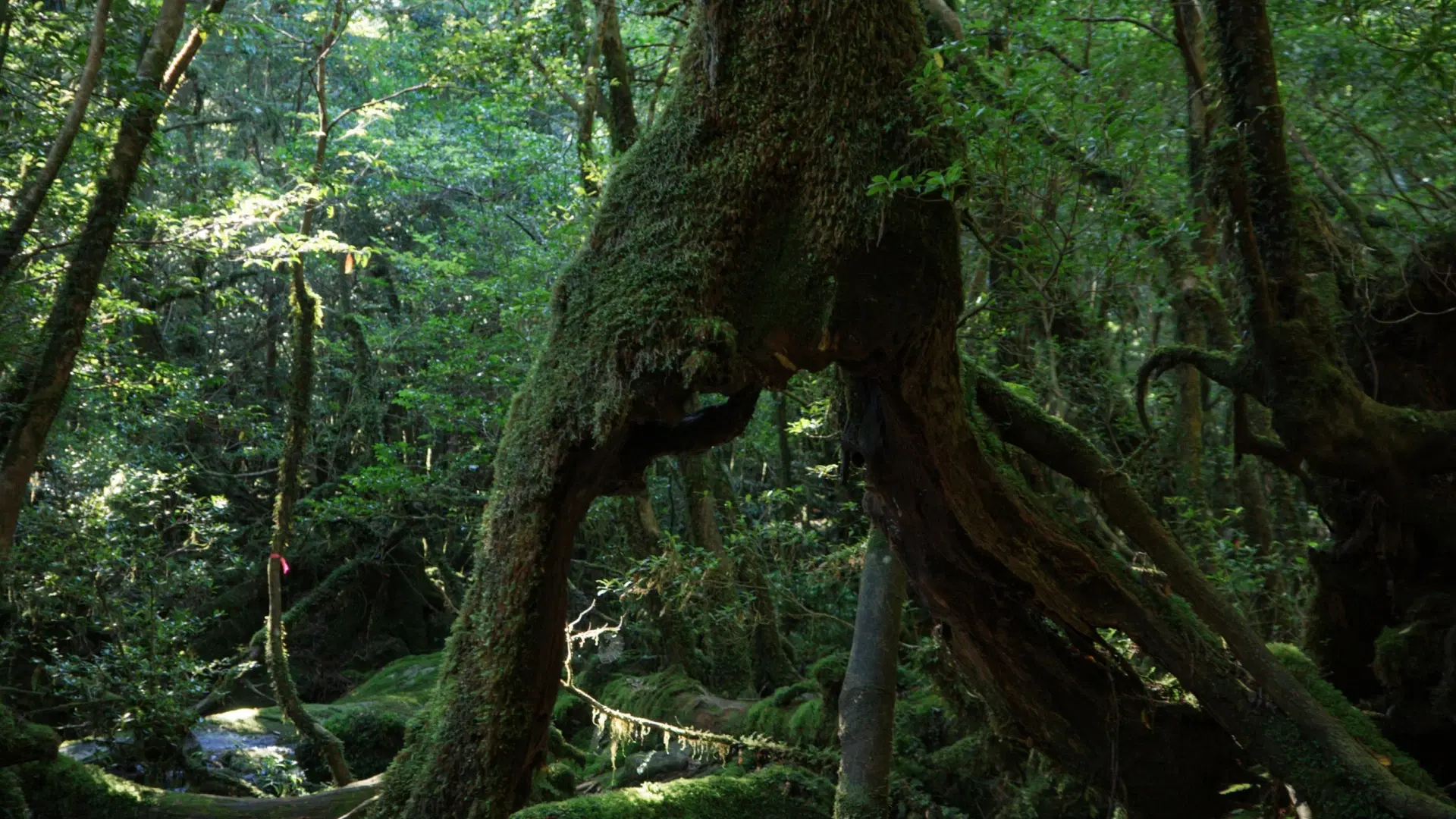
The ancient cedars of Yakushima are the island's most celebrated inhabitants. The yakusugi, cryptomeria trees over a thousand years old, grow in the island's mountainous interior, their massive trunks twisted and gnarled by centuries of typhoons, their roots gripping the granite boulders with a tenacity that speaks of survival through conditions that would have destroyed lesser organisms. Jomonsugi, the largest and oldest of the yakusugi, is estimated to be between 2,170 and 7,200 years old, a range of uncertainty that itself conveys the tree's antiquity. Reaching it requires a full-day hike through a forest whose mosses, ferns, and epiphytes create a green density so complete that the distinction between individual organisms dissolves into a continuous living surface.
Yakushima's UNESCO World Heritage designation, granted in 1993, recognized not a single feature but the entirety of the island's ecological system, from the subtropical lowland forests through the warm-temperate broadleaf zone to the cool-temperate coniferous belt and the alpine scrub at the summit. The island functions as a single, interdependent organism, its water cycle connecting mountaintop to reef in a system that ecologists have described as a microcosm of the entire Japanese archipelago compressed into a circle 130 kilometers in circumference.
Yakushima is an island that exists in vertical.
Highlights
The hike to Jomonsugi is Yakushima's essential pilgrimage, a round trip of approximately ten hours that tests the body while fundamentally altering the visitor's relationship with time. The trail begins along the Anbo Forest Railway, a narrow-gauge track laid through the forest for the timber industry that operated until the island's conservation designation halted logging. The railway ties, slippery with moss and moisture, provide a level but atmospheric path for the first portion of the journey. The trail then climbs through increasingly ancient forest, passing Wilson's Stump, a massive cedar remnant whose hollow interior is large enough to contain a small shrine and whose heartwood was harvested four hundred years ago to build a temple in Kyoto.
Shiratani Unsuikyo, the "Ravine of White Water and Clouds," is a moss-covered forest gorge that provides a more accessible alternative to the Jomonsugi hike. The trails through Shiratani wind among granite boulders blanketed in dozens of moss species, the green so saturated and various that it redefines the color. This is the landscape that inspired the forest of the Spirit Realm in Princess Mononoke, and the recognition is immediate: the draped mosses, the twisted roots, the filtered light, the sense of a forest that is not merely old but sentient. The Taikoiwa overlook, reached by a steeper trail, provides a panoramic view across the island's forested mountain interior that reveals the scale of the wilderness.
The coastal areas of Yakushima offer experiences that complement the mountain interior. Nagata Inaka-hama, a beach on the island's northwest coast, is one of Japan's most important loggerhead sea turtle nesting sites, with turtles coming ashore to lay eggs from May through July. The hot springs at Hirauchi Kaichu Onsen, tidal pools of thermal water accessible only at low tide, provide a bathing experience where volcanic heat, ocean water, and the rhythm of the tides converge in a setting of elemental simplicity.
Culinary Scene
Yakushima's cuisine reflects the island's position at the intersection of temperate and subtropical ecological zones, its markets and restaurants offering ingredients that span an unusually wide range of climate and habitat. Flying fish, called tobiuo, is the island's signature seafood, the silvery fish abundant in the surrounding waters and prepared in every conceivable form: as sashimi, grilled whole, dried into age-bushi for stock, ground into surimi for fish cakes, and deep-fried as tempura. The fish's firm, clean flesh and mild flavor make it versatile, but it is at its best as sashimi, the translucent slices accompanied by soy sauce and wasabi in a preparation that lets the sea speak for itself.
The island's mountain streams produce a freshwater shrimp of exceptional quality, while the subtropical lowlands grow tankan mandarin oranges, passion fruit, and guava that reflect the warm maritime climate. Yakushima tea, cultivated on the lower slopes in conditions of abundant rainfall and filtered light, produces a green tea of notable depth, the leaves' long growing season in the moist, temperate environment concentrating flavor compounds that quick-maturing lowland teas cannot match.
The dining scene on Yakushima is modest in scale but sincere in quality, with small restaurants and ryokan kitchens prioritizing the freshest local ingredients over culinary ambition. The island's shochu, distilled from local sweet potatoes and mountain spring water, is the natural accompaniment to a meal that may include flying fish sashimi, grilled venison from the island's deer population, mountain vegetable tempura, and tankan fruit for dessert, a menu that traverses the island's ecological zones in a single sitting.
Ryokans in Kagoshima
There are no ryokans in our guide listed in Yakushima. See our selection across Kagoshima.
View ryokans in Kagoshima