Kirishima
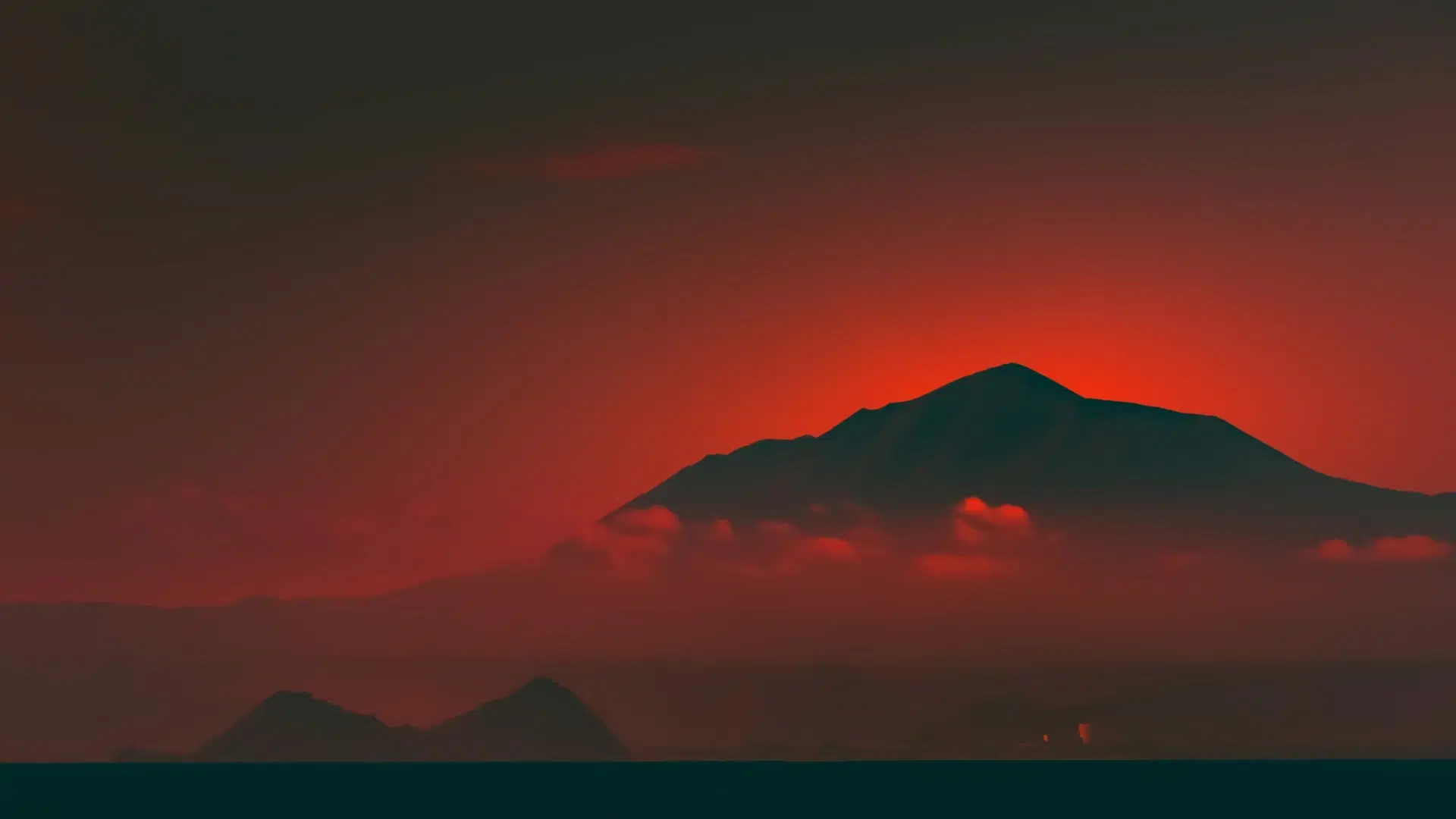
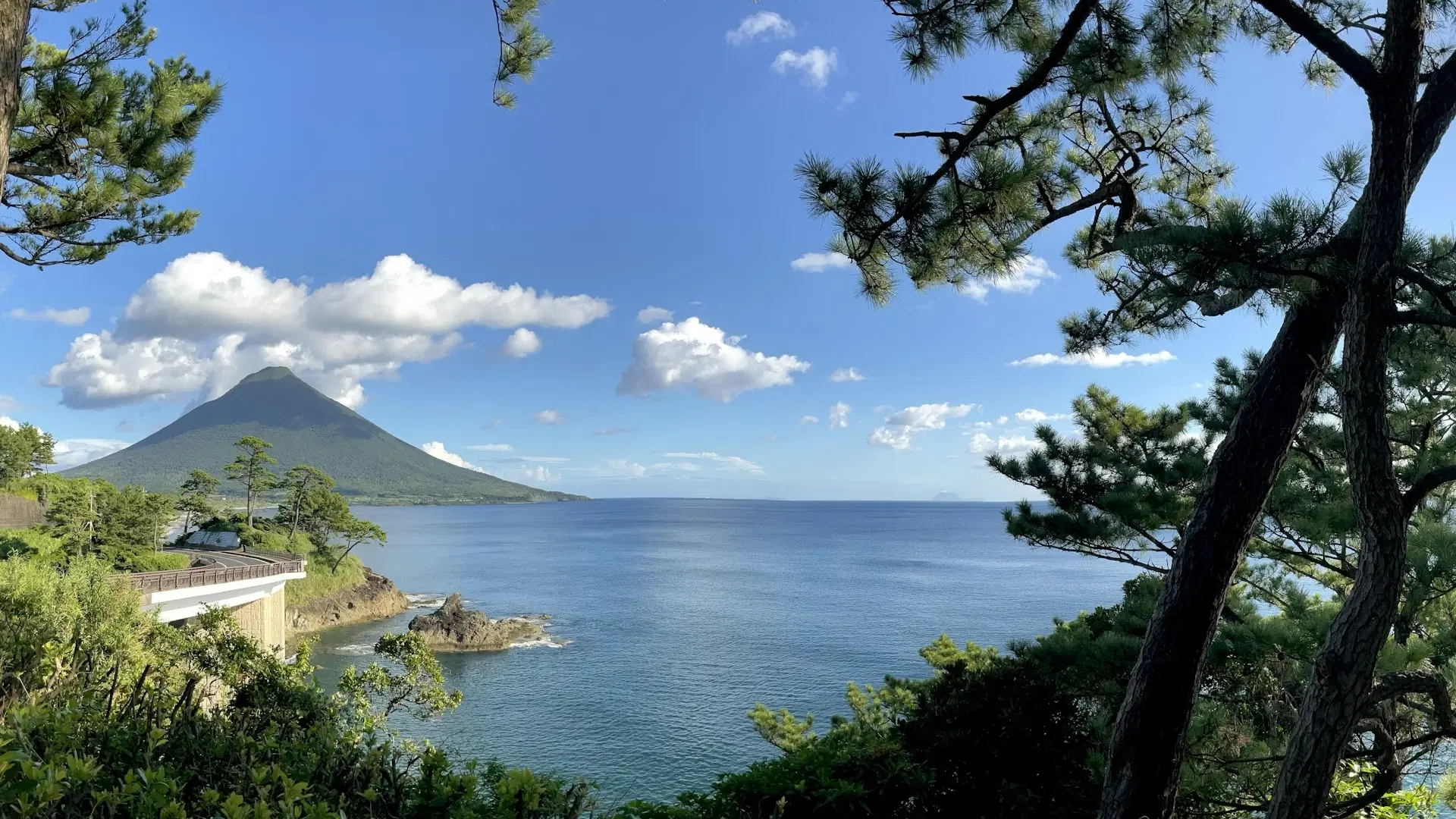
霧島Kirishima is a landscape still being made. The volcanic highland that straddles the border between Kagoshima and Miyazaki prefectures is among the most geologically active regions in Japan, its cluster of over twenty volcanic peaks, crater lakes, and steaming fumarolic fields composing a terrain that oscillates between the beautiful and the fearsome with a frequency that keeps its human inhabitants in a state of respectful alertness. Shinmoe-dake's eruptions in 2011 and 2018 reminded the region that the forces creating this landscape are not historical but contemporary, the ash plumes and lava flows reshaping terrain that had been stable within living memory.
The mythology of Kirishima is as layered as its geology. Takachiho-no-mine, one of the volcanic peaks, is revered as the site of tenson korin, the descent of the heavenly grandson Ninigi-no-Mikoto to the earthly realm. The bronze spear planted at the summit commemorates this founding myth, its presence connecting the physical landscape to the cosmological narrative that underlies Shinto belief. Kirishima Jingu, the grand shrine at the mountain's base, has been destroyed and rebuilt repeatedly by eruptions over the centuries, each reconstruction an act of devotion that reaffirms the community's commitment to inhabiting a landscape that periodically attempts to erase them.
The onsen culture of Kirishima draws directly from the volcanic plumbing that makes the landscape both magnificent and unstable. The thermal waters emerge at multiple points across the highland, each spring bearing the mineral signature of the particular geological formation it passes through. Sulfur springs, iron springs, carbonate springs, and simple hot springs coexist within a compact area, their diversity offering bathers a geological survey conducted through immersion rather than analysis. The ryokan of the Kirishima onsen district have developed their facilities around these natural variations, creating bathing programs that guide guests through different water types as if through the chapters of a book written in mineral chemistry.
Kirishima is a landscape still being made.
Highlights
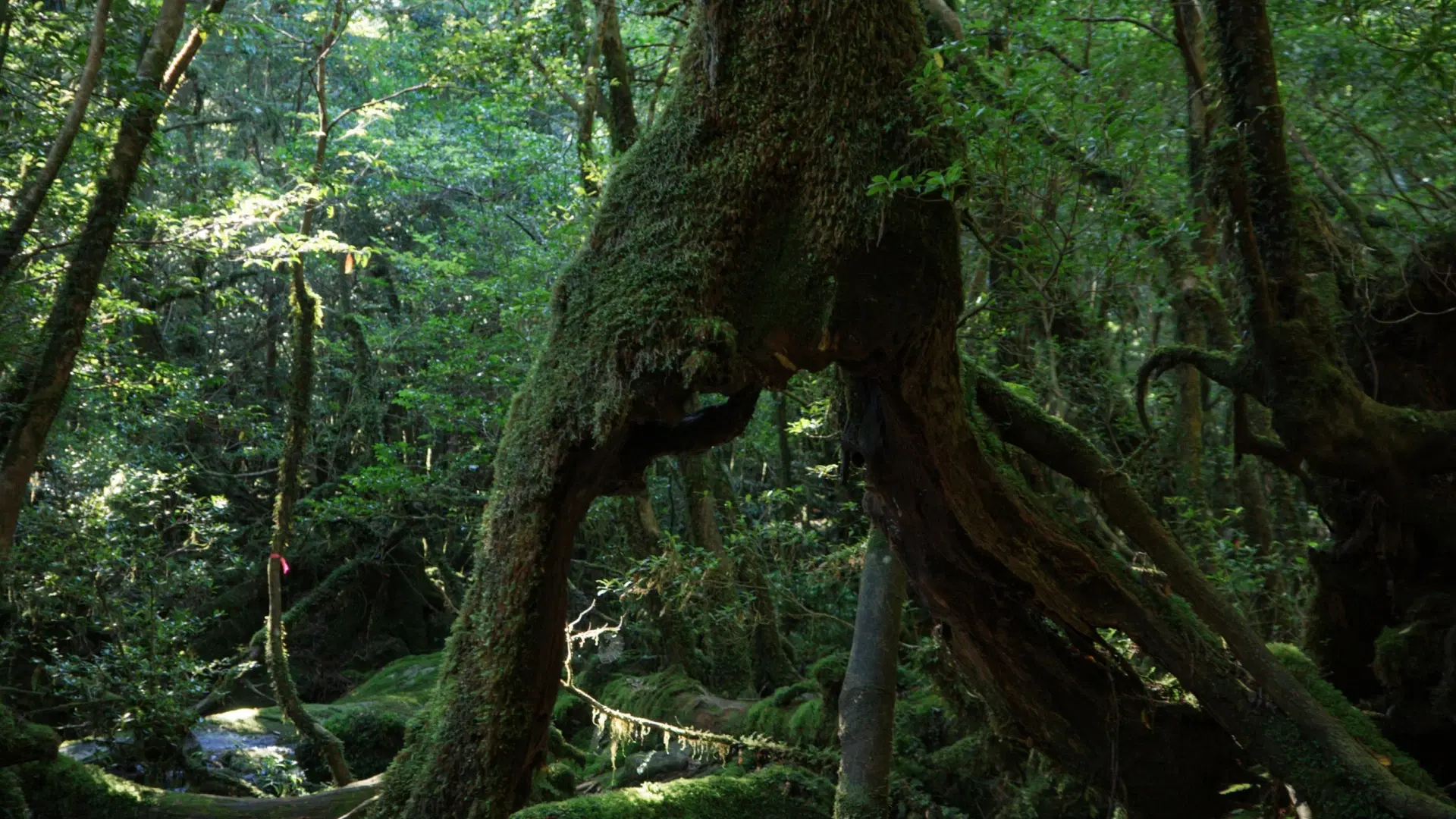
Kirishima Jingu is a shrine whose beauty is inseparable from its history of destruction and renewal. The current main hall, rebuilt in 1715 by the Shimazu domain lord, stands at the top of a stone stairway flanked by centuries-old cedars whose towering canopy creates a natural nave. The shrine's vermilion-painted buildings, set against the dark green of the forest and the grey volcanic peaks above, compose an image of Shinto architecture at its most dramatic. The surrounding forest contains specimen trees of extraordinary age, their trunks wrapped with shimenawa sacred ropes that mark them as dwelling places of the divine.
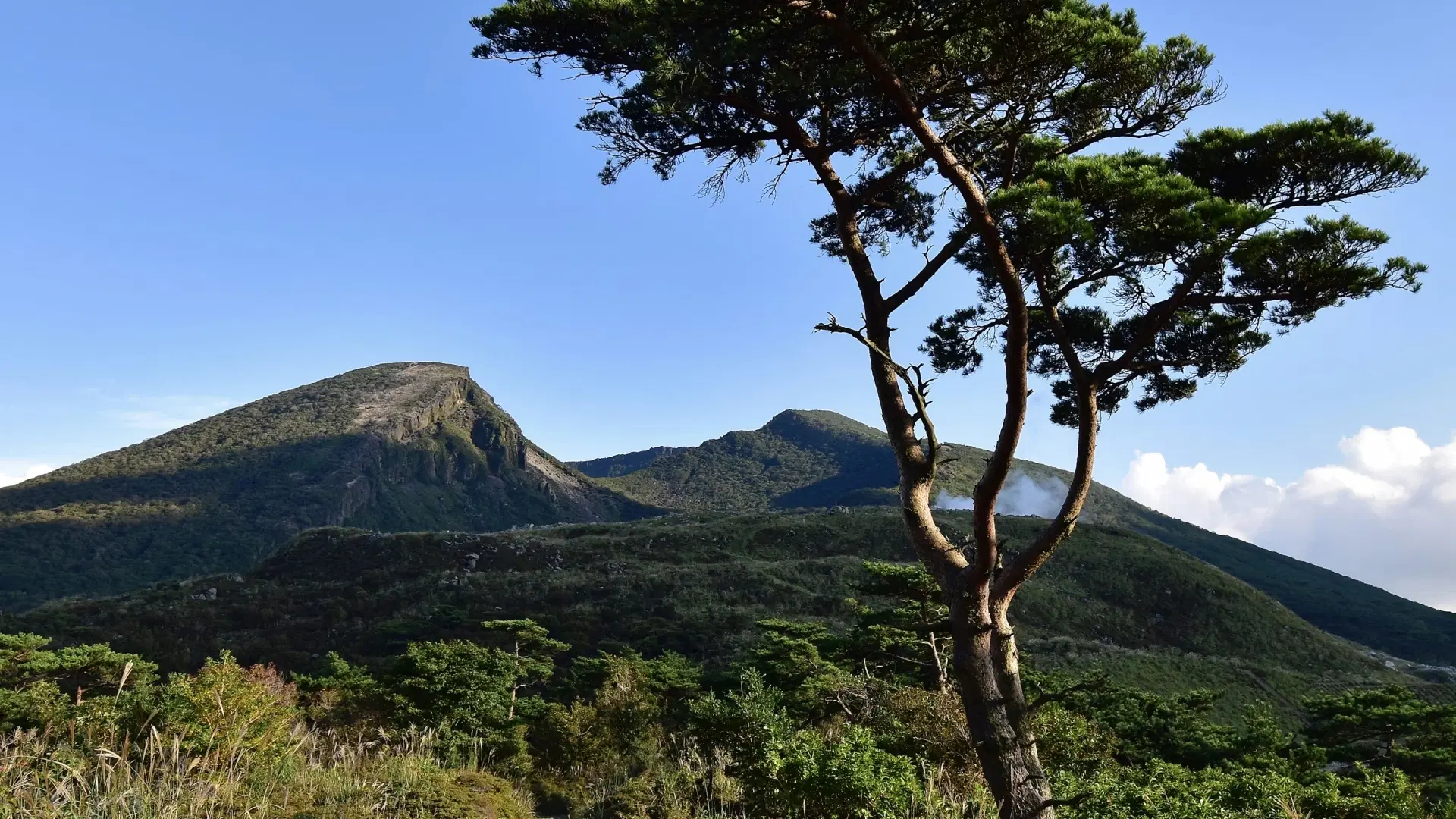
Ebino Kogen, the highland plateau at 1,200 meters elevation, provides the most rewarding walking in the Kirishima range for visitors who prefer contemplation to conquest. The crater lake circuit, a trail of approximately four kilometers, passes three volcanic lakes whose waters display different colors depending on their mineral content and the angle of the light: cobalt, emerald, and opaque white. The surrounding landscape of volcanic grassland, dotted with stunted pines and steaming vents, creates an atmosphere that feels extraterrestrial, the familiar categories of Japanese scenery replaced by something starker and more elemental.
The Maruo-no-Taki waterfall, descending 23 meters through a forest gorge, provides Kirishima's most accessible encounter with the water cycle that connects the volcanic heights to the cultivated lowlands. The falls are most impressive after rain, when the volume of water increases and the mist generated by the impact fills the gorge with a suspended moisture that catches the filtered forest light. The short trail to the falls passes through dense forest that provides welcome contrast to the exposed volcanic terrain of the higher elevations.
Culinary Scene
Kirishima's culinary traditions draw on the volcanic highland's particular combination of clean air, mineral water, and the agricultural abundance of the surrounding lowlands. The black pork of the Kirishima foothills, related to the celebrated kurobuta of Kagoshima, is a heritage breed whose meat reflects the quality of its environment: the volcanic spring water, the sweet potatoes grown in mineral-rich soil, the temperate highland climate. The pork appears on local menus in preparations that range from delicate shabu-shabu to robust charcoal grilling, each method revealing different aspects of the meat's character.
Kirishima tea, cultivated on the volcanic slopes at elevations where morning mist and wide temperature differentials between day and night concentrate flavor in the leaves, produces a green tea of exceptional sweetness and umami depth. The tea is served at ryokan throughout the region and available at plantation shops where visitors can observe the processing and taste varieties that rarely leave the local market. The water used in the tea preparation, drawn from volcanic springs with naturally balanced mineral content, contributes to the final cup with a softness that hard metropolitan water cannot replicate.
Shochu production in the Kirishima area benefits from the same volcanic spring water and locally grown sweet potatoes that define the region's agricultural character. Several distilleries offer tours and tastings that illuminate the relationship between ingredients, water, and process in creating a spirit whose regional character is as distinctive as any terroir-driven wine.