Morioka
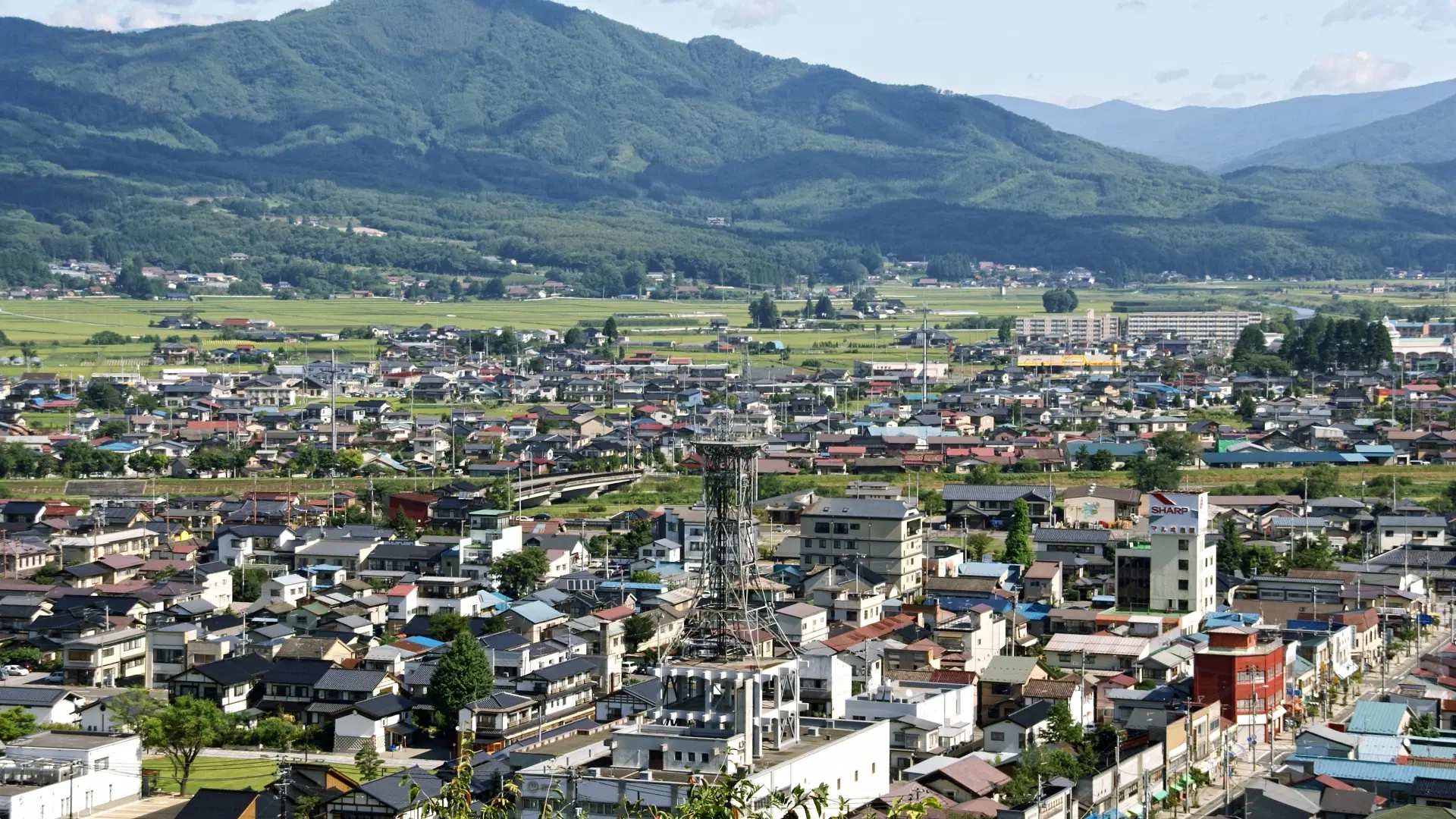
盛岡Morioka is a city that reveals itself at the confluence of three rivers. The Kitakami, the Shizukuishi, and the Nakatsu meet here in a broad valley ringed by mountains, and it is this geography of converging waters that has shaped the city's character for over four centuries. The Nanbu clan established their castle on a bluff above the Nakatsu in 1597, and while the stone walls are all that remain of the fortress itself, the city that grew in its shadow retains a quality of composure, a refusal to hurry, that distinguishes it from the more frantic pace of Tohoku's larger capitals. The New York Times placed Morioka on its list of places to visit in 2023, and the recognition felt less like a discovery than an overdue acknowledgment of what the Japanese have long understood: this is a city of uncommon grace.
The streets around the castle ruins unfold with a quiet logic. Zaimokucho, the old merchant quarter, preserves Meiji-era brick and mortar buildings alongside craft shops where Nanbu ironware, the region's most celebrated artisanal tradition, is displayed with the reverence it deserves. The Iwate Bank Red Brick Building, designed by Kingo Tatsuno and completed in 1911, stands as evidence of the era when Morioka's merchant class aspired to cosmopolitan refinement without abandoning regional identity. Coffee culture flourishes here with an intensity that surprises visitors; several kissaten have operated for decades, their interiors unchanged, their masters roasting beans with the same seriousness that a tea master brings to the ceremony.
Beneath the surface sophistication, Morioka is fundamentally a noodle city. Three distinct noodle traditions, wanko soba, jajamen, and reimen, constitute what locals call the Morioka Three Great Noodles. Each has its own history, its own rituals of consumption, and its own passionate following. To visit Morioka without engaging with at least one of these traditions is to miss the city's most accessible pleasure.
Morioka is a city that reveals itself at the confluence of three rivers.
Highlights
Begin at the Iwate Park castle ruins, where the massive stone walls rise above the Nakatsu River with a dignity that needs no reconstruction to convey the Nanbu clan's authority. In spring, over 200 cherry trees transform the grounds into one of Tohoku's finest hanami venues, the blossoms reflected in the moat water creating a doubled canopy of pink. The famous Ishiwarizakura, a cherry tree that has split a granite boulder over the course of 360 years, stands nearby as a monument to the quiet persistence that defines the region's character.
The craft district around Zaimokucho rewards an unhurried afternoon. Nanbu tetsubin, the cast iron kettles that have been produced in the region since the seventeenth century, are displayed in workshops where the casting process can be observed. The best examples achieve a balance of form and function that elevates a utilitarian object to sculpture, their surfaces textured with araare dots or decorated with pine and plum motifs that carry centuries of symbolic weight. The nearby Konya-cho district, once the dyers' quarter, preserves a stretch of traditional machiya townhouses along the riverbank.
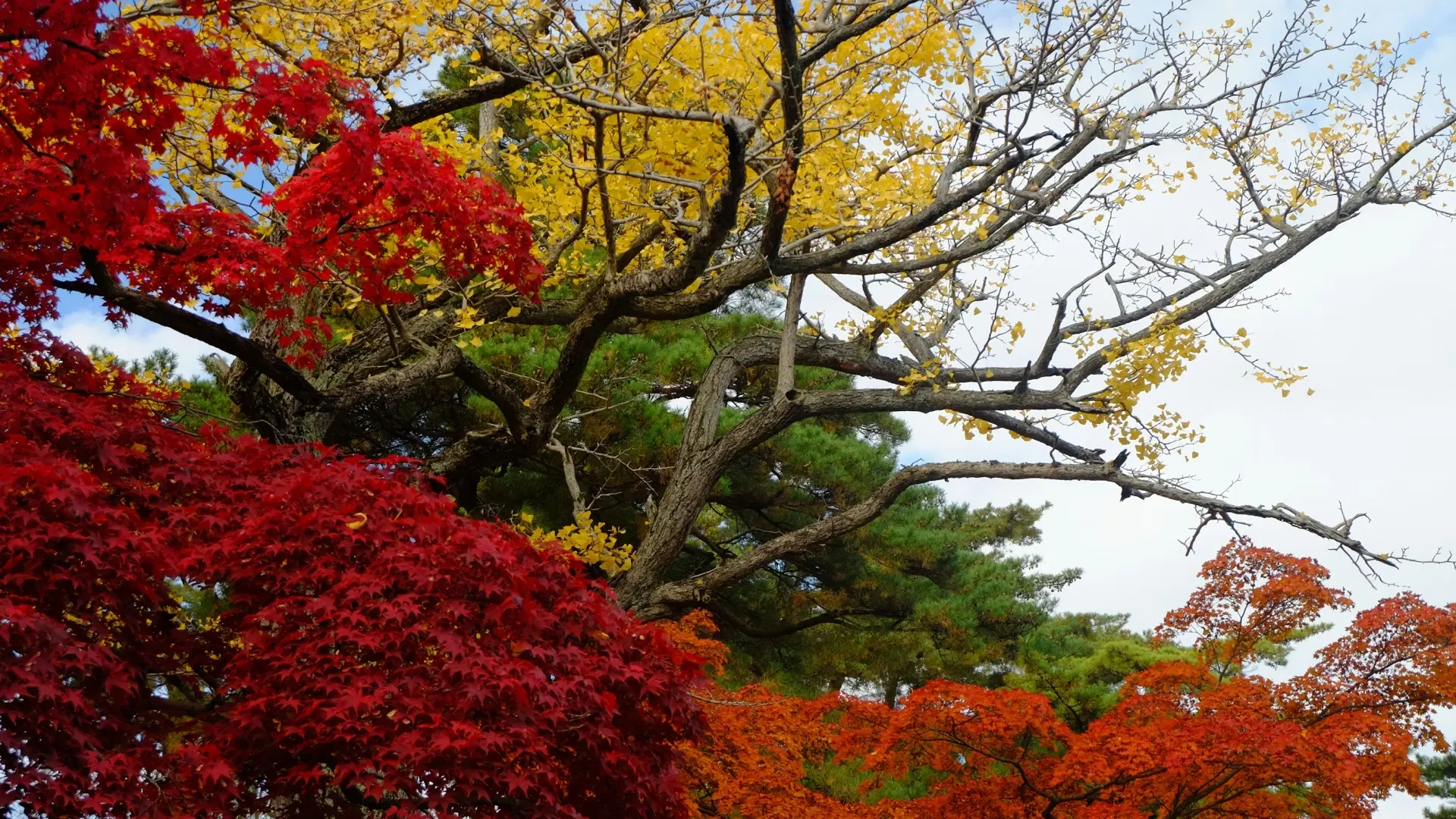
For a perspective that encompasses the entire basin, the ropeway to the summit of Mount Iwate's foothills provides views that on clear days reach from the city's grid to the volcanic peak itself, its symmetrical cone often compared to Fuji. In autumn, the surrounding mountains ignite in a progression of color that begins at the higher elevations in late September and descends to the city's parks by late October, extending the foliage season across an entire month.
Culinary Scene
The Morioka Three Great Noodles are not a marketing invention but a genuine culinary identity. Wanko soba is the most theatrical: small mouthfuls of buckwheat noodles served in rapid succession by attendants who refill your bowl the instant you empty it, continuing until you place the lid on the dish to signal surrender. The tradition originated as a form of hospitality for visiting lords, and the competitive element, counting your bowls, adds a ludic dimension that belies the quality of the noodles themselves. The finest establishments use stone-ground, hand-cut soba that would stand on its own merit without the performance.
Jajamen arrived in Morioka through a more circuitous route. Adapted from the zhajiangmian of northeastern China by a local restaurateur after the war, these thick, flat wheat noodles are served with a savory miso-meat sauce and customized at the table with garlic, chili oil, vinegar, and raw egg. The ritual concludes with chi-tan-tan, a soup made by cracking an egg into the remaining sauce and adding the noodle cooking water, a dish within a dish that wastes nothing. Reimen, Morioka's cold noodles, draw from Korean naengmyeon but have evolved into something distinctly local: translucent, impossibly chewy noodles in a clear beef broth, garnished with kimchi, cucumber, and seasonal fruit, most distinctively watermelon in summer.
Beyond noodles, Morioka's food culture embraces the broader Iwate larder. Maesawa beef, raised in the prefecture's southern pastures, rivals the more famous wagyu brands for marbling and depth of flavor. Local sake breweries draw on the pure snowmelt water of the Kitakami basin, and the kissaten coffee houses, some operating since the 1960s, serve hand-dripped coffee with a precision that reflects the city's broader commitment to craft.