Mito
水戸Mito announces itself not with spectacle but with authority. The former seat of one of the three great Tokugawa branch families, this city on the banks of the Naka River carries a lineage that shaped the intellectual and political course of late-Edo Japan. The Mito domain produced the Dai Nihonshi, a monumental history of Japan that took over two centuries to compile, and its legacy of scholarly rigor still permeates the city's character. Walk the streets near the old castle grounds on a weekday morning and you will find a quietness that feels earned, not empty.
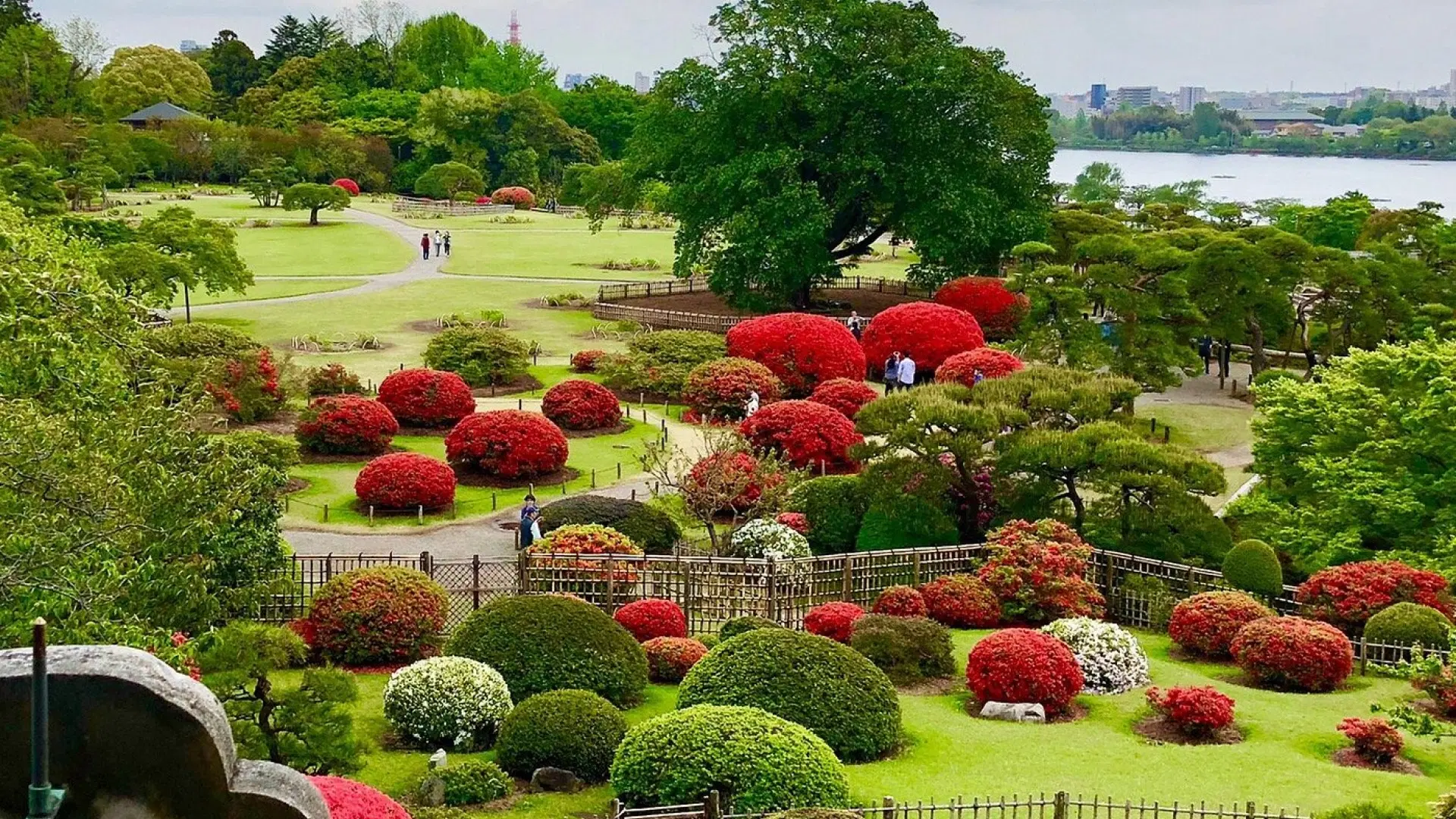
Kairakuen, the celebrated plum garden commissioned by Lord Tokugawa Nariaki in 1842, stands as the city's defining landmark and one of Japan's three great gardens. What distinguishes Kairakuen from its peers in Kanazawa and Okayama is its founding philosophy: Nariaki designed it not as a private retreat but as a public space, open to samurai and commoner alike. That democratic impulse, radical for its time, gives the garden a warmth that transcends its horticultural beauty. When over three thousand plum trees of one hundred varieties bloom in late February and March, the air fills with a fragrance at once sweet and astringent, a scent that defines the transition from winter to spring in the Kanto region.
Beyond the garden, Mito rewards patient exploration. Lake Senba, a placid crescent of water south of the station, reflects the seasons with quiet fidelity. The Kodokan, Nariaki's academy for the samurai arts and Confucian learning, has been meticulously preserved and offers a window into the intellectual ambitions of a domain that believed education could transform a nation.
Mito announces itself not with spectacle but with authority.
Highlights
Kairakuen garden is the essential destination, but its impact deepens when you understand its context. Arrive early, before the tour groups, and walk the Minami-mon southern approach where the plum trees are oldest and most gnarled. The Kobuntei pavilion within the garden, a three-story wooden structure with views across the plum groves to Lake Senba, served as Nariaki's personal retreat and contains rooms whose fusuma paintings reward close attention. In late February during the Mito Plum Festival, the garden extends its hours for evening illuminations that cast the blossoming branches in warm amber light.
The Kodokan, a ten-minute walk from the garden, is among the largest surviving domain schools in Japan. Its spartan wooden halls, arranged around a central courtyard, preserve the atmosphere of a place where young samurai studied Chinese classics, practiced martial arts, and debated the future of the nation. The contrast with Kairakuen's botanical abundance is instructive: together they embody Nariaki's vision of cultivating both mind and spirit.
Lake Senba offers a gentle counterpoint. The lakeside promenade is particularly striking in autumn when the zelkova and ginkgo trees turn gold, and in summer when lotus blossoms cover the water's surface. The Ibaraki Prefectural Museum of History, set on a hill overlooking the lake, provides a thorough account of the Mito domain's outsized influence on the Meiji Restoration.
Culinary Scene
Natto is inescapable in Mito, and the city wears its fermented soybean heritage with pride. The local varieties range from small-grain to large, from straw-wrapped traditional preparations to modern iterations flavored with shiso or karashi mustard. Shops along the Kairakuen approach sell natto in forms that challenge preconceptions: dried as a crispy snack, folded into rice crackers, even incorporated into ice cream for the adventurous. For the serious taster, the straw-wrapped wara natto offers the most complex flavor, its surface culture contributing a subtle earthiness absent from industrial versions.
Beyond natto, Mito's location near the coast and the fertile Kanto plain provides excellent access to fresh seafood and seasonal produce. Anko nabe, a rich monkfish hotpot prepared with miso, is a winter specialty that fortifies against the cold. Local wagashi confections, particularly those served during the plum festival, reflect a refinement inherited from the domain's aristocratic traditions.