Hitachinaka
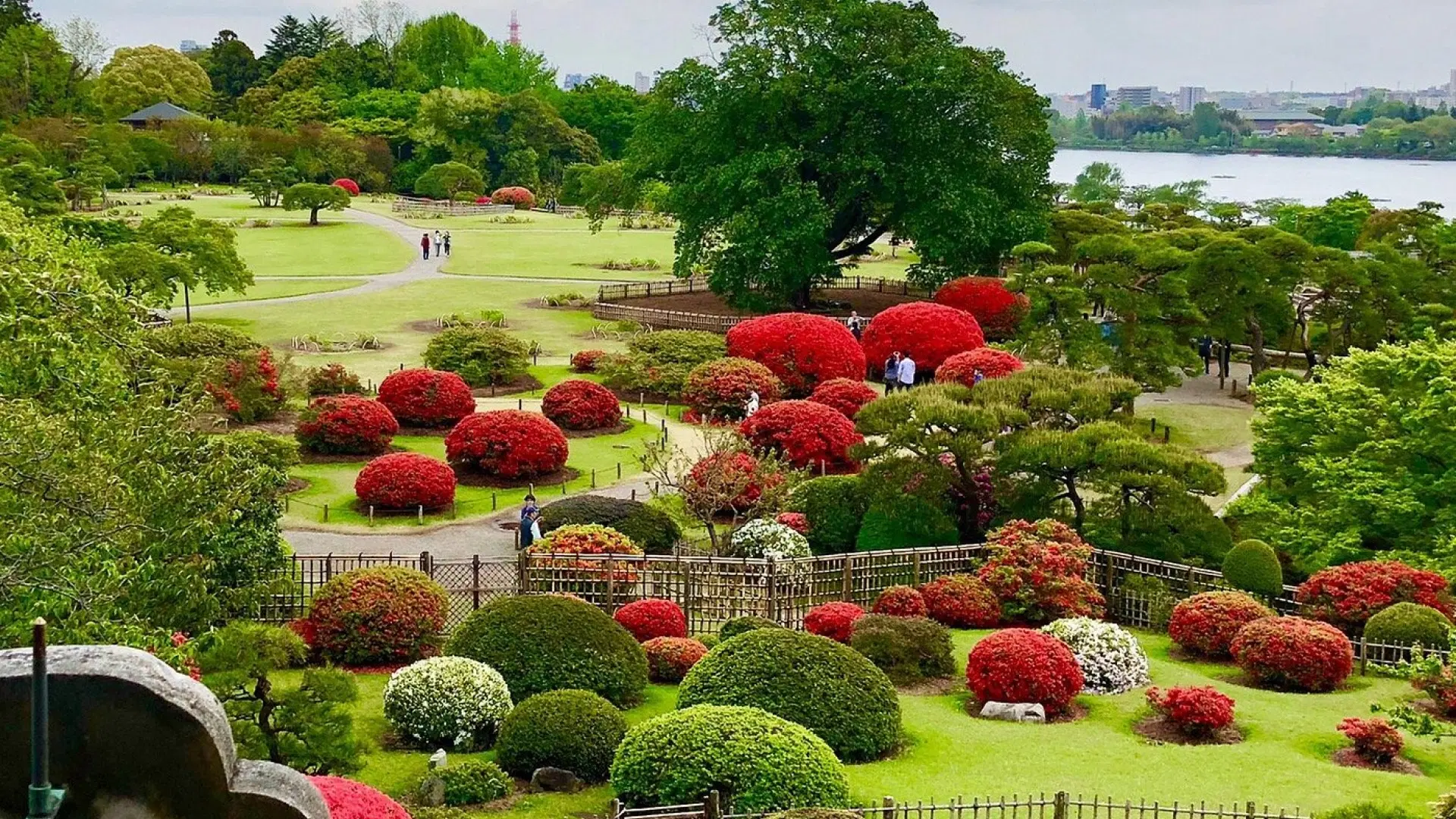
ひたちなかHitachinaka occupies a stretch of the Pacific coast north of Mito where the landscape alternates between sandy bluffs, pine groves, and the gentle hills of Hitachi Seaside Park, a former military site transformed into one of Japan's most photographed public gardens. The city itself is unassuming, a working coastal community of fishermen, farmers, and commuters, but the seasonal spectacles it produces have earned international recognition.
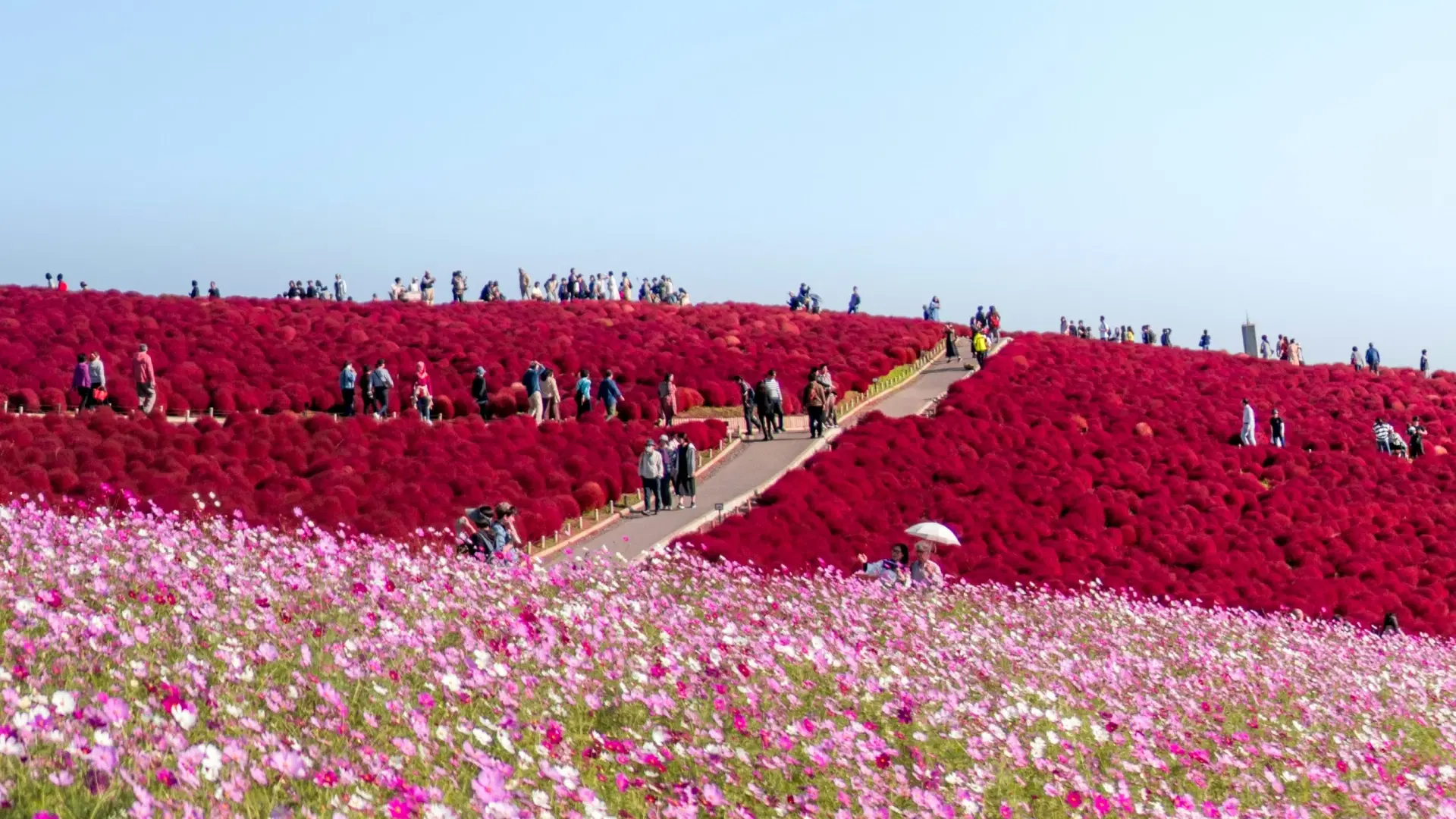
The park's Miharashi Hill is the epicenter. In late April and early May, approximately 5.3 million nemophila flowers bloom across the hillside, creating a seamless gradient of pale blue that merges with the sky at the horizon. The effect is not merely beautiful; it is disorienting, a dissolution of the boundary between earth and atmosphere that no photograph fully captures. In autumn, the same hill turns crimson as kochia bushes shift from summer green to vivid scarlet, a transformation that draws visitors who return season after season to witness the cycle.
Beyond the park, Hitachinaka's coastline offers pleasures of a quieter order. The Nakaminato fishing port lands some of Ibaraki's finest seafood, and the adjacent fish market sells the morning's catch with a directness that Tokyo's markets can no longer match. The Hitachinaka Seaside Railway, a charmingly local single-car train, trundles between the station and the coast through rice paddies and residential neighborhoods, a journey that feels decades removed from the Shinkansen.
Hitachinaka occupies a stretch of the Pacific coast north of Mito where the landscape alternates between sandy bluffs, pine groves, and the gentle hills of Hitachi Seaside Park, a former military site transformed into one of Japan's most photographed public gardens.
Highlights
Hitachi Seaside Park is the primary draw, and timing your visit to coincide with its seasonal peaks is essential. The nemophila season runs from mid-April to early May, with the flowers typically at their most intense in the last week of April. Arrive at opening time to experience the hillside before the crowds build; the early morning light, filtering through residual coastal haze, gives the blue flowers an almost luminous quality. The kochia season peaks in mid-October, when the rounded bushes glow red against the autumn sky.
Between these headline seasons, the park offers daffodils in March, tulips in April, roses and poppies in May and June, and cosmos in September. The park's scale, over 350 hectares, means that even during peak periods there are quiet corners to discover. The cycling paths that wind through the pine forests toward the beach are particularly rewarding.
In Nakaminato, the fish market operates from early morning, with stalls offering fresh sashimi bowls, grilled shellfish, and shirasu topped rice at prices that reflect the absence of middlemen. The adjacent Osakana Market extends the experience with seafood restaurants and dried fish shops.
Culinary Scene
Hitachinaka's culinary identity is inseparable from the Pacific. The Nakaminato fish market is the freshest and most affordable seafood experience in Ibaraki, with morning-caught shirasu, squid, bonito, and seasonal shellfish served in straightforward preparations that let the quality of the ingredients speak. Hoshi-imo, dried sweet potato strips with a natural crystalline sweetness, are produced extensively in the surrounding area and sold at roadside stands and the park's food stalls. The local craft beer scene has grown around the park's visitor economy, with several breweries producing ales that pair well with the coastal cuisine.