Hiroshima Peace Memorial Ceremony
広島平和記念式典The Hiroshima Peace Memorial Ceremony is not a festival but a reckoning, held each year on the anniversary of the atomic bombing at the site where the bomb detonated, in the presence of survivors whose number diminishes with each passing August. At 8:15 in the morning, the moment the bomb was released, the city falls silent. Bells ring, a minute of silence is observed, and the collective pause, shared by tens of thousands of people gathered in the Peace Memorial Park and by millions more watching from across the country and around the world, constitutes one of the most powerful acts of communal remembrance in human civilization. The ceremony is both a memorial to the dead and an appeal to the living, its annual repetition transforming a single catastrophic moment into an ongoing moral commitment.
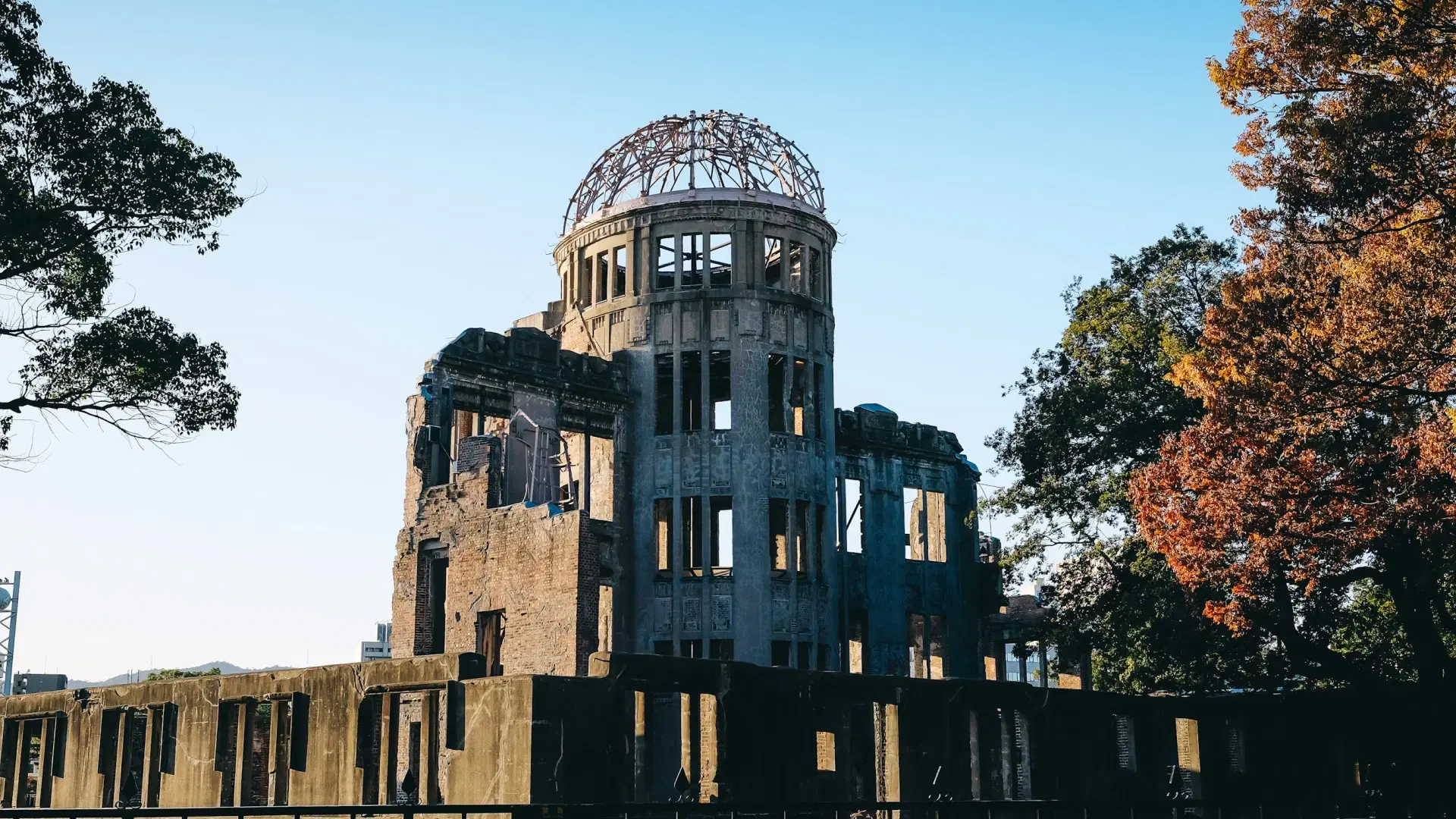
The ceremony takes place in the open air, before the cenotaph that holds the names of all known victims, with the Atomic Bomb Dome visible in the background, its ruined silhouette providing a physical reminder of what the words and rituals address. The Peace Declaration, delivered by the Mayor of Hiroshima, is the ceremony's central text, a statement that has evolved over the decades from expressions of grief and anger into sophisticated appeals for nuclear abolition that address the specific geopolitical conditions of the moment. The declaration is translated and distributed internationally, and its moral authority, grounded in the city's unique experience, gives it a weight that purely political statements cannot claim.
The ceremony's emotional center is the participation of the hibakusha, the survivors of the bombing, whose testimonies and presence connect the contemporary observance to the lived reality of August 6, 1945. As the hibakusha age and their numbers decline, the ceremony takes on an additional urgency: it is not only remembering an event but preserving a form of witness that will soon pass from living memory into history, and the determination to maintain that witness, to carry it forward beyond the last survivor's lifetime, is among the ceremony's most important functions.
The Hiroshima Peace Memorial Ceremony is not a festival but a reckoning, held each year on the anniversary of the atomic bombing at the site where the bomb detonated, in the presence of survivors whose number diminishes with each passing August.
History & Significance
The first Peace Memorial Ceremony was held on August 6, 1947, two years after the bombing, in a city still largely in ruins. The early ceremonies were modest in scale, organized by the municipal government as expressions of communal grief in a period when the American occupation restricted public discussion of the bombing and its effects. The lifting of occupation censorship in the early 1950s allowed the ceremony to expand in scope and ambition, and the construction of the Peace Memorial Park and Museum in the 1950s provided the physical setting that has defined the observance ever since.
The ceremony's evolution reflects the broader trajectory of Hiroshima's relationship with its history. In the immediate postwar decades, the focus was on mourning and physical recovery. As the city rebuilt and the Cold War intensified, the ceremony became increasingly oriented toward advocacy, its declarations calling for nuclear disarmament with a moral authority that transcended partisan politics. The recognition of the Atomic Bomb Dome as a UNESCO World Heritage Site in 1996 affirmed the international significance of the site and the observance conducted within it.
The participation of foreign dignitaries, which has expanded significantly in recent decades, has given the ceremony a diplomatic dimension that complements its commemorative function. The attendance of ambassadors, heads of state, and representatives of nuclear-armed nations carries political significance that the ceremony's organizers leverage through the Peace Declaration's specific appeals and the broader architecture of the event. Each expansion of international participation represents a small but meaningful step in the normalization of nuclear memory as a global rather than exclusively Japanese concern.
What to Expect
The ceremony begins in the early morning, as attendees gather in the Peace Memorial Park in the August heat. The formal program includes the offering of water to the dead, a ritual that recalls the desperate thirst of the bombing's victims; the minute of silence at 8:15; the Peace Declaration by the mayor; addresses by representatives of the national government and the United Nations; and the release of doves. The children's peace declaration, read by selected elementary school students, provides one of the ceremony's most emotionally affecting moments, the clarity and earnestness of young voices articulating the hope for a world they will inherit carrying a power that adult rhetoric often cannot achieve.
The Lantern Floating Ceremony, held on the evening of August 6 on the Motoyasu River that flows past the Peace Memorial Park, extends the day's observance into a visual meditation on loss and hope. Thousands of paper lanterns, inscribed with messages to the dead and prayers for peace, are released onto the river's surface, their candles creating a slowly moving constellation of light that flows past the Atomic Bomb Dome and downstream toward the sea. The lanterns, reflected in the dark water, create an image of luminous beauty whose gentleness contrasts with the violence it commemorates, and the act of writing a message, lighting a candle, and releasing it onto the current provides a participatory ritual through which visitors can engage with the day's significance in a personal and tangible way.
The Peace Memorial Museum, which provides extended hours around the anniversary, offers the documentary and interpretive context for the ceremony. Visiting the museum either before or after attending the ceremony deepens the experience immeasurably, connecting the ritual's abstractions to the specific human realities they represent.