Miyajima
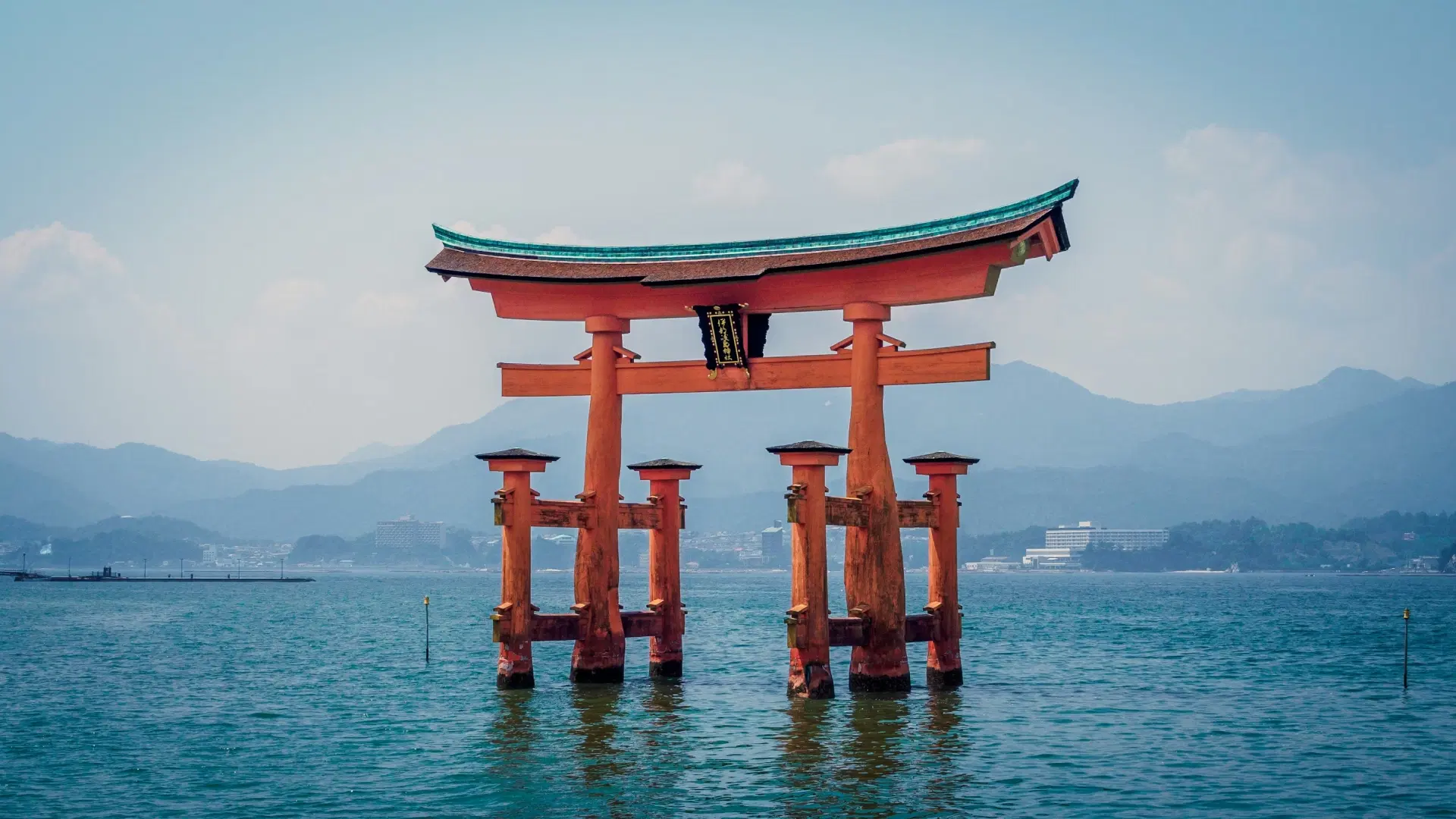
宮島Miyajima is sacred ground. This small island in the Seto Inland Sea, formally known as Itsukushima, has been regarded as a dwelling place of the divine since before recorded history, and the shrine that bears the island's name, constructed over the tidal flats so that its vermilion halls and corridors appear to float upon the water at high tide, is one of the most spiritually and aesthetically charged sites in Japan. The great torii gate standing in the sea before the shrine, rising sixteen meters above the water in its current 1875 incarnation, has become an image so widely reproduced that it risks becoming a mere symbol. But to see it in person, the massive camphor wood pillars planted in the seabed, the curved crossbeams silhouetted against the sky, the water rising and falling around its base with the six-hour rhythm of the tide, is to encounter a work of religious architecture whose power no reproduction can diminish.
The island itself is a landscape of forested mountains, hidden valleys, and coastal paths that extends far beyond the shrine precinct. Mount Misen, at 535 meters the island's highest peak, is accessible by ropeway and on foot, and its summit provides views across the Inland Sea that encompass hundreds of islands scattered across the water in compositions that change with the light, the weather, and the season. The primeval forest that covers Misen's slopes, designated a natural monument, harbors trees and vegetation that have grown undisturbed for centuries, their canopy filtering the light into a green twilight that creates the atmosphere of a natural cathedral.
The deer that roam freely through Miyajima's streets and temple grounds complete the island's sacral atmosphere. Regarded as divine messengers in the Shinto tradition, these gentle, accustomed animals move through the human landscape with a familiarity that blurs the boundary between the natural and the domestic, the sacred and the everyday. Their presence, along with the tidal rhythm that governs the shrine's appearance, the forest that clothes the mountain, and the sea that surrounds everything, creates an environment in which the spiritual and the natural are so completely intertwined that the distinction between them ceases to have meaning.
Highlights
Itsukushima Shrine is the island's reason for being and the starting point for any visit. The shrine complex, constructed in its present form in 1168 under the patronage of Taira no Kiyomori, extends over the tidal flats on a system of wooden platforms and corridors connected by covered walkways, its vermilion-painted woodwork and white walls creating compositions of extraordinary beauty against the blue of the sea, the green of the mountain, and the changing sky. At high tide, the shrine appears to float, its reflection in the water doubling the architecture and creating an image of otherworldly perfection. At low tide, the flats are exposed, and visitors can walk out to the base of the great torii gate, an experience that reveals the massive scale of the structure and the engineering that anchors it against typhoon and tide.
Daisho-in Temple, a Shingon Buddhist complex on the slopes of Mount Misen, provides a spiritual complement to the Shinto shrine below. The temple's approach, up a long stairway lined with prayer wheels and stone lanterns, ascends through increasingly dense forest into a precinct of halls, gardens, and meditation spaces whose variety and visual richness rival far more famous temple complexes. The Henjokutsu cave, said to contain sand from each of the eighty-eight temples of the Shikoku pilgrimage, offers a compressed spiritual journey within a single dark chamber.
The walk along the island's southern coast, from the shrine area around the headland to the quieter beaches and fishing villages on the far side, reveals a Miyajima that most visitors never see. The coastal path passes through forests, over rocky headlands, and past small beaches whose solitude contrasts sharply with the animation of the shrine precinct, and the views across the Inland Sea from the southern shore, where the ferry traffic and the mainland fade from sight, provide a reminder that Miyajima is, beneath its cultural overlays, a wild island in a sheltered sea.
Culinary Scene
Miyajima's culinary identity is dominated by two foods that have become inseparable from the island's image: oysters and momiji manju. The oysters cultivated in the waters surrounding the island benefit from the same tidal currents and nutrient-rich conditions that sustain the broader Hiroshima oyster industry, and the island's waterfront restaurants and stalls serve them in every conceivable preparation: raw on the half shell, grilled over charcoal until the edges char and the center remains creamy, fried in a light panko coating, and in curries, rice dishes, and cream stews that explore the bivalve's versatility. The experience of eating freshly grilled oysters on the waterfront, the shells still hissing from the fire, the Inland Sea visible beyond the shrine's torii gate, is one of Miyajima's most satisfying pleasures.
Momiji manju, the maple leaf-shaped cakes that have been produced on Miyajima since the Meiji era, are the island's sweet counterpart. The traditional filling of smooth red bean paste has been joined by cream, chocolate, cheese, and seasonal flavors, but the classic anko version, purchased warm from one of the shops along the Omotesando arcade and eaten while walking, remains the definitive Miyajima confection. The island's other specialty, anago-meshi, a bowl of rice topped with grilled conger eel glazed in a sweet soy reduction, is a substantial and deeply flavored dish whose preparation, the eel grilled slowly over charcoal until the surface caramelizes while the interior remains tender, requires a skill and patience that the best shops have refined over generations.
The Omotesando arcade, the covered shopping street that connects the ferry terminal to the shrine, is lined with food shops, souvenir vendors, and small restaurants whose offerings provide a continuous culinary experience that accompanies the walk from the secular waterfront to the sacred precinct.
Ryokans in Hiroshima
There are no ryokans in our guide listed in Miyajima. See our selection across Hiroshima.
View ryokans in Hiroshima