Onomichi
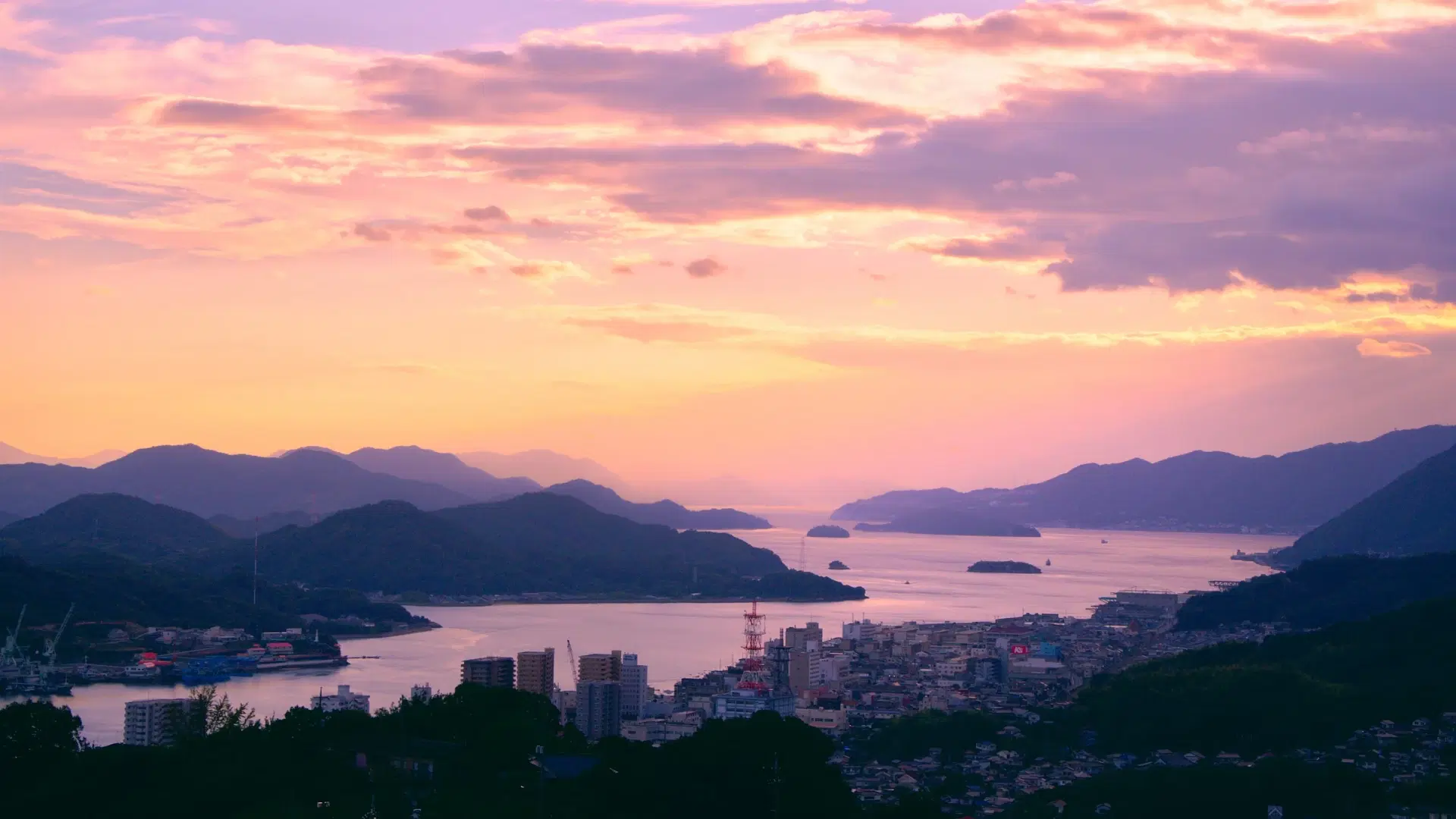
尾道Onomichi is a town that has been discovered by artists and cyclists, cats and pilgrims, without ever losing the quality that drew them: a steep, tangled, slightly melancholic beauty that resists the tidiness of preservation and the efficiency of development with equal stubbornness. Built on the narrow strip of land between a range of steep hills and the Onomichi Channel, the waterway separating Honshu from the island of Mukaishima, this small city on Hiroshima Prefecture's eastern coast has the compressed, vertical quality of a Mediterranean hill town. Stone stairways and narrow lanes climb the hillside through a labyrinth of temples, shrines, weathered wooden houses, and small gardens whose inhabitants have been negotiating the slope for centuries.
The town's literary and artistic associations are extensive and deeply felt. Shiga Naoya, Hayashi Fumiko, and other writers of the modern period lived and worked in Onomichi, drawn by the same atmospheric density that continues to attract filmmakers, photographers, and painters. Ozu Yasujiro set his 1953 masterpiece Tokyo Story partly in Onomichi, and the view from the hillside over the tiled rooftops to the channel and the islands beyond, which appears in the film's most contemplative sequences, remains essentially unchanged. This continuity, the sense that the view a great director composed sixty years ago is the view one sees today, gives Onomichi a temporal depth that most Japanese cities, rebuilt and modernized beyond recognition, can no longer claim.
The Shimanami Kaido, the seventy-kilometer cycling route that connects Onomichi to Imabari on Shikoku via a series of bridges spanning the islands of the Seto Inland Sea, has brought a new generation of visitors to a town that might otherwise have continued its quiet decline. The cycling route, widely regarded as one of the finest in the world, begins at the Onomichi waterfront, and the town has embraced its role as the gateway to this extraordinary journey with a hospitality infrastructure that includes bike-friendly accommodations, repair shops, and the Onomichi U2 complex, a converted waterfront warehouse that houses a hotel, restaurant, and cycling outfitter within a single beautifully renovated industrial space.
Onomichi is a town that has been discovered by artists and cyclists, cats and pilgrims, without ever losing the quality that drew them: a steep, tangled, slightly melancholic beauty that resists the tidiness of preservation and the efficiency of development with equal stubbornness.
Highlights
The Temple Walk, a roughly two-and-a-half-kilometer path that connects twenty-five temples along the hillside above the town, is Onomichi's defining experience. The route climbs from the commercial district near the station through a succession of temple gates, stone staircases, and narrow lanes, each turn revealing a new composition of tiled roofs, weathered wood, and the glinting water of the channel below. The temples themselves range from the grand, including Senko-ji with its vermilion pagoda and panoramic viewing platform, to the intimate, small neighborhood temples whose gardens and graveyards are tended by a single priest. The walk's beauty lies not in any single monument but in the accumulated effect of the ascent, the progressive revelation of the view, and the texture of the built environment through which the path winds.
Senko-ji Park, accessible by ropeway from near the station or on foot via the Temple Walk, crowns the hillside with cherry trees, observation decks, and the restored tower from which the panoramic view over the channel, the Inland Sea islands, and the Shimanami Kaido bridges can be absorbed. The ropeway ride itself, a brief ascent over the rooftops of the old town, provides an aerial perspective on Onomichi's vertical geography that reveals how completely the settlement has adapted itself to the slope.
The Onomichi waterfront and the former warehouse district along the channel have been revitalized in recent years with a sensitivity that honors the industrial character of the original buildings. The Onomichi U2 complex, the HOTEL CYCLE establishment within it, and the cafes and galleries that have opened in neighboring structures have created a contemporary cultural district that connects the old town's historical atmosphere to the cycling culture that has become central to the city's renewed identity.
Culinary Scene
Onomichi ramen is the town's signature dish, a shoyu-based noodle soup distinguished by the layer of pork back fat that floats on its surface, melting into the broth to create a rich, slightly sweet base that coats the flat, medium-width noodles. The style emerged in the postwar period from Chinese-influenced noodle stalls serving the working population of the waterfront, and its robust, unrefined character reflects those origins. The best shops, several of which have been operating for decades from tiny premises along the commercial streets near the station, produce bowls whose depth of flavor belies the apparent simplicity of the preparation, the pork fat adding body and richness to a broth whose base of chicken, small dried fish, and soy sauce provides the essential structure.
The Seto Inland Sea provides Onomichi's kitchens with a marine harvest that includes sea bream, octopus, small shrimp, and the seasonal fish that follow the currents through the narrow channels between the islands. The seafood is served with the directness appropriate to a fishing town: sashimi of the morning's catch, grilled whole fish over charcoal, and simple nimono preparations whose restrained seasoning allows the quality of the ingredients to express itself without interference.
The cafe culture that has developed along the hillside lanes and waterfront provides a contemporary culinary dimension. Small, independently operated coffee shops, bakeries, and lunch counters have opened in renovated houses and warehouses, their menus reflecting a creative sensibility that draws on local ingredients while engaging with broader culinary trends. Lemon-flavored specialties, from desserts to cocktails, celebrate Hiroshima Prefecture's position as Japan's leading lemon producer, the fruit cultivated on the Inland Sea islands visible from the Onomichi waterfront.
Ryokans in Hiroshima
There are no ryokans in our guide listed in Onomichi. See our selection across Hiroshima.
View ryokans in Hiroshima