Takayama Festival
高山祭The Takayama Festival is the artistic culmination of a mountain city that transformed its isolation into creative mastery. Twice each year, in spring and autumn, the streets of Takayama's old town fill with yatai, ornate festival floats whose lacquerwork, carvings, tapestries, and mechanical puppets represent some of the finest decorative craftsmanship in Japan. The spring edition, the Sanno Matsuri held at Hie Shrine, parades twelve yatai through the merchant district, while the autumn Hachiman Matsuri at Sakurayama Hachiman Shrine brings eleven floats into the streets. Each float is a mobile gallery, its surfaces dense with carvings of lions, phoenixes, and mythological scenes executed by the Hida no Takumi, the master woodworkers whose skills were so valued that the imperial court summoned them to Kyoto and Nara to work on palaces and temples.
The festival has been designated a UNESCO Intangible Cultural Heritage, a recognition that places it among the most significant matsuri traditions in the world. What distinguishes the Takayama Festival from other float processions in Japan is the concentration of artistic achievement in each individual yatai. These are not large-scale structures designed for spectacle at a distance but intimate works of art, their details revealed only upon close inspection: the grain of a paulownia panel carved to suggest flowing water, the gold leaf applied to a phoenix's feathers in microscopic gradations, the jointed puppets that perform dances and acrobatic feats through an intricate system of strings operated by puppeteers hidden within the float's interior. The scale is human, the craftsmanship transcendent.
The evening procession, in which the yatai are fitted with dozens of paper lanterns and drawn through the darkened streets, transforms the festival into an experience that operates on the senses with a power that daytime viewing cannot replicate. The lanterns cast a warm, trembling light across the lacquer and gold surfaces, the shadows shift and deepen with each movement of the float, and the sound of wooden wheels on stone pavement, accompanied by flute and drum, fills the narrow streets with a resonance that seems to vibrate in the chest.
The Takayama Festival is the artistic culmination of a mountain city that transformed its isolation into creative mastery.
History & Significance
The origins of the Takayama Festival reach to the sixteenth century, when the town's growing prosperity under the Kanamori clan allowed the construction of the first festival floats. The yatai evolved from simple portable shrines into increasingly elaborate vehicles of artistic display during the Edo period, as the wealth generated by Hida's timber industry and the competitive pride of the town's merchant neighborhoods drove successive generations of craftsmen to surpass their predecessors. The Hida no Takumi, whose reputation as master woodworkers had been established through imperial commissions centuries earlier, applied their skills to the yatai with an intensity that produced works rivaling the finest shrine and temple architecture in the country.
The festival survived the political upheavals of the Meiji Restoration and the economic disruptions of the twentieth century through the devotion of the neighborhood associations that own and maintain the floats. Each yatai belongs to a specific chonai, a traditional urban neighborhood, and the cost of preservation, restoration, and the periodic renewal of textiles and lacquerwork is borne by these communities through a combination of private contribution and public subsidy. This system of distributed ownership has proven remarkably resilient, ensuring that the festival is not a government program or a tourism initiative but a community practice in which artistic heritage is maintained by the people who live closest to it.
What to Expect
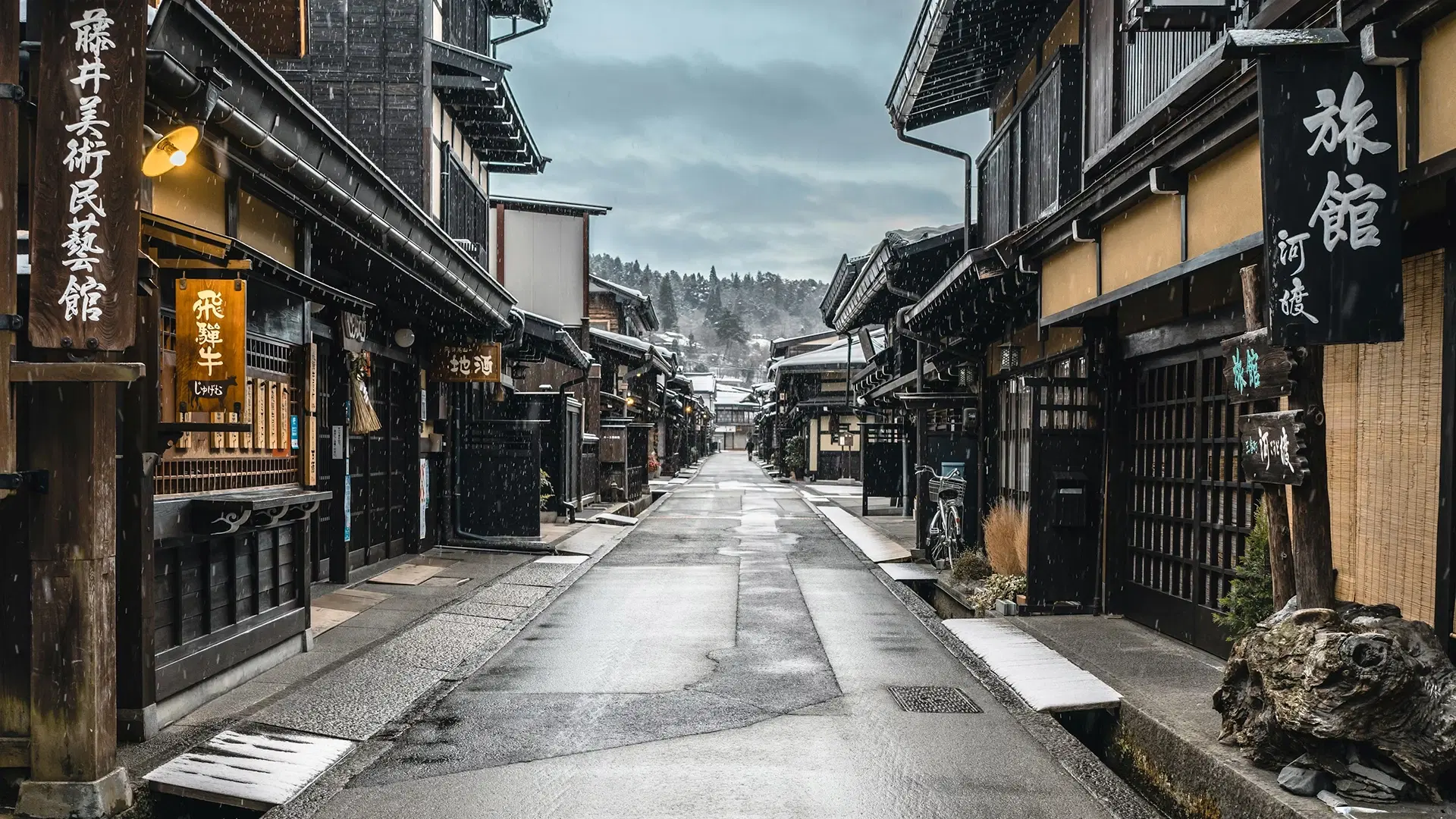
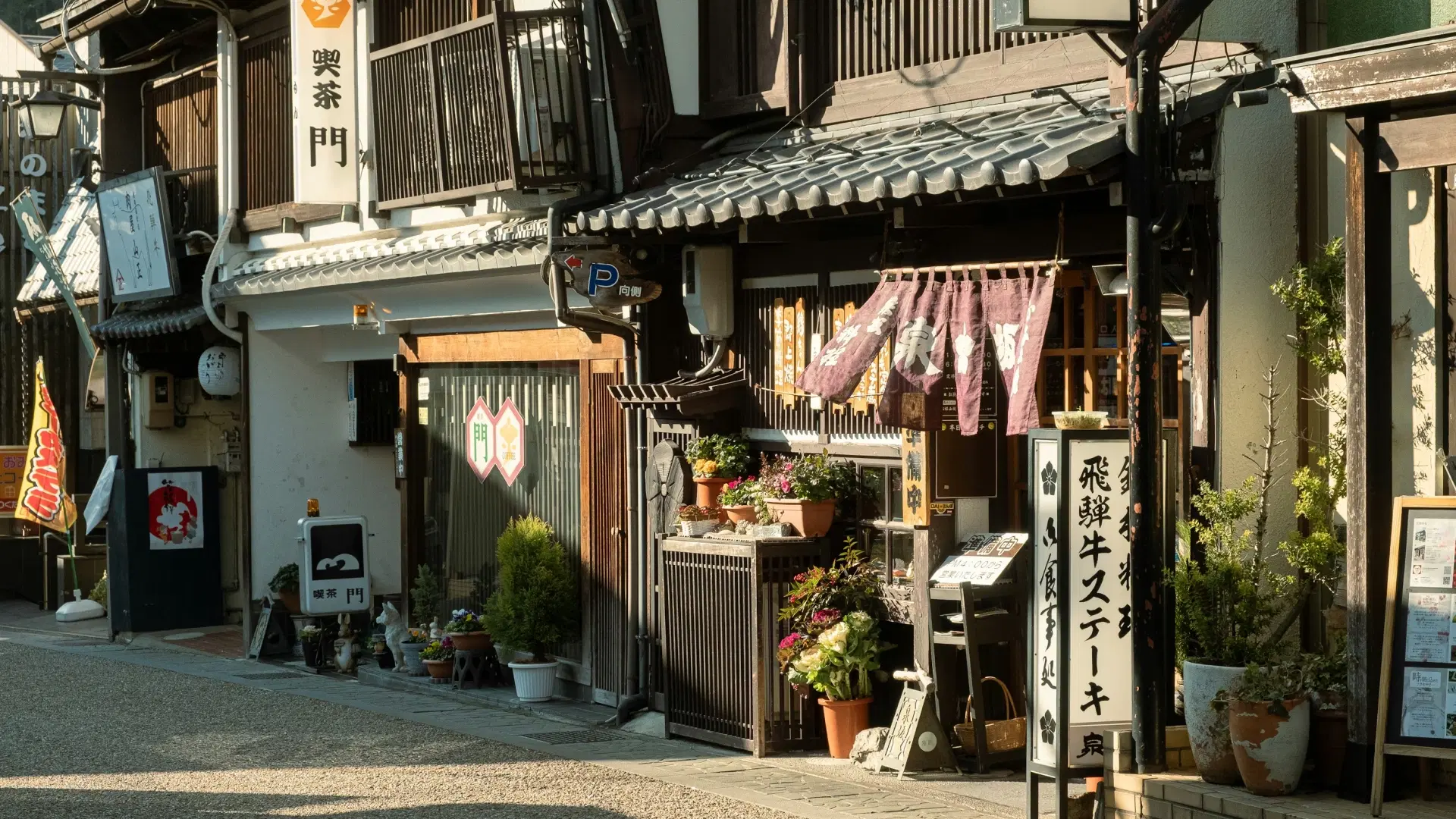
The daytime procession begins in the late morning, with the yatai drawn from their storehouses through the streets of the old town to a staging area near the shrine. The route passes through the Sanmachi-suji merchant district, and the narrow streets concentrate the visual and auditory impact of the floats, their carved and lacquered surfaces passing at arm's length from spectators pressed against the wooden facades of sake breweries and miso shops. The karakuri puppets perform at scheduled intervals, their mechanical dances and costume changes drawing particular crowds. Each performance lasts only a few minutes, but the skill of the hidden puppeteers, who manipulate dozens of strings to produce movements of startling fluidity and expression, rewards close and repeated viewing.
The evening procession, beginning around 6 PM, is the festival's emotional peak. Each yatai is fitted with as many as one hundred paper lanterns, and the procession moves through streets from which all modern lighting has been extinguished. The effect is mesmerizing: the floats become vessels of light moving through darkness, their ornamental surfaces catching and releasing the lantern glow in patterns that shift with every step of the pullers. The silence of the watching crowd, broken only by the music and the creak of the wheels, creates an atmosphere of collective reverence that transcends the category of entertainment.
The Takayama Festival Floats Exhibition Hall, located beside Sakurayama Hachiman Shrine, displays four of the autumn festival's yatai on a rotating basis throughout the year, allowing visitors who cannot attend the festival itself to examine the craftsmanship at close range. The hall provides useful context, but the static display cannot replicate the experience of seeing the floats in motion, illuminated, and surrounded by the community that has sustained them for centuries.