Takayama
高山Takayama occupies a broad basin in the heart of the Hida Mountains, surrounded by peaks that exceed three thousand meters and sealed, for much of its history, behind passes that were impassable for months at a time. This geographic isolation produced a city of remarkable self-sufficiency and cultural density, a mountain settlement that developed its own architectural traditions, craft vocabularies, and culinary practices with only intermittent influence from the lowland capitals. The result is a place that feels like a parallel civilization, recognizably Japanese yet distinctly Hida, its timber streetscapes and artisan workshops carrying the weight of a culture that evolved in conversation with alpine wilderness rather than coastal plain.
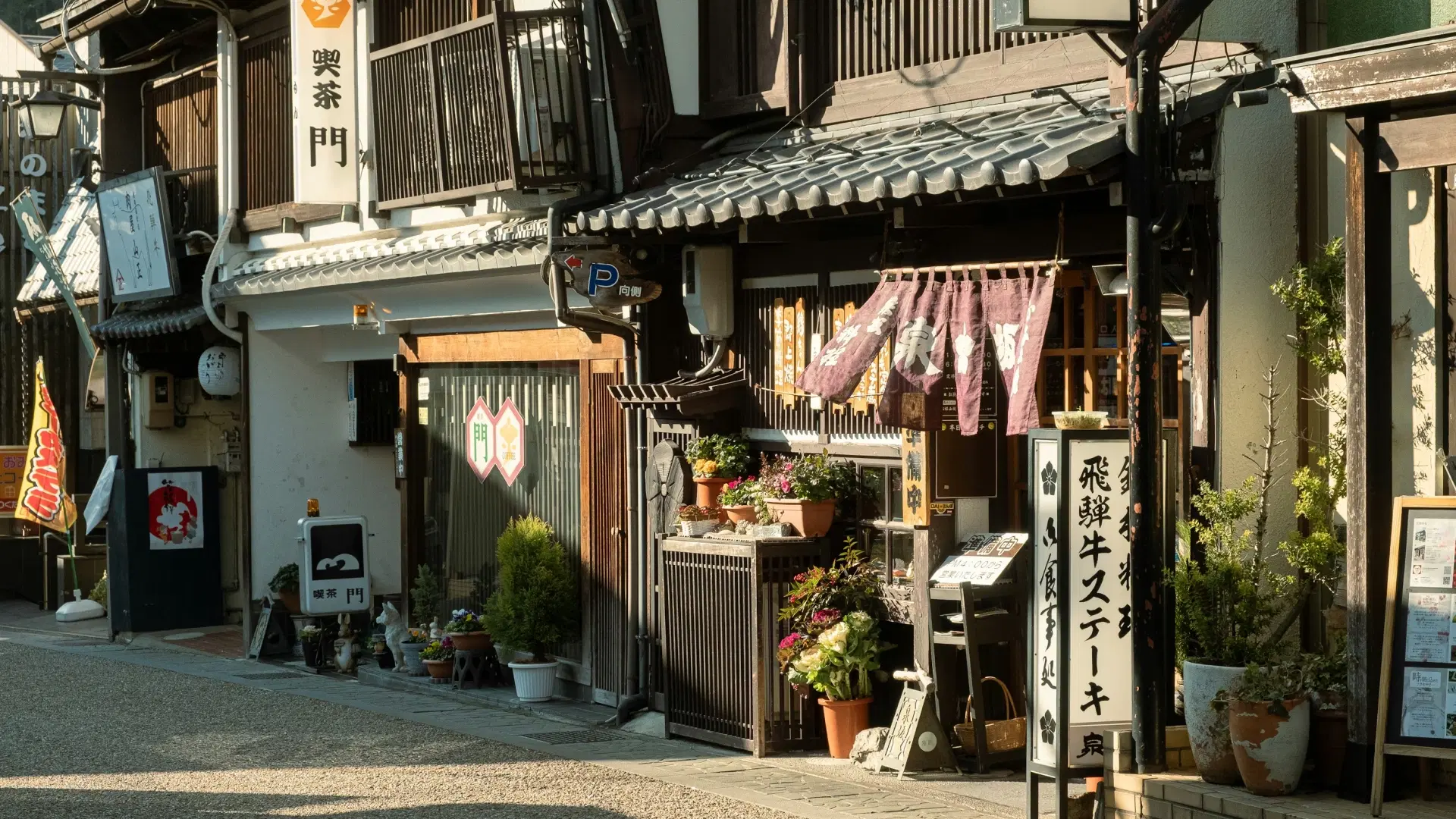
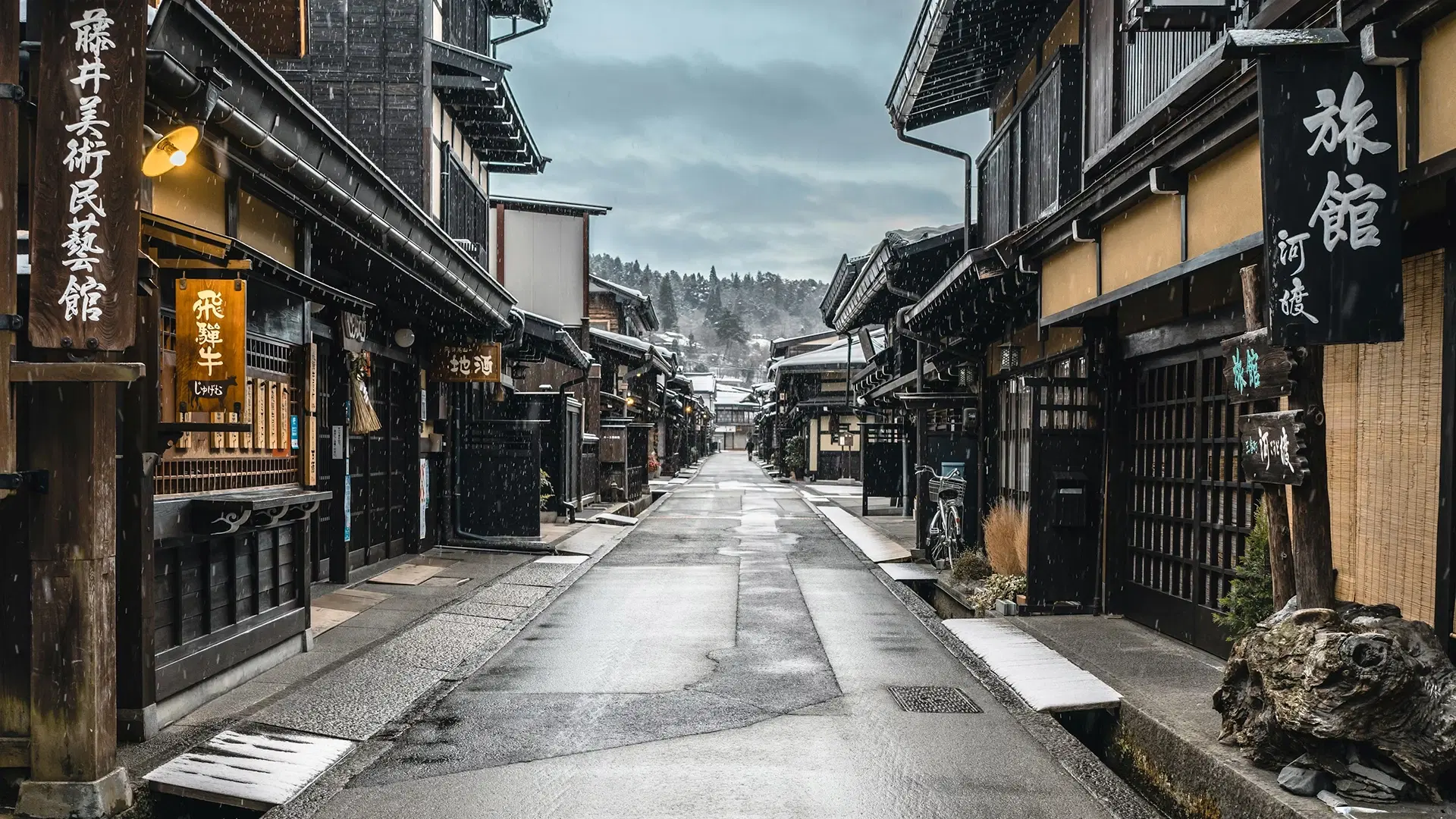
The old town, centered on the Sanmachi-suji district, preserves one of the most complete Edo-period merchant streetscapes in Japan. Three parallel lanes of dark-timbered sake breweries, miso shops, and merchant houses run along the eastern bank of the Miyagawa River, their latticed facades and overhanging eaves creating a visual rhythm that has changed little in two centuries. The effect is not of a museum but of a living commercial district where the cedar ball hanging above a doorway still signals that new sake has been pressed and the morning markets along the river still sell vegetables grown on the slopes above the city. Takayama's preservation is genuine because the buildings remain in use, their interiors adapted to contemporary commerce without sacrificing the structural integrity that makes them valuable.
The cultural depth of the city extends well beyond its architecture. The Takayama Jinya, the only surviving Edo-period government office building in Japan, documents the administrative sophistication of the Tokugawa shogunate's direct rule over this resource-rich domain. The Hida Folk Village, an open-air museum on a hillside above the city, gathers farmhouses from throughout the region, including massive gassho-zukuri structures relocated from Shirakawa-go and the surrounding valleys. And the city's festival tradition, expressed in the magnificent yatai floats of the Takayama Matsuri, reveals a community that channeled its isolation into artistic production of the highest order.
Takayama occupies a broad basin in the heart of the Hida Mountains, surrounded by peaks that exceed three thousand meters and sealed, for much of its history, behind passes that were impassable for months at a time.
Highlights
The Sanmachi-suji district is the essential Takayama experience, a place where the texture of daily life in an Edo-period merchant town can be felt rather than merely observed. The three streets, Kami San-no-machi, Kami Ni-no-machi, and Kami Ichi-no-machi, are lined with buildings whose dark cedar facades, white plaster walls, and narrow entrances open onto unexpectedly deep interiors where generations of commerce have left their mark. The sake breweries are the district's anchoring institutions, several of them offering tastings that reveal the particular character of Hida sake, brewed with snowmelt water and local rice in a climate that produces slow, cold fermentation. Walking these streets in the early morning, before the tour groups arrive, with the river mist still clinging to the rooftops and the only sounds the scraping of brooms on flagstone, is to enter a Japan that most visitors encounter only in photographs.
The Takayama Jinya demands attention not for spectacle but for substance. This former magistrate's office, with its reception rooms, courtrooms, rice storehouses, and torture chamber preserved intact, documents the machinery of Tokugawa governance with a completeness found nowhere else in the country. The tatami rooms, arranged in strict hierarchical sequence from the entrance to the innermost chambers, communicate the social order of the Edo period through spatial organization, and the rice storehouses, enormous timber structures designed to hold the tax grain collected from the surrounding domain, speak to the agricultural wealth that justified the shogunate's direct administration of this remote region.
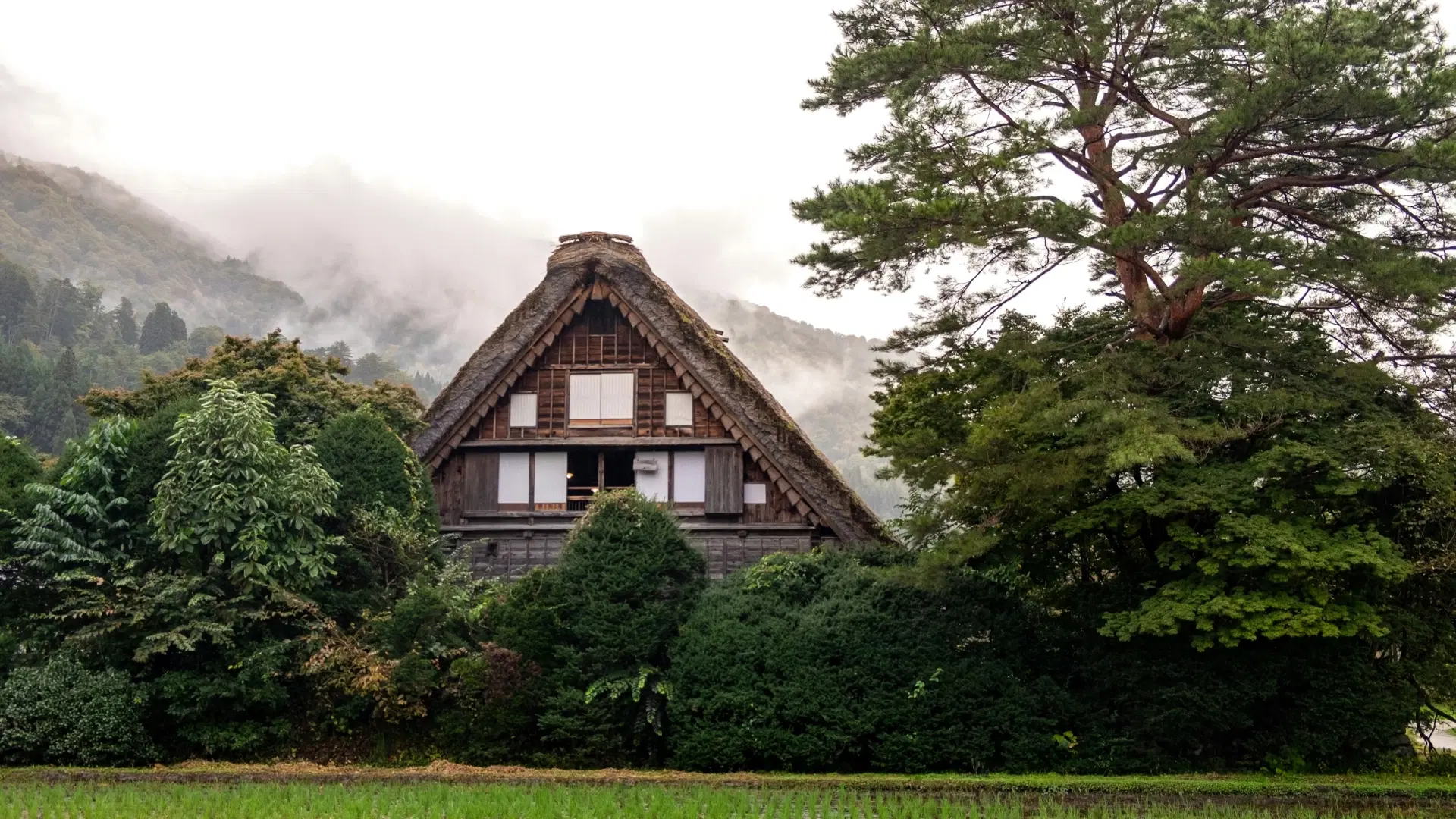
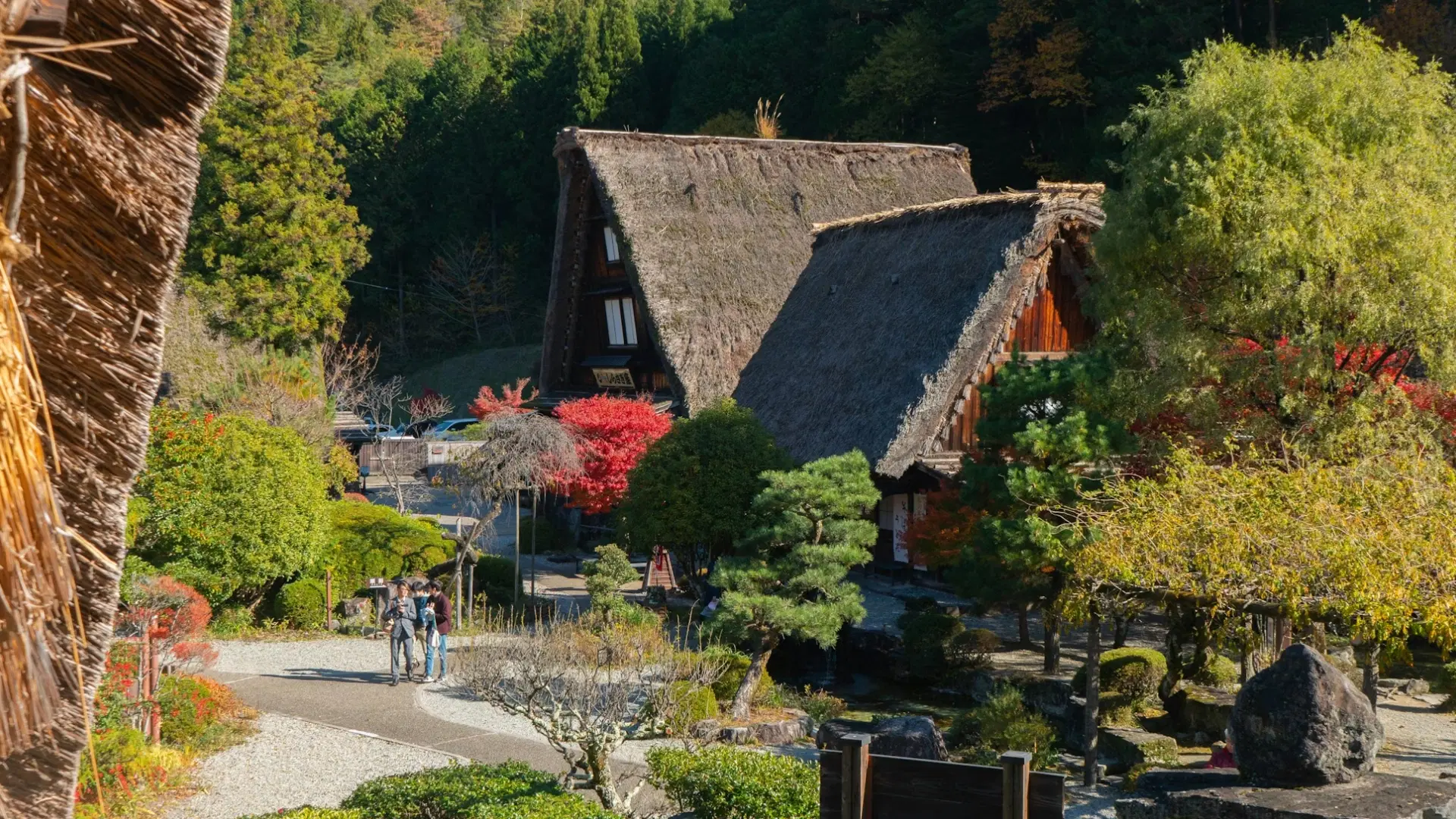
The Hida Folk Village, Hida no Sato, spreads across a wooded hillside overlooking the city and the mountains beyond. More than thirty traditional buildings, including gassho-zukuri farmhouses, storehouses, shrines, and workshops, have been relocated and reconstructed here, creating an architectural landscape that documents the building traditions of one of Japan's most demanding environments. The interiors, furnished with period tools and household goods, reveal the ingenuity required to sustain life through long winters at altitude, and the demonstrations of Hida's traditional crafts, including the woodworking techniques that produced the master carpenters known as Hida no Takumi, connect the built environment to the artisan culture that created it.
Culinary Scene
Takayama's cuisine is shaped by altitude, climate, and the creative necessity of a community that could not rely on the sea. Hida beef, the region's most celebrated ingredient, comes from cattle raised in the clean mountain air and fed on grain and grass from the surrounding highlands, producing meat with a marbling and tenderness that places it among the finest wagyu in Japan. Served as steak, as sushi atop small pillows of vinegared rice, or grilled on skewers at the morning market stalls, Hida beef demonstrates the range of expression that a single extraordinary ingredient can achieve. The beef sushi, a preparation unique to Takayama, places thin slices of lightly seared beef on rice and finishes them with a touch of soy and wasabi, the warmth of the meat against the cool rice creating a contrast of temperature and texture that is addictive in its simplicity.
The mountain landscape provides the balance to the richness of the beef. Hoba miso, a preparation in which fermented soybean paste is grilled on a dried magnolia leaf over a tabletop charcoal brazier along with mushrooms, green onions, and sometimes strips of beef, is the signature dish of the ryokan breakfast table, its smoky, savory complexity a perfect start to a cold mountain morning. Sansai, the wild mountain vegetables gathered from the slopes above the city in spring, appear as tempura, pickles, and simmered dishes whose slightly bitter, intensely vegetal flavors carry the taste of the forest itself. The tsukemono of Takayama, particularly the red turnip pickle called akakabu-zuke, are among the finest in Japan, their color and tang a product of the long fermentation that the cold climate encourages.
Takayama ramen, served in a soy-based broth of unusual depth, has earned a national following that belies the city's modest size. The noodles are thin and curly, the broth dark and concentrated, and the overall effect is warming and sustaining in a way that speaks directly to the needs of a mountain population accustomed to physical labor in cold weather.