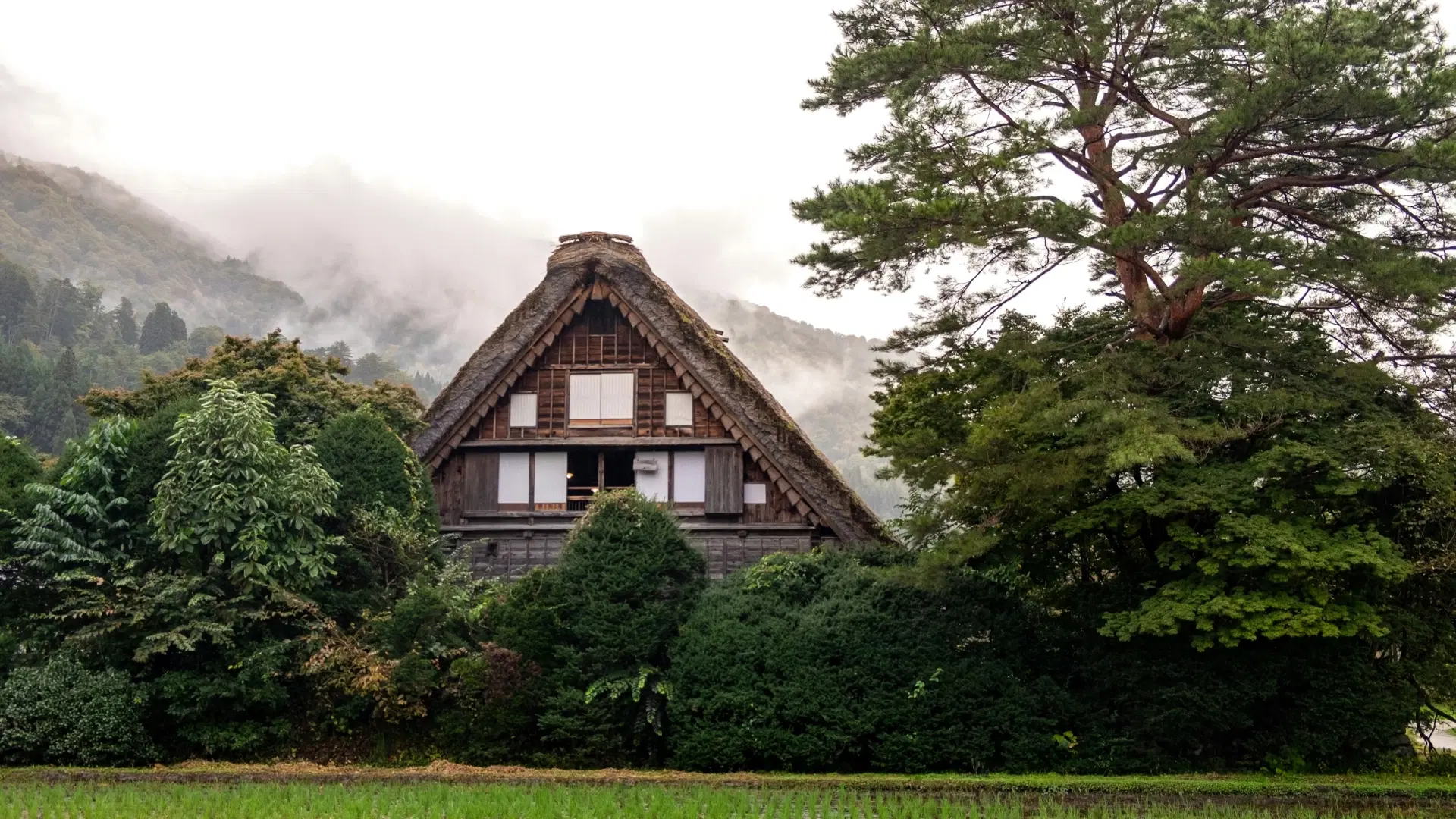
Shirakawa-go
白川郷Shirakawa-go is a village that could only have been built where it stands. Nestled in the deep valley of the Shogawa River in the mountainous northwest of Gifu Prefecture, this UNESCO World Heritage settlement of gassho-zukuri farmhouses represents one of the most complete surviving examples of a vernacular architecture shaped entirely by the demands of a specific landscape. The steep thatched roofs, angled at sixty degrees to shed the region's extraordinary snowfall, the massive timber frames joined without nails, the interior spaces organized around the central irori hearth whose rising warmth sustained the silkworm cultivation on the upper floors: every element of the gassho-zukuri form is a response to the conditions of life in a valley that receives some of the heaviest snow in Japan.
The main settlement of Ogimachi, home to 114 gassho-zukuri structures, occupies a river terrace surrounded by mountains on three sides and connected to the outside world by a single road that, until the construction of modern tunnels, was often impassable in winter. This isolation preserved both the buildings and the communal practices that sustain them. The most significant of these is yui, the system of mutual labor exchange through which the entire village participates in the re-thatching of each roof, a task that requires several hundred workers and occurs on a cycle of thirty to forty years. Yui is not nostalgia; it is the practical mechanism by which architectural heritage is maintained, and its continuation is what separates Shirakawa-go from a museum.
The village's inscription as a World Heritage Site in 1995 brought international recognition and, inevitably, the pressures of tourism. Yet Shirakawa-go has managed this tension with more grace than many heritage sites, maintaining the balance between visitor access and residential privacy through careful planning and the simple fact that more than five hundred people continue to live and work within the gassho-zukuri houses. The village remains a community first and a destination second, and this lived quality is precisely what makes it worth the journey.
Shirakawa-go is a village that could only have been built where it stands.
Highlights
The Ogimachi observation deck, reached by a short shuttle bus ride or a twenty-minute uphill walk from the village center, provides the iconic view of Shirakawa-go: the thatched roofs arrayed across the valley floor, the rice paddies stretching to the river, the mountains rising in forested layers behind. This perspective reveals the logic of the settlement pattern, the houses oriented with their narrow gable ends facing the prevailing wind, the spacing between structures calibrated to allow sunlight and reduce fire risk. In winter, when the roofs carry their burden of snow and the valley is white from river to ridgeline, this view achieves a beauty so complete that it seems almost composed, though it is entirely the product of practical decisions made by communities responding to environmental necessity.
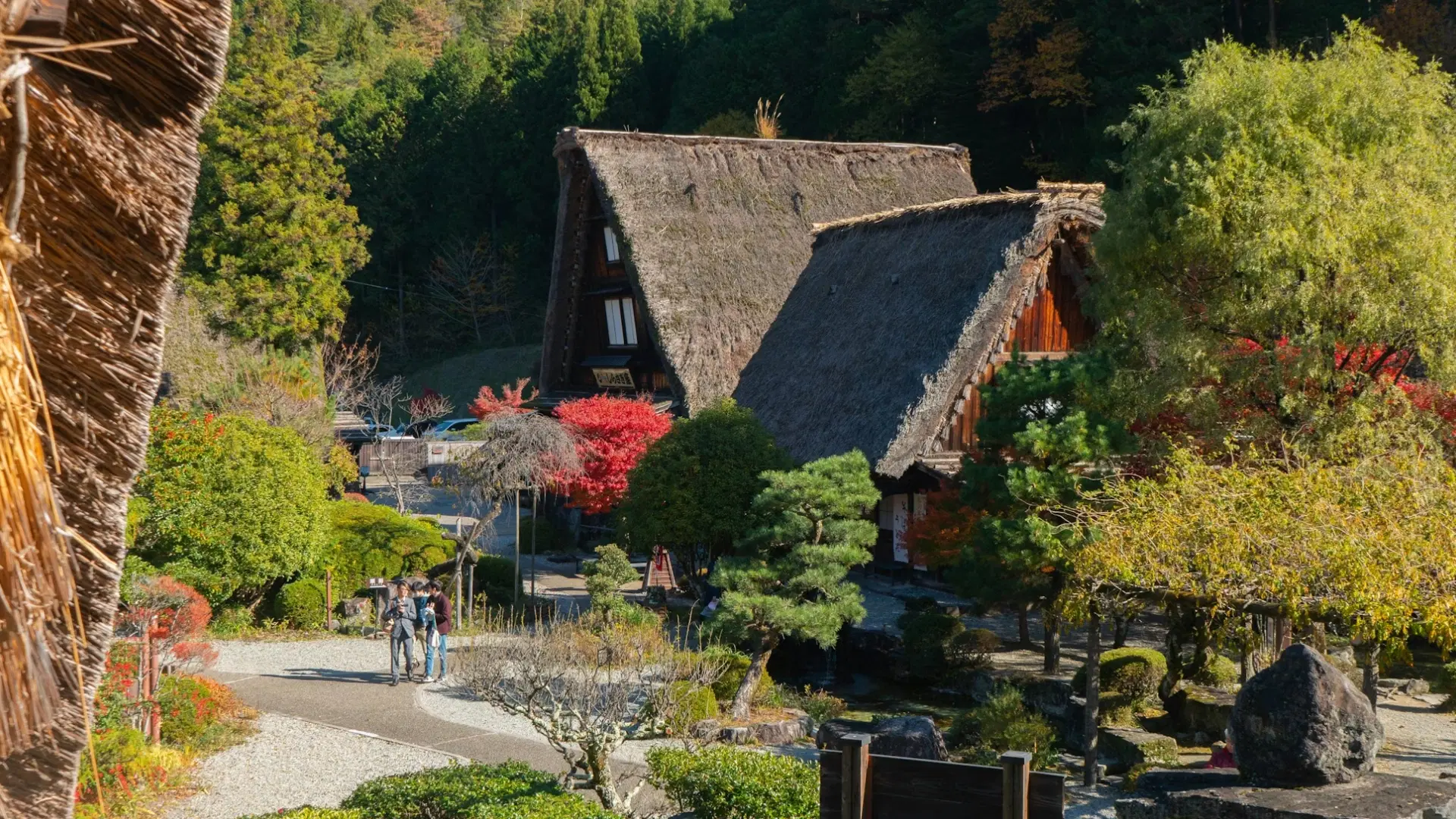
Within the village, several gassho-zukuri houses are open to visitors, each offering a different perspective on the architecture and the life it supported. The Wada House, the largest and most elaborate, was the residence of a wealthy family that served as the village headman, and its interior displays the full hierarchy of the gassho structure, from the formal reception rooms on the ground floor through the working spaces and storage areas of the upper levels. The Kanda House and the Nagase House provide additional variations, and the Shirakawa-go Gassho-zukuri Minkaen, an open-air museum on the village outskirts, gathers relocated farmhouses from surrounding areas that have lost their original settlements.
Walking the village paths in the early morning or late afternoon, when the day-tripper buses have departed, reveals Shirakawa-go at its most genuine. The sound of water in the irrigation channels, the smoke rising from irori hearths, the vegetable gardens tended beside four-hundred-year-old farmhouses: these details, invisible in the midday crowds, restore the village to its essential character as a place where people have found ways to live in extraordinary circumstances for extraordinary lengths of time.
Culinary Scene
Shirakawa-go's cuisine belongs to the mountain tradition of preservation and resourcefulness that defines cooking in Japan's snow country. The village's isolation, its long winters, and its distance from the sea produced a culinary vocabulary built around ingredients that could be dried, pickled, fermented, or stored through the cold months. Tofu, made from soybeans grown in the surrounding valleys, is prepared in the dense, firm Gokayama style and grilled over charcoal with miso. River fish, particularly iwana char and ayu sweetfish, are salted and grilled whole, their clean flavors reflecting the clarity of the mountain streams. Sansai, the wild vegetables gathered from the slopes in spring, appear in preparations that range from delicate tempura to robust pickles aged through the winter.
Staying overnight in one of the village's gassho-zukuri minshuku offers the most authentic culinary experience. Meals are served beside the irori hearth, where charcoal provides both heat and cooking surface, and the menu reflects what the season and the surrounding landscape have provided. The simplicity of these meals, a grilled fish, a bowl of mountain vegetable soup, pickles from the house's own production, rice cooked over the fire, is not a limitation but a distillation, each dish carrying the flavor of its origin with a directness that elaborate preparations cannot achieve. Local sake, brewed in small quantities with water from the mountain springs, accompanies these fireside meals with a warmth that extends well beyond its alcoholic content.
Ryokans in Gifu
There are no ryokans in our guide listed in Shirakawa-go. See our selection across Gifu.
View ryokans in Gifu