Breakfast at a Ryokan
Why the morning meal at a Japanese inn may be the most revelatory dining experience of your trip
The kaiseki dinner gets the attention. But ask any experienced ryokan traveler which meal they remember most vividly, which meal genuinely shifted their understanding of what food can be, and the answer is almost invariably the same: breakfast.
The Japanese ryokan breakfast is a revelation. It presents a vision of morning eating so fundamentally different from anything in the Western tradition that it requires a recalibration of expectations. There is no toast. There is no cereal. In their place is a meal of startling variety and quiet sophistication that nourishes the body, honors the season, and prepares you for the day ahead.
Before the Meal: The Morning Bath
The morning at a Japanese inn begins not at the table but in the bath. Most ryokans open their communal baths at dawn, and the custom of asa-buro is deeply embedded in the ryokan routine. The body emerges warm, alert, and genuinely hungry. The breakfast that follows is designed for this specific state: a body warmed by the bath, a palate cleansed by mineral water, and an appetite prepared for real food.
At most ryokans, the morning bath (asa-buro) opens between 5:30 and 6:00 AM. Bathing before breakfast sharpens the appetite and prepares the body for the meal ahead. The communal baths are often at their quietest and most serene in these early hours.
The Components
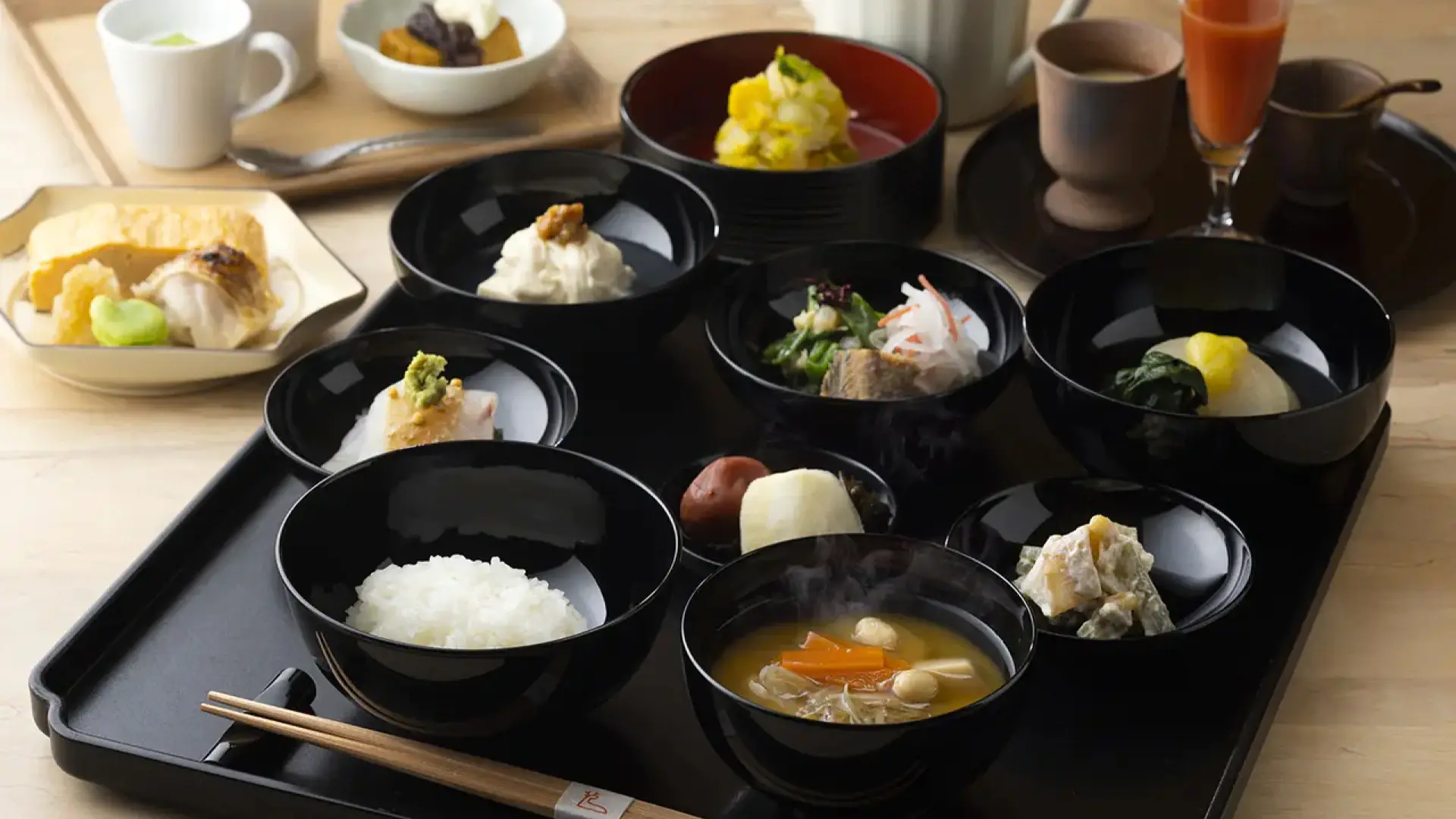
Rice is the center of gravity. At the finest ryokans, the breakfast rice may be a named cultivar from a specific paddy, cooked in spring water in a clay donabe pot. Miso soup anchors the liquid component. Grilled fish is the protein centerpiece. Tamagoyaki, the Japanese rolled omelet, is a breakfast staple with regional personality: slightly sweet in Kanto, savory in Kansai.
Some ryokans offer onsen tamago, eggs slow-cooked in the property's own hot spring water, producing a remarkable custard-like texture that could exist nowhere else.
The difference between this rice and the rice most people eat at home is the difference between a hand-picked tomato still warm from the vine and a supermarket tomato in February.
The Ryokan Guide Editorial
The Supporting Cast
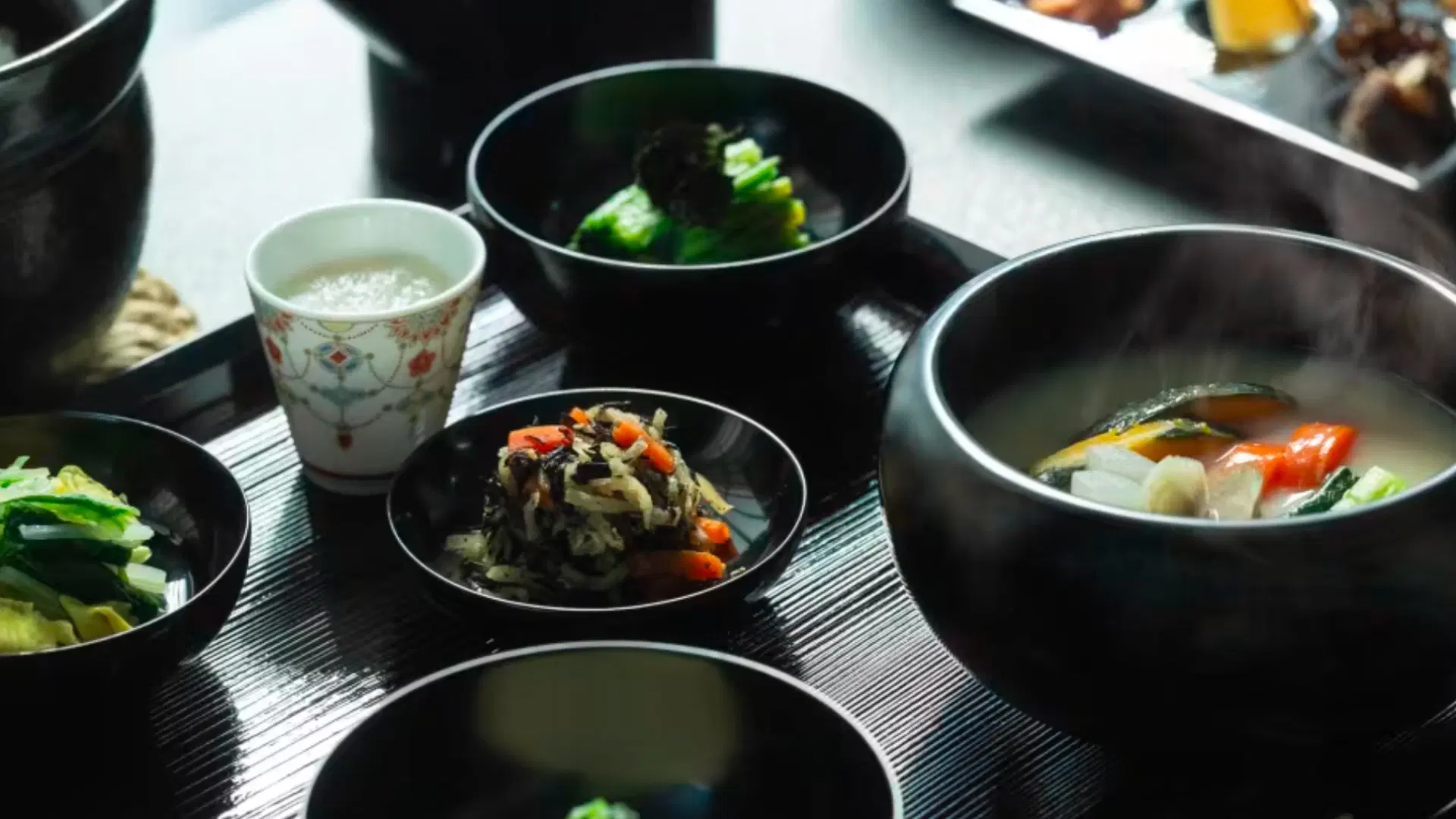
Pickles (tsukemono) are indispensable. They provide acidity, crunch, and fermented depth. Natto, tofu, nori, and an array of small side dishes round out the tray, each adding a different flavor note and texture to the meal's overall composition.
The Rhythm of Eating
There is no prescribed order. The meal invites you to move freely, following your appetite, alternating between salty, sour, sweet, and umami. The rice bowl is your constant companion. This orbital pattern, circling back to the grain at the center, is the natural rhythm of Japanese eating.
A Different Idea of Morning
What the ryokan breakfast ultimately offers is not just different food but a different idea of what morning eating can be. The fermented foods, the protein, the complex carbohydrates, the mineral-rich soup provide a sustained, even energy that carries through the morning. Beginning the day with a beautiful, thoughtfully composed meal establishes a quality of attention that persists long after the tray is cleared.
The ryokan breakfast is not just a meal. It is an argument, made gently and deliciously, for a better way to begin the day.
The Ryokan Guide Editorial