Kusatsu
草津Kusatsu is the onsen against which all others are measured. Perched at 1,200 meters in the mountains of northwestern Gunma, this town of fewer than seven thousand permanent residents has been drawing bathers for centuries with water of extraordinary mineral potency. The source springs produce over 30,000 liters per minute, making Kusatsu one of the most voluminous natural hot spring outputs in Japan. The water itself, with a pH hovering near 2.0, is acidic enough to dissolve iron nails and inhospitable to virtually all bacteria, a natural sterilization that early visitors recognized long before the science was understood.
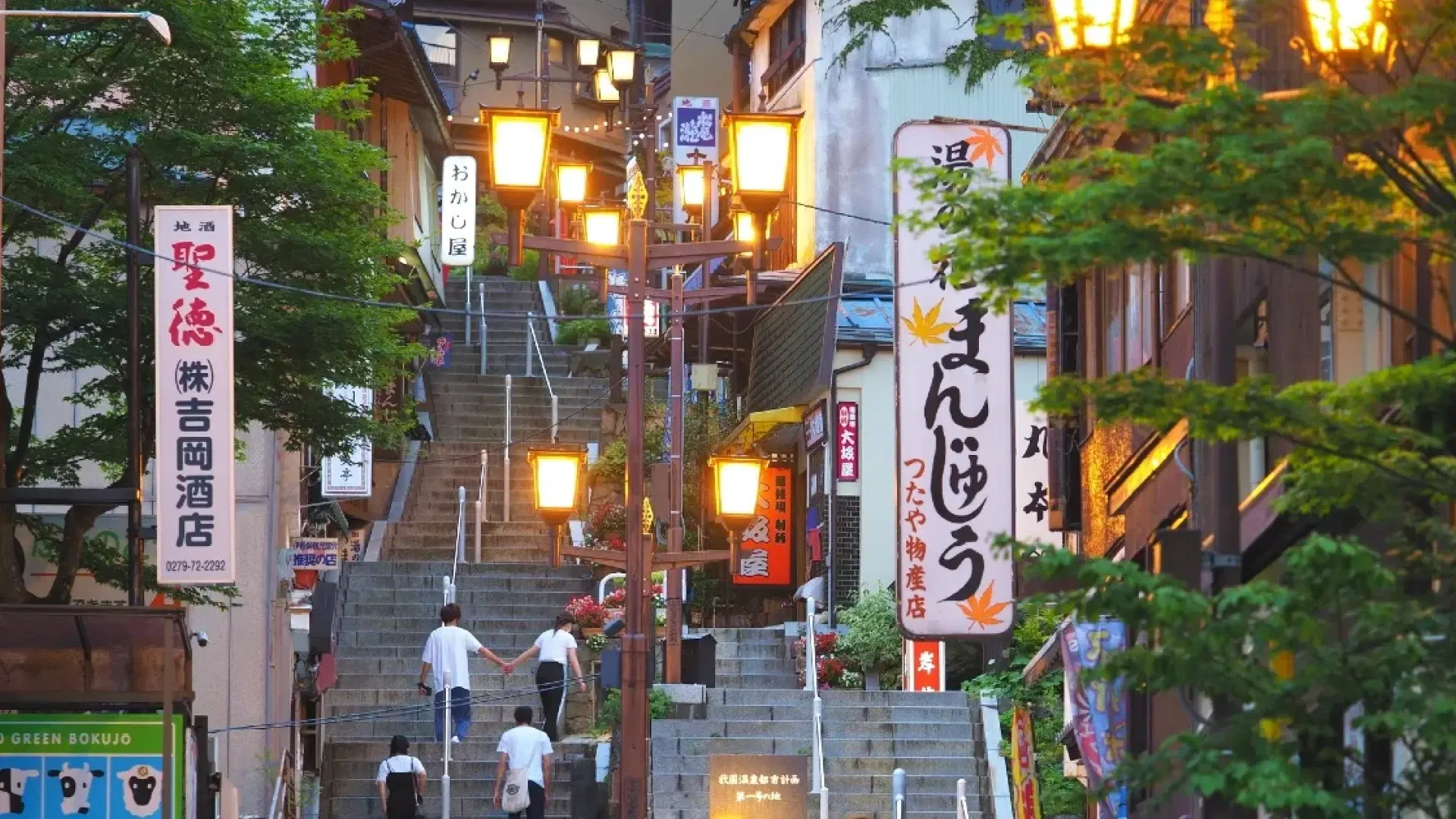
The Yubatake, the great hot water field at the town's center, is both functional infrastructure and civic theater. Steaming water cascades down wooden channels where it cools and deposits its minerals before being distributed to the surrounding bathhouses and ryokans. The sulfurous haze that perpetually hangs over the Yubatake gives Kusatsu its distinctive atmosphere: you smell the town before you see it, and the scent, once known, is never forgotten.
The tradition of yumomi, the rhythmic stirring of the scalding water with large wooden paddles set to the accompaniment of folk song, was developed as a practical solution to the problem of cooling the water without dilution. Dilution, the locals understood, would compromise the therapeutic power that made Kusatsu famous. The ritual continues today, both as a performance and as a living practice in the bathhouses where the old methods persist.
Kusatsu is the onsen against which all others are measured.
Highlights
The Yubatake commands the center of town and demands attention at different hours. At dawn, when the streets are empty and the steam rises thickest in the cold air, the field has a primordial quality. At night, under illumination, the green-tinged water glows against the wooden channels. The surrounding bath district includes Otaki no Yu, a large public bath with multiple pools of varying temperature, and the Jikan-yu time baths, where bathers enter the extremely hot water for precisely timed intervals under the guidance of a bath master.
The Netsu no Yu building at the Yubatake's edge hosts daily yumomi demonstrations, where women in traditional dress stir the water to the rhythm of Kusatsu folk songs. The performance is tourist-oriented but rooted in genuine practice, and participation sessions allow visitors to try the paddles themselves.
Beyond the baths, Kusatsu's mountain setting offers excellent hiking. The Shirane Highlands, accessible by bus from town, provide alpine meadows, volcanic lakes, and panoramic views. Sainokawara Park, a short walk from the center, features an enormous free open-air bath beside a river where hot spring water flows through a landscape of steaming rocks and bare earth, a scene that captures the volcanic energy underlying the entire town.
Culinary Scene
Kusatsu's cuisine is mountain fare elevated by the onsen town's hospitality tradition. Wild boar nabe, venison, and river fish from the mountain streams appear on ryokan menus alongside more refined kaiseki preparations. The local specialty is onsen tamago, eggs slow-cooked in the hot spring water to achieve a custard-like texture throughout, their shells sometimes tinted by the minerals. Yaki-manju, Gunma's signature grilled miso-glazed buns, are sold at stalls along the main street and pair excellently with a post-bath stroll.
The town's limited size concentrates its dining into a compact area around the Yubatake, where soba shops, izakaya, and small restaurants serve meals that prioritize warmth and substance over refinement. Several ryokans include elaborate dinner courses that showcase the mountain ingredients of the season.