Gunma
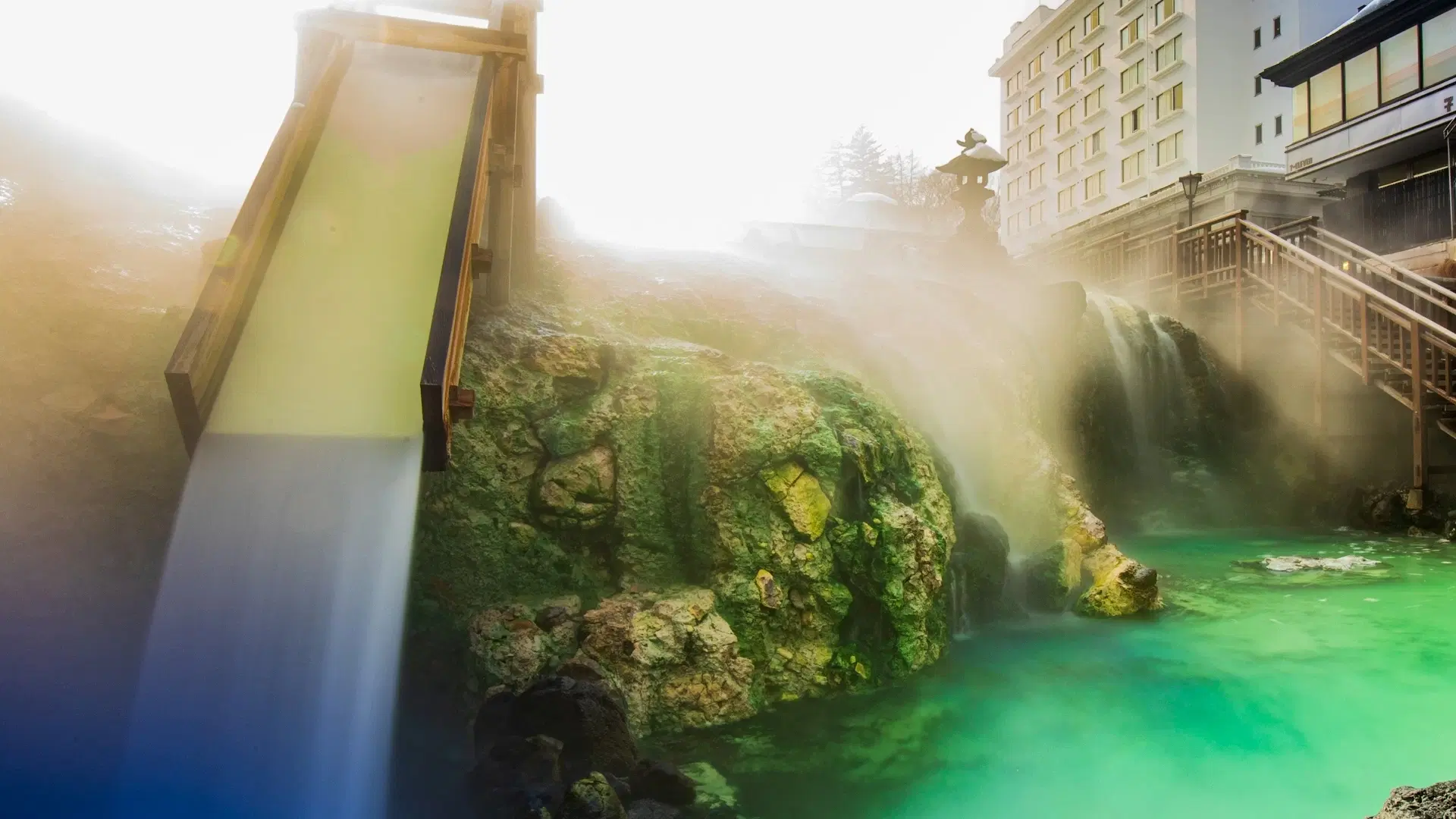
群馬県Gunma is Japan's hot spring heartland. No other prefecture concentrates so many celebrated onsen into such a compact territory, and no other place so thoroughly weaves bathing into the fabric of daily life. Kusatsu, consistently ranked the most popular onsen town in Japan, fills the mountain air with sulfuric steam and the sound of wooden paddles churning the scalding waters at Yubatake, the great hot water field at the town's center. The ritual of yumomi, the traditional stirring that cools the mineral-laden water without dilution, has been performed here for centuries.
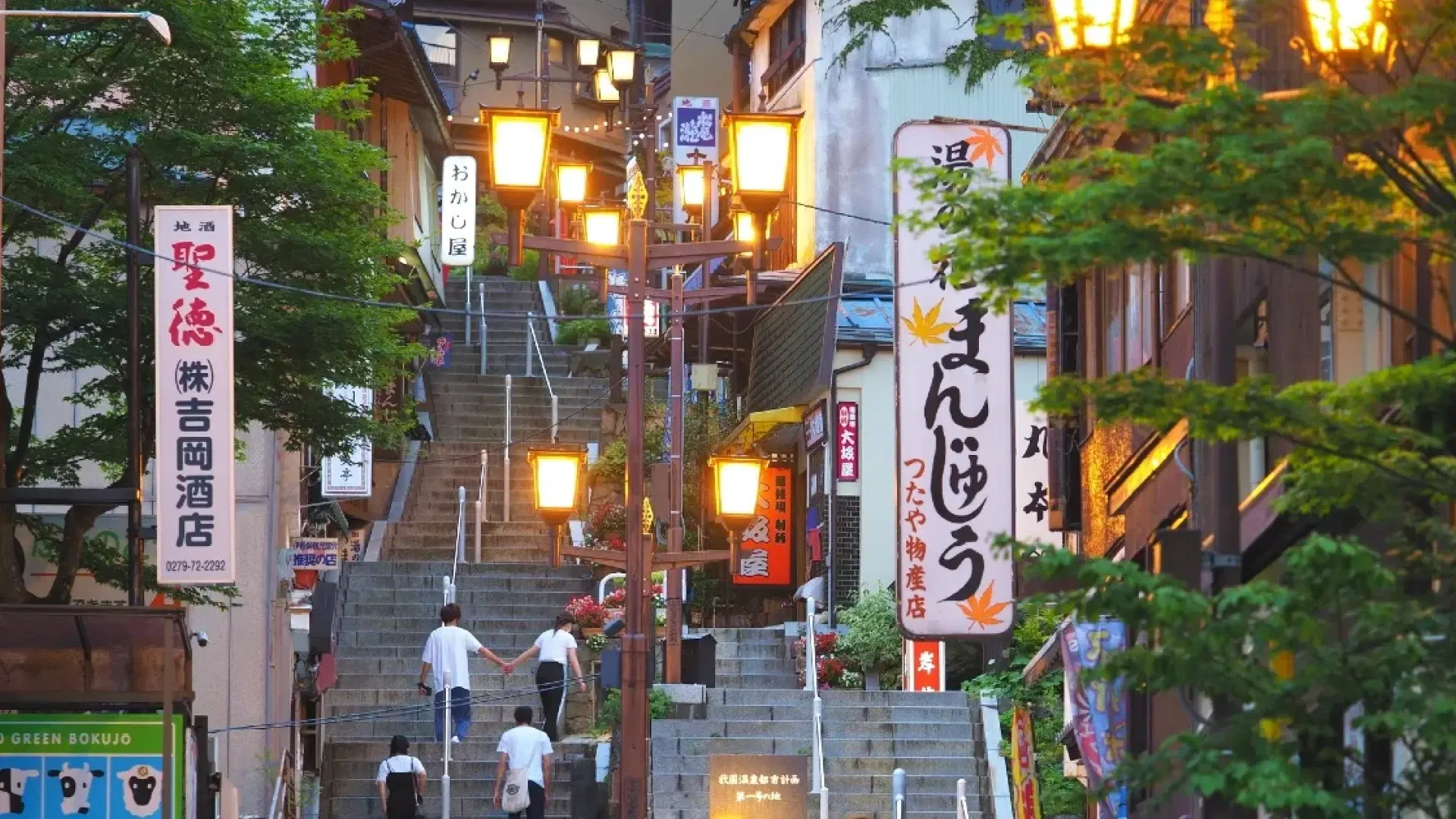
Beyond Kusatsu, the landscape multiplies with thermal riches. Ikaho Onsen climbs a steep stone stairway of 365 steps, its iron-rich "golden waters" leaving an ochre stain on every surface they touch. Takaragawa Onsen spreads its vast riverside baths beneath a canopy of forest, one of the largest open-air bathing experiences in all of Japan. And Hoshi Onsen Chojukan, with its Meiji-era wooden bathhouse where water rises directly through the riverbed stones, offers something close to the platonic ideal of a Japanese onsen.
This is also mountain country. The peaks of Tanigawa, Akagi, and Haruna define the horizon, offering serious alpine terrain in winter and wildflower meadows in summer. Gunma produces more konnyaku than any other prefecture, and its yaki-manju, grilled sweet buns glazed with miso, remain a beloved street snack that tastes of no place but here.
Cultural Identity
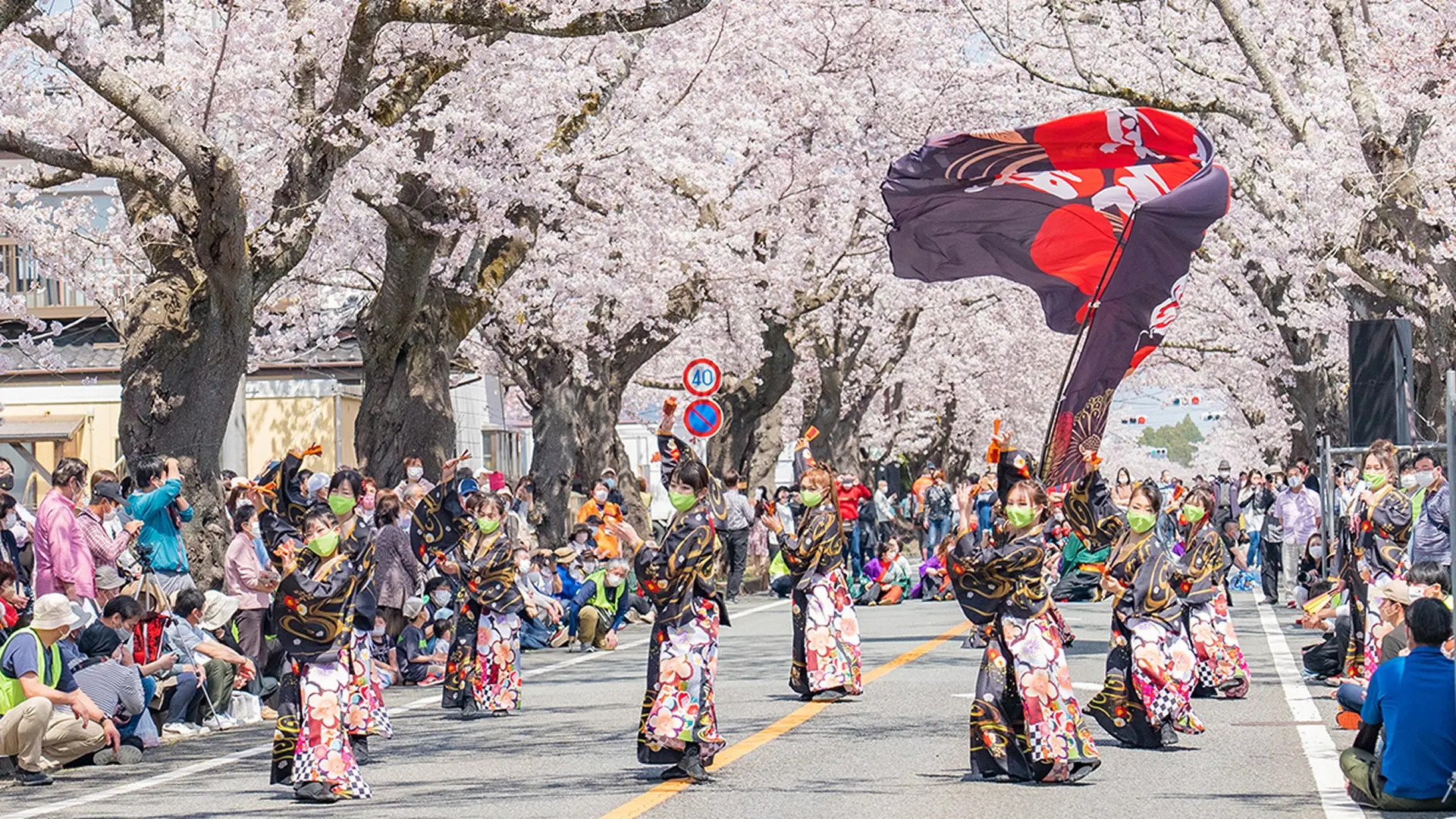
Gunma's culture is shaped by silk and stone. The Tomioka Silk Mill, a UNESCO World Heritage Site since 2014, was established in 1872 as Japan's first modern silk-reeling factory, a cornerstone of the Meiji industrialization that transformed the nation. The surrounding Joshu region's sericulture heritage remains visible in the distinctive farmhouses with raised roofs designed for silkworm cultivation. The Daruma dolls of Takasaki, produced in greater numbers here than anywhere in Japan, are symbols of perseverance and good fortune. Each January, the Shorinzan Daruma Temple hosts a raucous market where the red, round-bodied figures are sold by the thousands. Gunma's mountain festivals carry a raw energy that reflects the prefecture's frontier spirit.
Culinary Traditions
Konnyaku, the dense, gelatinous food made from konjac root, finds its capital in Gunma, which produces over ninety percent of Japan's supply. Sashimi-style konnyaku, served with a citrus miso dip, reveals a purity of texture that industrial versions cannot approach. Yaki-manju, skewered rice-flour buns basted in sweet miso glaze and grilled over charcoal, are the prefecture's signature street food, found at festivals and roadside stands across the region. Mizusawa udon, produced near Ikaho Onsen for over four centuries, is prized for its translucent, springy noodles served cold with sesame or soy dipping sauce. Wild boar nabe and river fish from the mountain streams round out a cuisine defined by altitude and mineral-rich soil.
Waters & Onsen
Kusatsu's waters are among the most acidic and mineral-rich in Japan, with a pH near 2.0 that is inhospitable to virtually all bacteria. The town's six major source springs produce over 30,000 liters per minute, and the Yubatake, where steaming water cascades down wooden channels in the town center, is an icon of Japanese onsen culture. Ikaho's twin springs offer a choice: kogane no yu, the iron-laden golden water that has drawn bathers since the seventh century, and shirogane no yu, a clear, calcium-rich spring discovered more recently. Manza Onsen, at 1,800 meters elevation, claims the highest sulfur concentration of any onsen in Japan, its milky white waters set against alpine vistas. Takaragawa and Hoshi round out a collection that is, simply, without equal in any single Japanese prefecture.