Kusatsu Onsen Yumomi Show and Festival
草津温泉湯もみショーThe yumomi of Kusatsu Onsen is the most iconic ritual in Japanese hot spring culture, a practice born of practical necessity that has evolved into a performance of hypnotic beauty. Kusatsu's thermal waters emerge from the earth at temperatures exceeding ninety degrees Celsius, far too hot for bathing. Rather than diluting this potent water and compromising its mineral concentration, the people of Kusatsu developed yumomi, a technique of stirring and agitating the water with long wooden paddles to reduce its temperature naturally while preserving the therapeutic properties that make Kusatsu's waters among the most prized in Japan.
The yumomi show at the Netsu no Yu bathhouse presents this tradition as a theatrical performance accompanied by folk songs whose rhythms synchronize with the paddling motion. Performers in traditional yukata stand at the edges of a steaming wooden bath, their paddles rising and falling in unison, splashing the scalding water in arcs that fill the enclosed space with mineral-rich steam. The songs, specific to Kusatsu and passed down through generations, provide not merely accompaniment but functional timing, their verses calibrated to the duration needed to cool the water to a bearable temperature.
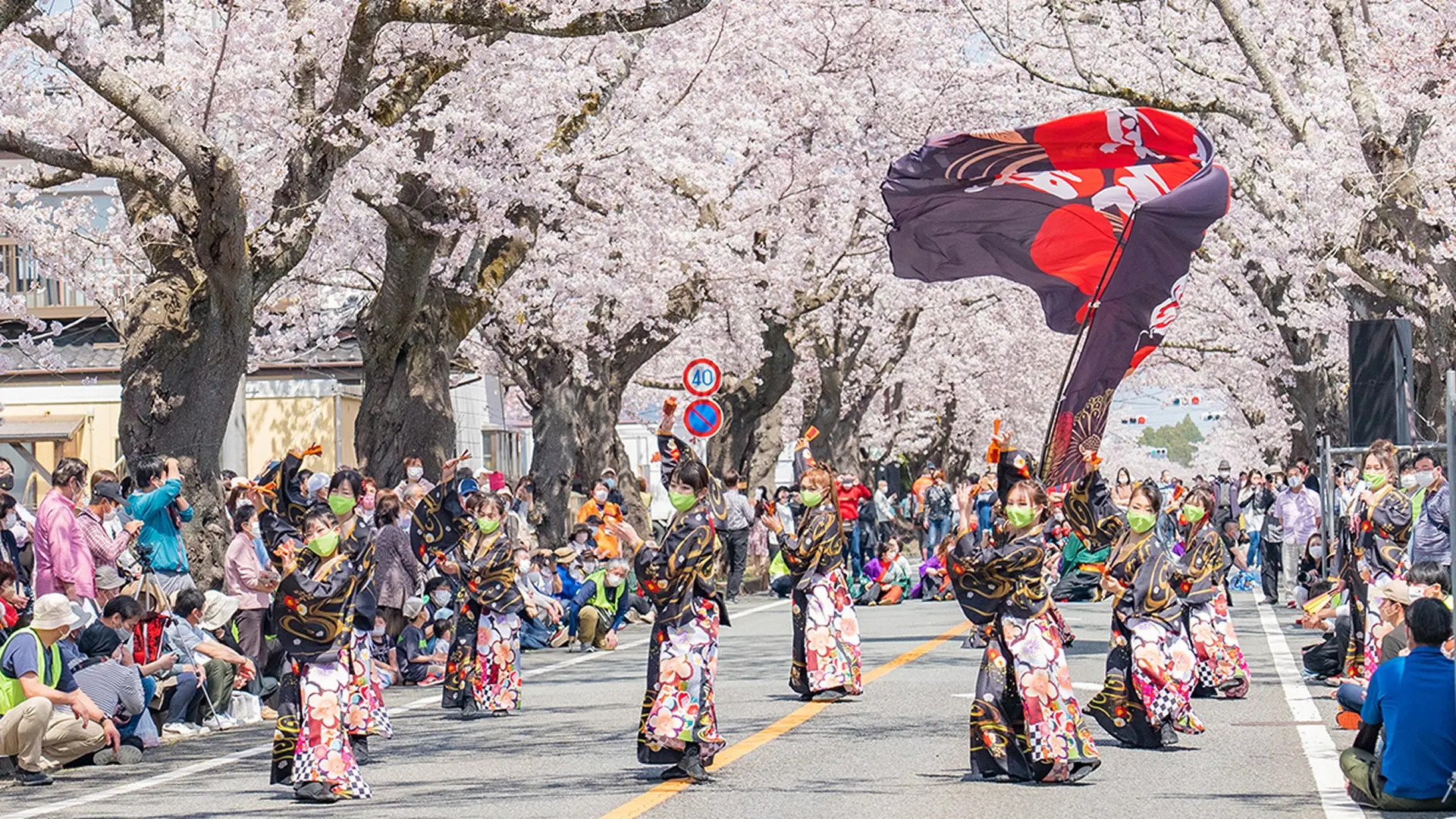
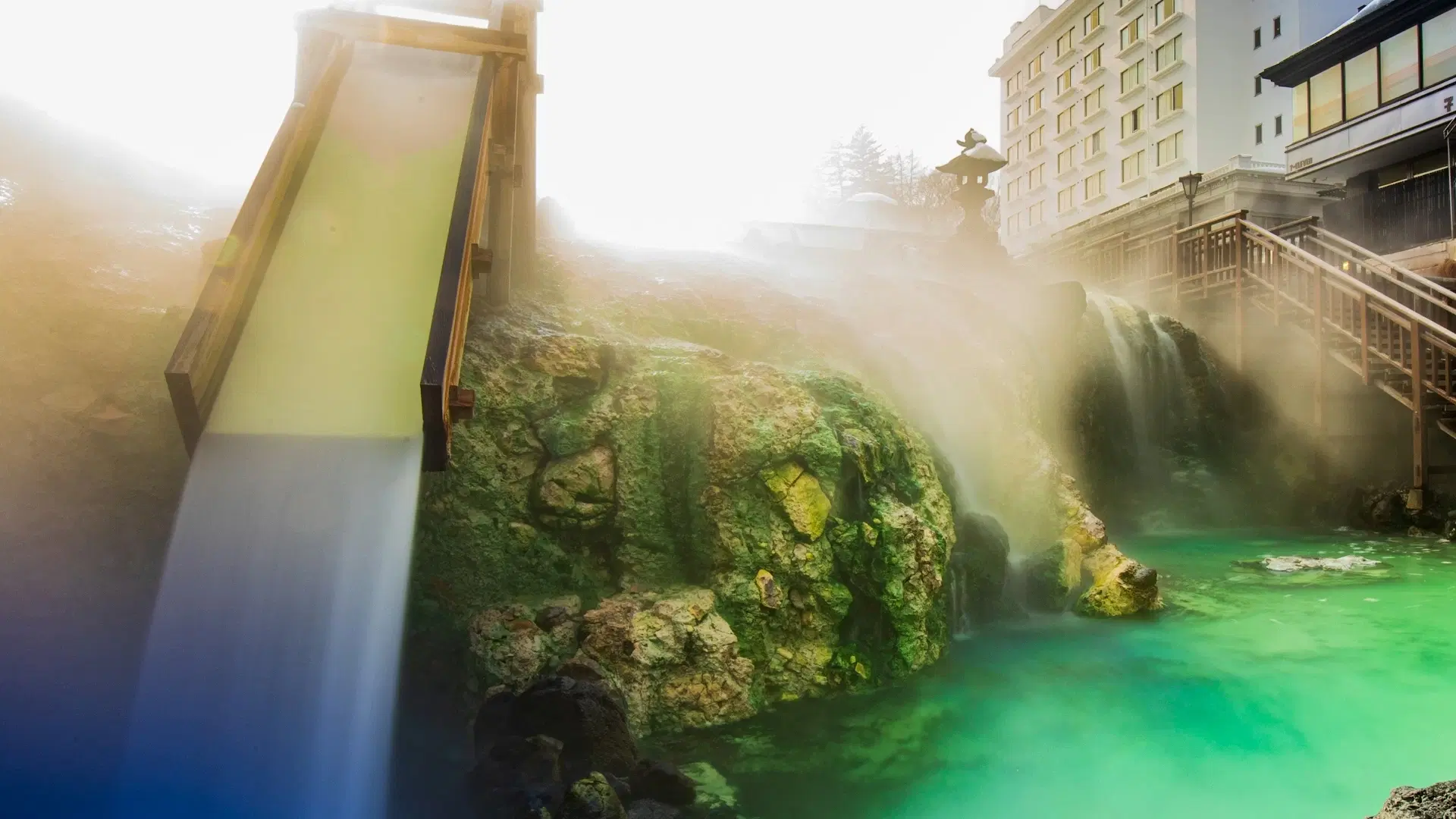
The annual Yumomi Festival in early August elevates this daily practice into a communal celebration that fills the town's famous Yubatake, the central hot spring field, with performances, food stalls, and a festive energy that contrasts with the contemplative atmosphere of the daily shows. The festival is Kusatsu's declaration of identity, an assertion that the town's relationship with its volcanic waters is not merely economic but cultural, the rituals surrounding the springs constituting a way of life that has sustained the community for centuries.
The yumomi of Kusatsu Onsen is the most iconic ritual in Japanese hot spring culture, a practice born of practical necessity that has evolved into a performance of hypnotic beauty.
History & Significance
Kusatsu's yumomi tradition dates to the Edo period, when the town's reputation as one of Japan's premier hot spring destinations was already well established. Historical records indicate that Kusatsu's waters were praised by traveling monks and feudal lords as early as the fifteenth century, and the town's development as a therapeutic bathing center predates modern hot spring tourism by several hundred years. The yumomi technique developed organically from the challenge of managing extremely hot water in an era without mechanical cooling systems, the communal labor of paddling becoming a social ritual that bound the community together around its primary natural resource.
The formalization of yumomi as a performance tradition occurred during the Meiji period, when Kusatsu began to attract visitors interested in observing local customs as well as bathing in the therapeutic waters. The Netsu no Yu bathhouse, where the daily shows now take place, was established as a venue where the practice could be shared with visitors in a setting that preserved its authenticity while making it accessible to an audience unfamiliar with its origins. The accompanying folk songs were codified during this period, their lyrics and melodies collected from the oral tradition of Kusatsu's bathing community and arranged for performance.
What to Expect
The daily yumomi shows at Netsu no Yu are held multiple times throughout the day, each performance lasting approximately twenty minutes. The bathhouse interior is warm and humid, the air thick with the sulfurous mineral steam that rises from the heated water. Performers, typically women in indigo and white yukata, demonstrate the paddling technique while singing the traditional songs whose rhythms govern the motion. The choreography is simple but mesmerizing, the synchronized rise and fall of the paddles creating a visual rhythm that mirrors the musical one, the splashing water catching the light in patterns that shift with each stroke.
Visitors are invited to participate in the paddling after the formal performance, an opportunity that transforms observation into physical understanding. The paddles are heavier than they appear, the hot water resistant to movement, and the coordination required to maintain the group rhythm while managing the physical demands provides a visceral appreciation of the labor that yumomi historically represented. The experience of standing at the bath's edge, paddle in hand, steam rising around you, connecting your efforts to centuries of communal practice, is one of the most genuinely participatory cultural experiences available in the Japanese hot spring world.
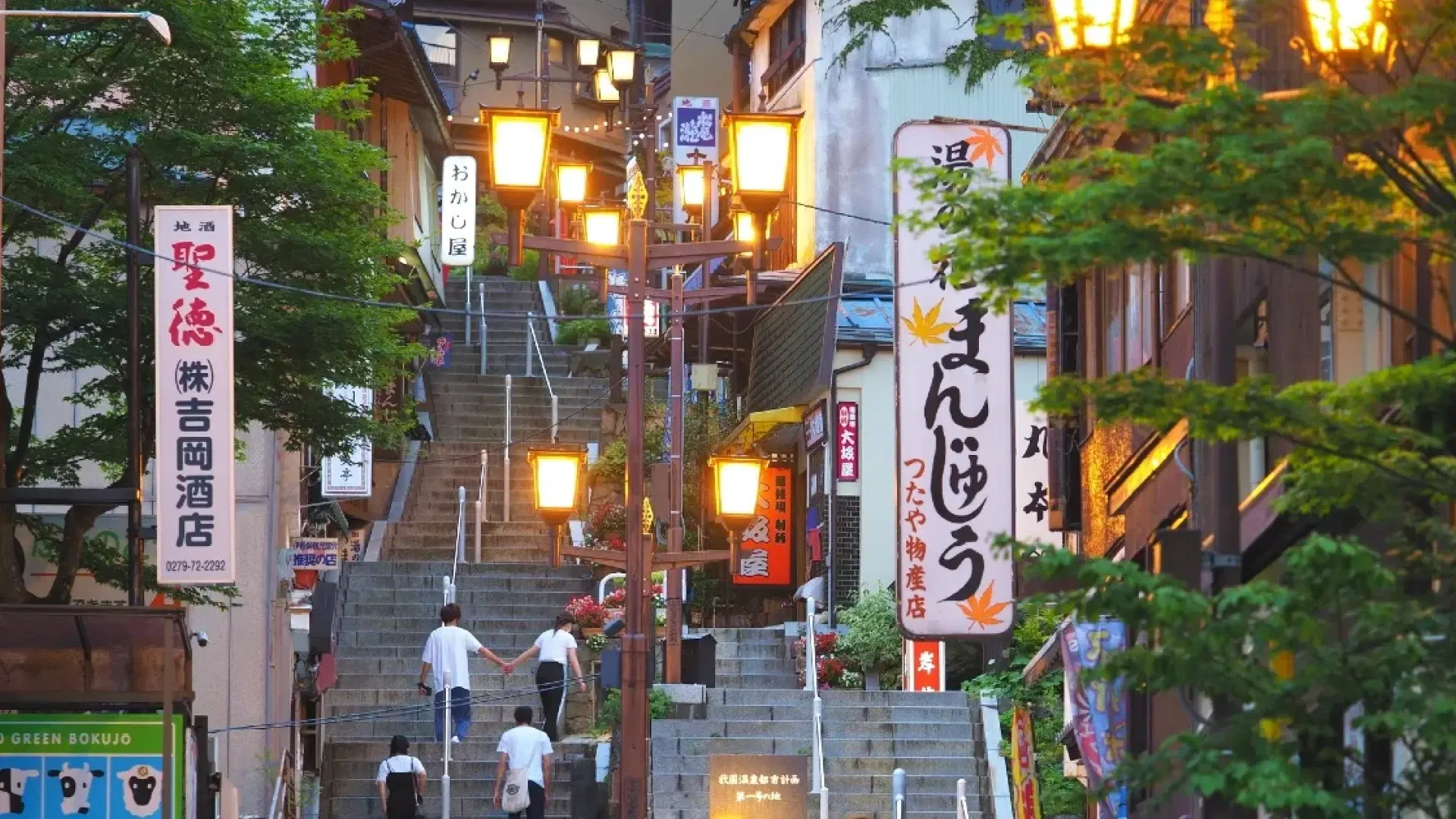
The Yubatake, Kusatsu's central hot spring field, provides the atmospheric context for understanding yumomi's origins. The wooden channels through which scalding water flows from the source, cooling gradually as it travels, demonstrate the infrastructure that the community built to manage its volcanic resource. At night, the Yubatake is illuminated, the steam rising through the lights creating an otherworldly atmosphere that reveals why Kusatsu has inspired artists and writers for centuries.