Kurashiki Ivy Square Illumination
倉敷アイビースクエアイルミネーションThe Kurashiki Ivy Square Illumination transforms one of western Japan's most atmospheric historic sites into a landscape of winter light whose beauty is intensified by the architectural heritage that provides its setting. The Ivy Square complex, a converted Meiji-era cotton spinning mill whose red-brick walls are draped in the ivy that gives it its name, becomes the canvas for an illumination that bathes the courtyard, facades, and surrounding streets of the Bikan Historical Quarter in warm, carefully composed light. Unlike the overwhelming LED spectacles that characterize many Japanese winter illuminations, the Kurashiki display is restrained and architectural, its lighting designed to reveal the beauty of the historic structures rather than obscure them beneath visual noise.
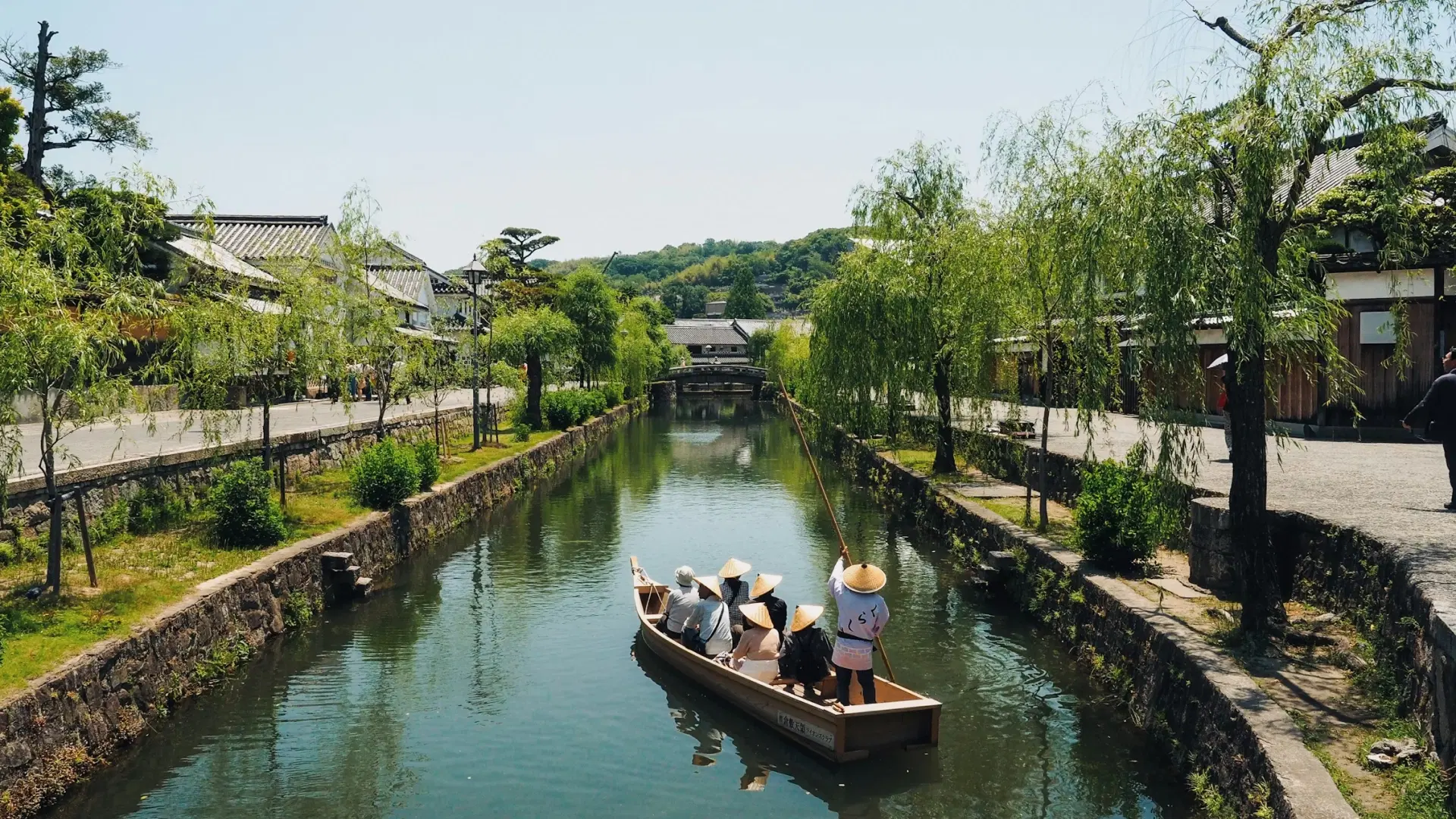
The illumination extends beyond the Ivy Square courtyard into the surrounding canal district, where the white-walled warehouses, willow-lined towpaths, and stone bridges of the Bikan quarter receive their own treatment of reflected and projected light. The still water of the canal doubles the display, creating a luminous corridor that connects the textile heritage of the Ivy Square to the merchant heritage of the warehouses, uniting Kurashiki's layered history within a single visual experience. Walking the illuminated canal on a winter evening, the air cold and still, the light reflecting from water and whitewashed walls, is an experience that reveals the quarter's beauty in dimensions that daylight cannot reach.
The illumination's extended season, stretching from November through February, allows it to serve as a backdrop for multiple occasions: autumn evenings when the last warmth of the year yields to winter's approach, the holiday season with its particular emotional resonance, and the deep winter months when the bare branches of the willows and the clarity of the cold air produce the sharpest reflections and the most crystalline light.
The Kurashiki Ivy Square Illumination transforms one of western Japan's most atmospheric historic sites into a landscape of winter light whose beauty is intensified by the architectural heritage that provides its setting.
History & Significance
The Ivy Square complex was originally constructed in 1889 as the Kurashiki Spinning Mill, one of the enterprises that drove the town's economic transformation from an agricultural market center to an industrial powerhouse. The mill operated for nearly a century before its conversion into a cultural and commercial complex in the 1970s, and the preservation of the red-brick buildings, their walls gradually enveloped by the ivy planted during the mill's operational years, created one of the most successful examples of industrial heritage repurposing in Japan.
The illumination tradition began as a modest holiday lighting in the 1990s, when the courtyard's architectural potential as a setting for winter light was first recognized. Over the subsequent decades, the display has grown in ambition and sophistication, evolving from simple string lights to a curated installation that engages with the architecture, the ivy, and the seasonal changes in the natural environment. The extension of the illumination beyond the Ivy Square into the broader Bikan quarter reflected the recognition that the canal district's reflective surfaces and white walls provided a natural extension of the lighting canvas.
The illumination has become one of the most important winter tourism events in the San'yo region, drawing visitors who might not otherwise visit Kurashiki during the cooler months and extending the town's tourist season into what was historically a quiet period. The economic and cultural impact has reinforced the town's commitment to the display, and the annual installation has become a point of civic pride and creative ambition.
What to Expect
The Ivy Square courtyard serves as the illumination's centerpiece. The red-brick walls, their surface textured by the leafless winter ivy, are washed in warm light that emphasizes the materiality of the brick and the organic pattern of the vines. The courtyard's trees are wrapped in lights whose color temperatures have been chosen to complement the brick rather than compete with it, and the overall effect is one of warmth and intimacy, a luminous room created within the walls of a nineteenth-century factory. On clear evenings, the contrast between the warm interior light and the cold dark sky above the courtyard's open roof creates a sense of protected beauty, an illuminated interior open to the stars.
The canal district's illumination unfolds along the towpath between the Ivy Square and the Ohara Museum, its light treatment responding to the different materials and surfaces of the quarter's architecture. The white warehouse walls receive projections and washes of light that emphasize their geometric patterns, while the canal's surface, still and reflective on windless evenings, mirrors the display with a fidelity that makes it impossible to determine where the architecture ends and its reflection begins. The willow trees, their bare winter branches delicate and calligraphic, are lit from below in treatments that transform their silhouettes into drawings against the dark sky.
Special events, including seasonal markets, musical performances, and tea ceremonies, are organized within the illuminated quarter on selected evenings, adding cultural programming to the visual experience. The combination of light, historic architecture, and the particular atmosphere of a winter evening in a town whose beauty is founded on craft and care creates an experience that is more contemplative than spectacular, more intimate than grand.