Unzen Azalea Festival
雲仙ツツジまつりThe Unzen Azalea Festival celebrates the transformation of a volcanic landscape into a canvas of color. Each spring, the slopes of Mount Unzen, the volcanic complex that rises above the Shimabara Peninsula, erupt not with lava but with the blossoms of wild Miyama Kirishima azaleas, whose dense clusters of pink, magenta, and crimson flowers cover the mountain's upper reaches in a display that rivals the volcanic geology beneath for sheer visual drama. The festival marks this annual flowering with guided walks, botanical programs, and the simple, essential invitation to witness one of nature's most extravagant performances against one of its most austere backdrops.
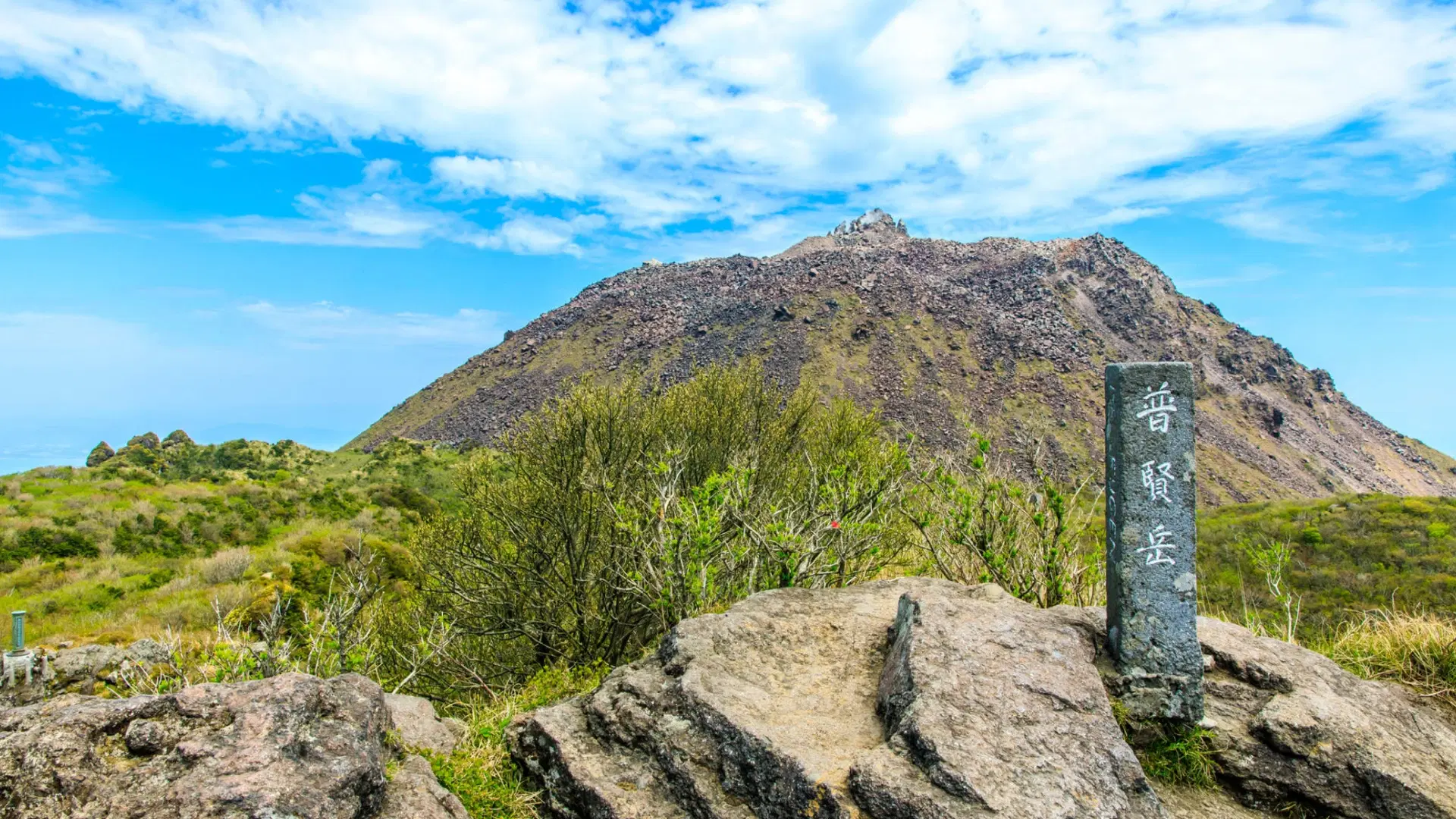
The conjunction of flowers and fire is what gives Unzen's azalea season its distinctive character. The azaleas bloom on slopes that still carry the visible evidence of volcanic activity: bare rock, sulfurous vents, and the shattered profiles of peaks reshaped by eruptions within living memory. The contrast between the delicacy of the blossoms and the violence of the geology that supports them creates a tension that is aesthetically thrilling, the flowers asserting the persistence of beauty against the backdrop of destruction, the volcanic landscape providing a scale and severity that magnifies the flowers' fragile luminosity.
The Miyama Kirishima azalea, the species responsible for the display, is a hardy alpine variety native to the volcanic peaks of Kyushu. It thrives in the acidic, mineral-rich soils that volcanic geology produces, and its capacity to colonize the harsh terrain of the upper slopes, where few other flowering plants survive, gives its blooming a quality of triumphant improbability that deepens the aesthetic experience. The flowers do not merely decorate the mountain; they inhabit it, their roots gripping the volcanic rock with a tenacity that mirrors the resilience of the communities that live in the shadow of the peaks below.
The Unzen Azalea Festival celebrates the transformation of a volcanic landscape into a canvas of color.
History & Significance
The azalea displays on Mount Unzen have been documented and celebrated since at least the Edo period, when the mountain's hot springs and volcanic phenomena attracted visitors from across Kyushu. The Miyama Kirishima azaleas were recognized as one of the mountain's distinctive natural assets, and their spring blooming was incorporated into the calendar of seasonal attractions that drew visitors to the Unzen plateau alongside the autumn foliage and the winter steam of the jigoku.
The formal festival, organized with guided walks, botanical interpretation, and public programs, developed during the postwar period as part of the broader effort to promote the Unzen-Amakusa National Park as a destination for nature tourism. The national park designation, which Unzen shares with the Amakusa Islands as Japan's first such designation in 1934, provides the institutional framework for the conservation of the azalea habitat and the management of visitor access to the more sensitive slopes. The festival's programming reflects the dual purpose of celebration and education, inviting visitors to admire the flowers while understanding the ecological conditions that produce them.
The eruptions of 1990-1995, which reshaped portions of the volcanic complex and destroyed areas of azalea habitat, demonstrated both the fragility and the resilience of the flowering community. The azaleas' return to slopes devastated by pyroclastic flows, a process that has been documented by researchers and celebrated by the local community, has become a symbol of natural recovery that adds a contemporary chapter to the mountain's long history of destruction and renewal.
What to Expect
The azalea bloom progresses from the lower slopes to the summit over a period of several weeks, typically beginning in mid-April and reaching its peak at the higher elevations in mid to late May. The Nita Pass area, accessible by ropeway from near the town center, provides the most accessible viewing, with dense concentrations of azaleas lining the walking paths and covering the slopes visible from the ropeway gondolas. The ride itself, ascending through clouds of pink and magenta blossoms toward the volcanic peaks above, is one of the most visually spectacular ropeway journeys in Japan.
The hiking trails that radiate from the Nita Pass summit toward the surrounding peaks provide progressively more immersive encounters with the azaleas. The Fugendake and Kunimidake trails, which ascend to viewpoints above the main flowering slopes, offer panoramic perspectives in which the azalea coverage can be appreciated in its full extent, the color spreading across the mountainside in irregular patterns that follow the contours of the terrain and the distribution of suitable habitat. The views from these summits, encompassing the flowering slopes, the volcanic peaks, the Ariake and Tachibana seas, and the distant mainland of Kyushu, provide the expansive context that ground-level viewing necessarily lacks.
The jigoku geothermal area, located in the town below the flowering slopes, provides the counterpoint experience that gives Unzen's azalea season its unique character. Walking from the steaming, sulfurous vents of the jigoku to the fragrant, flower-covered slopes above traces a passage from the destructive to the creative face of volcanic geology, and the proximity of these two landscapes, separated by a walk of less than an hour, creates a narrative of geological force and natural resilience that no single site could tell.