Goto Islands
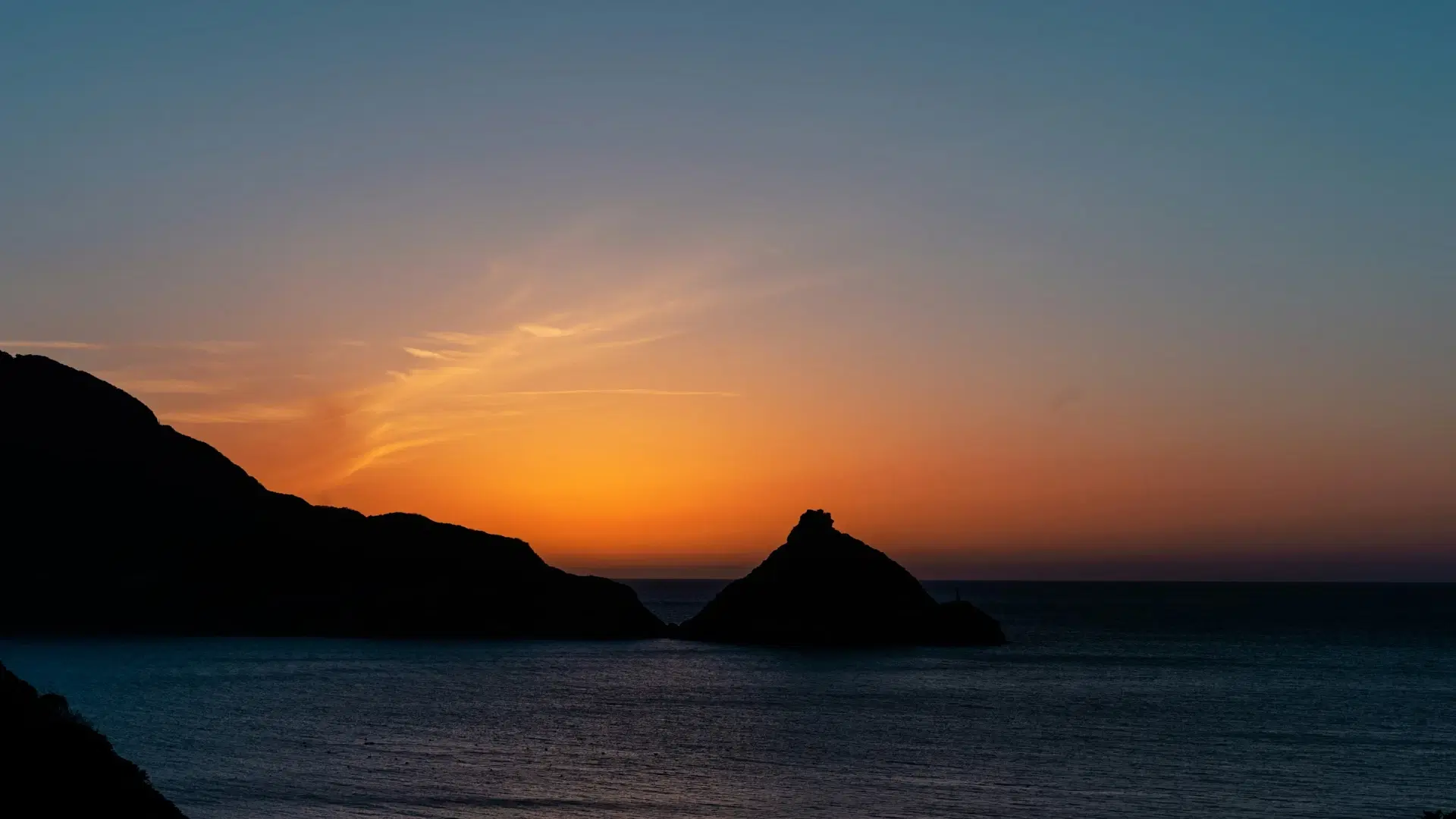
五島列島The Goto Islands are Japan at its most remote and its most revelatory. This archipelago of 140 islands, stretching into the East China Sea west of mainland Kyushu, has been shaped by isolation, faith, and the particular beauty that emerges when human settlement meets the open ocean at the edge of a civilization. The landscape is one of dramatic coastlines, terraced hillsides, dense subtropical forest, and beaches of such crystalline beauty that their existence in the temperate waters of Japan seems almost climatically improbable. But the islands' deepest significance lies not in their natural beauty, extraordinary as it is, but in the spiritual history inscribed upon their landscape: the Goto Islands were the final refuge of Japan's Hidden Christians, the communities that maintained Catholic faith in secret for over two hundred years after the prohibition of Christianity in the early seventeenth century.
The churches that these communities built after the lifting of the ban in 1873 are among the most moving architectural monuments in Japan. Constructed by congregations that had worshipped in hiding for seven generations, they express not merely religious devotion but the triumph of faith over persecution, the survival of belief against institutional violence of the most systematic kind. Several of the Goto churches are included in the UNESCO World Heritage inscription of "Hidden Christian Sites in the Nagasaki Region," and their quiet beauty, set against the wild coastal landscapes of the islands, creates a conjunction of the sacred and the natural that belongs to the highest register of Japanese cultural experience.
The journey to the Goto Islands is itself a passage into a different Japan. As the ferry crosses the open water from Nagasaki or Sasebo, the mainland recedes and the archipelago emerges from the sea horizon like a world apart, its green hills and white beaches untouched by the development that characterizes the coastal cities left behind. The pace of life on the islands, governed by tides, seasons, and the rhythms of a fishing community, provides a counterpoint to the urban intensity of the mainland that is restorative in the deepest sense.
The Goto Islands are Japan at its most remote and its most revelatory.
Highlights
The Goto churches represent the archipelago's most profound cultural experience. Kashiragashima Church on Nakadori Island, built in 1919 from locally quarried sandstone, stands on a headland above the sea, its Gothic form silhouetted against the East China Sea with a dramatic isolation that seems to embody the faith that built it. Dozaki Church on Fukue Island, constructed in 1908 and one of the earliest churches built after the reopening, features a red-brick facade and an interior of unexpected refinement, its wooden vaulting and stained glass creating a space of contemplative beauty. Egami Church on Naru Island, the smallest and perhaps most moving of the World Heritage churches, sits in a valley surrounded by terraced fields, its wooden construction blending the forms of European ecclesiastical architecture with the techniques and materials of Japanese carpentry in a synthesis that is unique in the world.
The natural landscape of the islands provides the setting for these cultural encounters and constitutes an attraction in its own right. Takahama Beach on Fukue Island is widely regarded as one of the most beautiful beaches in Japan, its white sand and transparent turquoise water set against a backdrop of green hills in compositions that evoke the Aegean as much as the East China Sea. The Osezaki cliffs at the western tip of Fukue, carved by millennia of wind and wave into formations of geological drama, face the open ocean with a stark beauty that communicates the islands' position at the edge of the Japanese world.
The fishing villages that dot the coastline of each island retain a character that has changed little in decades. The narrow streets, the boats pulled up on the beaches, the drying racks for fish, and the domestic rhythms of a community dependent on the sea provide glimpses of a Japan that urbanization has largely erased. The hospitality of the islanders, shaped by the intimacy of small communities and the tradition of welcoming the rare visitor, gives the Goto experience a human warmth that its remoteness might not lead one to expect.
Culinary Scene
The Goto Islands' cuisine is defined by the purity of its marine ingredients and the simplicity of their preparation. Goto udon, the islands' most famous culinary contribution, is a noodle of remarkable quality, made with flour, salt, and the camellia oil that has been a Goto specialty for centuries. The camellia oil gives the noodles a subtle richness and a smooth texture that distinguishes them from mainland varieties, and they are typically served in a hot broth with flying fish, the agodashi whose clean, intense flavor is the base note of Goto cooking. The combination of silky noodle and fragrant broth achieves a harmony of texture and taste that elevates a humble dish to the level of regional art.
The seafood of the surrounding waters is exceptional in both variety and freshness. The fishermen of the Goto Islands work waters that are among the most productive in Japan, and the catch, brought to shore in small boats that operate within sight of the islands, reaches the table with a freshness that no supply chain can replicate. Sashimi platters at the island's minshuku and ryokans display the day's catch in arrangements whose beauty reflects the respect that the islanders hold for the sea that sustains them. The spiny lobster of the Goto waters, available from autumn through winter, is a particular delicacy, its sweet flesh served as sashimi, grilled, or in miso soup.
The camellia oil that flavors the udon also appears throughout the islands' cooking, used for frying, dressing, and as a finishing oil whose floral character adds a distinctive note to dishes that would taste merely competent without it. The oil is pressed from the seeds of the camellia trees that grow wild across the islands, and its production represents one of the oldest continuous industries of the archipelago.
Ryokans in Nagasaki
There are no ryokans in our guide listed in Goto Islands. See our selection across Nagasaki.
View ryokans in Nagasaki