Nagasaki Peace Memorial Ceremony
長崎平和祈念式典The Nagasaki Peace Memorial Ceremony is not a festival but an observance, an annual gathering at the Peace Park in the Urakami district where, at 11:02 AM on August 9, 1945, the second atomic bomb used in warfare detonated approximately five hundred meters above the ground and destroyed the city below. The ceremony marks this moment with a silence, a prayer, and a declaration of commitment to the abolition of nuclear weapons that is renewed each year with an urgency that does not diminish with the passage of time. For visitors to Nagasaki, attending the ceremony or visiting the memorial sites on this day provides an encounter with the city's most profound historical reality and with the universal question of how humanity can prevent such destruction from ever occurring again.
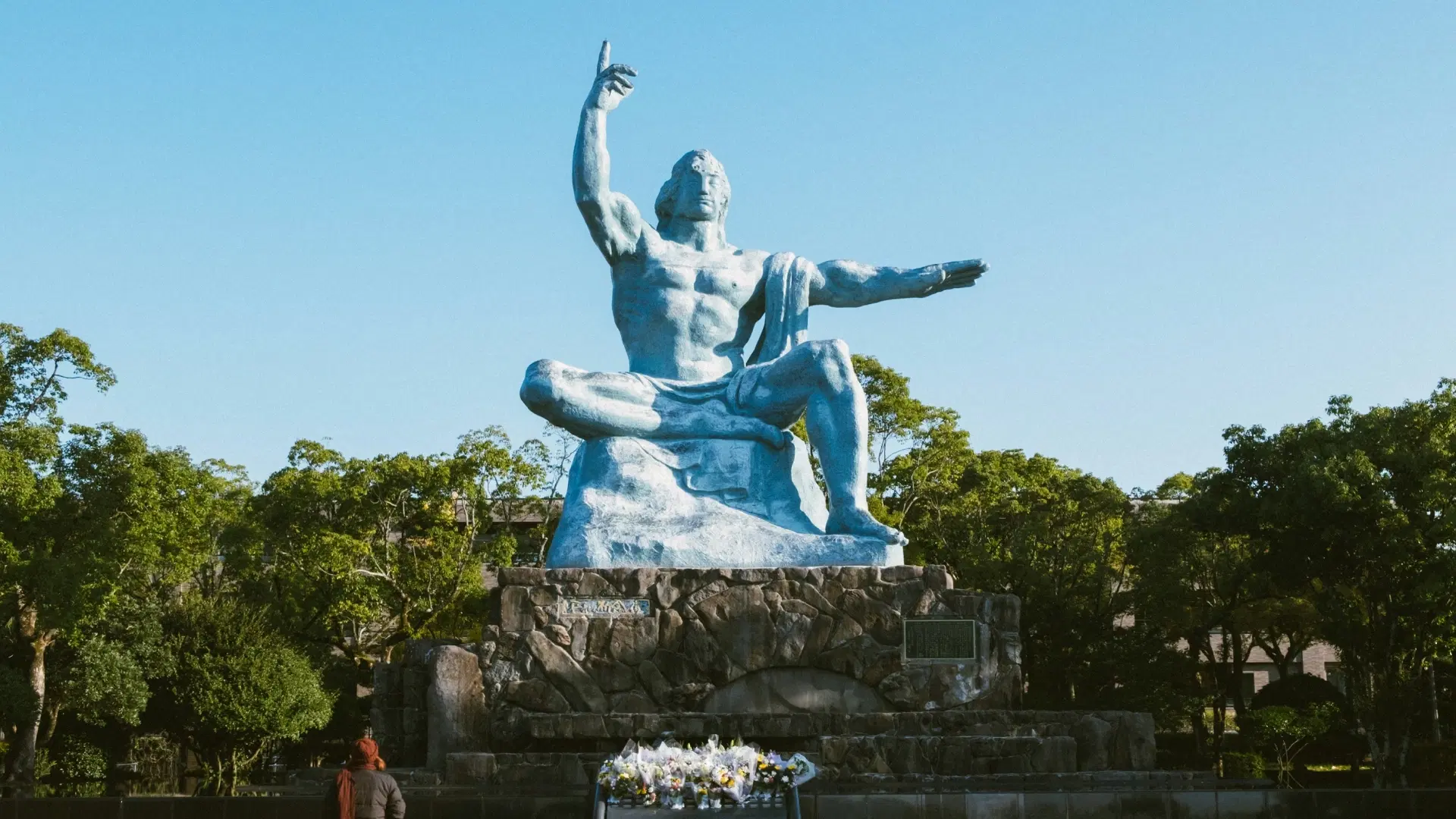
The ceremony takes place in the Peace Park, a green space created from the ruins of the Urakami district that was the bomb's hypocenter. The Peace Statue, a ten-meter bronze figure created by the sculptor Kitamura Seibo and unveiled in 1955, presides over the ceremony from its position at the park's northern end. The statue's raised right hand, pointing toward the sky from which the bomb fell, and its extended left hand, held in a gesture of peace, have become the universal symbols of Nagasaki's message, and the solemnity of the figure's expression communicates the gravity of the event it commemorates.
The ceremony draws government officials, diplomats, survivors, and ordinary citizens to the park, where they sit together in the August heat and observe a program that includes the reading of the Peace Declaration by the mayor of Nagasaki, the offering of flowers and water to the dead, the ringing of a bell at the moment of detonation, and a minute of silence that extends across the city and, through live broadcast, across the nation. The simplicity of the observance, its refusal of spectacle in favor of direct confrontation with memory and moral responsibility, gives it a power that more elaborate commemorations often dilute.
History & Significance
The atomic bombing of Nagasaki on August 9, 1945, three days after the bombing of Hiroshima, killed approximately 74,000 people by the end of that year and left many more suffering from injuries and radiation-related illness in the decades that followed. The bomb, a plutonium device nicknamed "Fat Man," detonated over the Urakami district, which was home to the city's largest concentration of Christians, including the Urakami Cathedral, the largest cathedral in East Asia at the time, which was destroyed in the blast. The cruel irony that the bomb fell on the community that had endured over two centuries of persecution for its faith, and that was celebrating the Feast of the Assumption at the moment of detonation, adds a layer of tragedy to the event that compounds the universal horror of nuclear destruction.
The first Peace Memorial Ceremony was held in 1946, one year after the bombing, and has been observed every August 9 without interruption since. The early ceremonies were modest, conducted in the ruins of the destroyed district before the memorial infrastructure that now defines the site had been constructed. The Peace Park was developed in the 1950s and 1960s, and the Peace Statue, the Atomic Bomb Museum, and the monuments and sculptures donated by nations from around the world were added over subsequent decades, creating the memorial landscape that exists today.
The Peace Declaration, read by the mayor of Nagasaki at each year's ceremony, has evolved from a statement of local grief into a document of international significance, calling upon the world's governments to abandon nuclear weapons and work toward a peace that honors the sacrifice of those who died. The declarations of recent years have addressed contemporary threats to nuclear non-proliferation with a directness that reflects the survivors' conviction that their experience must serve not merely as memory but as warning.
What to Expect
The ceremony begins at approximately 10:40 AM and concludes around 11:30 AM, with the moment of silence at 11:02 AM marking the time of the detonation. The Peace Park is open to the public, and seating is available on a first-come basis, with designated areas for survivors, officials, and diplomatic representatives. The atmosphere is solemn, and the behavior of the attendees, which includes elderly survivors for whom the memory is personal, reflects the gravity of the occasion.
The minute of silence at 11:02 AM is the ceremony's emotional center. Sirens sound across the city, traffic stops, and for sixty seconds, Nagasaki is still. The silence is not empty but full, charged with the accumulated grief, remembrance, and determination of eight decades of annual observance. For visitors, participating in this silence, standing in the place where the bomb fell and sharing the moment with those who lived through it or who carry the memory of those who did not, is an experience that reshapes one's understanding of history, responsibility, and the fragility of the human project.
The Nagasaki Atomic Bomb Museum, located adjacent to the Peace Park, provides the comprehensive historical account that the ceremony's brevity necessarily omits. The museum's exhibitions trace the events leading to the bombing, document the destruction with artifacts recovered from the ruins, and present the personal stories of survivors whose testimonies give individual faces and voices to the statistical enormity of the event. The museum's final galleries address the ongoing threat of nuclear weapons and the global movement for disarmament, connecting the historical event to the present moment with an immediacy that refuses the comfortable distance of retrospection.