Wajima
輪島Wajima sits at the northern tip of the Noto Peninsula, where the land narrows to a rugged promontory facing the open Sea of Japan, and the town's character has been shaped by this geography of exposure. The coast here is not the gentle, sheltered shoreline of southern Ishikawa but a dramatic confrontation between rock and ocean, the cliffs carved by winter storms into formations whose names, Senmaida rice terraces, Magaki fences, Sosogi coast, describe a landscape where human persistence and natural force have reached an uneasy, beautiful accommodation. The Noto Peninsula was inscribed on the UNESCO Intangible Cultural Heritage list not for any single monument but for the entirety of its traditional lifestyle, the satoumi and satoyama practices of coastal and mountain stewardship that have sustained communities here for centuries. Wajima is the cultural capital of this living heritage.
The town is synonymous with wajima-nuri, a lacquerware tradition that has been refined over more than six centuries into what many connoisseurs consider the finest urushi craft in Japan. The process is legendary for its complexity: a single piece of wajima-nuri passes through more than 120 stages of preparation, from the initial shaping of the wood base through the application of jinoko, a powder made from local diatomaceous earth that gives wajima lacquer its distinctive durability, to the final layers of urushi sap applied, dried, polished, and reapplied in cycles that can take months. The result is lacquerware of a depth and luminosity that no other production center can replicate, surfaces so densely built that they will endure for generations and can be repaired and refinished when damaged rather than discarded. In Wajima, lacquer is not decorative art but a philosophy of making that values permanence over novelty and repair over replacement.
The town suffered devastating damage in the Noto Peninsula earthquake of January 2024, and the ongoing recovery has only deepened the community's attachment to its cultural traditions. The morning market has resumed operations, the lacquer workshops have reopened, and the rhythm of festivals and fishing that has governed life on this coast for centuries continues with a resilience that reflects the same patient determination embodied in the lacquerware itself. Visiting Wajima is not an act of disaster tourism but an affirmation of the living culture that the town's artisans and fishermen and festival keepers are working to sustain.
Wajima sits at the northern tip of the Noto Peninsula, where the land narrows to a rugged promontory facing the open Sea of Japan, and the town's character has been shaped by this geography of exposure.
Highlights
The Wajima Morning Market, held along Asaichi-dori street on most mornings of the year, is one of Japan's oldest and most characterful markets, its origins traced to the Heian period over a thousand years ago. The market's vendors, predominantly women from the town and surrounding fishing villages, display the catch of the day alongside dried seafood, homemade pickles, handmade crafts, and the seasonal vegetables of the Noto Peninsula. The atmosphere is intimate and conversational, the vendors engaging customers with a warmth and directness that reflects the character of the Noto people themselves. The market functions as Wajima's public square, a place where commerce, community, and daily ritual merge in a practice so old it has become inseparable from the town's identity.
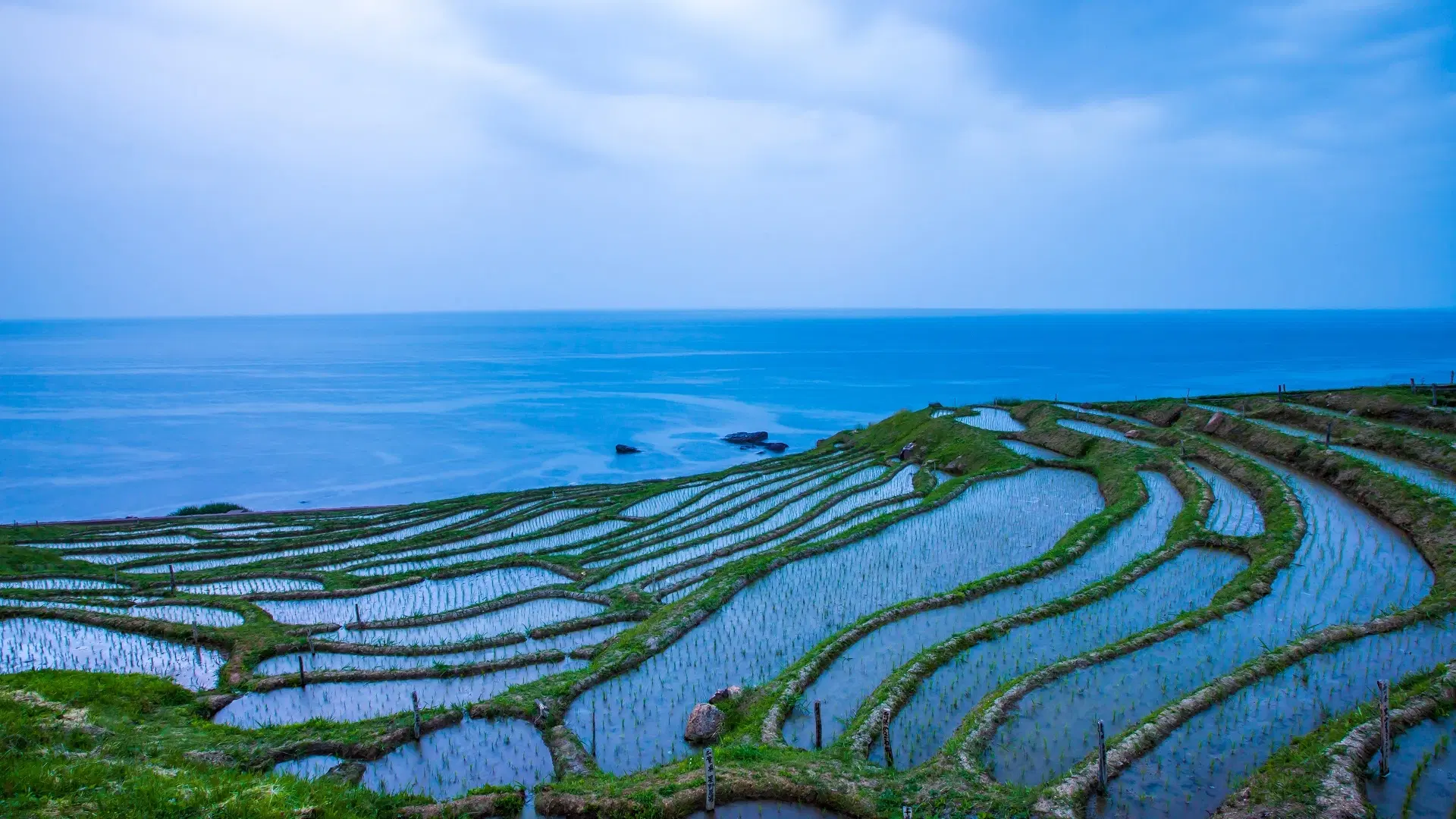
The Shiroyone Senmaida, approximately ten kilometers east of the town center, is a landscape of over a thousand tiny rice paddies cascading down a steep hillside to the sea, their narrow terraces carved into the slope over centuries by farmers who refused to concede an inch of cultivable land to the mountain. The paddies are too small for machinery, and many are still planted and harvested by hand in a practice that is maintained as much for cultural continuity as for agricultural output. In autumn, the harvested terraces are illuminated by over 25,000 LED lights in the Aze no Kirameki display, the artificial stars transforming the hillside into a constellation that mirrors the night sky above the dark sea.
The Kiriko Art Museum, formerly located near the waterfront, showcases the towering festival lanterns that are the defining objects of Noto Peninsula culture. These kiriko, wooden frameworks covered with painted and lacquered panels that can reach heights of fifteen meters, are carried through the streets during the summer and autumn festivals that define the spiritual calendar of the peninsula's communities. The museum's collection presents these objects outside their festival context, allowing visitors to appreciate the artistry of their painted panels and the engineering of their construction, but nothing substitutes for encountering a kiriko in motion, borne on the shoulders of chanting bearers through streets lit by fire.
Culinary Scene
Wajima's cuisine is defined by the sea and by the practice of preservation that centuries of harsh winters necessitated. Ishiri, a fermented fish sauce made from squid or sardine innards aged in cedar barrels for two to three years, is the foundational seasoning of Noto cooking, its deep, umami-rich complexity lending a savory depth to soups, stews, and marinades that no other condiment can replicate. The town's sushi and sashimi draw from waters where warm and cold currents converge, producing a marine biodiversity that supplies the kitchen with varieties rarely seen in urban fish markets: fugu pufferfish in winter, nodoguro roasted over charcoal until its oil-rich flesh caramelizes at the edges, abalone prised from the rocky shore by ama free-diving women whose tradition stretches back generations.
The ryokan of Wajima and the surrounding Noto coast practice a form of kaiseki that is rougher and more elemental than the refined formality of Kanazawa or Kyoto, the food reflecting the landscape's austerity and generosity in equal measure. A winter dinner might begin with sashimi of the morning's catch arranged on a wajima-nuri tray, proceed through grilled fish seasoned with ishiri and accompanied by mountain vegetables foraged from the peninsula's interior forests, and conclude with rice cooked in an iron pot over wood fire, the crust at the bottom of the vessel considered a delicacy. The tea served afterward comes from Noto's small tea gardens, the leaves roasted in a style particular to the region that produces a flavor of toasted grain and mineral depth. Eating in Wajima is an encounter with a food culture that has never been diluted by convenience or cosmopolitan fashion, each dish a direct expression of the land and sea from which it came.
Ryokans in Ishikawa
There are no ryokans in our guide listed in Wajima. See our selection across Ishikawa.
View ryokans in Ishikawa