Kanazawa
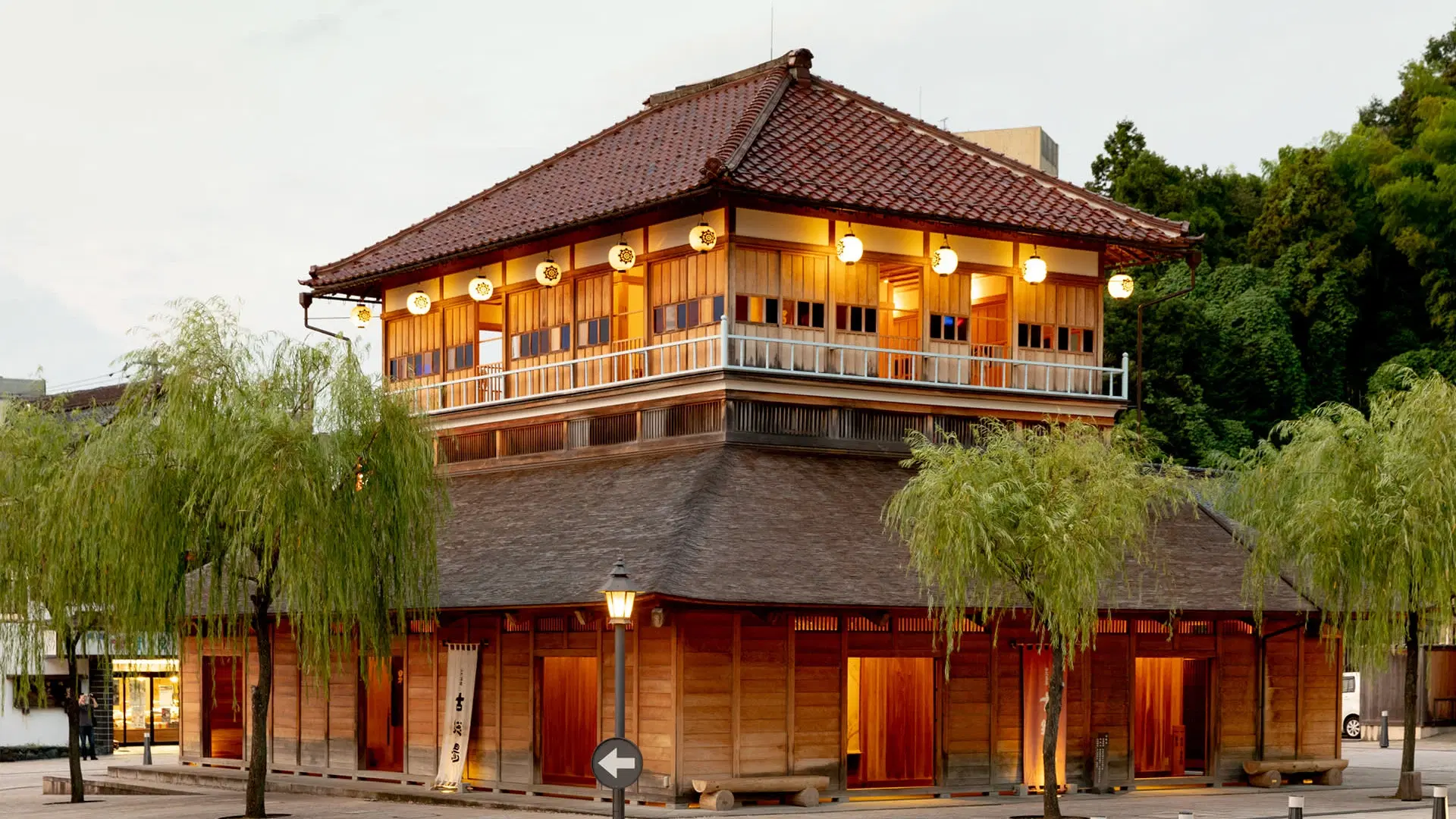
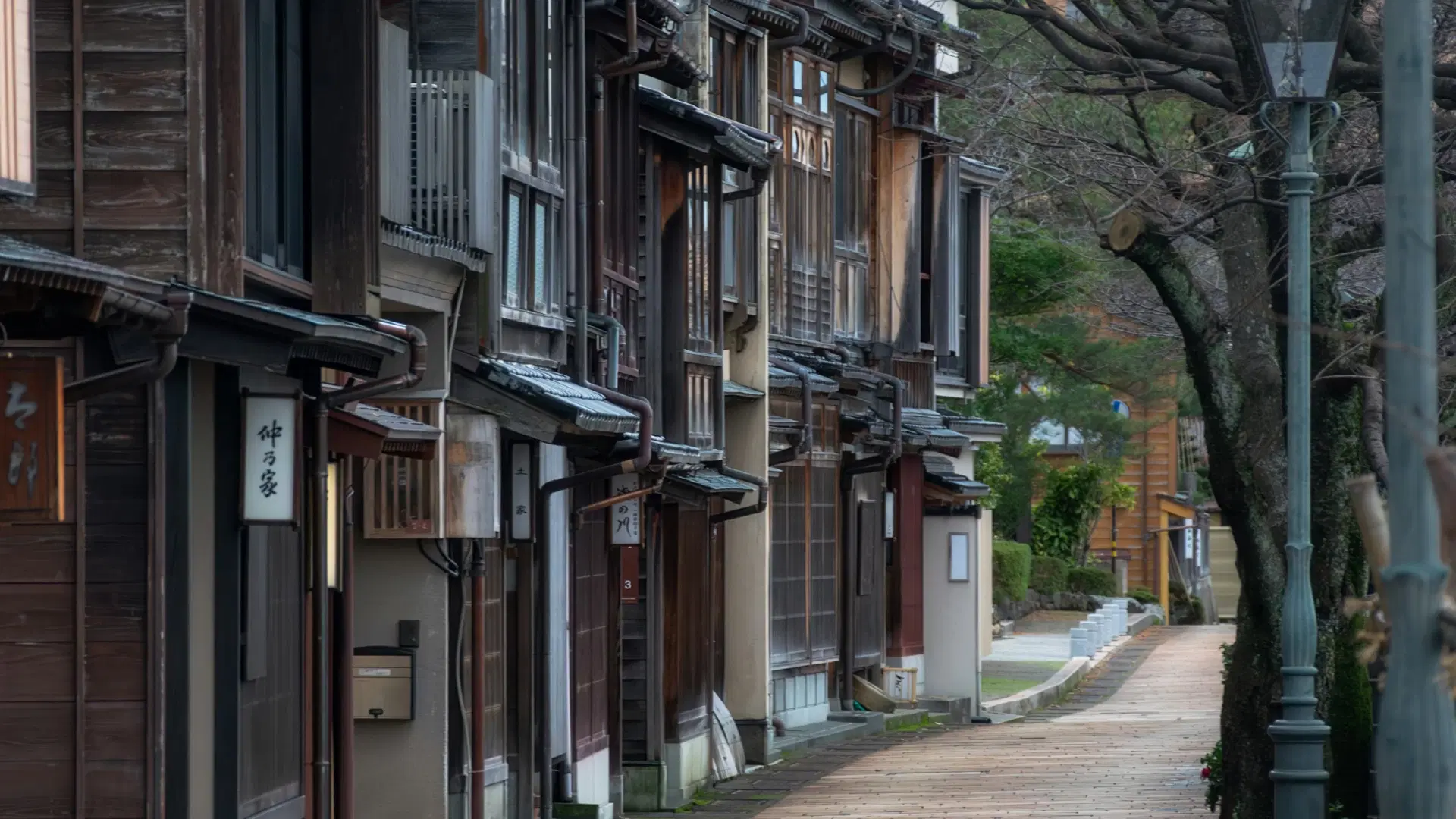
金沢Kanazawa is the city that war forgot. While Kyoto survived the twentieth century through deliberate American restraint and Hiroshima was rebuilt from annihilation, Kanazawa passed through the modern era simply unbombed, its samurai and geisha districts, its merchant quarters and temple neighborhoods, its castle walls and garden paths preserved not by decree but by the quiet accident of strategic irrelevance. The result is a city whose historical fabric is continuous in a way that even Kyoto, with its postwar concrete intrusions, cannot claim. Walking from the Higashi Chaya geisha district to the Nagamachi samurai quarter is a passage through layers of Edo-period urbanism that have never been interrupted, the wooden lattice facades and earthen walls and narrow stone-paved lanes existing not as restorations but as survivors.
The city owes its cultural depth to the Maeda clan, who governed the Kaga domain from the late sixteenth century through the end of feudalism in 1868. The Maeda were Japan's wealthiest feudal lords outside the Tokugawa shogunate, their domain producing over a million koku of rice annually, and they channeled that wealth into the arts with a systematic intensity that shaped every facet of the city's identity. Kutani ceramics, Kanazawa gold leaf, Kaga yuzen silk dyeing, lacquerware of extraordinary refinement, Noh theater sustained as a living practice rather than a museum curiosity: these were not incidental cultural achievements but the deliberate products of aristocratic patronage that understood artistic excellence as both political expression and spiritual discipline. The Maeda cultivated the arts partly to demonstrate that their ambitions were cultural rather than military, a strategic sublimation that protected the domain from Tokugawa suspicion while creating a civilization of remarkable sophistication.
For the contemporary traveler, Kanazawa offers something increasingly rare in Japan: a city where traditional culture is not performed for tourists but practiced by residents. Gold leaf artisans still work in studios along the streets of Higashiyama. Kaga yuzen dyers still stretch silk along the banks of the Asano River. Tea ceremony persists as a social practice rather than a ticketed experience. The city's scale, large enough to sustain world-class museums and dining but small enough to navigate on foot and by bus, creates an intimacy with craft and tradition that the sprawl of Tokyo and Osaka and even the tourist density of Kyoto have made difficult to find elsewhere.
Highlights
Kenrokuen occupies the high ground above Kanazawa Castle, its eleven hectares of ponds, streams, stone lanterns, and meticulously pruned pines composing what is traditionally ranked among Japan's three finest landscape gardens. The garden's name, meaning "garden of six sublimities," refers to the six attributes of the ideal garden as defined in Chinese landscape theory: spaciousness, seclusion, artifice, antiquity, water features, and panoramic views. That Kenrokuen achieves all six is not a matter of opinion but of observable design, each quality deliberately constructed over nearly two centuries of Maeda stewardship. The Kotojitoro stone lantern, its two legs straddling the edge of Kasumigaike Pond, has become the garden's emblem and one of the most recognizable images in Japanese landscape architecture. In winter, the yukitsuri rope canopies erected to protect the pine branches from snow weight transform the garden into a geometric wonderland, the conical lattices of rope creating forms that are as beautiful as the trees they shelter.
The Higashi Chaya district is the finest preserved geisha quarter in Japan, its wooden facades maintaining the architectural grammar of the pleasure districts that once existed in every castle town. The two-story machiya townhouses, their upper floors screened by koshi lattice that allowed those inside to observe the street while remaining unseen, line streets barely wide enough for two people to pass. Several houses have been opened to the public, their interiors revealing the red-lacquered staircases, intimate performance rooms, and refined aesthetic of a world where entertainment was inseparable from artistic accomplishment. At dusk, when the lanterns illuminate the facades and the sound of shamisen occasionally drifts from behind closed doors, the district achieves an atmosphere that transcends heritage tourism and approaches lived poetry.
The 21st Century Museum of Contemporary Art, a circular glass building designed by SANAA that sits in deliberate proximity to Kenrokuen, represents Kanazawa's refusal to choose between past and future. The museum's most famous installation, Leandro Erlich's "Swimming Pool," uses a layer of water over glass to create the illusion of people standing at the bottom of a filled pool, a work that plays with perception in ways that resonate with the garden's own manipulation of space and perspective across the street. The museum's free public zones blur the boundary between institution and city, the building functioning as a civic living room that draws residents and visitors alike into encounters with contemporary art that feel casual rather than ceremonial.
Culinary Scene
Kanazawa's culinary identity rests on the convergence of mountain and sea, the city's position between the Japan Sea coast and the Hakusan mountain range providing a pantry of extraordinary range and quality. The Omicho Market, operating since 1721, concentrates this abundance into a labyrinth of over 170 stalls where the morning's catch from the Japan Sea is displayed alongside mountain vegetables, locally made tofu, and pickles whose recipes predate the modern era. The winter months bring the market's greatest treasures: kano crab, the prized male snow crab caught off Ishikawa's coast, whose sweet, dense flesh and coral-colored roe command reverence from chefs across Japan; buri yellowtail, fattened by cold water migration until its flesh achieves a buttery richness unlike any other season; and nodoguro, the deep-sea blackthroat perch whose delicate, oil-rich meat has been called the most luxurious fish in the Japan Sea. The market is not a tourist attraction that also serves locals but a functioning wholesale and retail hub where Kanazawa's restaurant kitchens source their ingredients each morning, the quality assured by the competitive scrutiny of professional buyers.
Kaga ryori, the formal cuisine of the former Kaga domain, elevates these ingredients through techniques refined over centuries of aristocratic dining. The cuisine is distinguished by its treatment of duck, hunted in the lagoons south of the city using traditional nets; by jibuni, a simmered duck dish thickened with wheat flour that is the city's signature preparation; and by the kaiseki tradition that arranges seasonal ingredients in compositions where visual beauty and gustatory pleasure are given equal weight. Kanazawa's sushi culture, drawing directly from the Omicho Market's supply chain, produces nigiri of exceptional freshness, the neta placed on rice within hours of the catch. The city's wagashi confectionery tradition, the third most prolific in Japan after Kyoto and Matsue, produces seasonal sweets of sculptural beauty designed to accompany matcha in the tea ceremonies that remain a cornerstone of Kanazawa social life. Eating in Kanazawa is not merely sustenance or even pleasure; it is participation in a culinary civilization that has never been broken.