Hanamiyama Cherry Blossom Season
花見山の桜Hanamiyama is not a public park but a private hillside on the outskirts of Fukushima City that one farming family, the Abe household, has spent more than sixty years transforming into one of the most remarkable flowering landscapes in Japan. What began as the planting of ornamental trees on unused agricultural land has become a hillside garden of staggering beauty, where cherry trees of multiple varieties bloom in succession alongside magnolias, forsythias, peach blossoms, and flowering quinces, their overlapping seasons of color creating a tapestry that the late photographer Akiyama Shuzo famously declared "a second Peach Blossom Spring," comparing it to the paradisiacal landscape of Chinese literary legend.
The experience of Hanamiyama is fundamentally different from that of Japan's urban cherry blossom sites. There are no festival stalls, no loudspeakers, no designated hanami plots where office workers unfurl their blue tarps. Instead, visitors walk a network of paths that wind up the hillside through groves of flowering trees, each turn revealing a new composition of color and form, with the snow-capped peaks of the Azuma mountain range providing a backdrop of alpine grandeur. The variety of species means that the hillside is never uniformly pink but shifts through shades of white, rose, coral, and deep magenta, punctuated by the gold of forsythia and the creamy white of magnolia, an effect that approaches the condition of a living painting.
The generosity of the Abe family, who have opened their land to the public without charge and continued planting and maintaining the trees through decades of labor, gives Hanamiyama an emotional dimension that enhances its visual splendor. This is not a landscape designed by committee or funded by municipal budgets but the realization of one family's vision, pursued with the patience and devotion that characterize the finest expressions of the Japanese relationship with cultivated nature.
Hanamiyama is not a public park but a private hillside on the outskirts of Fukushima City that one farming family, the Abe household, has spent more than sixty years transforming into one of the most remarkable flowering landscapes in Japan.
History & Significance
The transformation of the Abe family's hillside began in the 1930s, when the household planted the first ornamental trees on land that was too steep for productive agriculture. Over the following decades, successive generations expanded the plantings, selecting species for their flowering times and complementary colors, gradually creating a landscape that attracted the attention of neighbors and, eventually, visitors from beyond the immediate community. The breakthrough in public awareness came in the 1960s and 1970s, when Akiyama Shuzo's photographs of the hillside in full bloom were published nationally, and his comparison to the Peach Blossom Spring captured the imagination of a country already devoted to the art of flower viewing.
The Abe family's decision to open the hillside to the public, and their consistent refusal to commercialize the experience, established Hanamiyama as something rare in modern Japan: a place of extraordinary beauty maintained by private individuals for the public good. The growing fame of the site brought challenges, including the pressure of visitor numbers on the paths and plantings, and the city of Fukushima has worked with the family to manage access while preserving the intimate, uncommercial character that distinguishes Hanamiyama from professionally managed gardens. The site now draws hundreds of thousands of visitors during the peak bloom period, yet it retains the quality of a personal offering, a family's gift to the world.
What to Expect
The walking course at Hanamiyama follows a loop of approximately one hour, ascending the hillside through successive groves of flowering trees and offering viewpoints that expand as the path climbs. The lower slopes are planted with early-blooming species including ume plum, sanshyu dogwood, and forsythia, which provide color from late March. The middle elevations bring the cherries into view: weeping shidarezakura, somei-yoshino, and the deep pink yae-zakura bloom in overlapping waves, each variety reaching its peak at a slightly different moment, so that the hillside is never without some form of blossom during the season. At the summit, a clearing offers panoramic views across the Fukushima Basin to the Azuma mountains, their snow still deep in April, framing the flowering hillside in a composition of uncommon beauty.
The quality of light at Hanamiyama changes dramatically through the day. Morning visits benefit from soft, angled light that illuminates the blossoms from behind, creating a luminous translucence in the petals. Afternoon light is warmer and more direct, intensifying the colors but flattening the depth of the compositions. Overcast days, often dismissed by visitors seeking blue-sky photographs, in fact produce some of Hanamiyama's most subtle effects, the diffused light bringing out the gradations between species and eliminating the harsh shadows that can obscure the layering of color.
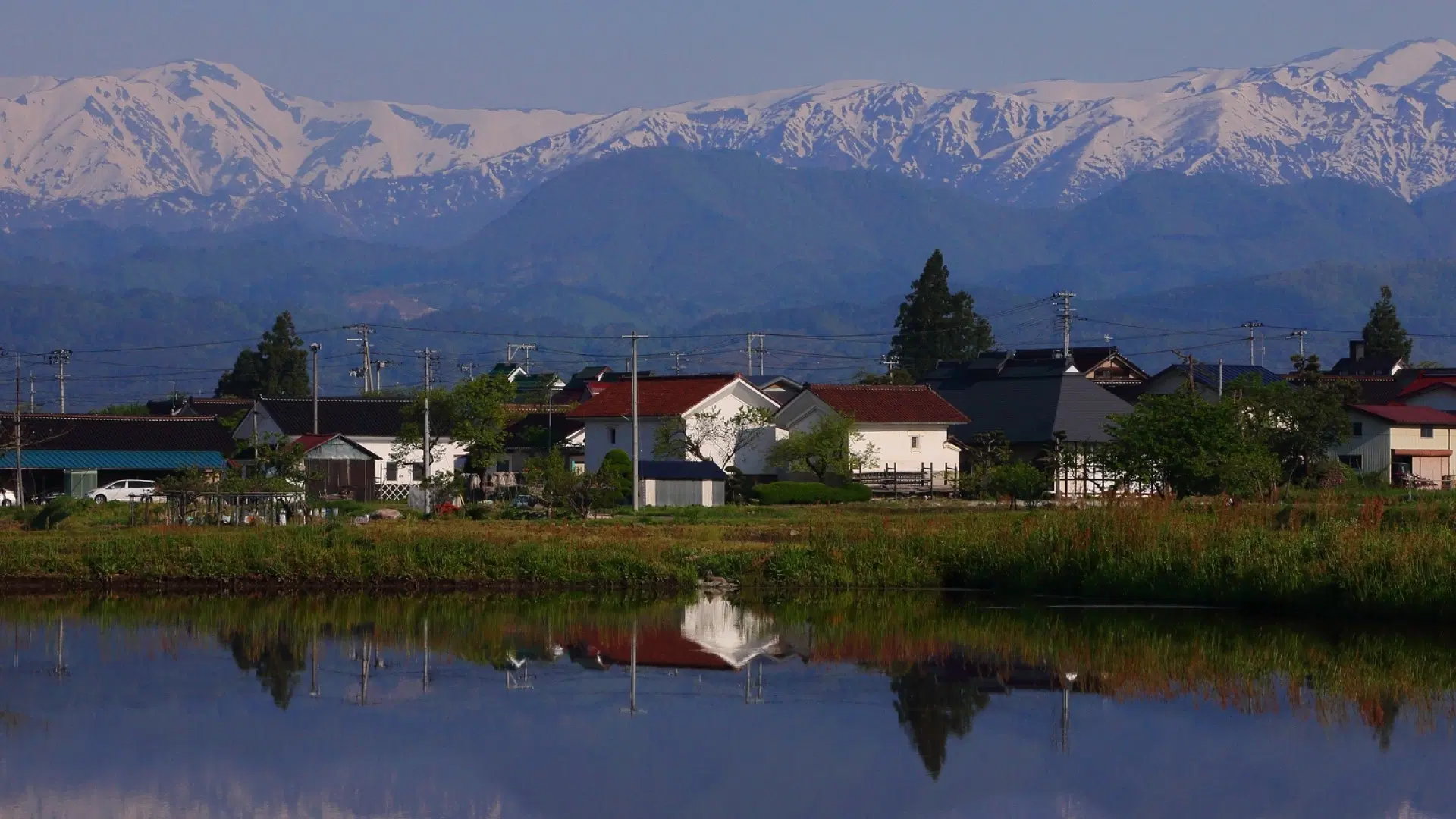
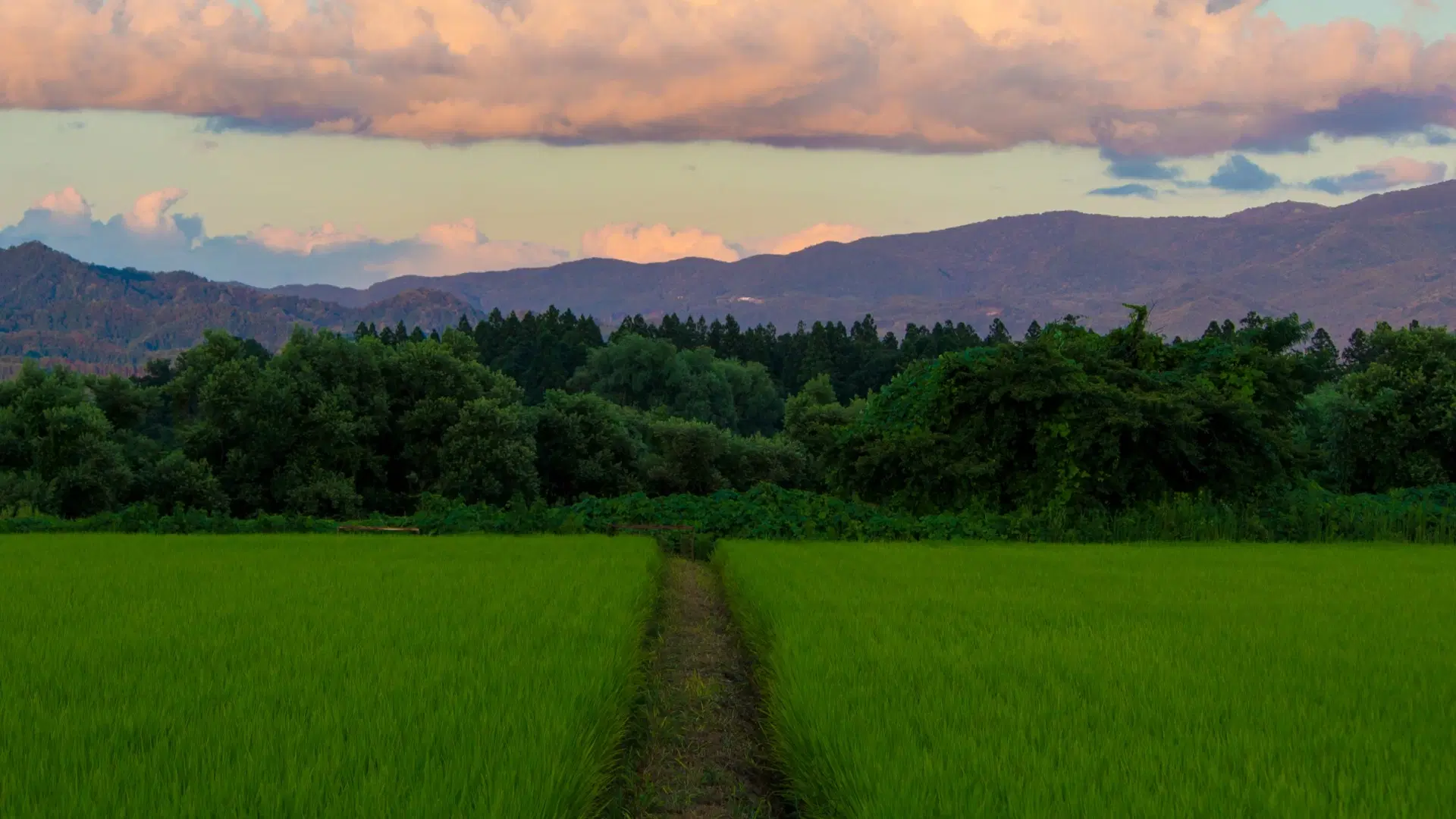
The surrounding agricultural landscape is itself part of the experience. Rice paddies in various stages of preparation, farmhouses with their own ornamental plantings, and kitchen gardens emerging from winter dormancy provide a context of working countryside that grounds the hillside's beauty in the rhythms of rural life. The walk from the temporary bus stop to the hillside entrance passes through this landscape and serves as a prelude that prepares the eye for the intensity of color that awaits.