Kitakata
喜多方Kitakata is a small city that punches immeasurably above its weight. With a population of fewer than fifty thousand, this settlement on the northern edge of the Aizu Basin has secured two distinct national reputations that would be remarkable for a city ten times its size: as one of the three great ramen capitals of Japan, and as the city of kura, the traditional storehouses whose thick-walled, white-plastered or black-tiled forms line its streets in a concentration unmatched anywhere in the country. That both of these identities are rooted in the same source, the prosperity of a merchant class that grew wealthy trading sake, miso, and soy sauce through the Edo and Meiji periods, gives Kitakata a coherence that many heritage destinations lack.
The kura are the city's architectural signature and its most distinctive visual experience. More than 2,600 of these structures survive throughout the municipality, their original functions ranging from sake brewing and lacquerware storage to residential living and shop frontage. Unlike the storehouses of other historic cities, which tend to be concentrated in a single preserved district, Kitakata's kura are distributed throughout the urban fabric, appearing alongside modern buildings, behind residential gardens, and along side streets where their discovery feels like a private revelation rather than a guided tour. Some have been converted into galleries, cafes, and museums, but many remain in their original use, their interiors still cool and dark and fragrant with the products they were built to protect.
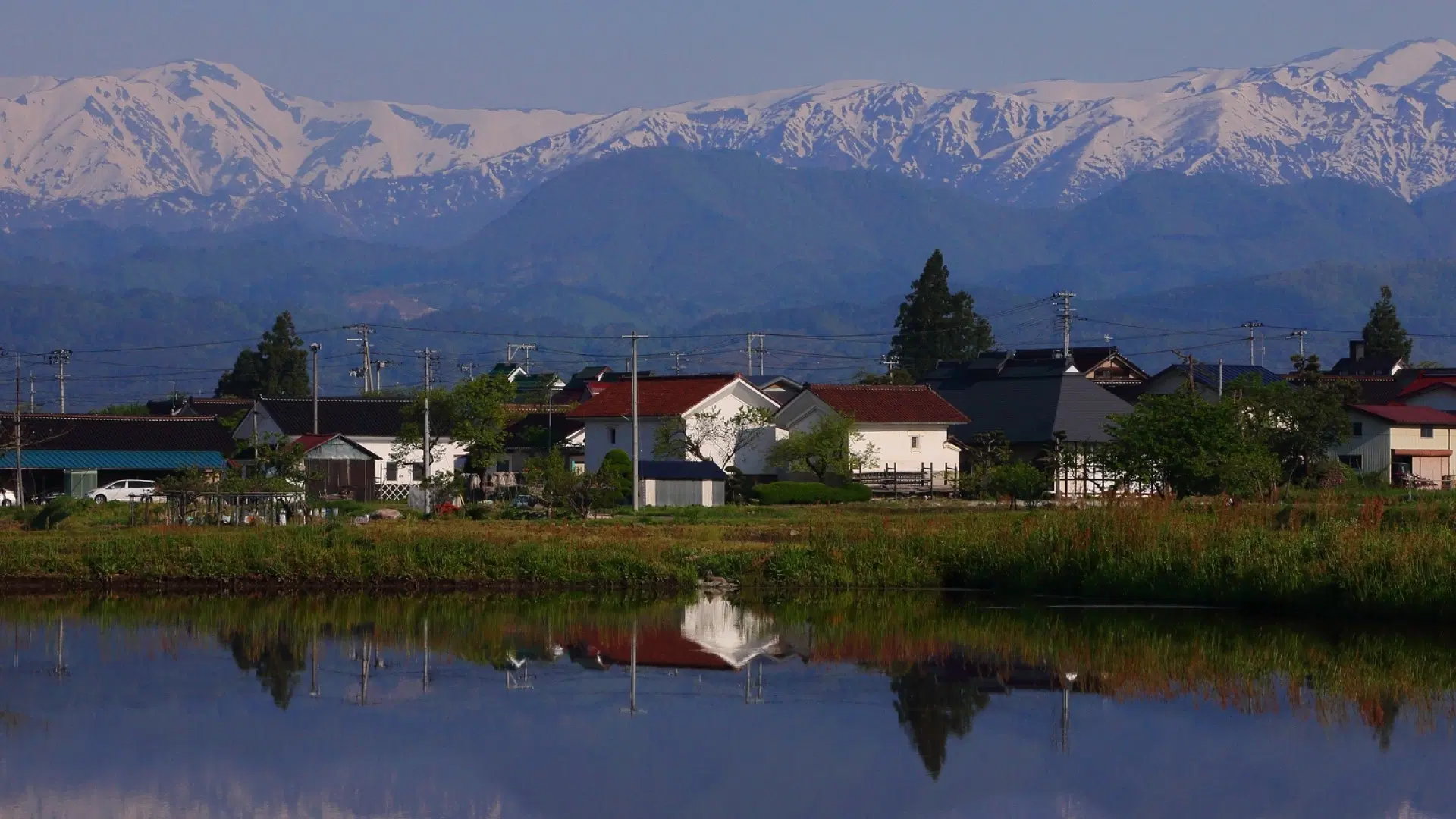
Kitakata occupies a landscape shaped by water. The Aga River and its tributaries, fed by snowmelt from Mount Iide and the highlands to the north, provide the pure, soft water that made the city's brewing and food production industries possible. The same water feeds the rice paddies that surround the city, their flooded surfaces reflecting the mountains in spring and rippling with green growth through the summer months, creating a setting of agricultural beauty that frames the urban core.
Kitakata is a small city that punches immeasurably above its weight.
Highlights
The kura district along Otazuki Street and the surrounding blocks provides the most concentrated encounter with Kitakata's architectural heritage. Walking these streets in the early morning, when the light catches the white plaster walls and the shadows sharpen the geometric forms of the storehouses, is an experience of architectural discovery that requires no admission fee and no guided explanation. The Kura no Sato, a museum complex assembled from relocated and restored kura buildings, provides context for the construction techniques and functional variations of the storehouse tradition, and its galleries display lacquerware, folk art, and historical materials that document the merchant culture from which the kura emerged.
The sake breweries that operate within Kitakata's historic core offer tours and tastings that connect the architectural heritage to a living industry. Ohara Shuzo, whose sake warehouse dates to the early Meiji period, and several smaller operations welcome visitors into buildings where the brewing process continues in spaces that have been used for this purpose for well over a century. The relationship between the water, the building, and the product is made tangible in a way that bottled sake purchased elsewhere cannot convey.
The Niida River walking path, which follows the waterway through the eastern part of the city, provides a quieter counterpoint to the kura district. Lined with weeping willows and old stone walls, the path passes through residential neighborhoods where the pace of life reflects the rhythms of a small northern city rather than the urgency of a tourist destination. In spring, cherry trees along the river create a canopy that rivals more famous sites, and the relative absence of crowds allows for a contemplative experience that the better-known hanami locations cannot offer.
Culinary Scene
Kitakata ramen is, alongside Sapporo and Hakata, one of the three pillars of Japan's regional ramen tradition, and eating it here, in the city where the style originated, is an experience that transforms a familiar dish into something specific and irreducible. The noodles are thick, flat, and curly, made with a high water content that gives them a distinctive chewiness and a capacity to absorb the soy sauce-based broth without becoming soft. The broth itself, typically a blend of pork bone and niboshi dried sardine stock seasoned with aged soy sauce, achieves a balance of depth and clarity that distinguishes it from the heavier tonkotsu of the south and the miso-based preparations of Hokkaido. The toppings are restrained: slices of chashu pork, menma bamboo shoots, green onion, and little else, an austerity that reflects the Aizu temperament and keeps attention focused on the broth and noodle.
What makes eating ramen in Kitakata singular is the culture that surrounds it. More than 120 ramen shops serve a population of fewer than 50,000, a ratio that may be the highest in Japan. Many locals begin their day with a bowl, a practice called asa-ra, morning ramen, that confounds the expectations of visitors accustomed to ramen as a late-night indulgence. The shops themselves are typically modest, family-operated establishments where the recipe has been refined across generations and the queue at 7 AM tells you everything you need to know about the quality within.
Beyond ramen, Kitakata's food culture is anchored by the fermented products that made the city prosperous. The miso, aged in the city's kura for periods that can extend to three years, develops a complexity that mass-produced versions cannot approach. The soy sauce, brewed from local soybeans and wheat with the same pure water that feeds the sake industry, appears on every table and in every kitchen, a quiet foundation beneath the more celebrated ramen.

Ryokans in Fukushima
There are no ryokans in our guide listed in Kitakata. See our selection across Fukushima.
View ryokans in Fukushima