Eiheiji
永平寺Eiheiji is not a temple that one visits so much as a world that one enters. Founded in 1244 by Dogen Zenji, the philosopher-monk whose writings on the nature of time, being, and practice remain among the most profound in Buddhist literature, the temple complex climbs the forested slopes of a narrow valley in the mountains southeast of Fukui City. Seventy buildings connected by covered corridors ascend through centuries-old cedar groves, the architecture rising with the terrain in a progression that mirrors the Zen path itself: each step upward reveals a new perspective, a new threshold, a new encounter with silence and structure.
The monastery remains one of the two head temples of the Soto Zen school, and approximately 150 monks reside here at any given time, following a daily regimen of meditation, sutra chanting, communal meals, and physical labor that has been maintained with only minor modification for nearly eight centuries. This is not a heritage site preserved in amber but an active training hall where young monks commit to years of discipline so demanding that it reshapes their relationship with sleep, food, movement, and thought. The sound of the han, the wooden board struck to mark the hours, punctuates the day with a rhythm that has governed life here since the Kamakura period.
For the traveler, the experience of walking through Eiheiji is one of deepening quietude. The massive san-mon gate, the Buddha Hall with its gold-leafed ceiling, the Dharma Hall where the abbot delivers lectures, the kitchen where meals are prepared with ceremonial precision: each space communicates a different facet of the Zen understanding that every act, from seated meditation to the washing of rice, is practice. The cedar trees that tower over the complex, some exceeding seven hundred years of age, provide a living canopy that filters the light into green-gold columns and muffles the outside world to a distant murmur.
Eiheiji is not a temple that one visits so much as a world that one enters.
Highlights
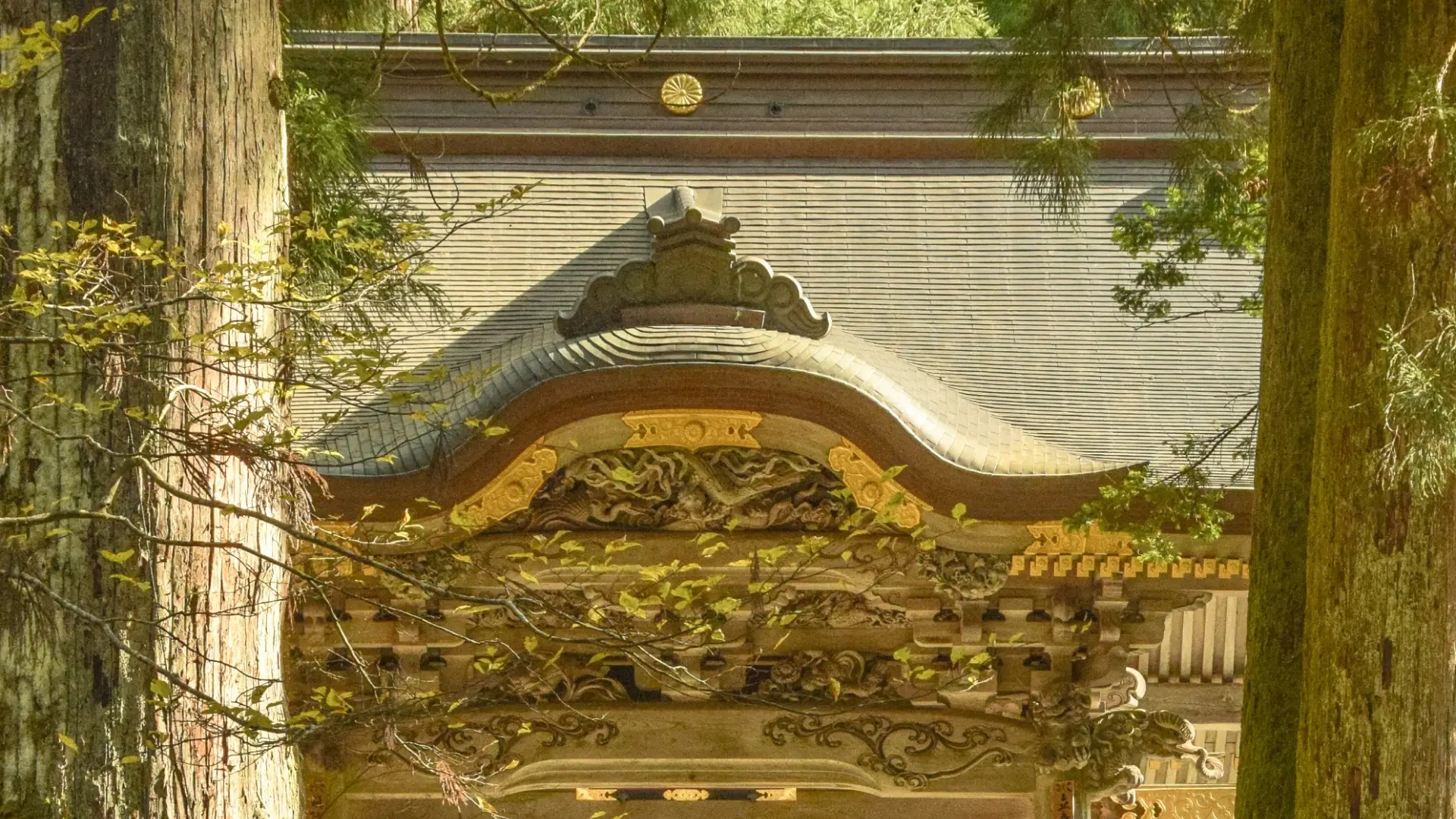
The san-mon gate, rebuilt in the eighteenth century, stands as the formal threshold between the secular world and the monastic universe within. Its massive wooden pillars and curved roof, darkened by centuries of mountain weather, frame a view of the cedar forest and the ascending corridors that conveys both the grandeur and the gravity of what lies beyond. Passing through this gate is understood in the Soto Zen tradition as a commitment, however temporary, to the values of the community one is entering. The upper floor houses statues of the sixteen Rakan, disciples of the Buddha, whose carved faces display expressions ranging from serenity to fierce concentration, a reminder that enlightenment is not a single state but a spectrum of engagement.
The shidare-zakura corridor system that connects the temple's seventy buildings is itself a meditation on movement and attention. The wooden floors, polished to a dark sheen by generations of stockinged feet, require visitors to remove their shoes and walk in the slow, deliberate manner that the monks themselves practice. The corridors turn and climb, offering glimpses through windows of moss gardens, stone arrangements, and forest views that change with each step. In winter, when snow blankets the cedars and the only color is the gray of wood and the green of moss, the corridors become passages through a monochrome world whose austerity is itself a form of beauty.
The joyoden, the founder's hall, is the spiritual heart of Eiheiji, the place where Dogen's presence is most directly felt. The hall is maintained as though Dogen were still in residence, with daily offerings of meals, tea, and incense presented before the altar with the same care that would attend a living teacher. The ceremonial precision of these offerings, performed by monks whose movements have been refined through years of repetitive practice until they achieve a fluid, unselfconscious grace, demonstrates the Soto Zen principle that reverence is expressed not through ecstatic devotion but through meticulous, unhurried attention to the act at hand.
Culinary Scene
Eiheiji's culinary tradition is shojin ryori, the Buddhist vegetarian cuisine that Dogen himself codified in his Tenzo Kyokun, Instructions for the Cook, a text that treats food preparation as a spiritual discipline equal in importance to meditation. In this tradition, the tenzo, or head cook, holds one of the monastery's most respected positions, responsible not merely for nourishment but for the transformation of simple ingredients into offerings that sustain both body and spirit. The meals served to monks and to visitors who participate in temple stays follow seasonal rhythms, drawing from mountain vegetables, tofu prepared in the temple kitchen, pickled roots, sesame-dressed greens, and rice cooked with the attention typically reserved for ceremony. No garlic, onion, or strong allium is used; no animal product enters the kitchen. The constraints are not limitations but parameters within which extraordinary subtlety is achieved.
The town surrounding the temple has developed its own culinary identity, one that bridges the monastic austerity within the gates and the agricultural abundance of the Fukui countryside. Soba noodles, made from buckwheat grown in the surrounding highlands, are the signature secular dish, served cold with a dipping sauce whose restrained sweetness reflects the regional palate. Echizen oroshi soba, topped with grated daikon radish and bonito flakes, is a preparation particular to this part of Fukui whose sharpness and simplicity echo the Zen aesthetics of the temple above. Several restaurants along the approach road serve this dish with a seriousness that suggests they understand their role as the culinary threshold between the world of appetite and the world of discipline.