Echizen
越前Echizen is a name that resonates across multiple domains of Japanese craft and culture, denoting not merely a geographic area but a constellation of traditions that have defined this region of Fukui Prefecture for centuries. Echizen washi, the handmade paper whose production stretches back fifteen hundred years to the legend of a goddess who appeared on the banks of the Okamoto River and taught the villagers papermaking, is among the oldest continuous craft traditions in Japan. Echizen lacquerware, Echizen cutlery, Echizen pottery: each of these industries has been practiced in the area for generations, their persistence creating a landscape where craft is not heritage but living economy, the rhythms of production still shaping the daily life of the communities that sustain them.
The coast that bears the Echizen name is a rugged stretch of the Sea of Japan shoreline where fishing villages cling to narrow coves between rocky headlands. This is the territory of the echizen-gani, the male snow crab that has become the region's most celebrated culinary export, its yellow tag certifying Echizen provenance as reliably as any appellation in the wine world. The fishing boats set out before dawn during the winter season, returning with catches that are auctioned at harbors along the coast and appear on ryokan tables the same evening, the chain from ocean to plate measured in hours rather than days.
The interior landscape is equally compelling, a terrain of forested hills and narrow river valleys where the craft villages are tucked into settings that seem chosen for their combination of practical advantage and natural beauty. Water from the mountain streams, clean and mineral-soft, is essential to papermaking and lacquer work alike, and the forests provide both the mulberry bark from which the finest washi is made and the timber from which lacquerware blanks are turned. Walking through these villages, where workshop doors stand open and the sounds of production, the slap of wet paper on a drying board, the rhythmic rasp of a plane on wood, escape into the street, one encounters an integration of work and place that industrialization has severed in most of the world.
Echizen is a name that resonates across multiple domains of Japanese craft and culture, denoting not merely a geographic area but a constellation of traditions that have defined this region of Fukui Prefecture for centuries.
Highlights
The Echizen Washi no Sato, Paper Village, gathers museums, workshops, and galleries in a campus that provides a comprehensive encounter with the papermaking tradition. The Udatsu Paper and Craft Museum occupies a converted warehouse where visitors can observe the full production process, from the soaking and beating of kozo mulberry bark to the rhythmic motion of the papermaker's screen as it catches the fiber slurry and transforms it, through a motion that is half technique and half intuition, into a sheet of paper of extraordinary strength and beauty. Hands-on workshops allow visitors to make their own sheets under the guidance of artisans whose families have practiced the craft for generations, an experience that reveals how much skill underlies what appears, in the master's hands, to be effortless.
Echizen Pottery Village, centered on the kilns that have produced stoneware in this valley since the twelfth century, represents one of Japan's Six Ancient Kilns, a designation that places Echizen alongside Seto, Tokoname, Shigaraki, Tamba, and Bizen as the foundational pottery traditions of the country. The Echizen style is characterized by its rugged simplicity, the unglazed surfaces showing the natural color of the local clay, from warm browns to deep charcoals, often marked by the natural ash glazes that form when wood-firing deposits settle on the vessels during the kiln's multi-day burn. The village's climbing kilns, some still fired with wood in the traditional manner, produce pots, jars, and vessels whose aesthetic aligns with the wabi-sabi values of tea ceremony culture.
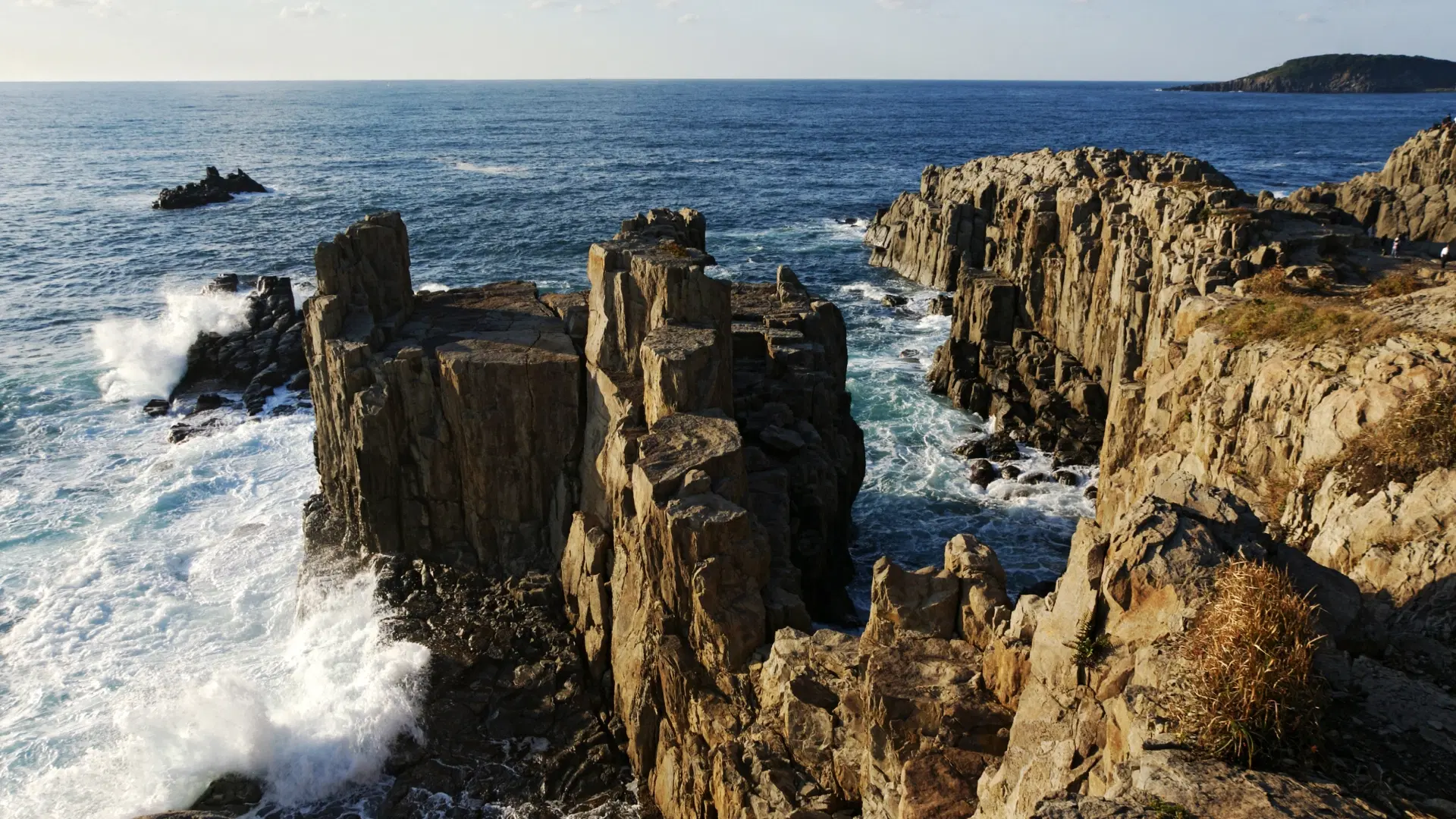
The Echizen coast walk, stretching between the fishing villages of Koshino and Echizen-Misaki, follows a shoreline where the volcanic geology of the region is exposed in cliffs, sea stacks, and tidal platforms that reveal the layered history of the earth. The walk is most rewarding in autumn and early winter, when the migratory birds begin to appear, the sea roughens, and the fishing villages prepare for the crab season that will dominate the coming months.
Culinary Scene
Echizen's culinary identity is inseparable from the sea that bears its name. The echizen-gani, tagged with the distinctive yellow provincial seal, is the region's gastronomic crown, a crustacean whose sweet, firm flesh and rich coral have earned it a reputation that extends far beyond Fukui. The female crab, smaller and known as seiko-gani, is prized for its internal roe and the external eggs that cling to its undershell, and connoisseurs debate with genuine passion whether the male or female offers the finer eating. Both are served in the coastal ryokan and restaurants with a thoroughness that approaches ritual: raw, boiled, grilled, steamed, in rice, in soup, in vinegar, each preparation designed to reveal a different facet of the ingredient.
Beyond crab, the Echizen pantry includes ama-ebi sweet shrimp, whose translucent flesh and oceanic sweetness are best appreciated as sashimi; wakame and mekabu seaweed harvested from the rocky coast; and the seasonal fish that migrate along the Sea of Japan current. Echizen oroshi soba, buckwheat noodles served cold with grated daikon radish, is the inland counterpart to the coastal seafood, a dish of emphatic simplicity whose quality depends entirely on the buckwheat's freshness and the radish's sharpness. The soba shops of the Echizen interior, many of them family operations grinding their own flour from locally grown grain, produce noodles of a character distinct from those of Nagano or Tokyo, the Fukui style favoring a coarser texture and a darker color that speaks of the grain's earthen origins.