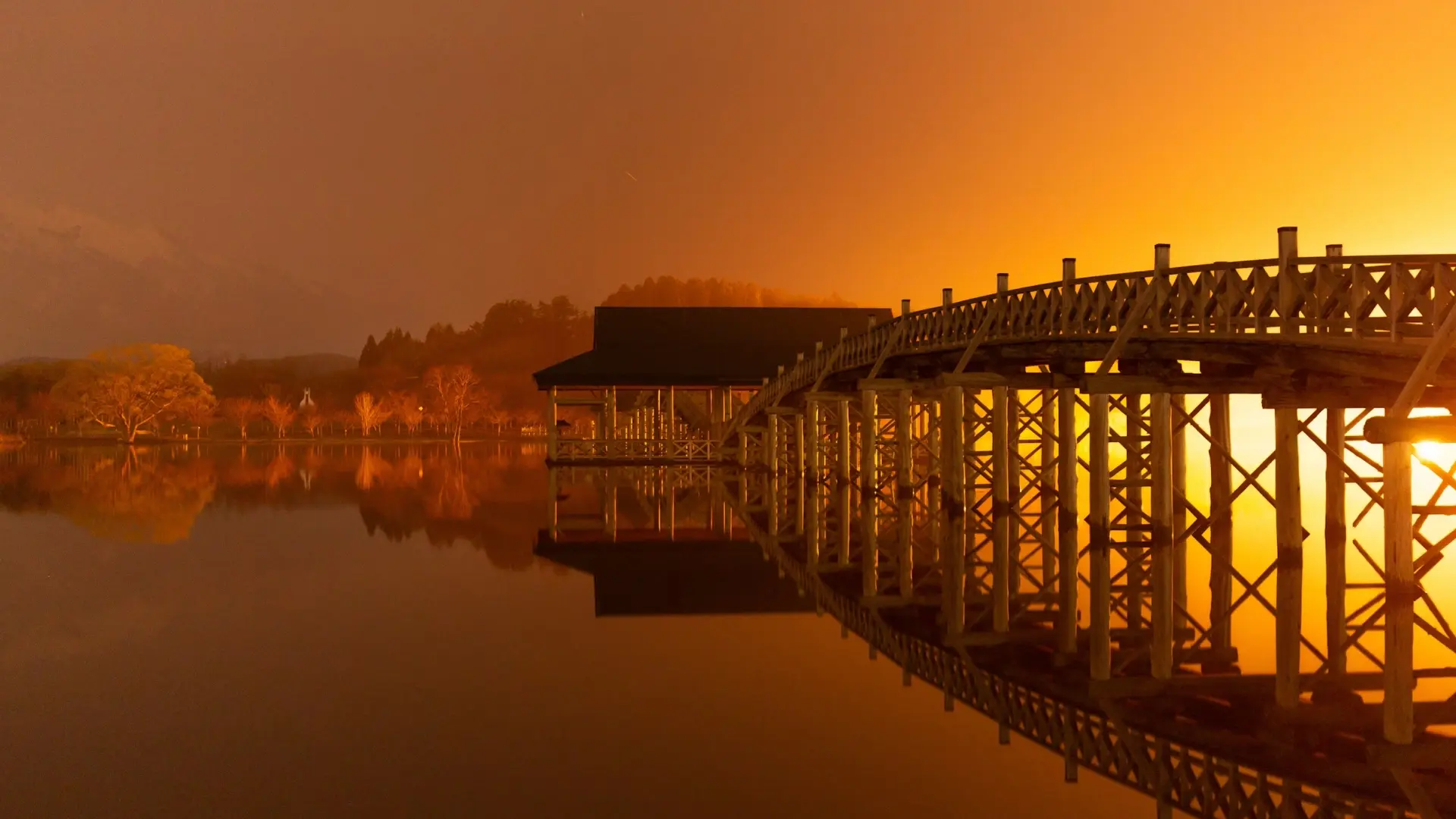
Hirosaki Cherry Blossom Festival
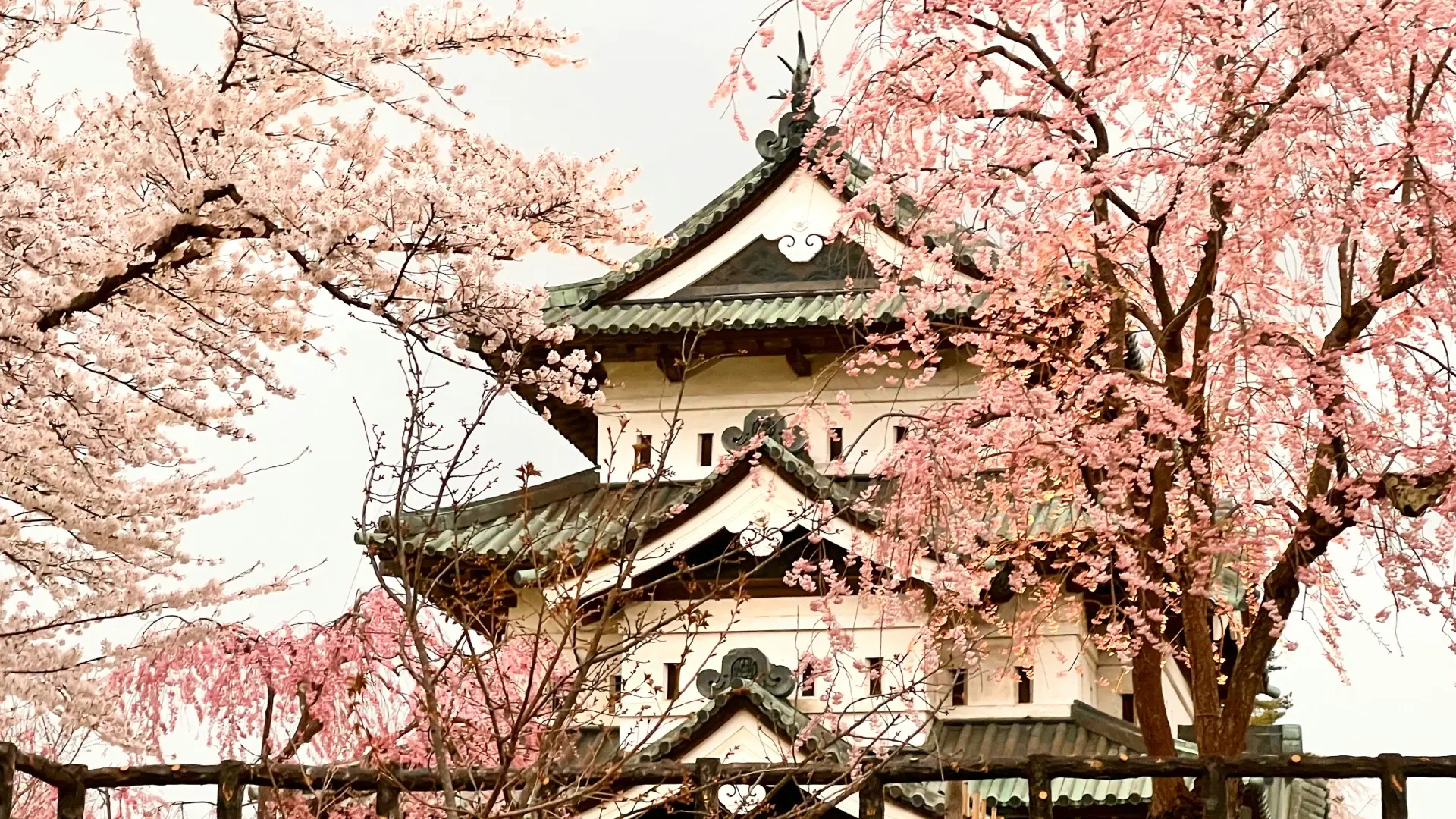
弘前さくらまつりThe Hirosaki Cherry Blossom Festival is Japan's supreme hanami experience, a statement that those who have witnessed it tend to make without qualification. The 2,600 cherry trees within Hirosaki Castle Park, many of them ancient specimens maintained through a pruning technique developed by local apple farmers, produce a density of bloom that transforms the park into something closer to hallucination than horticulture. The castle's three concentric moats become canals of reflected pink. The petals, when they fall, carpet the water's surface in the phenomenon known as hanaikada, flower rafts, creating a secondary spectacle that many consider even more beautiful than the blossoms at their peak.
The festival's timing, typically two to three weeks after Tokyo's cherry season, allows travelers who have missed the capital's blossoms to experience them again in the north, but Hirosaki's display is not a consolation prize. The combination of the castle's architecture, the moats' mirror-like stillness, the sheer number and age of the trees, and the Tsugaru backdrop of snow-capped Mount Iwaki on the western horizon produces a hanami of a different order altogether. Evening illumination of the trees, reflected in the water below, adds a nocturnal dimension that makes the park feel suspended between the real and the imagined.
The festival draws over two million visitors during its approximately two-week run, transforming quiet Hirosaki into one of Tohoku's busiest tourist destinations. Food stalls line the outer park roads, selling yakisoba, dango, and local specialties, while families and groups spread tarps beneath the trees for traditional hanami picnics that combine eating, drinking, and the contemplation of transience that lies at the philosophical heart of cherry blossom viewing.
The Hirosaki Cherry Blossom Festival is Japan's supreme hanami experience, a statement that those who have witnessed it tend to make without qualification.
History & Significance
Cherry trees were first planted at Hirosaki Castle in 1715, when the Tsugaru clan's retainers brought twenty-five Somei Yoshino trees from Kyoto to the northern fortress. Subsequent plantings expanded the collection through the Meiji and Taisho periods, but the trees' survival and extraordinary vitality owe much to a technique developed in the 1960s, when local apple farmers applied their pruning expertise to the aging cherry trees. In apple cultivation, careful pruning encourages the tree to produce more flowers and fruit; adapted to cherry trees, this method stimulated new growth and extended the productive lives of specimens that would otherwise have declined. Today, some of Hirosaki's cherry trees are over a hundred years old, producing blooms of a fullness that astonishes arborists from other regions.
The formal festival dates to 1918, when the park was opened to the public for blossom viewing, but the practice of hanami at the castle grounds stretches back to the Edo period, when the Tsugaru lords hosted private viewing parties for their retainers. The democratic transformation, opening the castle grounds to all citizens, coincided with the broader Taisho-era liberalization and established Hirosaki as a destination that belongs to its entire community, not merely its former ruling class.
What to Expect
The park divides naturally into zones of differing character. The outer moat, lined with trees whose branches arch over the water, provides the iconic tunnel-of-blossoms experience and is best walked in the morning before the crowds thicken. The inner grounds around the castle keep offer more structured gardens with weeping cherry varieties and unobstructed views of Mount Iwaki. The westernmost section of the park, less visited, contains some of the oldest trees and provides quieter contemplation.
Evening illumination, beginning at dusk and continuing until approximately 11 PM, transforms the park entirely. The trees are lit from below, their branches glowing against the darkened sky, and their reflection in the still moat water creates a doubled image of such symmetry that photographs cannot capture its effect. The yozakura, night cherry viewing, experience at Hirosaki is unmatched anywhere in Japan, the combination of water, light, and petals producing an atmosphere that collapses the boundary between landscape and dream.
During the final days of the blossom season, when petals are falling in earnest, the hanaikada phenomenon reaches its peak. The moat surface becomes a solid carpet of pale pink petals, so thick in places that it appears one could walk upon it. This moment of decay, when the beauty of the blossoms is simultaneously at its most poignant and its most excessive, embodies the Japanese aesthetic of mono no aware, the bittersweet awareness of impermanence, with a directness that makes the concept visceral rather than abstract.