Hirosaki
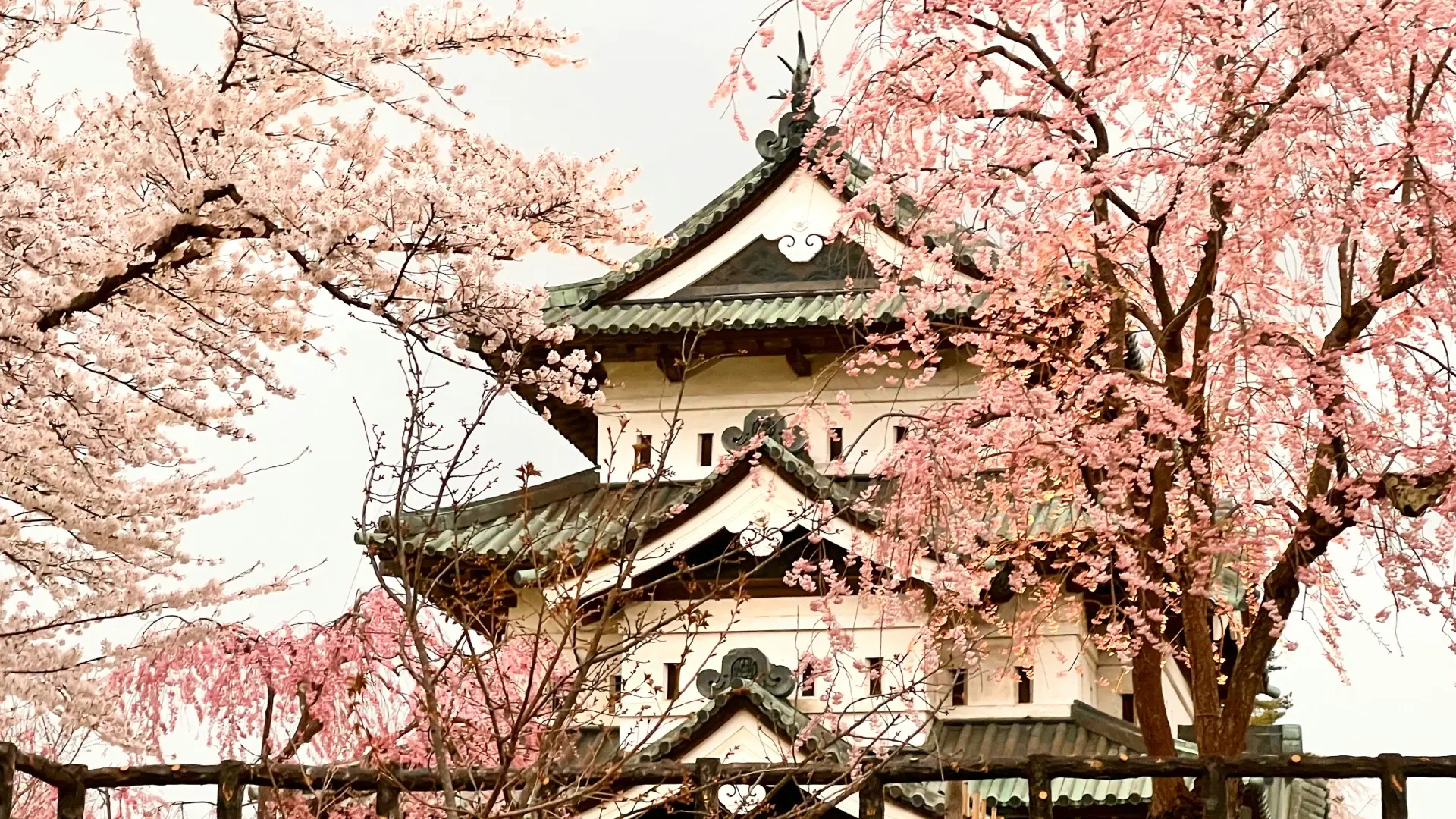
弘前Hirosaki is the cultural heart of Tsugaru, a castle town whose refinement seems improbable given its latitude and its distance from the traditional centers of Japanese civilization. The Tsugaru clan, who governed from Hirosaki Castle for nearly three centuries during the Edo period, cultivated a culture of sophisticated arts, scholarly pursuits, and military discipline that remains legible in the city's architecture, its festivals, and the bearing of its residents. The castle itself, a rare surviving original structure, sits within a park of 2,600 cherry trees that produce what is widely considered Japan's finest hanami display each spring, a spectacle so excessive in its beauty that it verges on the hallucinatory.
The city's relationship with Western culture, unusually deep for a provincial Tohoku town, dates to the Meiji era, when Hirosaki embraced modernization with particular enthusiasm. Foreign teachers were invited to the local schools, and the Western-style buildings they inspired, including churches, former residences, and a Renaissance Revival library, now form a distinctive architectural layer that coexists with the samurai district's earthen walls and thatched gates. This cultural duality gives Hirosaki a complexity that few Japanese cities of its size can match.
Beneath these visible layers runs the deeper current of Tsugaru shamisen, the percussive, emotionally raw style of three-stringed lute playing that originated in this region. Born from the tradition of blind itinerant musicians, bosama, who wandered the harsh Tsugaru winters performing for food and shelter, this musical form carries the weight of northern hardship transformed into art. Live performances can still be heard in Hirosaki's restaurants and cultural venues, and the annual Tsugaru Shamisen National Convention draws masters and young competitors from across Japan.
Hirosaki is the cultural heart of Tsugaru, a castle town whose refinement seems improbable given its latitude and its distance from the traditional centers of Japanese civilization.
Highlights
Hirosaki Castle Park in cherry blossom season is one of Japan's supreme natural spectacles. The 2,600 trees, many of them ancient Somei Yoshino and weeping varieties, frame the castle and its moats in layers of pink and white so dense that the petals, when they fall, carpet the canal water in a phenomenon known as hanaikada, flower rafts. Walking beneath the canopy along the outer moat as petals drift onto the still water produces a beauty that is almost physically overwhelming. The castle's main keep, a compact three-story tower built in 1611, has been temporarily relocated for stone wall repairs, offering a rare view of the engineering that supports these structures.
The samurai district of Nakamachi and Kamisayashiki-machi preserves several original residences open to the public, their gardens and reception rooms illustrating the austere elegance of warrior-class domestic life. The Tsugaru-han Neputa Village provides year-round access to the fan-shaped Neputa floats, distinct from Aomori City's three-dimensional Nebuta, along with demonstrations of Tsugaru lacquerware, kogin-zashi embroidery, and other regional crafts.
Hirosaki's collection of Meiji-era Western architecture deserves unhurried exploration. The Former Fifty-Ninth Bank, designed in Renaissance Revival style, the Former Hirosaki Library with its octagonal towers, and the numerous wooden churches scattered through the residential streets together document a moment of cultural ambition when this small northern city imagined itself as a window onto the wider world.
Culinary Scene
Hirosaki's food culture reflects both its castle-town heritage and its position at the center of Japan's most productive apple-growing region. The city's kissaten, old-fashioned coffee houses, are famous for their apple pie, each shop offering a distinct interpretation that has become a point of civic pride. Apple pie maps are available at the tourist office, guiding visitors through a tasting tour that reveals surprising variation within a seemingly simple form. Beyond apples, the Tsugaru region's cuisine leans heavily on preserved and fermented foods developed to sustain communities through the long winters: tsugaru-zuke pickles, dried vegetables reconstituted in rich soups, and the distinctive igamenchi, a fried patty of minced squid and vegetables bound with miso.
The city's proximity to both the Sea of Japan and Mutsu Bay ensures excellent seafood, though Hirosaki's inland position has historically favored river fish and mountain vegetables. Local izakaya serve kiritanpo-adjacent rice dishes, senbei-jiru crackers simmered in broth, and the rich, miso-based stews that characterize Tohoku winter cooking. Sake from the handful of remaining Tsugaru breweries, made with rice grown in the Iwaki River plain and water filtered through volcanic stone, provides a fitting accompaniment, its clean, slightly dry character reflecting the cool fermentation climate.
Ryokans in Aomori
There are no ryokans in our guide listed in Hirosaki. See our selection across Aomori.
View ryokans in Aomori