Yokote
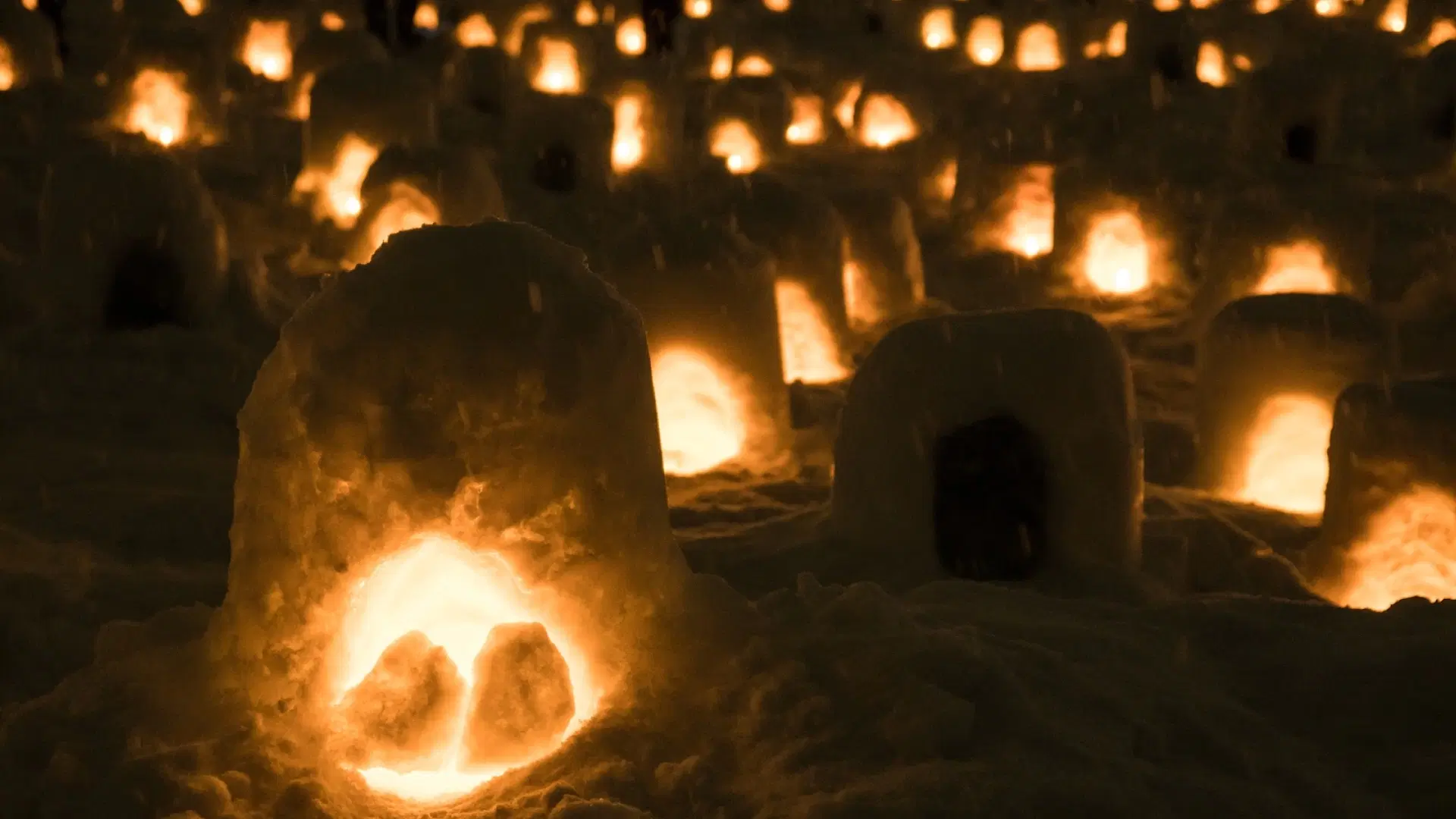
横手Yokote is a city of deep snow and deep memory. Located in the Yokote Basin of southeastern Akita, where the Yokote River meets the broad agricultural plain that produces some of Japan's finest rice, this city of roughly 90,000 inhabitants is defined by a winter that transforms its streets into corridors of white and a festival tradition that has turned snow itself into a medium of art and worship. The Kamakura Festival, held each February, fills the city with hundreds of snow houses, their interiors lit by candlelight and dedicated to the water deity Suijin, and the sight of an entire city glowing softly through walls of snow is one of the most extraordinary visual experiences in Japan.
Yokote's history extends well beyond its signature festival. The Yokote Castle ruins, perched on a hillside above the city, date to the early sixteenth century and figured in several of the conflicts that shaped Tohoku's political geography. The reconstructed castle tower, though modest in scale, provides views across the basin that explain why this location was strategically significant: the flat, fertile plain stretching in every direction is both an agricultural treasure and a military vulnerability, a landscape that demanded fortification. The castle grounds, transformed into a park, are among the finest cherry blossom viewing sites in the prefecture.
The city's agricultural identity remains central to its character. Yokote's rice, cultivated in paddies fed by snowmelt from the surrounding mountains, is renowned throughout Japan, and the yakisoba that has become the city's most famous culinary export reflects a culture that takes its starches seriously. The Yokote Yakisoba, distinguished by its thick, straight noodles and fried egg topping, has achieved regional celebrity and draws food pilgrims from across the country who come to taste the original versions at small shops scattered through the city's commercial district.
Yokote is a city of deep snow and deep memory.
Highlights
The Kamakura Festival in mid-February is Yokote's defining experience and one of the great winter festivals of Japan. The snow houses, each about two meters in diameter and equally tall, are constructed throughout the city but concentrate along the Yokote River and at the castle grounds, where dozens are built in close formation. Each kamakura contains a small altar to Suijin, the deity of water, and children sitting inside offer amazake, sweet fermented rice drink, and mochi to visitors who kneel at the entrance. The experience of peering into these glowing chambers, the warmth of the candles against the cold of the snow, the hospitality of the children extending an ancient greeting, is both beautiful and deeply moving.
The Yokote Masuda area, a twenty-minute drive southeast of the city center, preserves a remarkable collection of uchigura, inner storehouses built within the main structures of merchant families' homes. These buildings within buildings, some dating to the Meiji and Taisho eras, were designed to protect valuables from fire and demonstrate a level of craft and investment that reveals the prosperity of the region's rice and sake merchants. Several are open to visitors, their interiors revealing the lacquered beams, ornamental transoms, and hidden storage systems of a commercial culture that valued both beauty and security.
Yokote Castle Park is at its finest in spring, when cherry trees blanket the hillside and the views across the basin, with its patchwork of flooded rice paddies reflecting the sky, create one of Akita's most serene panoramas.
Culinary Scene
Yokote Yakisoba is the city's most recognized culinary contribution, and eating it here, at one of the small shops where it originated, is essential to understanding why a plate of fried noodles can inspire devotion. The noodles are thick, straight, and slightly chewy, fried on a griddle with pork, cabbage, and a sweet-savory sauce, then crowned with a fried egg whose runny yolk serves as a second sauce when broken and mixed through. The simplicity is the point; every element must be precisely right because there is nowhere to hide. The Yokote Yakisoba Association certifies participating restaurants, but the best versions are found at unmarked neighborhood shops where the griddle has been seasoned by decades of continuous use.
Beyond yakisoba, Yokote's location in Akita's rice heartland shapes its broader food culture. The rice itself, often Akitakomachi, is exceptional, and meals at local ryokans and restaurants begin with that quality as their foundation. Pickled vegetables, fermented preparations, and the hearty hot pots that sustained farming families through the long winters, particularly kiritanpo nabe and imoni, the taro and beef stew that marks the autumn harvest, remain staples of the local table.
The sake produced in and around Yokote benefits from the same superior rice and pristine water. Several small breweries operate in the area, their output modest in volume but distinctive in character, with a richness and body that reflects the robust agricultural traditions of the basin.
Ryokans in Akita
There are no ryokans in our guide listed in Yokote. See our selection across Akita.
View ryokans in Akita