Akita
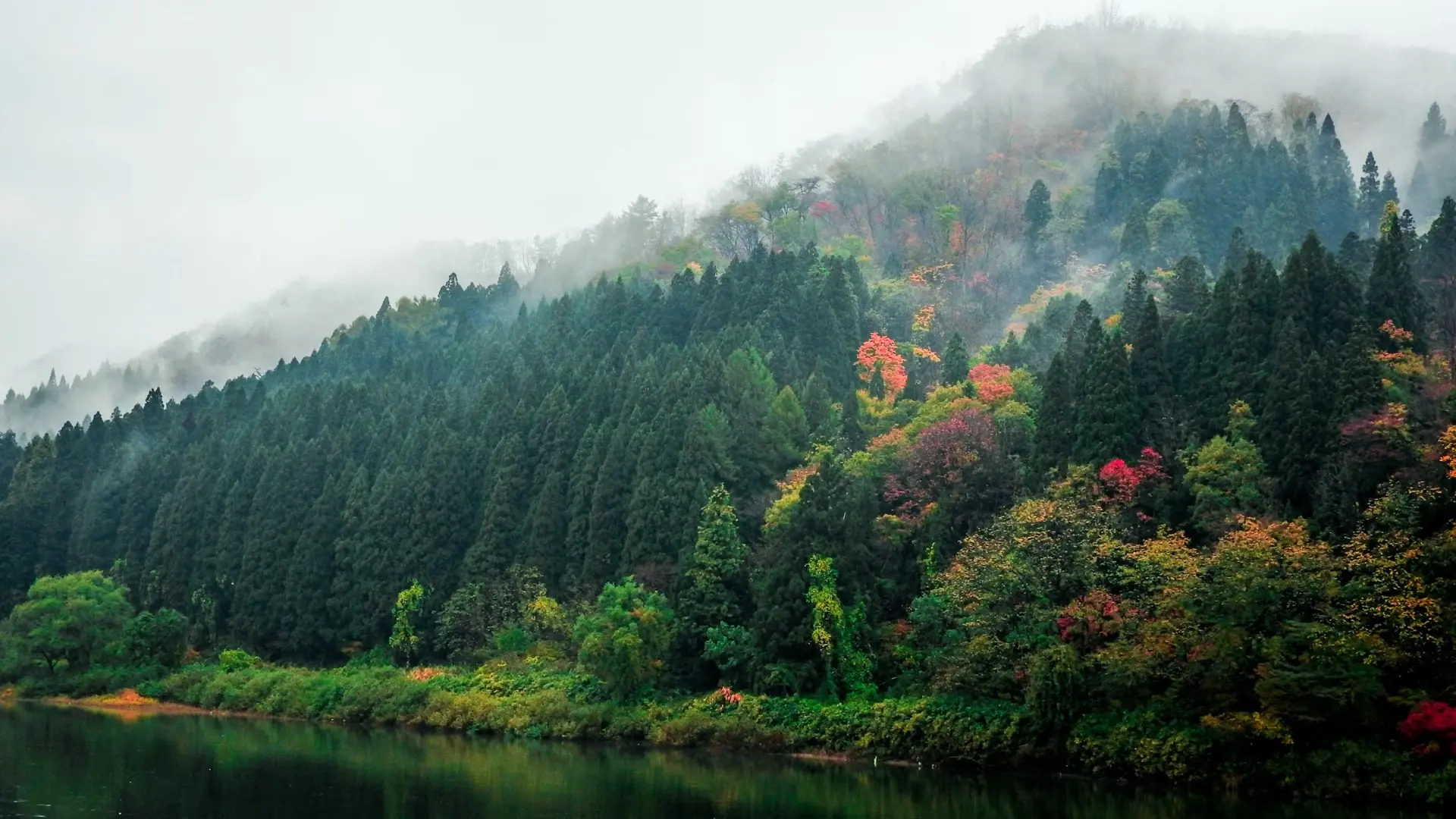
秋田県Akita is the quietest room in the house of Japan. Facing the Sea of Japan along the northwestern coast of Tohoku, it receives the full weight of winter storms that cross from Siberia, burying its cedar forests and rice paddies under meters of snow that linger well into spring. This snowfall is not merely a seasonal inconvenience; it is the central fact of Akita's identity, shaping its architecture, its cuisine, its festivals, and the inward-turning character of its people. The thatched-roof farmhouses of the Yokote basin, the deep eaves of Kakunodate's samurai residences, and the snow-walled kamakura igloos of February all speak to a culture that has learned not simply to endure winter but to make beauty from it.
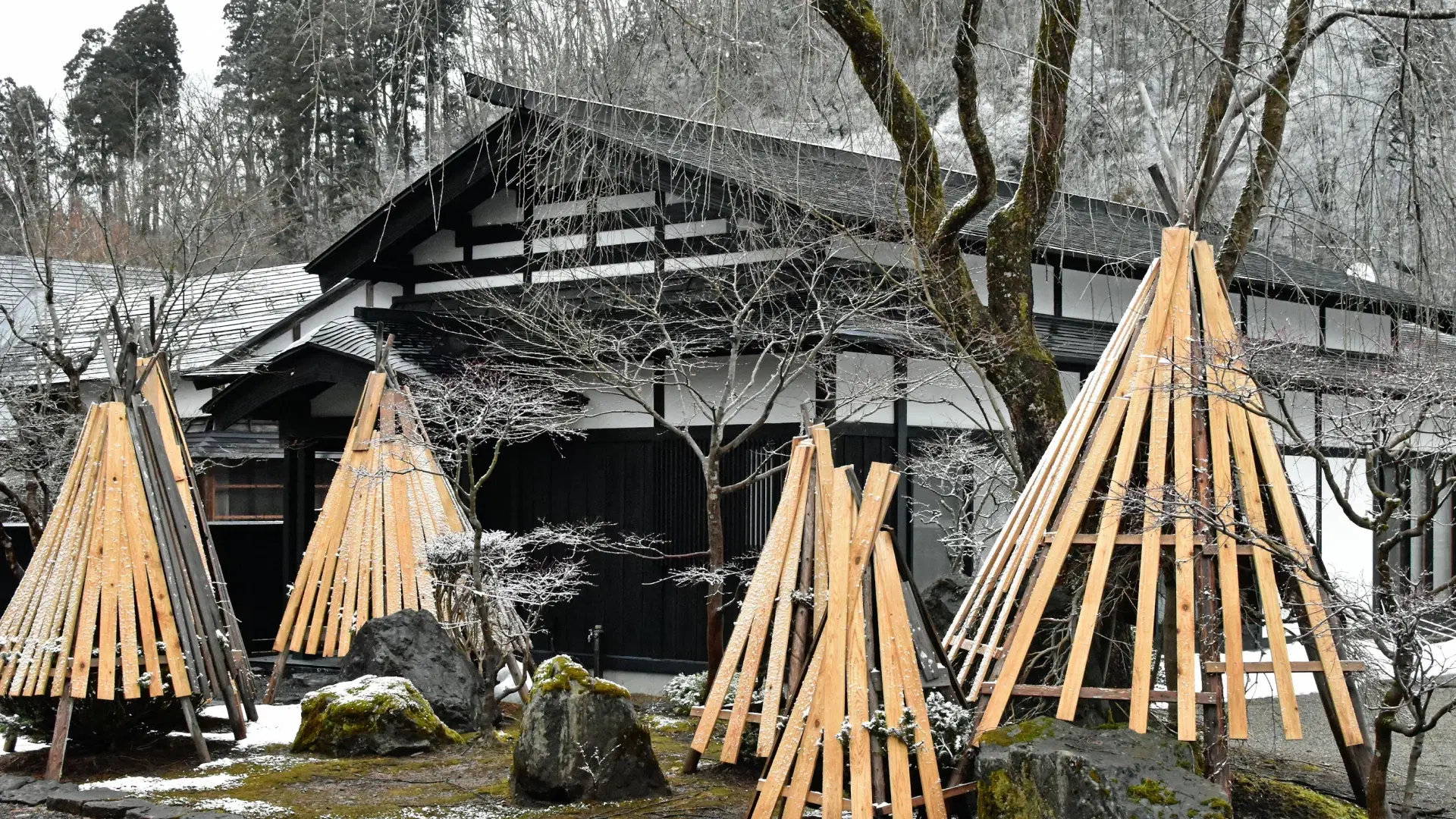
Kakunodate, often called the "little Kyoto of Tohoku," preserves one of Japan's finest samurai districts, a street of dark-walled bukeyashiki residences shaded by weeping cherry trees that were brought from Kyoto nearly four centuries ago by a homesick bride. In spring, these shidarezakura explode in cascading pink, creating a scene of refined, almost melancholic beauty that draws comparisons to the old capital without ever feeling derivative. The district's stillness, even at the height of cherry season, sets it apart from more famous hanami destinations.
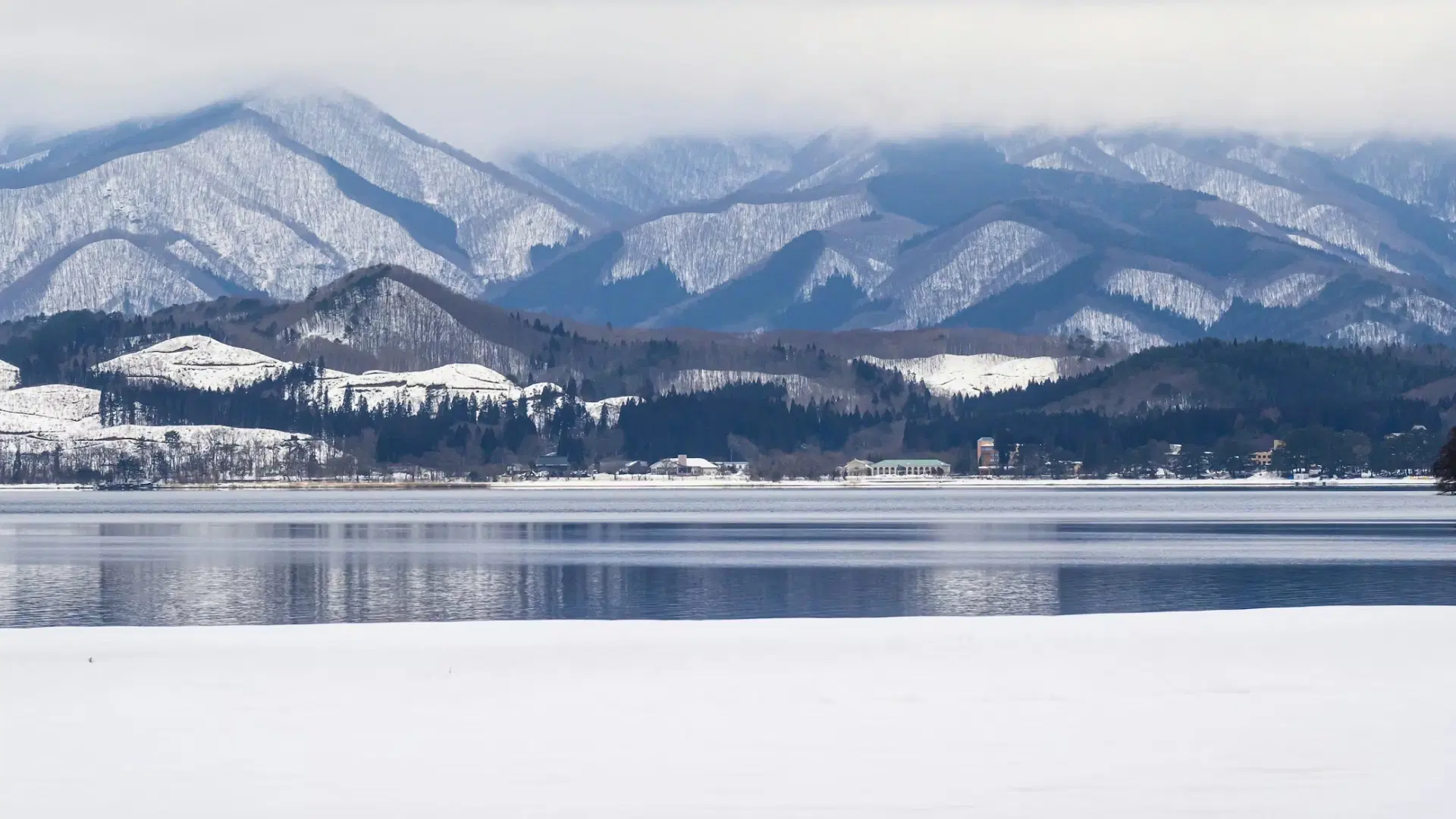
To the east, Lake Tazawa sits in a volcanic caldera, its waters the deepest of any lake in Japan, their depth giving the surface an unearthly shade of cobalt that shifts with the light. Above the lake, the Nyuto Onsen cluster, a scattering of rustic inns linked by forest paths through the beech woods, represents one of the last truly secluded hot spring retreats in the country, places where the architecture is weathered cedar, the lighting is dim, and the milky waters have been flowing since long before anyone thought to build a road.
Akita is the quietest room in the house of Japan.
Cultural Identity
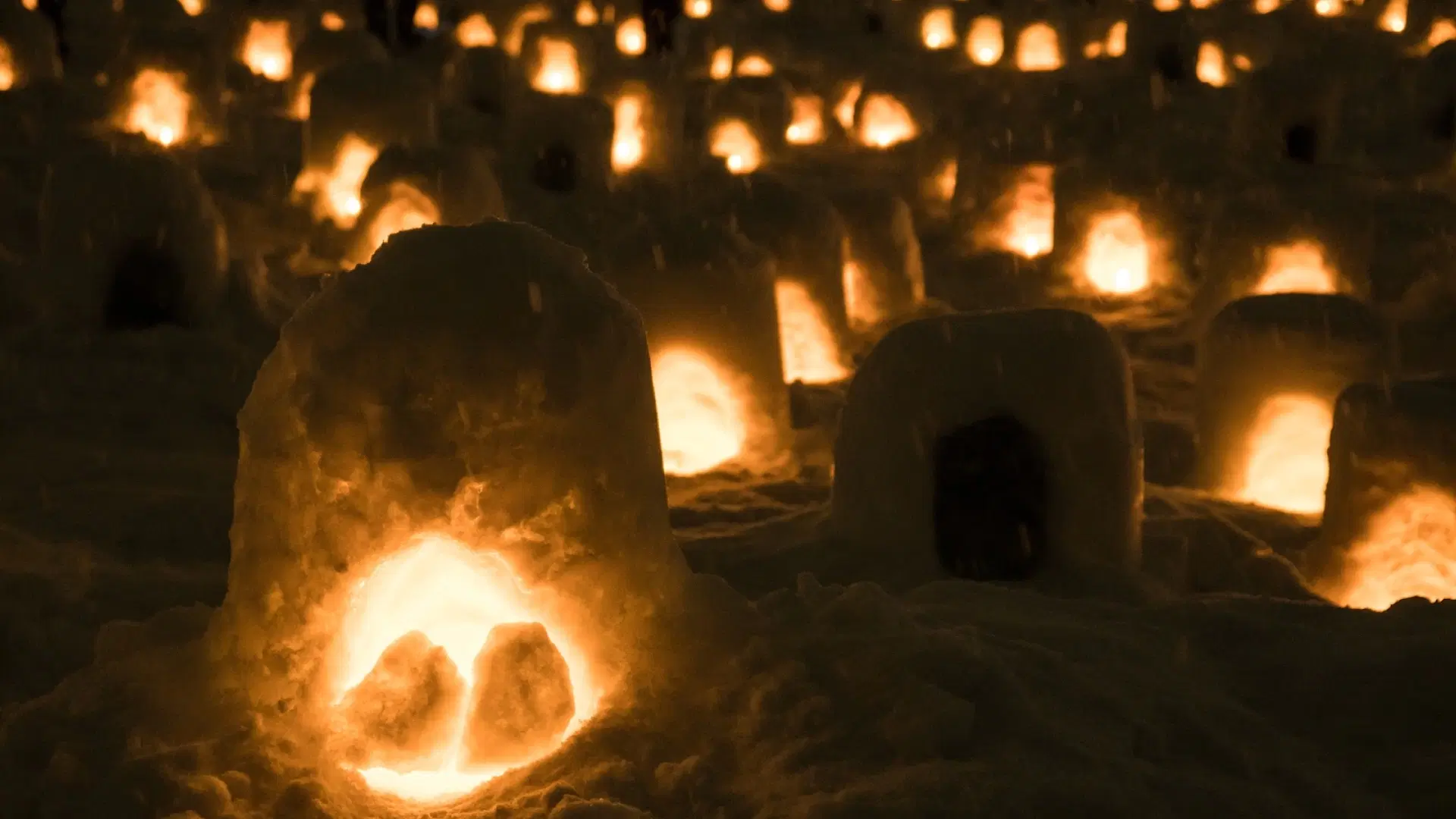
Akita's festivals are among the most striking in the Tohoku region. The Kanto Festival, held each August in Akita City, sees performers balance towering bamboo poles strung with dozens of paper lanterns on their foreheads, hips, and palms, the swaying clusters meant to resemble rice stalks heavy with grain. It is a prayer for harvest abundance, and the skill required is mesmerizing. In February, the city of Yokote hosts its Kamakura Festival, where hundreds of snow domes, each containing a small altar to the water deity, are illuminated by candlelight along the riverbanks. Kakunodate's samurai heritage endures not only in its architecture but in the tradition of kabazaiku, cherry bark craft, where artisans strip and polish the bark of wild mountain cherry trees to create tea canisters, trays, and boxes of lustrous, deep-red beauty.
Culinary Traditions
Akita Komachi rice, grown in the rich alluvial soil of the Yokote Plain and nourished by snowmelt from the Ou Mountains, is considered among the finest in Japan, with a sweetness and sticky texture that make it exceptional for both table rice and sake brewing. The prefecture's signature dish, kiritanpo, is fashioned from freshly pounded rice molded around cedar skewers and toasted over charcoal, then simmered in a rich chicken stock with seri (Japanese parsley), burdock, and maitake mushrooms. It is cold-weather cooking at its most satisfying. Inaniwa udon, the prefecture's other celebrated staple, is a hand-stretched noodle of remarkable thinness and silken texture, dried slowly and served cold with a light dipping sauce. Hatahata, a small sandfish that arrives in December storms, is the prefectural fish, salted, dried, or simmered in shottsuru, a pungent fish sauce unique to Akita.
Waters & Onsen
The Nyuto Onsen cluster, nestled in beech forest at the foot of Mount Nyuto near Lake Tazawa, is among the most atmospheric hot spring destinations in Japan. Seven rustic inns, each with its own source and character, are connected by walking paths through the woods. Tsurunoyu, the most famous, has welcomed bathers since the seventeenth century; its milky white outdoor bath, surrounded by wooden fencing and backed by forest, is one of the most photographed onsen in the country. The waters here are sulfur-rich and said to be beneficial for skin ailments. Elsewhere in Akita, Tamagawa Onsen, on the slopes of Mount Yakeyama, boasts the most acidic and highest-volume single spring source in Japan, drawing visitors seeking its intensely therapeutic waters. The experience is elemental, with steam rising from bare, mineral-stained rock.