The Yukata Guide
How to wear, when to wear, and why this simple cotton robe is central to the ryokan experience.
In your ryokan room, folded neatly on a shelf or draped over a stand, you will find a yukata. It is a simple garment: a single layer of cotton, cut in a T-shape, with a fabric belt called an obi. It comes in indigo, or navy, or a soft grey, patterned perhaps with a discreet geometric weave or left entirely plain.
The yukata (浴衣) translates literally as "bathing cloth," a name that recalls its origins as a garment worn in and around the bathhouse. Over the centuries, it evolved into something broader: the standard informal wear of the Japanese summer, the garment of festivals and fireworks displays, and, at the ryokan, the uniform of leisure.
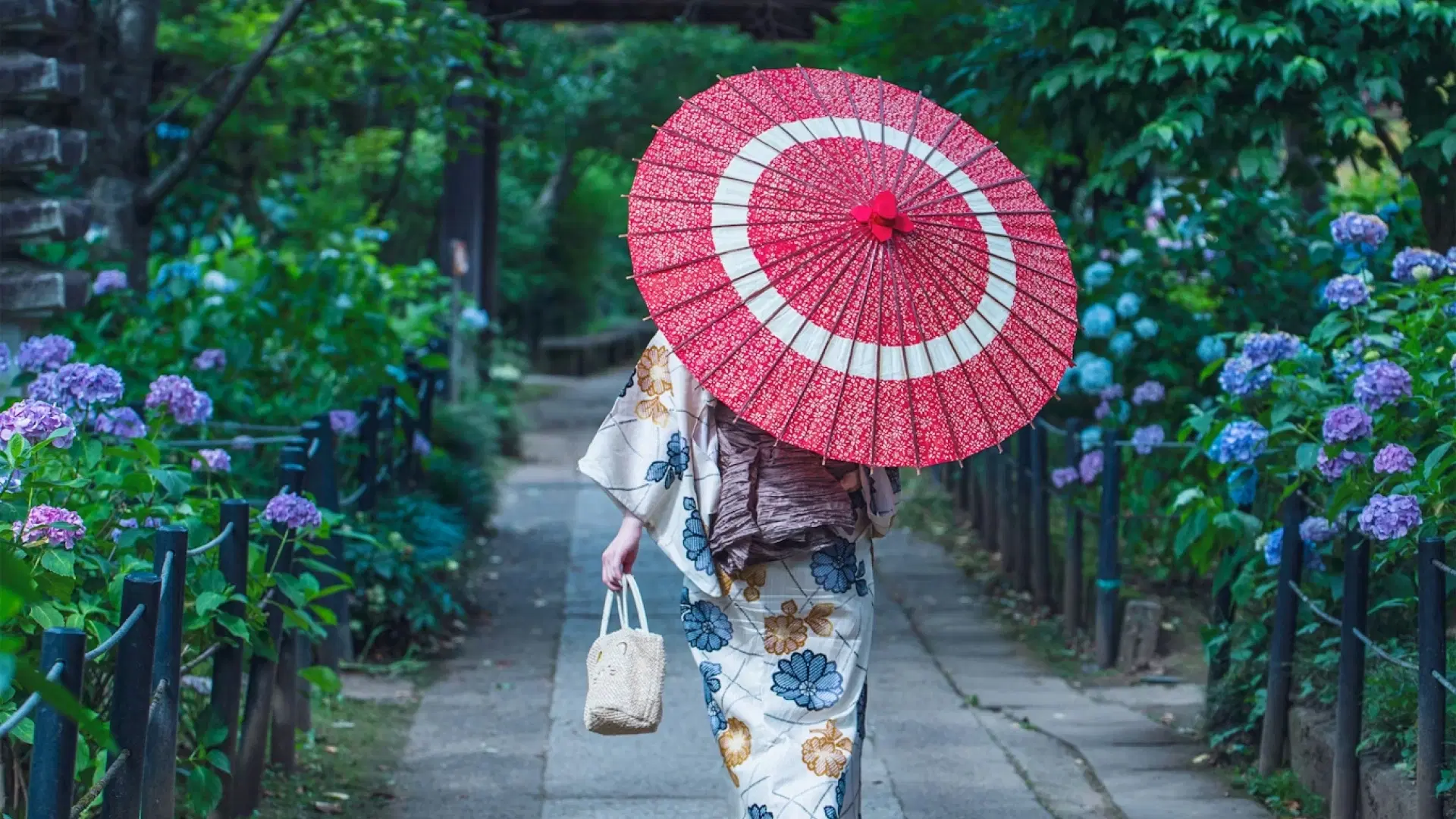
Dressing in the Yukata
The mechanics are straightforward, but one rule is absolute: left side over right. This is not a suggestion, a preference, or a cultural nicety. It is a rule as firm as any in Japanese custom. Right over left is used exclusively when dressing the deceased for burial.
Here is the process, step by step: Start by holding the yukata open behind you, slipping your arms through the sleeves. Adjust the length so the hem falls to your ankles. Wrap the right side across your body first, then bring the left side over the right. Secure with the obi belt, and adjust the collar to form a clean V at the front.
If you are uncertain, ask your nakai-san for help. Many can dress a guest in a yukata in under thirty seconds.
The single most important rule of wearing a yukata: left side wraps over right. Right over left is reserved exclusively for dressing the deceased in Japanese funeral tradition. Reversing the overlap is the most conspicuous mistake a visitor can make.
The yukata does not merely clothe you. It slows you down. Its fabric, its drape, its gentle restriction of stride all conspire to move you at the ryokan's own tempo.
When to Wear It
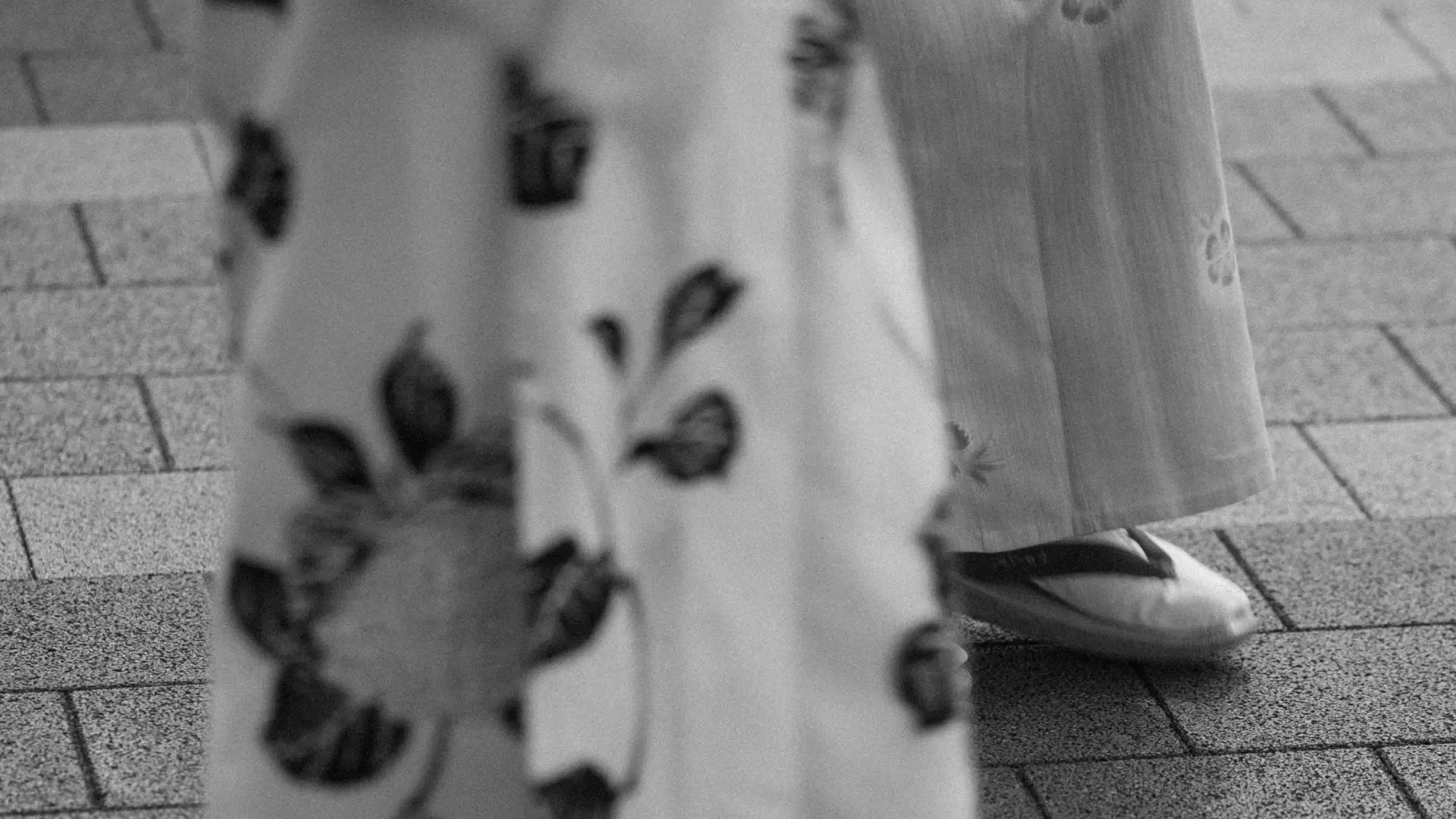
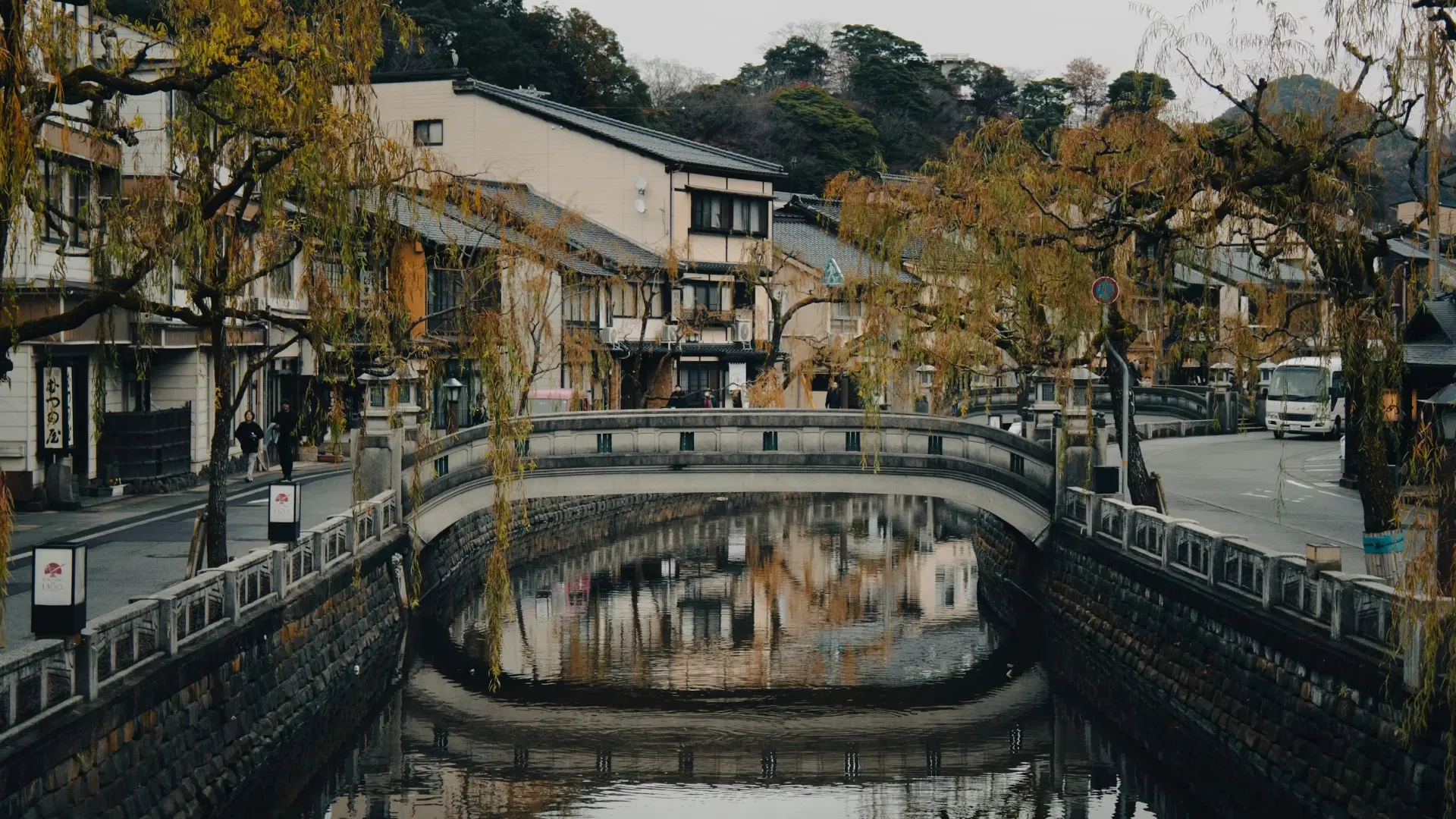
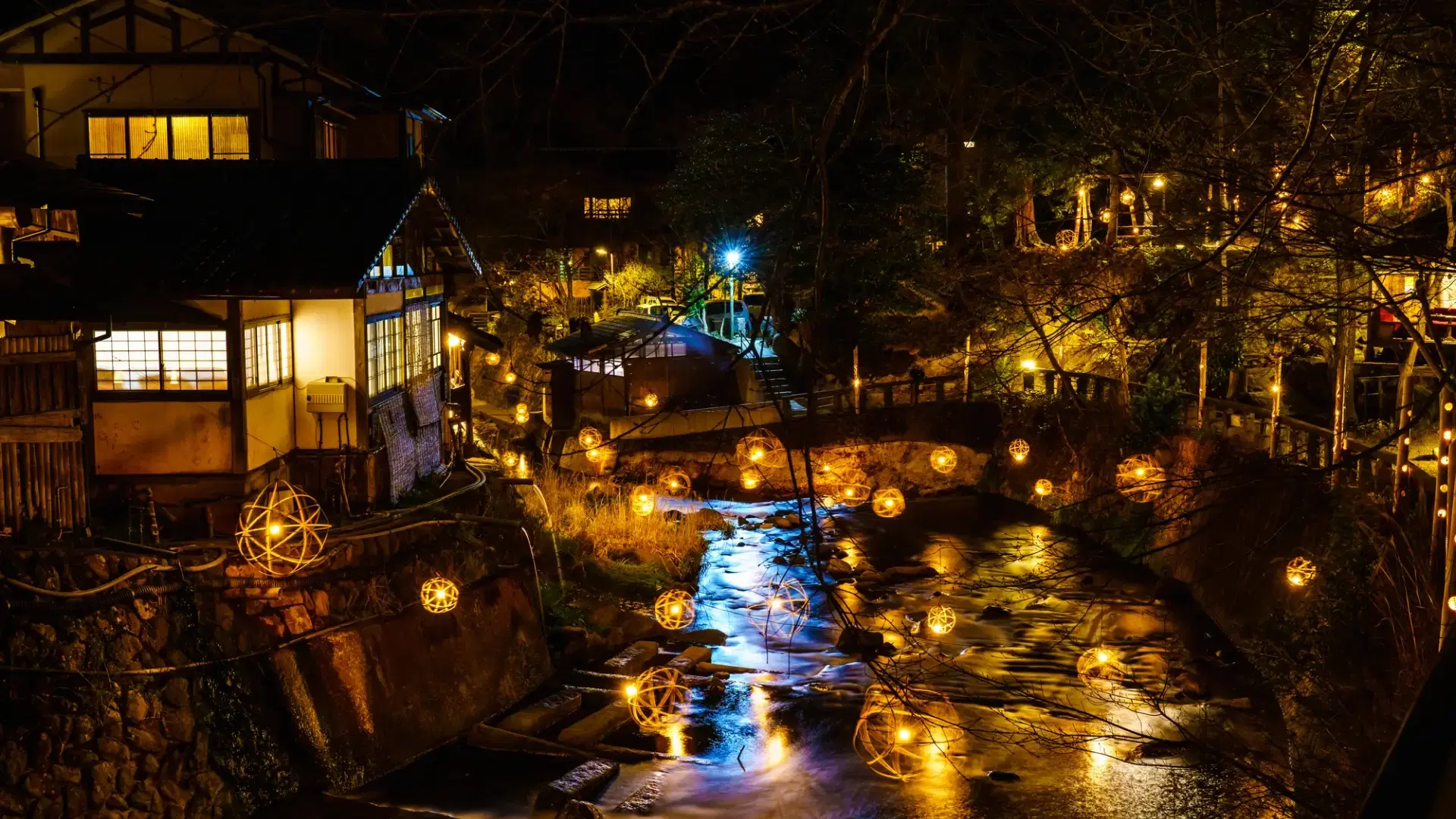
The yukata is your primary garment for the duration of your ryokan stay. Once you change into it upon arrival, you may wear it everywhere within the property: to the baths, to dinner, to the garden, to the lounge. Many onsen towns extend this permission beyond the ryokan itself; in places like Kinosaki, Kurokawa, and Ginzan, guests stroll the streets in their yukatas and geta (wooden sandals).
Within the ryokan, the yukata is the great equalizer. Guests of every nationality, background, and body type walk the same corridors in the same cotton robe, and the effect is quietly democratic.
The Yukata Walk
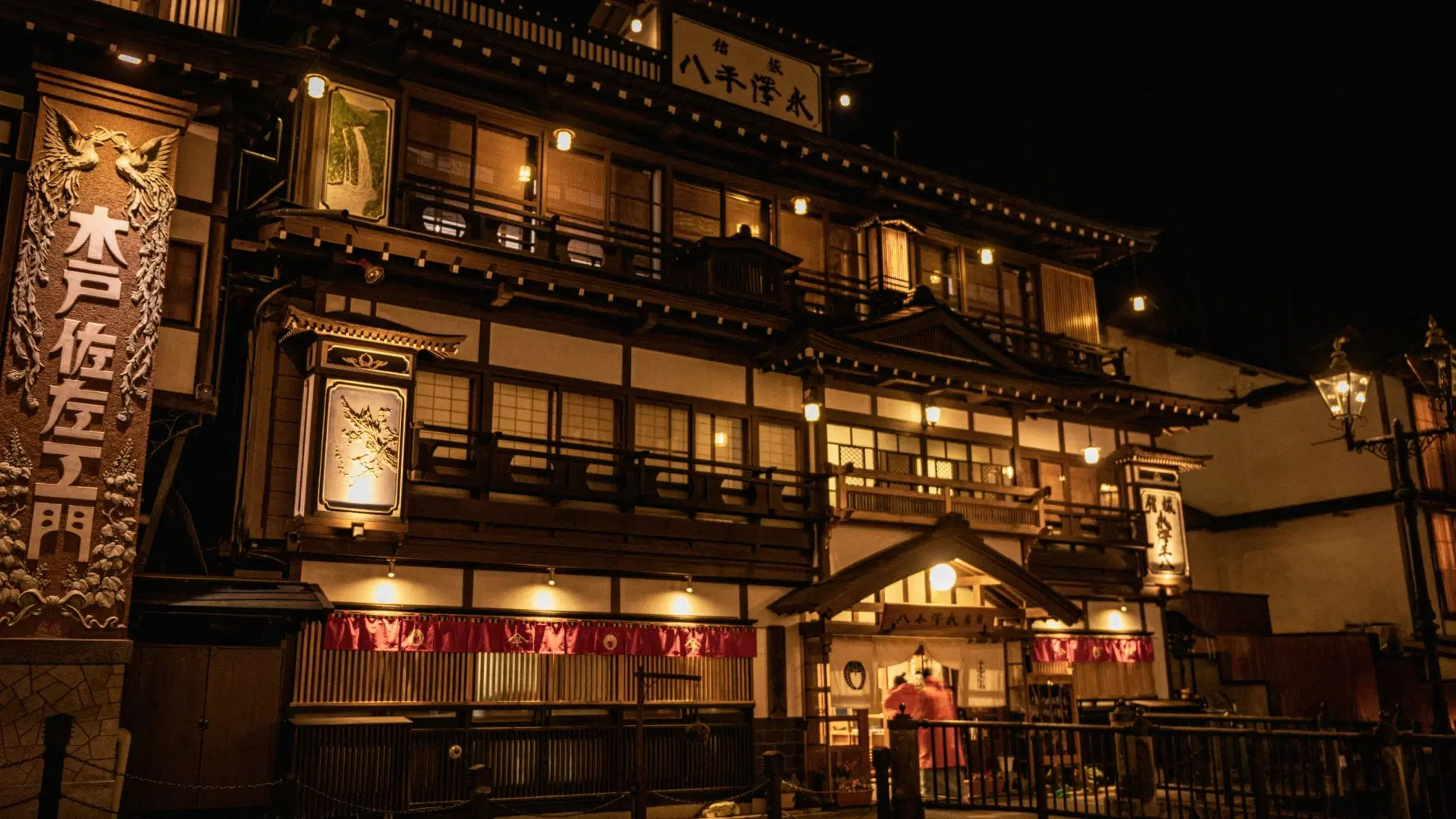
In the great onsen towns of Japan, the evening yukata walk, known as sotoyu meguri in Kinosaki, is one of travel's quiet pleasures. Don your yukata, slip into the wooden geta provided by your ryokan, and step outside.
The sound comes first. Geta on stone pavement produce a distinctive kara-koro clatter, a sound so associated with the onsen town that it has become a kind of informal soundtrack. The walk is aimless by design. You wander. You visit a bathhouse, soak, emerge steaming into the cool air, and wander again.
A Note on Tradition
The yukata occupies an unusual position in Japanese culture. It is simultaneously deeply traditional and entirely casual. For the foreign guest, the yukata can feel like a costume, but this anxiety is misplaced. The ryokan provides the yukata precisely because it wants you to wear it. Putting it on is not cultural appropriation; it is cultural participation.
The yukata also offers a subtle lesson in Japanese aesthetics. Its beauty lies not in ornamentation but in simplicity: the clean lines, the unhemmed edges, the way the fabric drapes differently on every body.
In the yukata, you learn what Japanese culture has always known: that simplicity, properly understood, is the highest form of elegance.