Shimonoseki
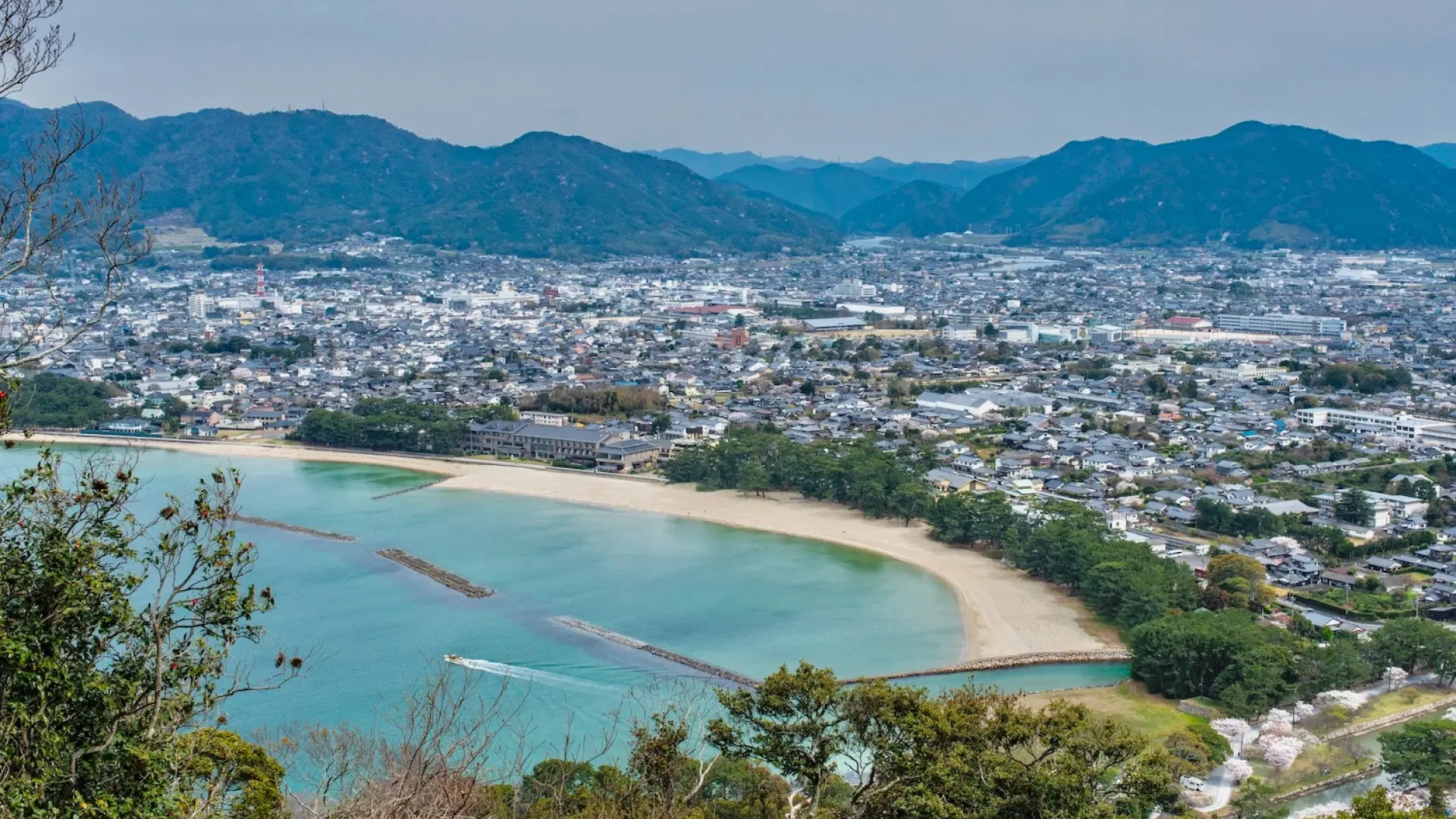
下関Shimonoseki commands the strait. Positioned at the southwestern tip of Honshu, where the Kanmon Strait narrows to barely six hundred meters between the main island and Kyushu, this port city has controlled one of the most strategically important waterways in East Asia for over a millennium. The currents that race through the strait, connecting the Seto Inland Sea to the Sea of Japan, carry a history of naval battles, commercial exchange, and diplomatic encounters that have shaped the course of Japanese civilization. The Battle of Dan-no-ura, fought in the strait in 1185, ended the Genpei War and established the Minamoto clan's supremacy, while the Shimonoseki bombardments of 1863-1864, when Western naval forces attacked the Choshu domain's shore batteries, accelerated the crisis that led to the fall of the shogunate.
Modern Shimonoseki is defined by two things: its relationship to the sea and its relationship to fugu. The pufferfish, whose potentially lethal toxin has not diminished but rather intensified the Japanese appetite for its delicate flesh, is to Shimonoseki what truffles are to Alba or oysters to Arcachon: the defining ingredient around which a culinary culture, an economy, and an identity have been constructed. The Haedomari Fish Market, the largest fugu wholesale market in Japan, processes the majority of the country's fugu supply, and the restaurants that line the waterfront and the streets surrounding Karato Market offer preparations that range from the translucent sashimi called tessa to the deep-fried fugu known as fugu kara-age, each designed to showcase the fish's subtle flavor while respecting the expertise required to prepare it safely.
The city's waterfront, facing Kyushu across the narrow strait, provides a panorama of maritime activity, from container ships and tankers navigating the channel to fishing boats returning to port with the morning's catch. The Kanmon Pedestrian Tunnel, which crosses beneath the strait to Moji on the Kyushu side, allows visitors to walk between the two main islands, an experience whose novelty is enhanced by the knowledge that the narrow passage above has been a contested and celebrated waterway for centuries.
Highlights
The Karato Fish Market is Shimonoseki's culinary and cultural epicenter, a waterfront complex where the morning auction, the retail fish stalls, and the sushi counters create an environment of controlled frenzy that communicates the scale and significance of the city's fishing industry. The weekend market, when additional stalls open along the waterfront promenade, draws visitors from across the region for sushi, sashimi, and the opportunity to eat directly from the source, the fish on the plate having been in the sea hours earlier. The market's fugu section, where the blowfish are displayed in their inflated, spiny state before being broken down by licensed preparers, provides the most vivid introduction to the ingredient that defines the city.
Akama Shrine, perched on a hillside overlooking the strait, memorializes the child emperor Antoku, who drowned in the Battle of Dan-no-ura when his grandmother leaped into the sea with him rather than surrender to the Minamoto forces. The shrine's dramatic vermilion gate, its stairway descending toward the water, and its position above the strait where the battle was fought create a site of unusual historical and emotional intensity. The Hoichi Hall within the shrine precinct references the famous ghost story of Hoichi the Earless, whose encounter with the spirits of the Heike warriors has made Akama one of the most literarily resonant shrines in Japan.
The Kanmon Strait itself is a spectacle that rewards sustained observation. The current flows through the narrow passage at speeds that visibly accelerate the movement of ships, and the interplay of tidal forces, commercial traffic, and the opposing shorelines of Honshu and Kyushu creates a dynamic maritime landscape. The Hinoyama observation point, accessible by ropeway, provides a panoramic view of the strait, the bridges that span it, and the two islands whose proximity and separation have defined Shimonoseki's strategic and commercial significance.
Culinary Scene
Fugu is Shimonoseki's reason for being at the table. The city, which handles roughly eighty percent of Japan's fugu trade, has developed a culinary relationship with the pufferfish that encompasses every edible part of the animal and every technique that can be applied to it. Tessa, the sashimi preparation in which the fugu's translucent flesh is sliced so thin that the pattern of the plate is visible through it, is the most refined expression of the tradition, its presentation a demonstration of the knife skills required to achieve uniform thinness across dozens of slices arranged in chrysanthemum or crane patterns. The flavor is subtle, clean, and faintly sweet, with a texture that offers gentle resistance before yielding, and the proper accompaniment of ponzu with momiji-oroshi and asatsuki elevates the experience from mere consumption to ceremony.
Tecchiri, the fugu hot pot, provides the warmer, more communal expression of the same ingredient, its broth absorbing the fish's gentle flavor as the flesh, vegetables, and tofu simmer at the table. Hire-zake, warm sake infused with the toasted fin of the fugu, is the traditional accompaniment, its smoky, marine flavor providing a counterpoint to the delicacy of the fish. Fugu shirako, the milt of the male pufferfish, is considered the ultimate delicacy of the fugu table, its creamy, custard-like texture and rich flavor available only during the winter season when the fish are at their reproductive peak.
Beyond fugu, Shimonoseki's position at the junction of two seas provides access to the full range of San'yo and San-in seafood traditions. The whale meat that was historically a staple of the city's diet reflects its whaling heritage, and the uni from the surrounding waters appears in sushi and donburi preparations whose sweetness and oceanic depth rival the sea urchin of Hokkaido.