Oda
大田Oda is the gateway to one of Japan's most remarkable geological and historical landscapes: the Iwami Ginzan Silver Mine, whose output during the sixteenth and seventeenth centuries accounted for a significant portion of the world's silver production and whose influence on global trade routes, East Asian power dynamics, and the economic foundations of the Tokugawa shogunate places it among the most consequential industrial sites in world history. The mine and its surrounding cultural landscape were inscribed as a UNESCO World Heritage Site in 2007, recognized not only for the mine itself but for the extraordinary completeness of the landscape that surrounds it: the mining tunnels, the smelting sites, the transportation routes to the coast, the port from which the silver was shipped, the castle that defended it, and the townscape that housed the workforce and the merchants who serviced the trade.
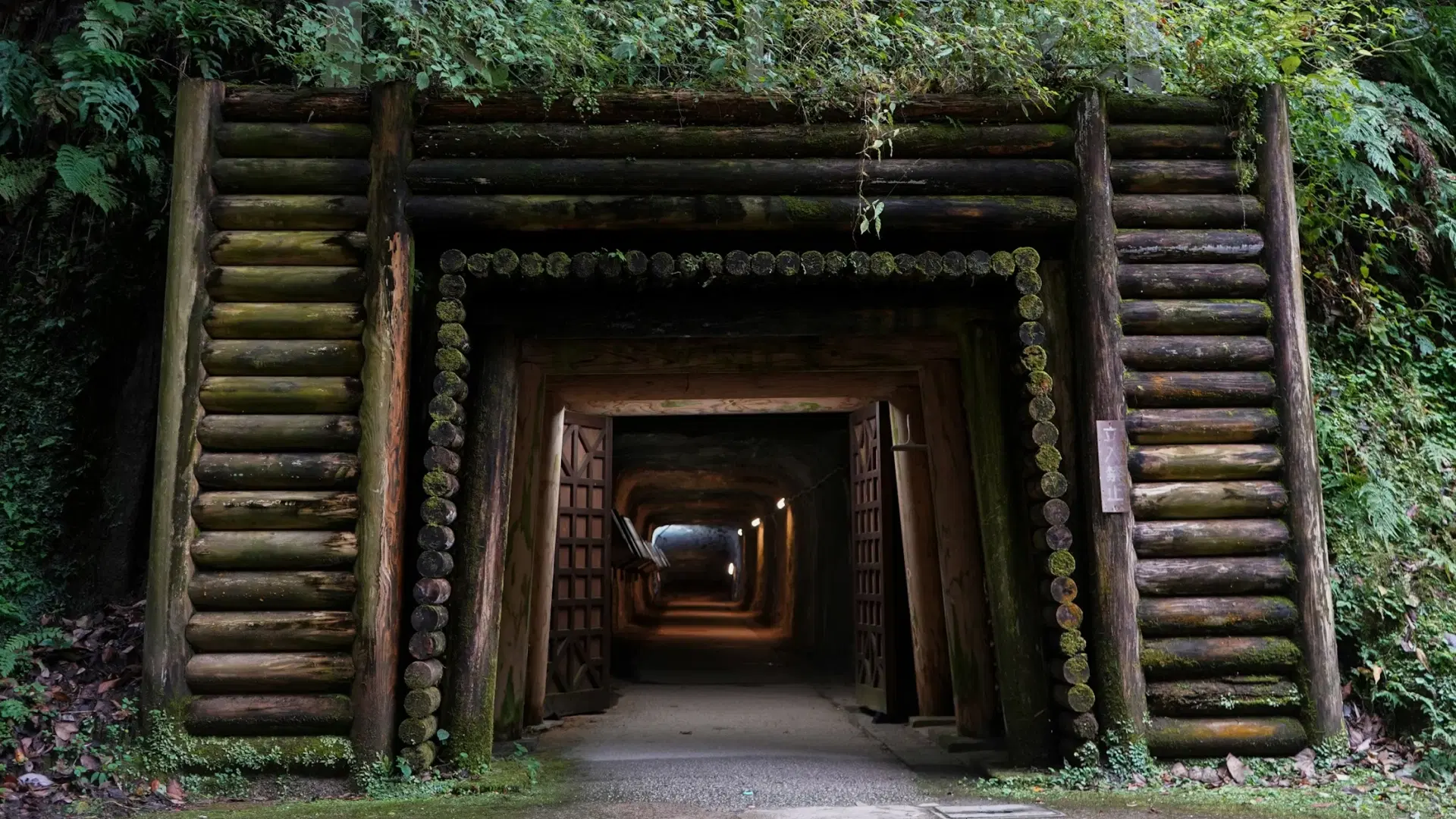
The Iwami Ginzan landscape is exceptional because it has not been industrialized into abstraction. Unlike most historic mining sites, which were either abandoned to ruin or transformed by modern extraction technology beyond recognition, Iwami Ginzan was worked primarily through small-scale tunneling and hand-processing techniques that left the surrounding forest and terrain largely intact. The mine entrances, or mabu, are scattered across a forested hillside, their modest openings disappearing into the mountain like animal burrows, their scale more suggestive of artisanal craft than of the industrial enterprise that once made this the richest silver mine in Asia. The forest has reclaimed most of the surface infrastructure, and walking the mine trails today is an experience of moving through a landscape where nature and history have reached an equilibrium that neither one dominates.
The town of Omori, at the foot of the mine hills, preserves the architectural character of the Edo-period settlement that supported the mining operation. Its single main street, lined with merchant houses, samurai residences, and temple buildings whose wooden facades and tiled roofs have been maintained rather than reconstructed, creates a townscape of genuine historical continuity. The residents of Omori, many of whom are descendants of the families that lived here during the mining era, have pursued a philosophy of rehabilitation rather than restoration, repairing and adapting the old buildings for contemporary use while preserving their essential character. The result is a living village rather than a museum, a place where the past is not exhibited but inhabited.
Highlights
The Ryugenji Mabu mine tunnel, one of the few shafts open to public entry, provides a visceral encounter with the conditions under which Iwami Ginzan's silver was extracted. The tunnel, barely wide enough for a single person and so low that most visitors must duck, extends into the hillside through hand-carved rock, its walls marked by the chisel strokes of the miners who worked here by candlelight, their progress measured in centimeters per day. The tunnel's claustrophobic dimensions and the perpetual chill of the underground air communicate the physical reality of sixteenth-century mining more powerfully than any museum exhibit could. Vein marks in the rock, where the silver-bearing ore was identified and followed into the earth, are visible along the tunnel walls, their presence a geological text that trained miners once read as fluently as scholars read manuscripts.
The townscape of Omori is Iwami Ginzan's human complement, its street of preserved buildings demonstrating how the wealth extracted from the mountain was translated into the architecture, craft, and community life of the settlement. The Kumagai family residence, one of the largest merchant houses in the district, has been opened as a museum that reveals the domestic arrangements of a prosperous mining-era household: the formal reception rooms, the private family quarters, the storerooms, and the kitchen facilities that sustained a household whose wealth depended on the mine's continued productivity. The house's scale and refinement testify to the prosperity that silver brought to this remote valley, a prosperity visible also in the temples that line the street, their quality of construction and decoration disproportionate to the town's small size.
Yunotsu Onsen, the port settlement on the Japan Sea coast through which Iwami Ginzan's silver was shipped to markets across Asia, preserves a small onsen town of remarkable character. The two public bathhouses, Yakushi-yu and Moto-yu, occupy buildings whose wooden interiors and stone tubs have been heated by the same thermal springs for centuries. The town's narrow streets, climbing the hillside from the harbor, retain the compressed, vertical townscape of a fishing and shipping community built on terrain too steep for horizontal expansion.
Culinary Scene
Oda and the Iwami Ginzan area draw their culinary character from the Japan Sea coast and the mountain interior of western Shimane, a dual pantry that produces a cuisine of honest, robust flavors shaped by the region's historical isolation from the cosmopolitan influences that refined the kitchens of Kyoto and Osaka. The Japan Sea supplies nodoguro and other seasonal fish, but the region's signature marine ingredient is the sazae turban shell, a large sea snail whose firm, briny flesh is grilled in its own shell over charcoal, the juices collecting in the spiral cavity and forming a concentrated sauce of oceanic intensity that the diner tips directly from shell to mouth.
The mountain interior provides wild boar in winter, river fish in summer, and year-round supplies of the mountain vegetables, mushrooms, and preserved foods that sustained the mining communities during the centuries when Iwami Ginzan operated. Tsuwano, the castle town inland from Oda, contributes a tradition of ceremonial cuisine associated with the feudal lords who governed the district, and the influence of this more refined tradition can be tasted in the ryokan dining of the area, where the presentation and sequencing of courses reflect the kaiseki principles that filtered from Kyoto into even the most remote domains.
Yunotsu, the port town on the coast, brings a fisherman's directness to the table: grilled fish eaten beside the harbor, miso soup thick with wakame seaweed harvested from the rocks below the town, and pickled vegetables whose recipes have been handed from household to household across generations without ever being written down. The convergence of fishing port austerity and mining town prosperity in a single compact area gives the Iwami Ginzan region a culinary personality that is rougher and more characterful than the polished cuisine of larger San'in cities.