Izumo
出雲Izumo is the place where Japanese mythology begins, the region whose name appears in the oldest surviving chronicles as the setting for the creation stories that established the spiritual foundations of the nation. The Kojiki and the Nihon Shoki, the eighth-century texts that record Japan's mythological origins, describe Izumo as the realm of Okuninushi, the deity who built the land and then ceded it to the heavenly gods in the act of kuni-yuzuri, the "transfer of the land," that established the divine lineage from which the imperial family claims descent. The great shrine of Izumo Taisha, erected as compensation for Okuninushi's surrender of earthly sovereignty, has stood on this stretch of the Shimane coast for as long as Japanese civilization can remember, its spiritual authority second only to the Grand Shrine of Ise and, in the estimation of many, equal to it.
The shrine's architecture is unlike that of any other Shinto sanctuary in Japan. The main hall, built in the taisha-zukuri style, is the oldest form of shrine architecture, its massive pillars, elevated floor, and steeply pitched roof reflecting construction principles that predate the Chinese architectural influence that shaped most subsequent Japanese building. The hall's scale is extraordinary: historical records and archaeological evidence suggest that the original structure stood at a height of 48 meters, supported on enormous pillars that would have made it the tallest building in Japan during the medieval period. The current hall, rebuilt in 1744 and standing at 24 meters, remains one of the largest wooden shrine structures in the country, its presence at the end of the long pine-lined approach conveying a weight of spiritual authority that even the secular visitor cannot fail to register.
Izumo's mythological identity extends beyond the shrine to encompass the entire landscape. The Inasa Beach, where the gods are believed to arrive each November for the annual divine assembly, the Hinomisaki Cape where the lighthouse marks the westernmost point of the Shimane coast, and the Izumo Plain where the kuni-yuzuri is said to have occurred compose a sacred geography whose features are not merely settings for the myths but active participants in their meaning. To travel through Izumo is to move through a landscape that has not been separated from its stories, where the relationship between place and narrative is as immediate and as powerful as it was when the stories were first told.
Izumo is the place where Japanese mythology begins, the region whose name appears in the oldest surviving chronicles as the setting for the creation stories that established the spiritual foundations of the nation.
Highlights
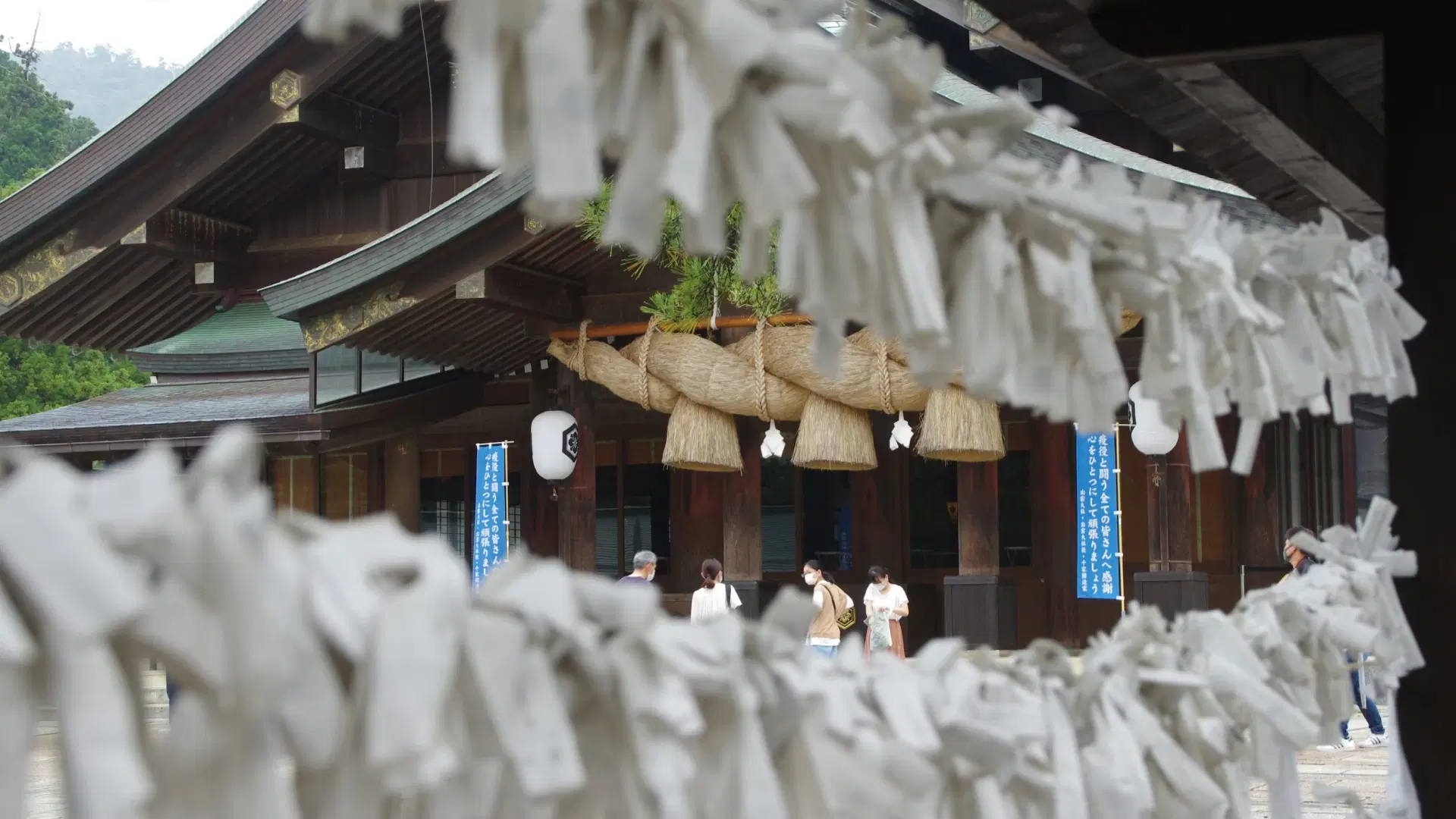
Izumo Taisha is one of the supreme religious sites of Japan, its authority rooted in a mythological history that predates the historical record and extends into the very origins of the Japanese people. The shrine's approach, a long avenue of ancient pine trees that descends gently toward the compound, reverses the usual upward approach of Japanese shrine architecture, the visitor moving downward toward the divine presence rather than ascending toward it, a spatial anomaly that some scholars interpret as a reflection of Okuninushi's chthonic nature, his association with the underworld and with the unseen forces that operate beneath the surface of the visible world. The shimenawa, the sacred rope that hangs across the front of the kagura-den worship hall, is the largest in Japan, its thirteen-meter length and five-ton weight a physical expression of the spiritual gravity concentrated at this site.
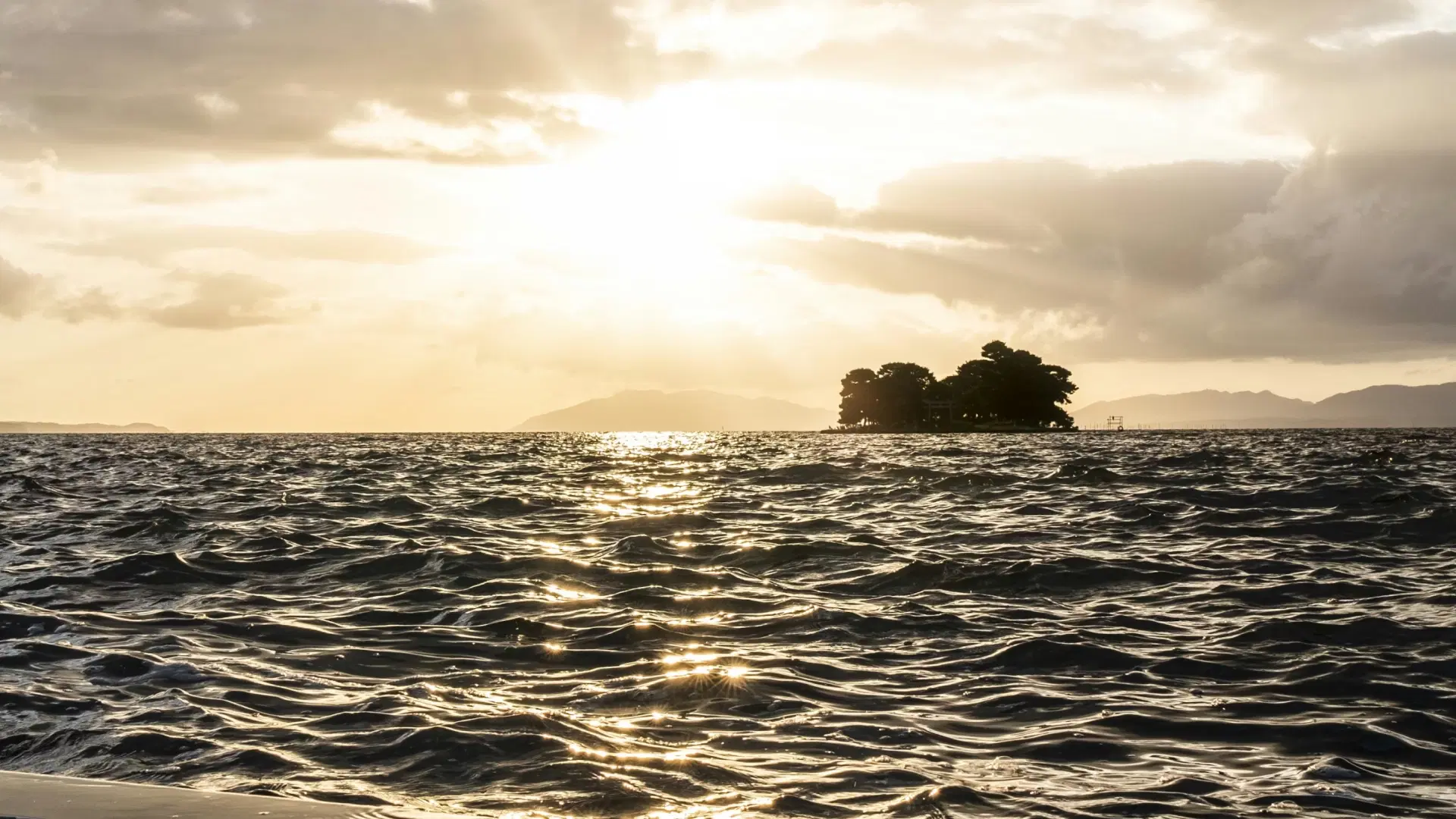
Inasa Beach, a crescent of sand facing the Japan Sea less than a kilometer west of the shrine, is the mythological landing site of the eight million deities who gather at Izumo each November for the Kamiari-zuki, the "month of the gods' presence." The beach's Benten-jima, a small rock island connected to the shore at low tide, serves as the ritual reception point for the arriving gods, and a ceremony performed on the beach during the tenth month of the lunar calendar formally welcomes the divine assembly. The beach itself, apart from its mythological significance, is a landscape of austere beauty, its dark sand and rough surf providing a visual counterpoint to the cultivated serenity of the shrine precincts.
Hinomisaki Shrine, perched on the cliffs at Cape Hinomisaki northwest of the city, presents a vision of shrine architecture radically different from Izumo Taisha's austere grandeur. Its buildings, painted in vivid vermillion and decorated with polychrome carvings of animals, flowers, and mythological scenes, display the ornate, Tokugawa-era aesthetic that the shogunate applied to shrines under its patronage. The contrast with Izumo Taisha's unadorned wood is instructive: two expressions of sacred architecture, one emphasizing the raw power of natural material and ancient form, the other celebrating the human capacity to embellish the divine dwelling with color and craft.
Culinary Scene
Izumo soba is the defining culinary tradition of the region, a buckwheat noodle preparation whose distinctive character stems from the use of the whole buckwheat grain, including the dark outer hull, which gives the noodles a deeper color, a stronger flavor, and a more robust texture than the refined soba served in Tokyo and most other regions. The traditional serving method, warigo-soba, presents the noodles in a stack of three round lacquered boxes, each portion accompanied by a selection of condiments: grated daikon, chopped negi scallion, dried bonito flakes, nori seaweed, and a concentrated tsuyu dipping sauce that the diner pours directly over the noodles. The excess sauce from each box is poured into the next, the progressive enrichment of the sauce through the meal creating a crescendo of flavor that concludes with the final box's accumulated depth.
The Japan Sea coast supplies Izumo's tables with the same quality of seafood that defines the broader San'in culinary tradition, but the city's proximity to Lake Shinji adds the singular pleasure of shijimi clams, whose briny sweetness and mineral complexity contribute to soups, rice dishes, and the simmered preparations that anchor the local home cooking tradition. The combination of mountain soba and lakeside shijimi gives Izumo a dual culinary identity that mirrors its geographical position between the mountains of the interior and the waters of the coast.
The shrine town's commercial street, Shinmon-dori, which leads from the station to the Izumo Taisha approach, is lined with shops and restaurants that cater to the pilgrim appetite with a range that extends from the essential bowl of warigo-soba to elaborate kaiseki dinners featuring the seasonal produce of the Izumo Plain. The tradition of eating soba upon arrival at Izumo Taisha, a practice that connects nourishment with pilgrimage in a manner as old as the shrine itself, gives the meal a ritual dimension that elevates it beyond mere sustenance into an act of participation in the spiritual economy of the site.