Takachiho
高千穂Takachiho is the place where Japanese mythology touches the earth. According to the Kojiki and Nihon Shoki, the foundational texts of Shinto cosmology, it was here that Ninigi-no-Mikoto, grandson of the sun goddess Amaterasu, descended from the celestial realm to establish divine rule over the terrestrial world. The specifics of this descent are a matter of competing local claims across Kyushu, but Takachiho's landscape makes the strongest argument not through scholarship but through atmosphere. The gorge that gives the town its most famous vista is a chasm of volcanic basalt carved by the Gokase River into columnar formations so geometrically precise they appear constructed rather than eroded, the basalt pillars rising like the columns of a temple built by forces that predate human architecture by millions of years.
The town sits on a highland plateau in northern Miyazaki, isolated from the coastal lowlands by mountains whose forested slopes have historically discouraged casual access and preserved a cultural continuity that more accessible regions have lost. The Yokagura, sacred dances performed at Takachiho Shrine and in private farmhouses throughout the winter months, enact the myths of the Kojiki in movements and music that have been transmitted between generations for centuries, their performers not professional dancers but farmers and tradespeople who set aside their daily work to become, for the duration of the ritual, vessels for the oldest stories of the Japanese people.
For the traveler, Takachiho offers an encounter with a Japan that exists beneath and before the modern surface. The shrines are not tourist attractions but active places of worship where the mythology is not interpreted but lived. The gorge is not a scenic viewpoint but a geological text that records the volcanic history of Kyushu in its stone. The night dances are not performances but ceremonies whose power derives from the sincerity of their participants and the depth of the tradition they sustain.
Takachiho is the place where Japanese mythology touches the earth.
Highlights
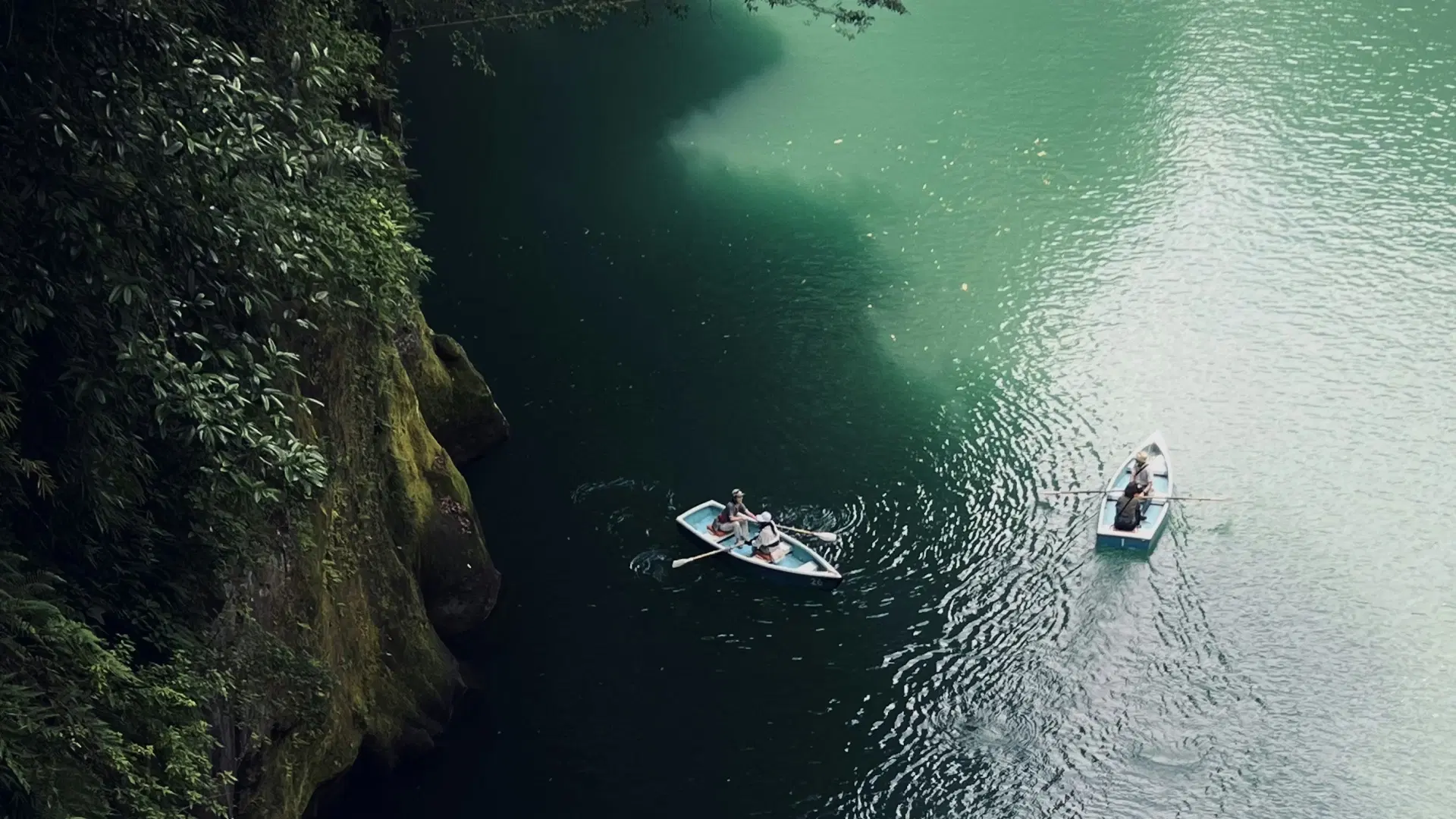
Takachiho Gorge is a ravine of extraordinary visual power, its walls of columnar basalt rising up to 100 meters above the Gokase River, which flows through the narrow channel in a ribbon of emerald water. The Minainotaki waterfall, dropping 17 meters from the cliff edge into the gorge, is the focal composition, its white curtain of water framed by the dark geometry of the basalt columns and the green of the ferns and mosses that colonize every ledge and crevice. Rental rowboats allow visitors to approach the waterfall from the river surface, a perspective that amplifies the scale of the cliffs and the intimacy of the gorge into an experience of being held within the landscape rather than observing it from without.
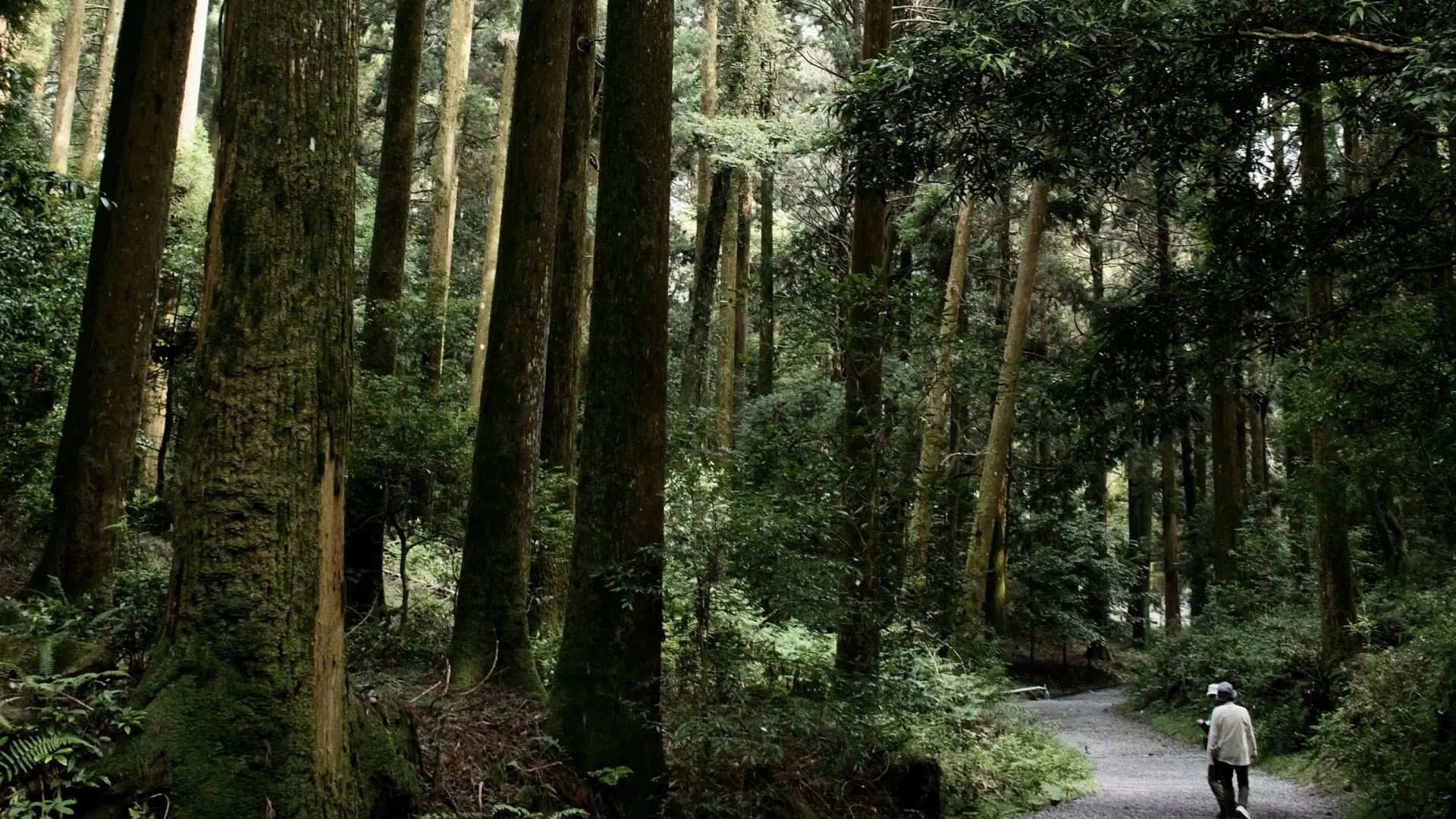
Takachiho Shrine, set within a grove of ancient cedars whose canopy filters the light into green-gold shafts, is the spiritual anchor of the town. The shrine's most famous feature is a pair of conjoined cedar trees whose trunks have grown together, a natural phenomenon interpreted as a symbol of marital harmony and approached by couples who circle the joined trees three times while holding hands. The nightly Yokagura performances at the shrine's kagura hall offer an accessible introduction to the sacred dances, presenting four of the thirty-three traditional dances in a program that lasts approximately one hour.
Amanoiwato Shrine, a short drive west of the town center, guards the cave where, according to myth, Amaterasu hid herself from the world, plunging it into darkness until the other gods lured her out with music and dance. The cave itself, visible from a sacred viewing platform accessible only with a shrine priest's escort, is a dark opening in the cliff face across a river gorge, its plainness somehow more convincing than any architectural elaboration could be. The adjacent Amano Yasukawara, a shallow cave beneath an overhanging cliff where the gods are said to have convened to devise their plan, is filled with thousands of small stone cairns left by visitors whose wishes accumulate in the silence like geological prayer.
Culinary Scene
Takachiho's cuisine reflects the highland isolation that has preserved its cultural traditions, drawing on mountain ingredients with a simplicity that speaks of self-sufficiency rather than sophistication. Takachiho beef, raised on the plateau's grasslands, is a regional specialty whose quality reflects the cattle's diet of mountain grasses and clean highland water. The beef appears on local menus as steak, grilled over charcoal, and in the regional preparation of beef nanban, a variation of Miyazaki's celebrated chicken nanban that substitutes thinly sliced beef for the usual poultry.
Nagashi somen, thin wheat noodles served in a trough of flowing cold water from which diners pluck the noodles with chopsticks as they pass, is Takachiho's most distinctive and theatrical culinary experience. The practice, which uses the town's clean mountain spring water, transforms a simple dish into a communal game, the speed and agility required to catch the noodles generating laughter that elevates lunch into entertainment. Several restaurants along the gorge offer the experience in settings where the sound of the river and the sight of the basalt columns accompany the meal.
The highland produces soba of notable quality, the buckwheat thriving in the cool, mineral-rich volcanic soil of the plateau. Small soba restaurants in the town center serve handmade noodles whose earthy flavor and firm texture reflect the grain's growing conditions. Grated daikon radish, locally grown wasabi, and the clean, cold water used for dipping complete a meal whose austerity is a form of refinement.