Nichinan
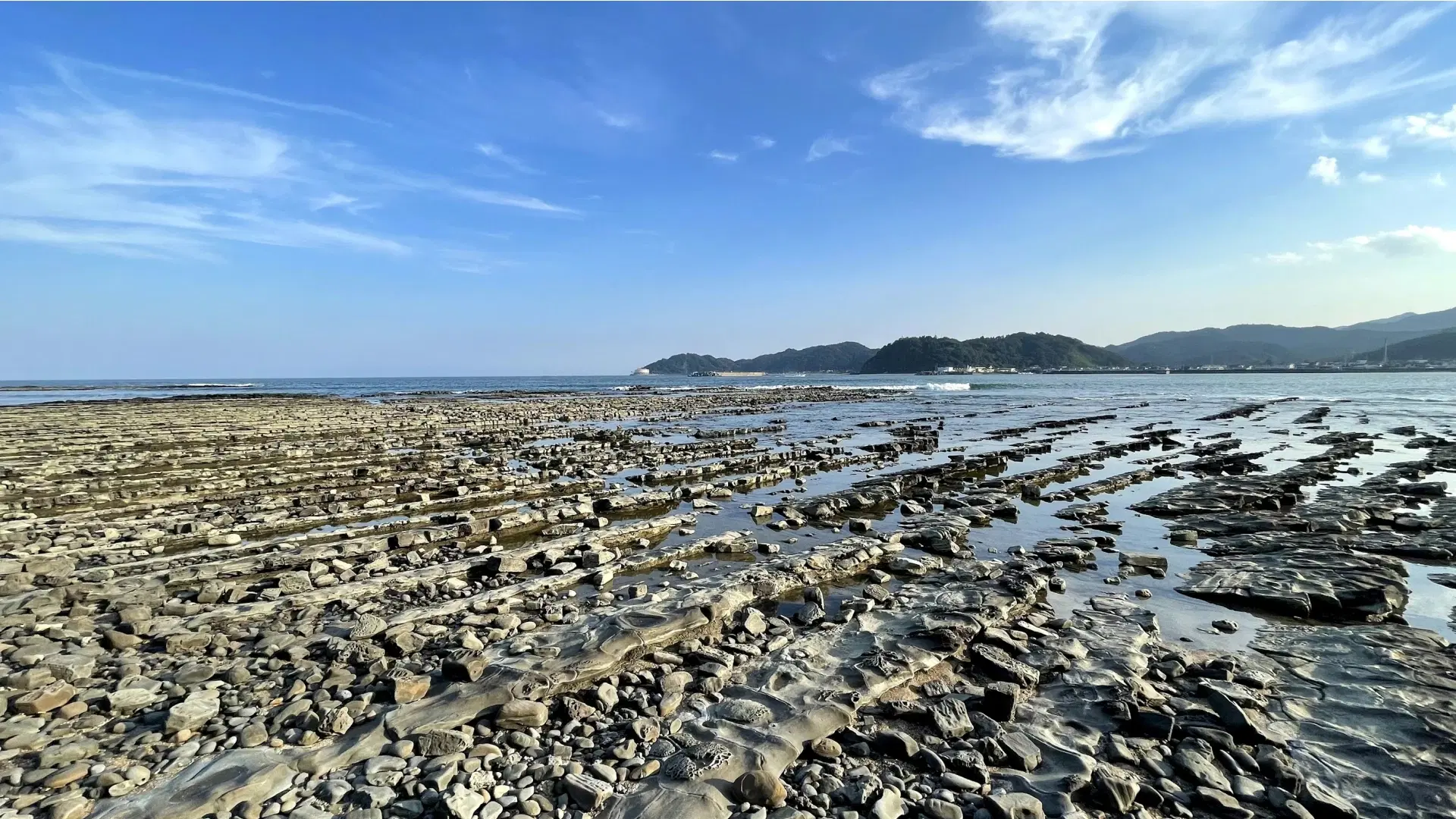
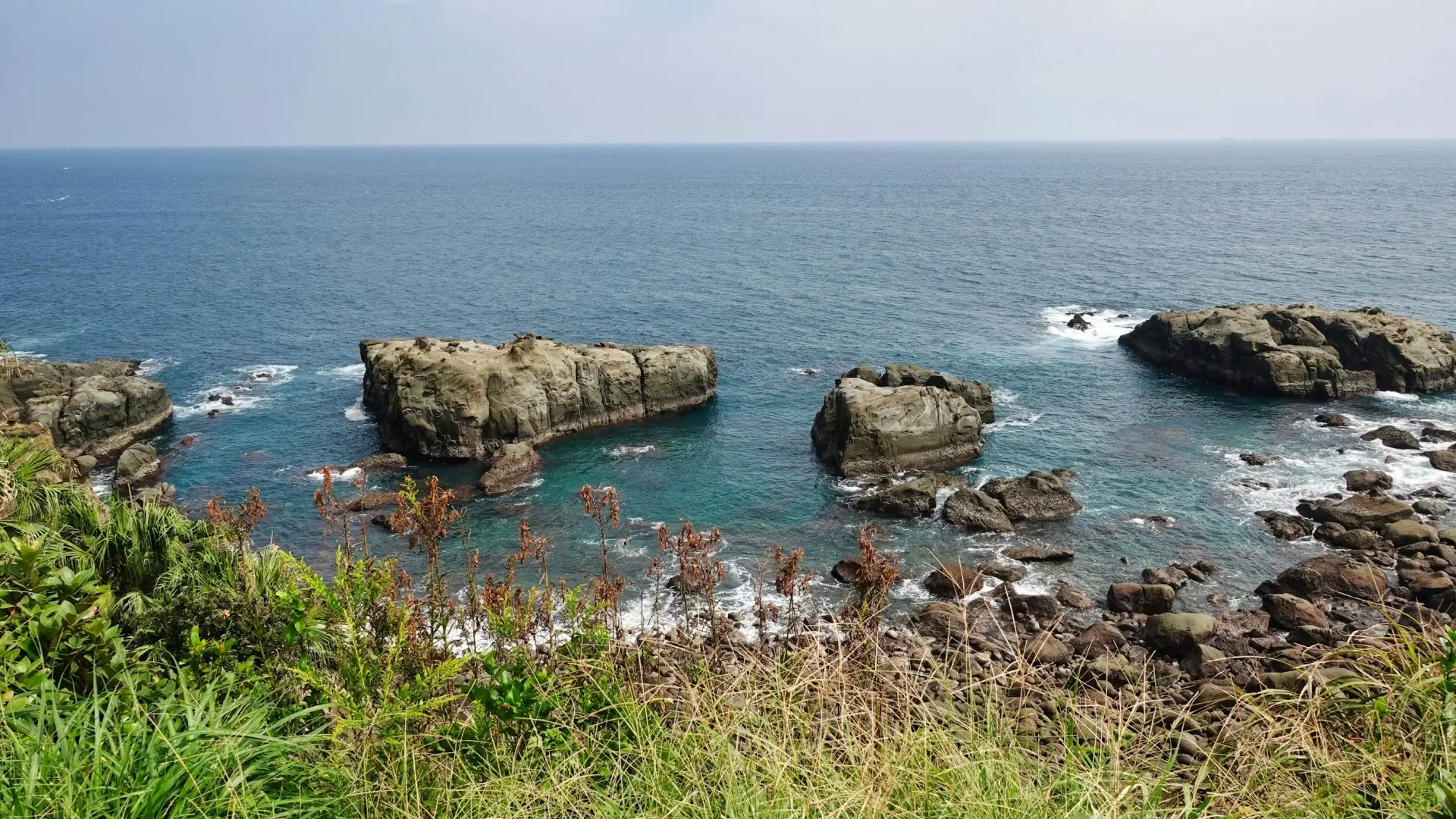
日南The Nichinan Coast stretches south from Miyazaki along a Pacific shoreline of such scenic concentration that the entire route has been designated a quasi-national park, its capes, coves, and volcanic headlands composing a coastal landscape that combines the dramatic with the intimate in proportions that reward both driving and walking. The coast road follows the contours of the land with a fidelity that has resisted the straightening impulse of modern highway engineering, its curves revealing sequential views of wave-cut platforms, island-studded bays, and subtropical forest that descend to beaches of dark volcanic sand.
Nichinan itself is a small castle town whose history predates its coastal scenery in cultural significance. The Obi district, sometimes called "the little Kyoto of Kyushu," preserves a samurai quarter of white-plastered walls, stone-lined waterways, and dark-timbered gates that compose one of the most atmospheric historic streetscapes in southern Japan. The Ito clan ruled from Obi Castle for centuries, and the town's cultural institutions, from its Noh theater tradition to its scholarly academy, reflect the aspirations of a feudal elite who sought to cultivate in their remote domain a sophistication worthy of the imperial capital.
The stretch of coast between Aoshima and Nichinan encompasses Sun Messe Nichinan, a clifftop park featuring replicas of the Easter Island moai statues, authorized by the Chilean government in gratitude for Japanese restoration efforts on the originals. The moai, arrayed along the cliff edge facing the Pacific, create a surreal juxtaposition of Polynesian monumentality and Japanese coastal landscape that defies easy categorization but produces an undeniable visual impact, particularly at sunset when the statues are silhouetted against the darkening sky.
Highlights
Udo Jingu Shrine is the Nichinan Coast's most remarkable cultural site, a vermilion-painted shrine built within a cave in the sea cliffs overlooking the Pacific. The shrine is dedicated to the father of Emperor Jimmu and is associated with prayers for fertility, safe childbirth, and marital harmony. The approach descends a stairway carved into the cliff face, the shrine appearing below in its cave setting with the ocean crashing against the rocks beneath. Visitors throw undama (luck balls) at a target on the wave-washed rocks below, the challenge of landing the small clay ball within the rope-marked area providing a physical enactment of prayer that engages the body as well as the spirit.
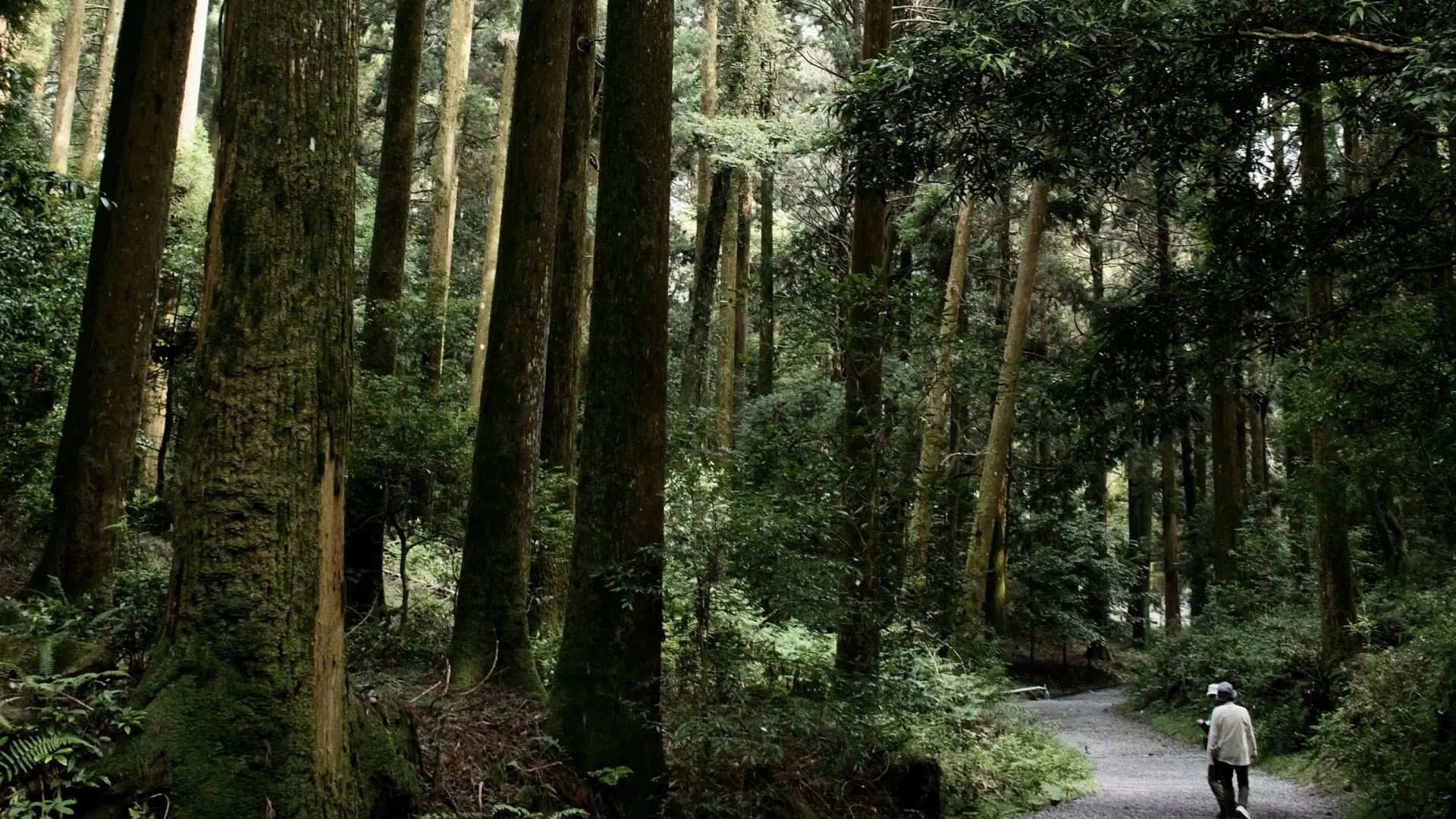
Obi Castle Town rewards exploration on foot, its compact grid of streets preserving the hierarchical geography of feudal Japan. The Obi Castle grounds, though the main keep has been replaced by a reconstructed gate and turret, retain their stone walls and the atmospheric approach through a tunnel of ancient cedars. The Matsuo no Maruyama, a rounded hillside of planted cherry and maple trees within the castle precinct, provides seasonal color that softens the military austerity of the stone fortifications. The samurai residences in the surrounding streets have been selectively opened to visitors, their gardens and interiors offering glimpses of the domestic refinement that accompanied the martial discipline.
The coastal rock formations between Aoshima and Nichinan present a geological narrative of volcanic activity and marine erosion that unfolds along the driving route. Horikiri Pass offers a panoramic viewpoint from which the sweeping arc of the coast, the offshore islands, and the layered headlands are visible in a single composition. The road itself, winding through tunnels of subtropical forest and emerging onto clifftop stretches with sudden ocean views, is among the finest coastal drives in Japan.
Culinary Scene
Nichinan's cuisine draws from both its coastal waters and its castle town heritage. Obi tempura, a style unique to the town, uses a batter enriched with tofu, producing a coating that is denser and more savory than the light, crisp tempura of Tokyo or Kyoto. The tofu tempura is served not as a delicate starter but as a substantial dish, often eaten cold and sliced, its texture closer to a savory cake than a fried food. The preparation reflects the practical ingenuity of a town that adapted a metropolitan cooking technique to local ingredients and preferences.
Katsuobushi, dried and smoked bonito flakes, is produced in Nichinan using methods that have changed little in centuries. The smoking process, which reduces fresh bonito to rock-hard blocks through repeated cycles of smoking and sun-drying over several months, produces an ingredient of intense umami that forms the foundation of dashi broth and is shaved over countless Japanese dishes. Visitors to the few remaining katsuobushi workshops can witness this painstaking process and taste freshly shaved flakes whose flavor intensity dwarfs that of the packaged product.
The seafood along the Nichinan Coast benefits from the Kuroshio Current's warm waters, which support populations of bonito, yellowtail, and flying fish. The last of these, tobi-uo, is a Nichinan specialty served as sashimi, as dried stock for soup, and grilled whole over charcoal, the small fish's firm, clean flesh reflecting a life spent leaping through open ocean.