Kirishima
霧島Kirishima is a volcanic highland that straddles the border between Miyazaki and Kagoshima prefectures, its cluster of more than twenty volcanic peaks, crater lakes, and fumarolic vents composing a landscape of geological restlessness that has earned comparison to the volcanic regions of Iceland and New Zealand. The highest peak, Karakuni-dake at 1,700 meters, offers summit views that extend across both prefectures to the sea, while the still-active Shinmoe-dake, whose 2011 eruption sent ash columns kilometers into the sky, serves as a reminder that the landscape's beauty is a byproduct of forces that remain capable of dramatic assertion.
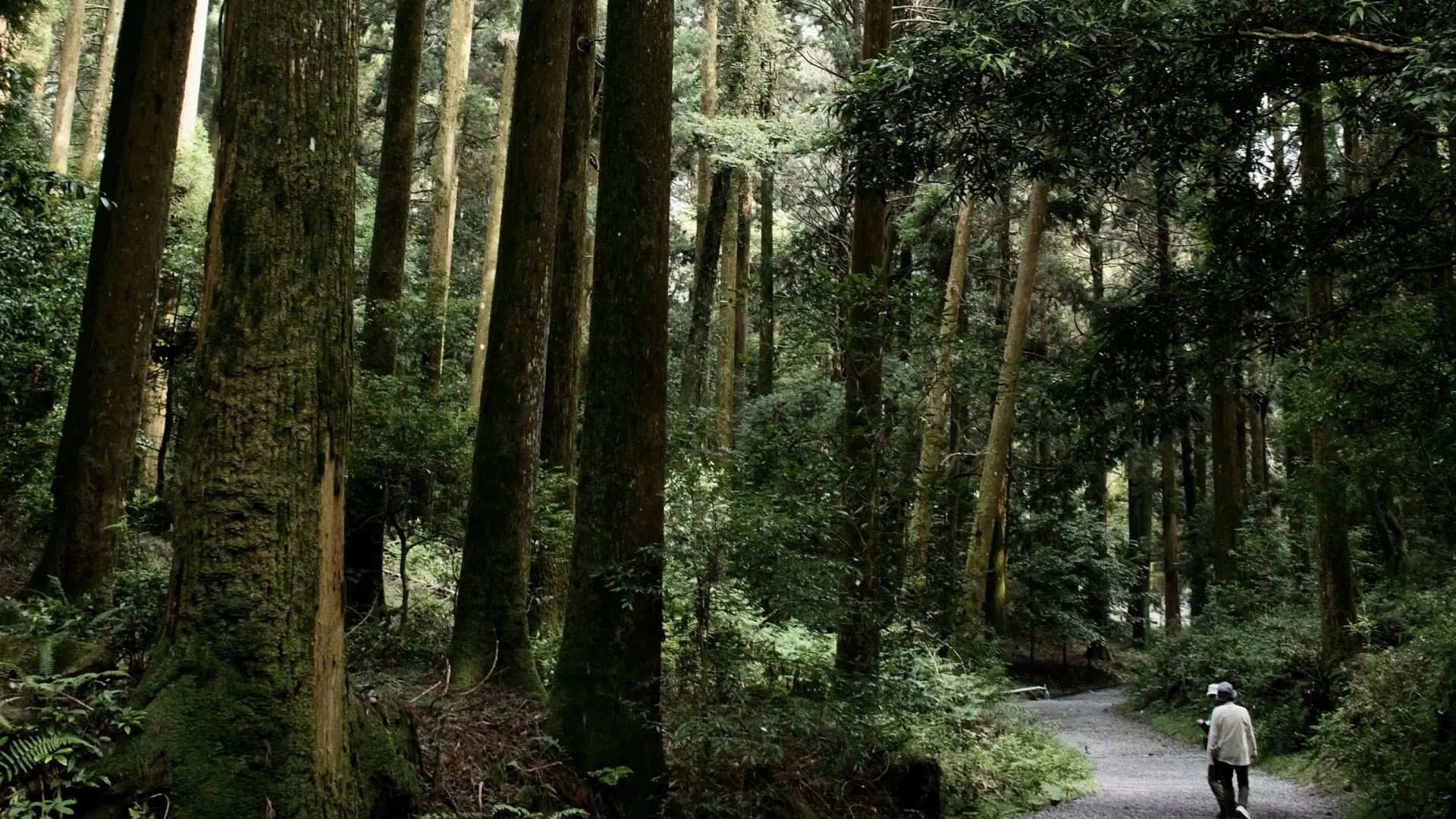
The mythology of Kirishima runs as deep as its geology. Takachiho-no-mine, one of the volcanic peaks, is traditionally identified as the site where Ninigi-no-Mikoto descended from heaven to earth, a claim commemorated by the bronze spear that stands at the summit and the Kirishima Jingu shrine that guards the mountain's lower slopes. The shrine, originally built near the summit but relocated repeatedly due to volcanic eruptions, now sits among an ancient forest of cedar and camphor trees whose canopy creates a twilight even at midday, the massive trunks and tangled roots suggesting a forest that has been growing since the age of the gods.
The thermal waters of Kirishima, heated by the volcanic plumbing beneath the peaks, feed onsen towns and isolated mountain bathhouses whose mineral compositions vary with the specific geology of each spring. The range of bathing experiences available within a compact area is remarkable: milky sulfur springs that carry the scent of the volcano, clear, alkaline springs that soften the skin like silk, iron-rich springs whose russet color stains the towels of the unwary. The highland setting, where bathing is accompanied by mountain views and the sound of forest birds, offers an atmosphere distinct from the coastal and lowland onsen of the surrounding region.
Highlights
Kirishima Jingu is one of the most atmospheric shrines in southern Japan, its vermilion buildings set against a forest of enormous cedars whose age and scale dwarf the human structures. The main hall, rebuilt in 1715 in the ornate style of the Momoyama period, stands at the top of a stone stairway whose moss-covered steps discourage haste and encourage the contemplative ascent that Shinto architecture is designed to produce. The shrine's connection to the founding myths of the Japanese imperial line gives it a significance that transcends the local, yet its setting amid the forest and the mountains anchors that significance in the physical landscape with a directness that more urban shrines cannot achieve.
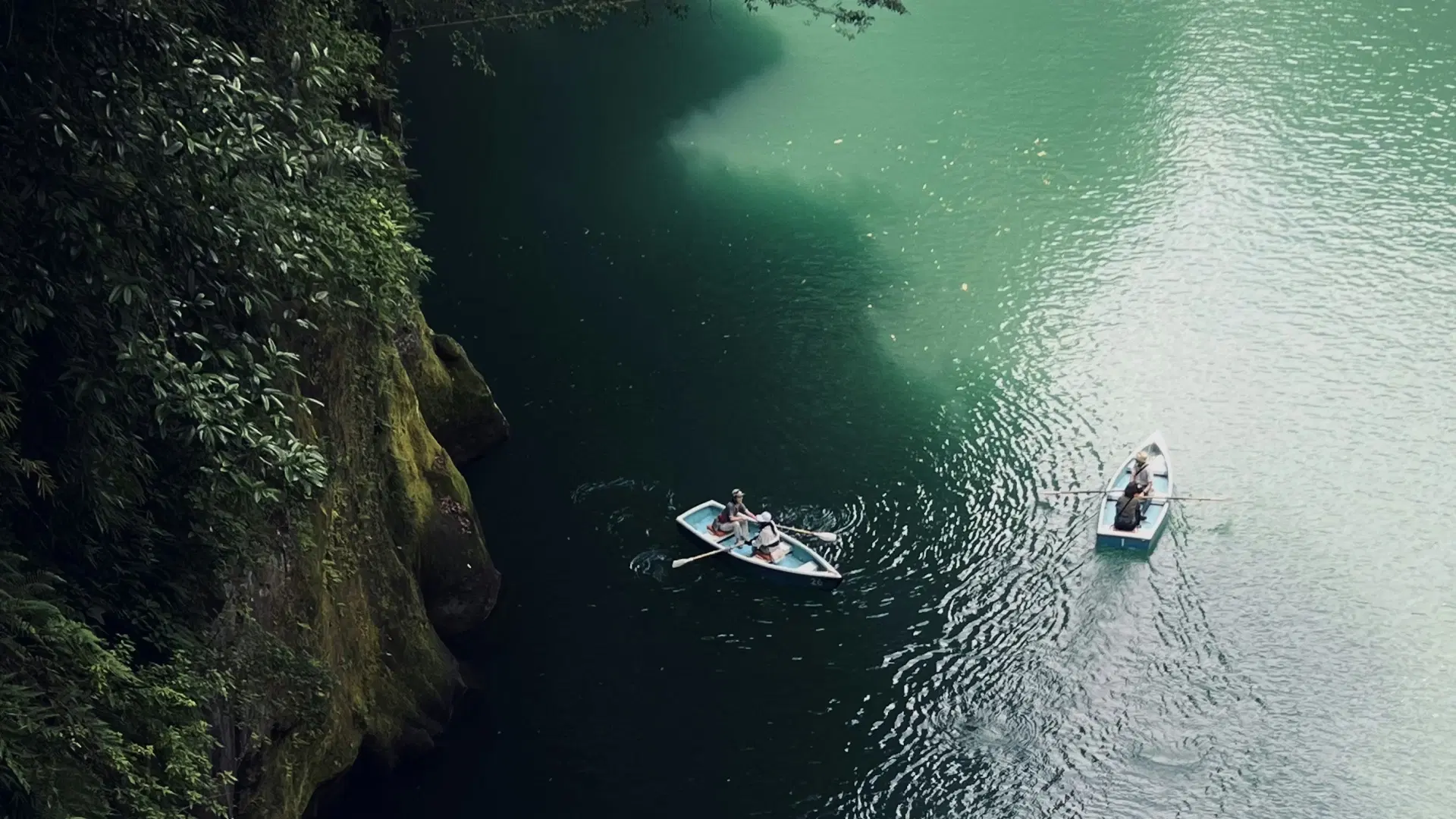
The Ebino Kogen plateau, at an elevation of 1,200 meters, provides the most accessible introduction to Kirishima's volcanic landscape. A walking trail of approximately four kilometers circuits three crater lakes whose colors, cobalt blue, emerald green, and the milky white of dissolved minerals, reflect different chemical compositions in a geological palette visible within a single hike. The surrounding terrain of volcanic grassland, stunted forest, and steaming fumaroles creates an atmosphere that oscillates between the pastoral and the primordial.
The Maruo-no-Taki waterfall, dropping 23 meters through a dense forest gorge, is Kirishima's most celebrated natural feature outside the volcanic peaks themselves. The falls are reached by a short trail through ancient forest, the approach building anticipation through a progression of deepening silence broken only by the growing sound of falling water. The plunge pool at the base, surrounded by moss-covered boulders and overhanging trees, composes a scene of such self-contained perfection that it has been designated a natural monument.
Culinary Scene
Kirishima's culinary character is defined by the highlands, where clean air, mineral-rich volcanic soil, and altitude combine to produce ingredients of notable purity and intensity. Kirishima tea, grown on the slopes of the volcanic mountains, benefits from the temperature differentials between day and night that concentrate flavor compounds in the leaves, producing a green tea with a sweetness and depth that has earned recognition at national tea competitions. The black pork raised in the Kirishima foothills, a heritage breed related to the celebrated Berkshire pigs of Kagoshima, yields meat of distinctive richness that is served as tonkatsu, shabu-shabu, and grilled over charcoal at restaurants throughout the highland towns.
Shochu, the distilled spirit that is Kyushu's contribution to the world of liquor, is produced in Kirishima by distilleries that draw on the region's sweet potatoes and mineral-rich spring water. The Kirishima brand, one of the most recognized shochu labels in Japan, takes its name from the volcanic highland where its ingredients grow and its water flows. Tasting rooms at local distilleries offer flights that illuminate the differences between sweet potato, barley, and rice-based shochu, the volcanic terroir lending each variety a mineral backbone that distinguishes the local product.
The mountain vegetables of the Kirishima highlands, gathered from the forests and cultivated in the volcanic soil, appear in the ryokan cuisine of the onsen towns in preparations that emphasize their natural flavors. Fiddlehead ferns, bamboo shoots, wild mushrooms, and mountain yam are served in seasonal arrangements that trace the progression from spring through autumn, each ingredient carrying the particular taste of altitude, mineral water, and volcanic earth.
Ryokans in Miyazaki
There are no ryokans in our guide listed in Kirishima. See our selection across Miyazaki.
View ryokans in Miyazaki